Trump’s “Corridor Wars” in the Caucasus
His deals are informed by hyper-transactional dealmaking.
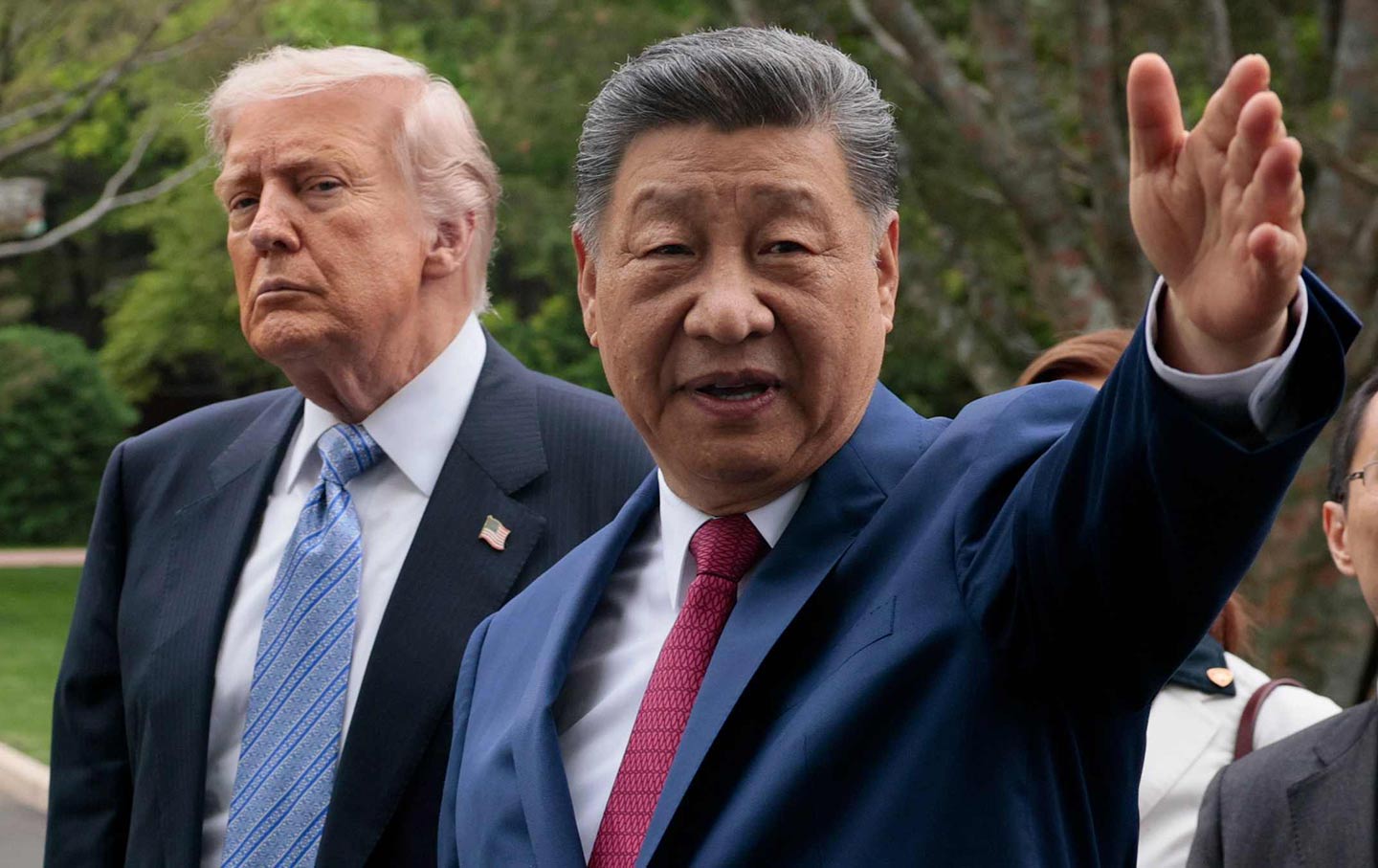
Despite campaign promises of peace, Donald Trump’s presidency has thus far represented business as usual for Washington’s war profiteers. Although claiming to run as a peace president, The Donald swiftly disregarded his own base in favor of advice from DC’s neoconservative pro-war establishment, continuing much of what his predecessor Biden began. The result was a 12-day war aimed at regime change (or regime removal) in Tehran. Now, amid shrinking poll numbers and a troubled economy, Trump has desperately sought to pivot back to peace—at least rhetorically—and reinvent himself as a “dealmaker” worthy of no less than the Nobel Peace Prize.
The president’s aim is to distract public attention by racking up some quick wins on the diplomatic front, all while making certain that those wins conveniently correspond with the geopolitical interests of DC’s donor classes. The fact that Trump’s deals are informed by his hyper-transactional approach to international politics hardly helps. Yet this has not stopped Trump from pushing through deal after deal without giving much consideration to how his deals could impact the long-term stability of any given part of the world.
The Caucasus region represents a perfect case study in this regard. Far from the shores of the United States, the Caucasus is little known to most Americans. This mountainous region, hemmed in between the Black and Caspian seas, encompasses oil-rich and traditionally Shia Muslim Azerbaijan, the ancient Christian civilizations of Armenia and Georgia, and the various autonomies of the Russian-administered North Caucasus. Added to the mix are a complex thicket of territorial disputes, geopolitical intrigues, and breakaway republics with names like South Ossetia and Artsakh. The region has served as the traditional zone of influence for major powers Russia, Iran, and Turkey—with Russia remaining the dominant player.
It is this same very region that Trump seeks to enter as part of his “dealmaking” drive. The president’s proclaimed plan is “peace” between Armenia and Azerbaijan. However, the evidence indicates that the real objective is to cut into the traditional neighborhood of Moscow and Tehran as a means of shoring up American global hegemony, and chalking up a quick, ill-conceived win for Washington, amid its declining global capital. Trump’s grandiose idea, as Reuters reports, is to force Armenia to give up its sovereignty over a corridor through its southern province of Syunik (Zangezur), which borders Iran. Much like Trump’s designs on Greenland, the idea would be for Armenia to effectively cede part of Syunik—a province of immense strategic, historical, and spiritual significance for Armenians—to the US for an extended period of “up to 99 years.” The resulting corridor through the region would be named for President Trump.
The geopolitical significance of such a move is made obvious by a quick glance at the map. Despite the recent pro-Western overtures of Armenian PM Nikol Pashinyan, Armenia is the only South Caucasian state that is part of the Russian-led Eurasian Economic Union (EAEU). Thus, a potential American acquisition of a corridor through Syunik serves the objective of cutting Russia off from Iran, which just implemented a free trade agreement with the EAEU in May. Moreover, the corridor will serve as a link connecting Israel-allied Azerbaijan with its Nakhichevan exclave and NATO member Turkey, thus providing NATO with a direct outlet to the Caspian Sea. Behind this scheme are the interests of Western Big Oil and the aim to realize the long-coveted Trans-Caspian gas pipeline in order to “counter Russia and China” in Eurasia. Israel’s interest in using Azerbaijan as a forward base against Iran also factors into the strategy.
The Trump plan for the Caucasus was first floated in July by his ambassador to Turkey, Tom Barrack, and represents a less aggressive version of the corridor plan espoused by Azerbaijani President Ilham Aliyev and Turkish President Recep Tayyip Erdoğan. Aliyev in particular has made no secret of his desire to aggressively seize Syunik by military force. His ambitions were made possible by Armenia’s loss in the 2020 war over Nagorno-Karabakh (Artsakh) and, Pashinyan’s controversial decision to recognize the historic Armenian land as part of Azerbaijan. The latter move resulted in the ethnic cleansing of the indigenous Christian Armenian population of Artsakh by Azerbaijan in September 2023. Pashinyan’s act is widely perceived in Armenia as a betrayal, not only of Armenia’s national security but, more fundamentally, of the democratic rights of the Artsakh Armenians and even of democracy itself, the very idea that Pashinyan claimed to support in 2018. Meanwhile, Aliyev’s ethnic cleansing of Artsakh not only evoked memories of the 1915 Armenian Genocide but also set the stage for Netanyahu’s war against the Palestinian people—the genocide in Gaza—fueled by oil from Baku.
The situation is being carefully observed by the region’s two largest actors—Moscow and Tehran. It would be no exaggeration to say that their security concerns in the Caucasus represent a clear red line. This position was unambiguously articulated by the two BRICS giants in the Russo-Iranian partnership pact inked in January, which obligates the signatories to prevent the “interference” and “destabilizing presence” of “third states” in the region.
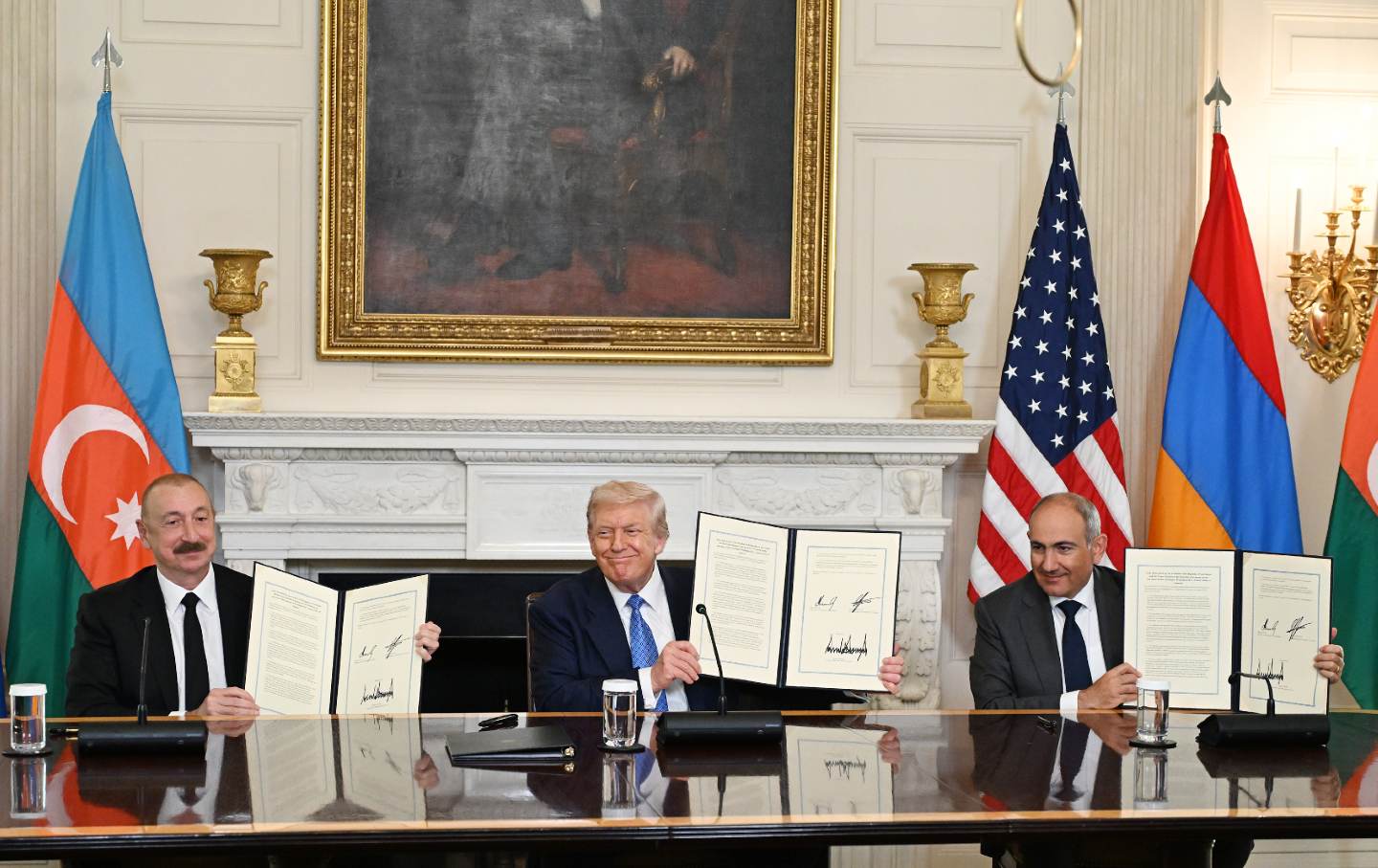
Simply put, Russia and Iran will not be “trumped” in the Caucasus. Their focus on the region was only heightened after the recent 12-day war, in which Israel used Azerbaijani territory in its strikes against Iran. More generally, both Aliyev and Pashinyan have recently pursued policies corresponding to Western war interests, putting them into direct conflict with Iran and Russia. Their Friday meeting with Trump resulted only in the signing of a trilateral framework declaration. However, should Pashinyan and Aliyev decide to go “all in” and fully realize the president’s “peace proposals,” they can expect a sharply negative reaction from Moscow and Tehran.
It is uncertain how far the Trump administration will go in its quest to “counter” Russia and Iran in the Caucasus, especially given the fact that so many Western resources are now focused on Israel and Ukraine. What is clear is that, rather than representing peace, a potential Trump deal in the Caucasus will only be planting the seeds for future war.
Become a Sustaining Donor This September
Between the reemergence of right-wing red-baiting and Donald Trump’s use of the chilling National Security Presidential Memorandum–7 to criminalize left political organizing, we’re seeing McCarthyism reborn before our eyes.
This assault on democracy cannot be ignored or wished away. Resisting it requires bravery in the face of threats and repression, a steadfast commitment to the truth, and the unwavering belief that we can—and will—overcome this darkness.
We must have an independent media that sets the record straight, unearths corruption and abuses of power, and advances a politics of justice and dignity for all if we’re to win this fight.
That’s why I’m writing to you today. This September, The Nation needs to add 100 monthly donors to sustain our progressive journalism. Your contribution makes the next investigative report, the next truth-speaking column, and the next pathbreaking essay all possible.
I hope you’ll support our work with a recurring donation today. If you donate $10 or more a month, we’ll send you a brand new “Hands Off the Free Press!” sticker to recognise your commitment to our cause. Please, donate today.
Onward,
Katrina vanden Heuvel
Editor and Publisher, The Nation