There Is No “After Gaza”
Whether intentionally or with callous word choice, too many have begun relegating Palestine to the past tense.
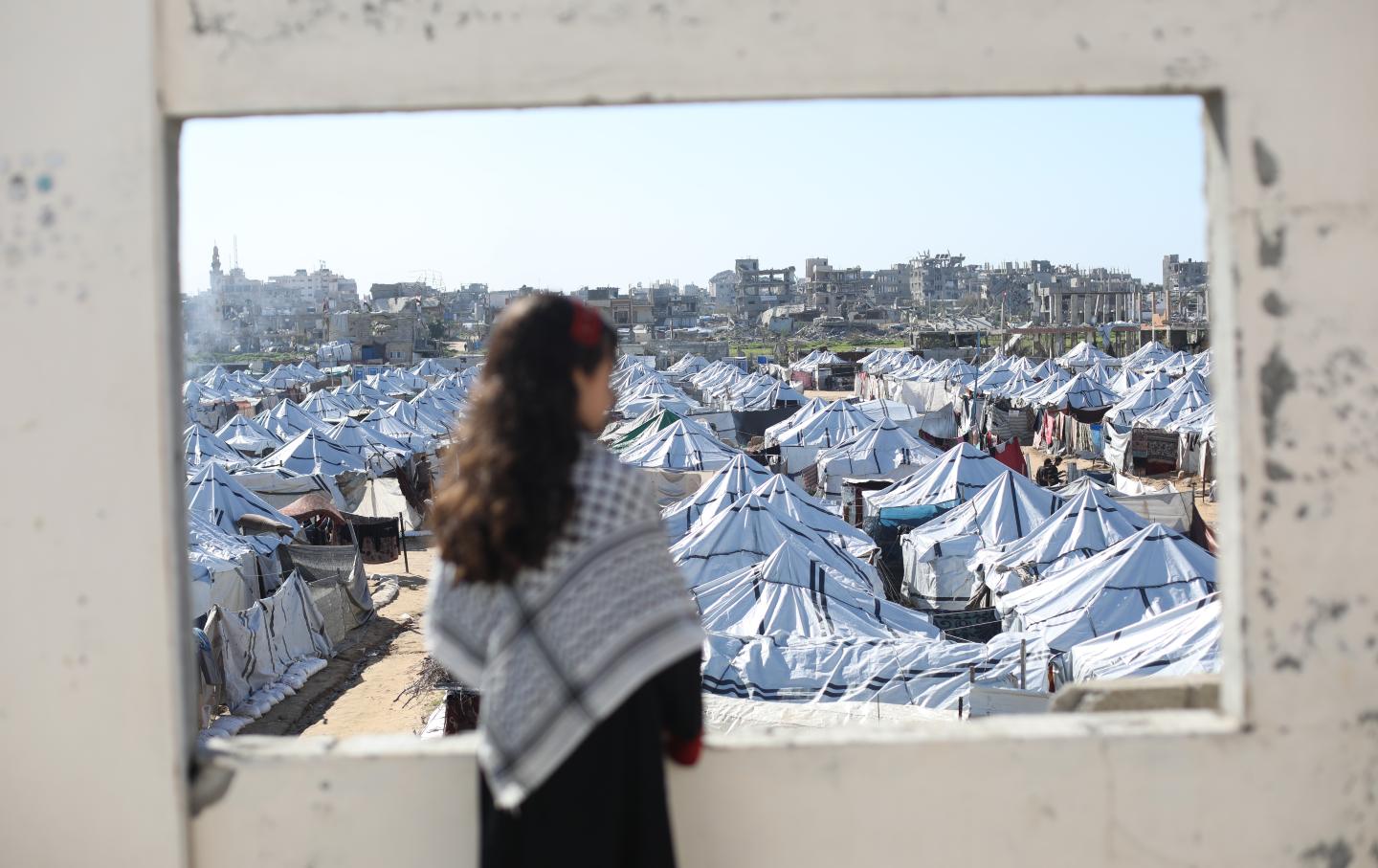
Displaced Palestinians endure harsh winter conditions in makeshift tents after Israeli attacks destroyed their homes in Nuseirat, Gaza Strip on January 11, 2026.
(Hassan Jedi / Anadolu / Getty Images)It was a strange sensation—those months when the world seemed to vibrate with the question of Palestine. As a diasporic daughter of refugees from ‘Ibdis and Deir al-Balah, Gaza, I was born into this question—the open wounds of the Nakba, the unfinished work of liberation and return. Yet, growing up in the diaspora, I’d learned the stubborn, structural hostility to our existence that is intrinsic to much of the Western world. Nowhere was this clearer than in the United States, where “Palestine” was mostly a lacuna, obliterated in silence or colonial narratives of our barbarity. Upon hearing I was Palestinian, most Americans stared at me blankly, or replied, “You’re from Pakistan?” Some responded with vehement denial— “Palestinians don’t exist!”—while a few looked at me with some combination of pity and fear.
And then, on October 7, 2023, Palestine invaded discourses and streets, surged into spaces that had, until then, fashioned themselves out of reach.
On that day, Palestinian militants broke out of Gaza and attacked nearby settlements and military bases, resulting in the death of roughly 373 Israeli security forces, 695 Israeli civilians, and 71 foreign nationals, including a number of people killed by Israel’s own Hannibal Directive. The attacks, and the capture of 251 hostages, represented an unprecedented rupture in Israel’s presumed impenetrability, and with it, a crisis for the Western imperial paradigm.
Within hours, this imperial machinery leapt into overdrive, scrambling to counter this rift with sheer, spectacular force. Pundits and politicians cranked existing Islamophobic, racist, and anti-Indigenous rhetoric full blast in a frenzy. Western heads of state attested to baseless tales of beheaded babies, joining Israeli officials who declared Gaza’s entire population of 2 million to be terrorists and animals. As calls for an unbridled, indiscriminate military assault on the Strip reached a fever pitch, Palestinian and other dissenting voices were viciously smothered by means ranging from cancellations and firings to blackmail and outright violence. Throughout, these actions moved with an orchestrated efficiency that suggested the anti-Palestinian maelstrom was less hysteria than the unmasking of deep, long-held desires.
From my home in New York City, I watched in horror as these murderous fantasies landed with atomic force on my relatives. Within the first 10 days, with over 4,200 Palestinians in Gaza had been counted dead and over 1 million violently displaced, it became clear that Israel intended something far more devastating than its past, routine bombardments of this small, besieged enclave. Between the power outages and air strikes, my young cousin Haneen sent harried updates from Nuseirat:
We are living another Nakba, we are dying at every moment. We live in complete darkness, with increasing and continuous bombing. We cannot sleep at night. Sometimes I feel like I want to scream because of the magnitude of the injustice Gaza is being subjected to… how I wish the war would end, Israel threatens to cut off a large part of Gaza and annex it…
For me and millions of fellow Palestinians outside the Strip, reality became only Gaza—its suspended moment of disaster, endless and repeated again, again, again. As winter seeped into the shortening days, I staggered through a gale of grief, inseparable from screens. I poured my days into them, false portals that only mimicked proximity to my family under siege. In pixels, I received partial glimpses of their terror, incomplete dispatches of the unthinkable as it erupted by the hour—a cousin vaporized in the shower, a displaced aunt dying of cold, newlyweds blown apart in their makeshift home. Every instant, unbearable, palpitating with a pain that stopped—and shamed—language in its tracks.
All of this was, while horrific and unprecedented in scale, also profoundly predictable. Even without the flamboyantly genocidal statements of Israeli leaders in the wake of October 7, history is clear—Israel was established through ethnic cleansing and massacres, founded on a logic of colonial settlement. And in the West, there have always been many—especially among the world’s richest and most powerful—who gleefully perpetuate, and exploit, the demonization of Palestinians, Arabs, and Muslims (among other groups). Yet in the early, blood-drenched days following October 7, something else happened, too—the spectacle of Israel’s genocidal war compelled many of the previously indifferent to look, or look again, at the question of Palestine.
Looking, their glimpses passed through the multiple distortions of distance and censorship, buffeted by Israel’s multimillion-dollar hasbara apparatus and frequent lies—and yet what they saw changed them. Day in and out, they saw Palestine’s hundred-year history distilled and on display each time Israel shelled a hospital or firebombed civilian tents. Hour by hour, the truth of Zionism exposed itself, as astonishing violence erased family lines and drove hundreds of thousands from one besieged zone to the next. Here was the Nakba, which had never ended, replayed as hyperbole. Here was the vaunted “only democracy in the Middle East”—Israel’s self-proclaimed title, declared to contrast its neoliberal utopia with the supposed backwardness of its millions of non-Jewish neighbors—revealing its enduring agenda of ethnic cleansing and barbarity.
Palestine, and Gaza specifically, had escaped the margins of the global consciousness. Glimpsed as a mosaic of staggering suffering, astonishing courage, and stalwart tenderness, Palestine did more than shatter hearts. Palestine threw open the contradictions—and challenged the framework—of the existing order of the world.
And so came another rupture. This one, a global reckoning between the millions of everyday citizens who recoiled from the wanton slaughter of Palestinians, and their institutions and governments that sided, unequivocally, with the Zionist war machine. In the ensuing months, we would witness not only genocide but also a pitched battle between a burgeoning global solidarity and the brutal overseers of the status quo.
“Ceasefire now!” was an early refrain among Western activists, and in the first weeks of Israel’s assault, this basic demand was treated as radical. In the streets, I joined the call, though I harbored wariness toward the phrase. Desperate as Palestinians were for reprieve, anyone with a passing knowledge of history also knew that a ceasefire alone has never, and would never, halt Israel’s genocidal project.
Since 1948, Zionist occupation of Palestine has meant even the most “peaceful” intervals include the routine, and often daily, murder of Palestinians—a dynamic mostly ignored or tolerated by the world. Even before October 7, the year 2023 had been defined by ever-intensifying settler violence and annexation, and was already the deadliest for Palestinian children on record. The latest pogrom in the West Bank had taken place in the Palestinian village of Huwara just the day before.
At marches and vigils in Manhattan, Brooklyn, and Washington, I glanced at the faces around me—sober, enraged, dazed—and wondered what the threshold for each protester might have been. Had they heard of Huwara? Did they know about Jenin, Sheikh Jarrah, Deir Yassin? How many of our dead had it taken to make us visible? How many to spur them to the streets? And how much of their horror would remain if the killing tapered from a roar to its previous, droning hum? When they shouted “free, free Palestine,” did they know what it might cost, and how much Palestinians had already paid?
As the weeks of slaughter grinded on, so did the spectacle of sit-ins, rallies, and mass marches from Sydney to Sana’a. The world counted one month, then two, then three months of unthinkable violence made possible by European and US governments. My Whatsapp brought near-daily news of familial casualties, and I forgot how it felt to think of anything but death.
One cold night in the first, cruel spring of genocide, I slipped past security guards and makeshift blockades onto Columbia’s campus and witnessed several dozen students laying claim to their university’s lawn. Some huddled together under shared blankets or tents, while others listened to a series of political presentations interspersed with song. Around the country and the world, many more courageous students and faculty placed their bodies, and privilege, on the line. While administrators tried to dismiss them as misguided children, these students repeatedly demonstrated principled and sophisticated political commitment, even at great cost.
Such moments of collectivity were, at times, gestures large enough to be glimpsed on Gaza’s shores. In the midst of their unthinkable horror, Gazans waved back, expressing gratitude and solidarity to the student protesters as well as to their Lebanese and Yemeni compatriots who stood with them against a hostile world. Such moments were more than symbolic, my cousin Nabil told me, messaging from Nusierat refugee camp in Gaza. In those instants, his sense of absolute isolation wavered. In these moments, he told me, we break the siege.
The overwhelming reality, however, remained split-screen. Even as Israeli targeted assassinations picked off members of Gaza’s press, their daily courage allowed global audiences to witness Israel’s intensifying atrocities. Around the world, people learned names like “Jabaliya” and “Shujayiya” just in time to witness their decimation. They heard the words of Refaat al-Areer and Heba Abu Nada just as Israel destroyed their flesh. Beyond the relentless bombing came intentional starvation, engineered epidemics, decimated healthcare facilities, systematic erasure of educational and cultural institutions, and exposure to the harsh elements of cold, rain, heat and thirst. In Gaza, death was reinvented again and again.
Looking for ways to describe Israel’s wanton atrocities, NGOs and experts began reaching for the language of time, declaring one countdown after the next. As early as day 26 of the assault, the United Nations had declared that “Gaza is running out of time.” Two months later, UNICEF reported that “children in Gaza are running out of time…violence, killing, bombardment and captivity…all the suffering has been too much.”
Too much. My family in Gaza agreed: We no longer have the energy to endure, Haneen wrote in December 2023. Her brother, Nabil, writes to me of his deferred dreams: to travel, to work as a pharmacist, to fall in love, to write a book. We will never get used to this killing. Not a single martyr was without a heart, full as the world.
Too much. What does it mean when time runs out, and goes on? In 2024, then 2025, more reports fluttered across the Internet like air-dropped leaflets, declaring “time is running out [for women and girls] [to prevent a famine] [to prevent genocide]”
Like the lie of red lines around Rafah, these clamoring clocks were made of nothing but words. Over and over, Gaza was forced beyond every imaginable limit, plunged into every forewarned nightmare and more. While empty words circulated in the likes of English, German, and French, the truth spoke in bodies—bodies held hostage under rubble, bodies torn and charred, bodies robbed of organs and limbs, bodies severed from every living relative. Bodies huddled in hungry endurance, cradling maimed hearts. Bodies embracing in the long night of our abandonment. We are alone, my cousins finally decided. We have no one but God.
The magnitude of our failure is beyond our ability to know.
Perhaps, from now on, I will forever measure time this way: as chapters of disaster, iterations of irreparable loss, which statistics—like The Lancet’s report of “three million life years lost”—will never touch.
Yet it is also true that the world outside of Gaza has passed through chapters of its own. The repression against Palestine solidarity came swiftly and violently, and its legacy endures. From the outset, the ruling class seized on the Palestine solidarity movement as scapegoat to carve out new, alarming precedents.
On a chilly night in April 2024, I stood outside the gates of CUNY City College, just down the street from Columbia. It was the night the NYPD violently raided the student encampments at both schools. I arrived to find a crowd of around 200 who had gathered outside the college gates after several days of escalating rhetoric from the school administration. Among them were CUNY students and faculty, hoping their presence would help protect their community members within. After several hours of chanting, chatting, and waiting under the watch of a handful of drowsy-looking police, a caravan of NYPD vehicles glided into view. Across from the college, their armored doors peeled open to disgorge dozens of officers bristling with guns and riot gear. In the glint of red and blue light, the expression on their faces was unmistakable. They were eager, and smug. A few minutes later, they sprang forward, rushing toward us. Standing toward one side, phoneless and motionless, I was unprepared when one officer pivoted toward me, rushing, baton raised. As cries of pain erupted around me, I turned and ran.
Around the country, similar scenes played out as students were subjected to stun grenades, rubber bullets, and even live fire by city, state, and vigilante forces. Perpetrated under the administration of a Democratic president, these crackdowns further normalized ongoing practices of political repression against US citizens and foreign-born civilians alike. Soon after, ICE practices of kidnapping, imprisonment, and deportation would take on a new level of performative cruelty, as with the snatching of pro-Palestine students like Mahmoud Khalil and Rümeysa Öztürk. Months later, to witness the unfolding horror and heroism in Minneapolis is to recognize how bipartisan crackdowns on the Palestine solidarity movement (as well as the George Floyd uprisings, and more) were clear foreshadowings of today.
These developments, alongside Orwellian legislation, increased journalistic malpractice, anti-Palestinian hate crimes, and even the demonization of the likes of children’s television star Miss Rachel, the struggle against genocide revealed drastic faultlines crisscrossing the “free world.” These throbbing, bloody borders frequently cut down class and racial lines, as enforcers of Zionism expose the entanglements of capital, white supremacy, technofascism, environmental exploitation, and Western imperialism in ever more explicit terms. In other quarters, social media and mainstream news has been rapidly consolidated under the control of a vanishing number of overlords.
Meanwhile, United Nations hand-wringing delivered only stillborn ceasefires and now, an endorsement of Trump’s macabre, corporatized “Board of Peace,” a pay-to-play conglomerate of nations headed by the US president, who would chair for life. This farce was compounded in the board’s charter, which, despite its initial premise, makes no mention of Gaza. Rather, it seeks a global mandate that some see as a direct challenge to the UN itself. Meanwhile, Trump’s son-in-law, the Board of Peace member and ethnic cleansing enthusiast Jared Kushner, recently unrolled a proposal for Gaza’s future as a real estate fever dream, complete with skyscrapers and resorts.
These increasingly flagrant refusals of so-called international law have reinforced a world in which a US president kidnaps world leaders—and slaughters civilians along the way—with only the thinnest of pretexts, and no thought of consequence. The world of livestreamed genocide is a world that recognizes no sovereignty but will enforced by might.
Thus, the primary emergency of genocide has also drawn a global, connected crisis into sharp focus. Those willing to witness these connections will understand the words of Ghassan Kanafani who, before his assassination by an Israeli-planted car bomb, declared, “The Palestinian cause is not a cause for Palestinians only, but a cause for every revolutionary…a cause of the exploited and oppressed masses in our era,” expounding: “Imperialism has laid its body over the world…wherever you strike it, you damage it, and you serve the world revolution.’”
But the monster will strike back, and bets against the human ability to endure.
Nowhere is this more evident than in Gaza, where over 90 percent of the region’s structures lie in ruins, and 2 million souls (or perhaps ~1.5 million, should recent death-estimates prove true) remain starved of vital supplies and cut off from the world. Forced beyond every imaginable limit, she somehow survives, rising to face another day of unknown fate. Meanwhile, brazen Israeli violence in the West Bank has killed over 1,000 men, women, and children, established 69 new illegal settlements, and seized over 16 percent of the scant remaining Palestinian land since October 2023.
The fight for Palestine’s liberation remains her right and our moral call, but we must also confront the ways we have failed her. For all the marches, all the courageous acts of civil disobedience and disruptions to the arms trade, to the ongoing plight of political prisoners held in Western prisons and even the flotillas—which, for an instant, reminded us that the sea belongs to no government—Israel’s killing gallops on.
Our defeats need not be final, but they are manifold—for most of us, there is a widening gap between unprecedented awareness about Palestine and the faltering action we have answered with. Even as some continue to work earnestly toward a liberated Palestine, and polls show unprecedented numbers turning against Zionism, cultural shifts are meaningless if not parlayed into systemic change. As always, beyond the hundreds of millions Israel has spent on spin and censorship, Zionism’s true horror is not in its rhetoric or symbolic violence—it’s how literal it is.
The terrain we face now is different, both more hostile and more obvious than it was two years ago. Grace Lee Boggs’s question rises to us now: “What time is it on the clock of the world?”
It is our turn to answer. We are running out of time.
We are entering a new, and acutely dangerous phase. Months before the current, false “ceasefire”—which Israel has to date violated over one thousand times, murdering nearly 500 Palestinians directly and an untold number more through the ongoing blockade of most of the food, medicine, and shelter it is required by the agreement to let in—a flurry of books and analyses began to circulate, postulating about the world “after Gaza.” Whether intentionally or with callous word choice, too many have begun relegating Palestine to the past tense. For others, the return to “normalcy” manifests as the desire to look away, to accept the porcelain-thin veneer of “peace,” to declare that the “war” has come to end.
But just as Palestine has always been present—whether acknowledged or not—so Palestine, with Gaza as its heart, remains as a stake of reality in an age of illusions. We will never be after Gaza, for Gaza encompasses us. She represents the dark underside of our choices, the extreme cost of our passivity. She suffers most acutely for what oppresses all of us, forced to the furthest edge of this extreme age. In this way, Gaza is after us—as a haunting, and as a brutalized forerunner revealing where our current trajectory—runaway capitalism, AI-powered killing, collapsed international law, ecocide , and mercenarism—will lead.
Genocide has been an underpinning of the colonial order since it began more than half a millennium ago—but in Gaza we see its emerging, modern face. It looks like my family—the buried and the battered, and also those who continue to resist. We owe them the world, even as they warn us about ours. The liberation of Palestine is its own righteous cause, but a system that sustains Israel’s murderous impunity guarantees a future in which its crimes continue to metastasize, multiplying far beyond the Strip.
We will never be after Gaza. However we choose to proceed, her blood is a sacred stain that will outlast all of us.
More from The Nation
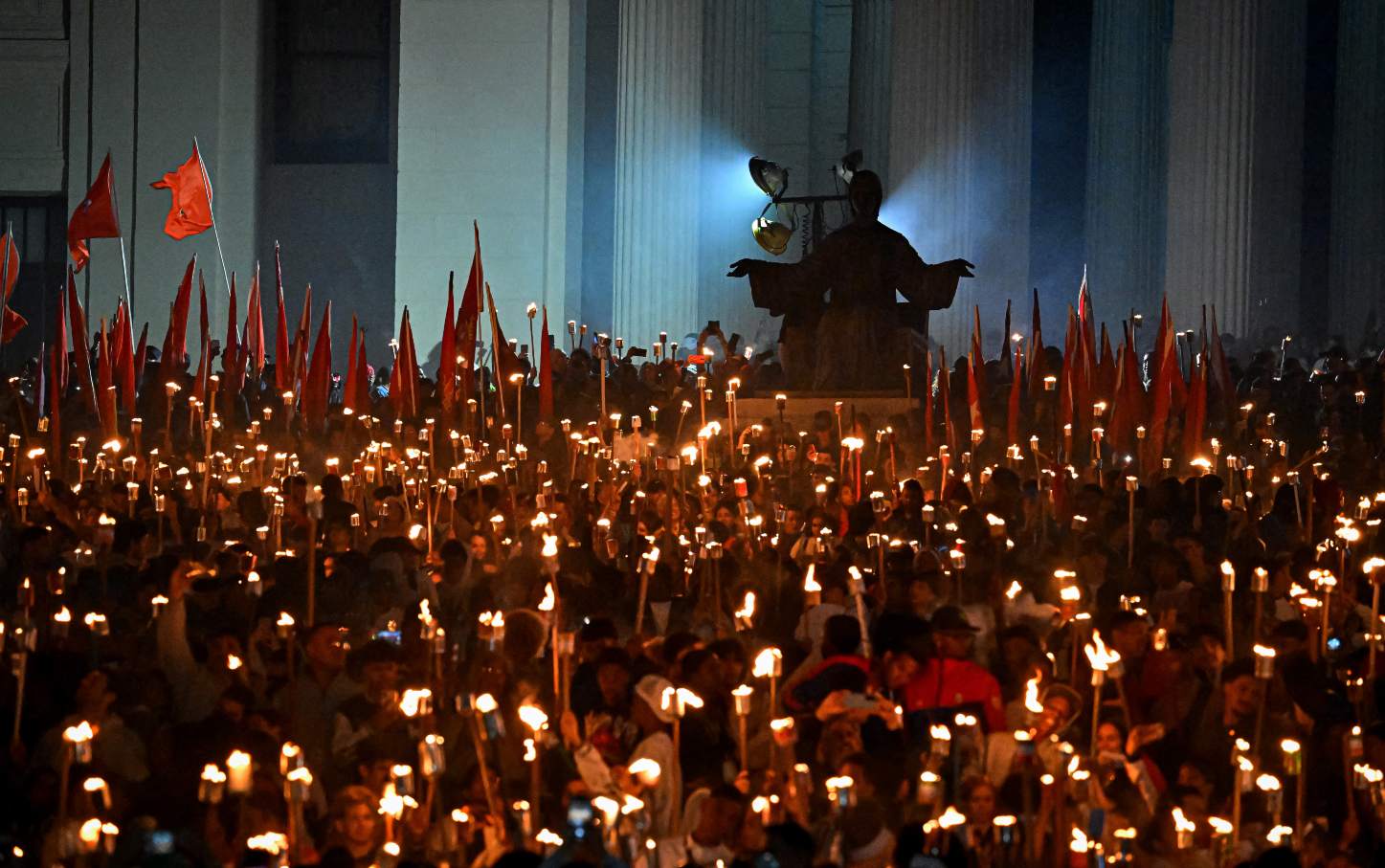
Cuba Rallies Residents, Prepares for War Cuba Rallies Residents, Prepares for War
As Washington escalates regime-change pressure after the Venezuela raid, Cuba braces for confrontation amid economic collapse, oil shortages, and mass mobilization.
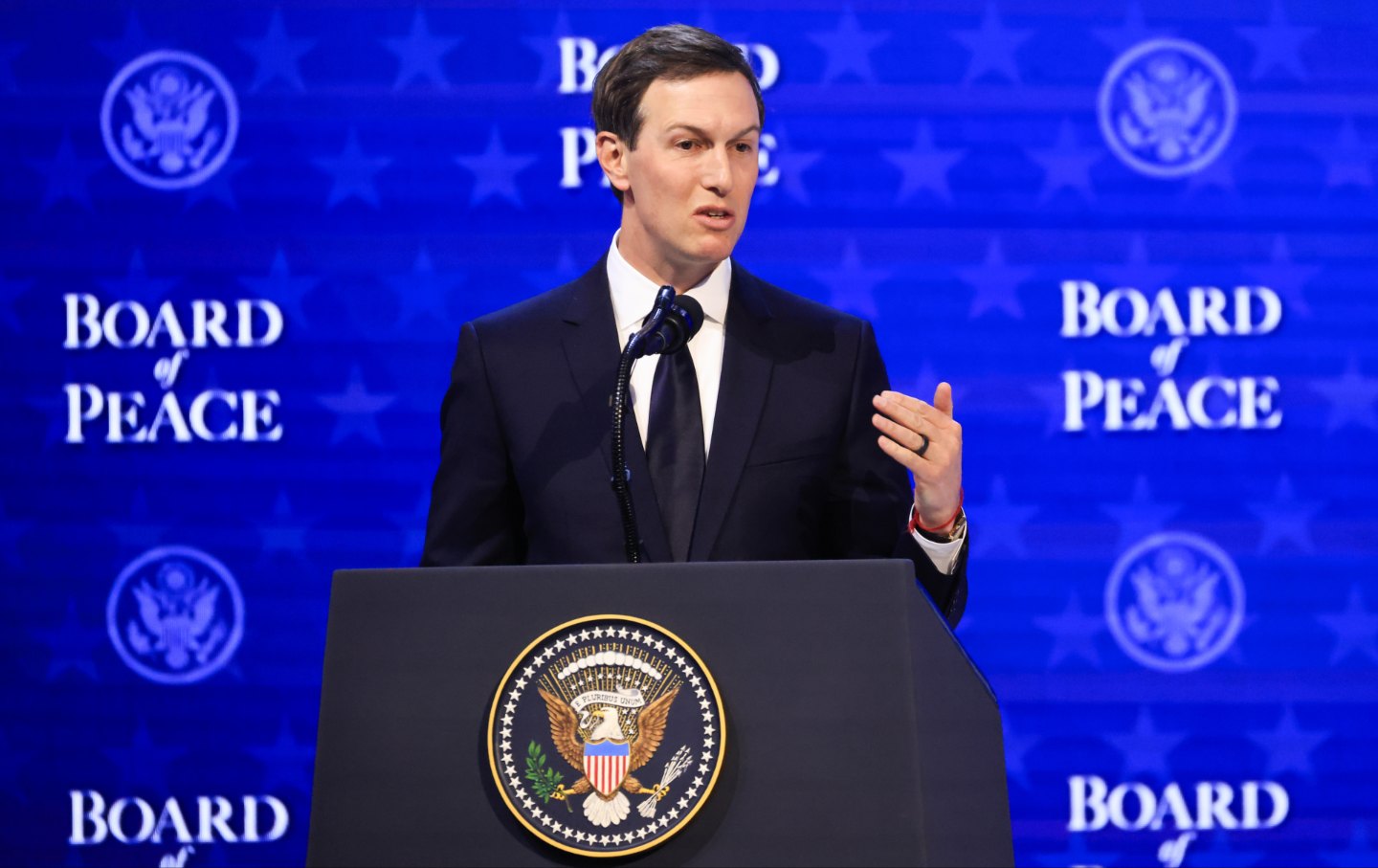
Jared Kushner’s “Plan” for Gaza Is an Abomination Jared Kushner’s “Plan” for Gaza Is an Abomination
Kushner is pitching a “new,” gleaming resort hub. But scratch the surface, and you find nothing less than a blueprint for ethnic cleansing.
I’ve Covered Migration and Borders for Years. This Is What I’ve Learned. I’ve Covered Migration and Borders for Years. This Is What I’ve Learned.
Borders are both crime scenes and crimes, with nationalism the motive.
Gaza Is a Crime Scene, Not a Real Estate Opportunity Gaza Is a Crime Scene, Not a Real Estate Opportunity
The Trump administration’s plan for a New Gaza has nothing to do with peace and rebuilding, and everything to do with erasure.
Mark Carney Knows the Old World Is Dying. But His New World Isn’t Good Enough. Mark Carney Knows the Old World Is Dying. But His New World Isn’t Good Enough.
The Canadian prime minister offered a radical analysis of the collapse of the liberal world order. His response to that collapse is unacceptably conservative.

