Some of Our Top Schools Are Embarrassing Themselves Over Covid
Why are places like Stanford and Johns Hopkins hosting gatherings of well-known coronavirus cranks?
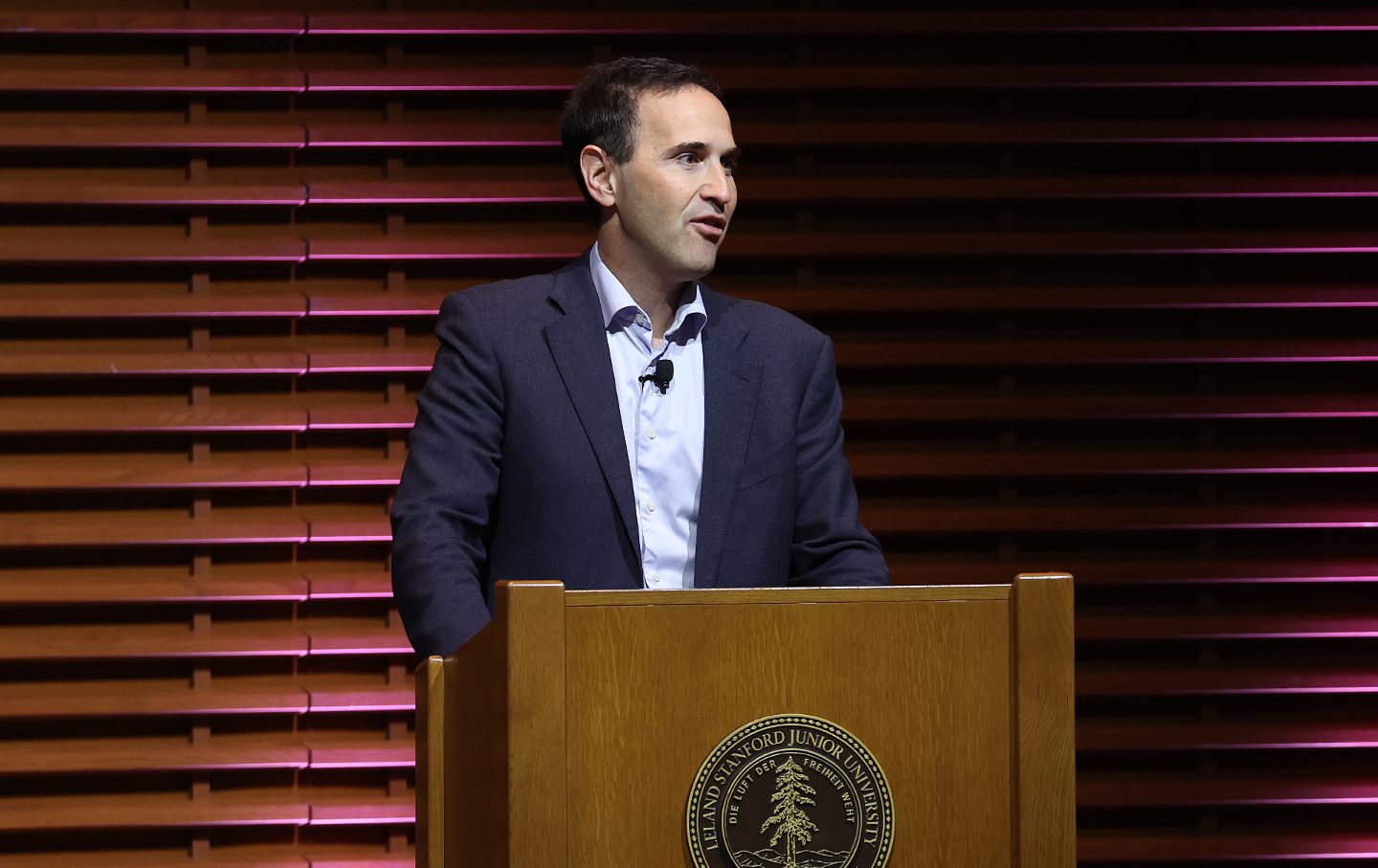
Stanford University president Jonathan Levin
(Justin Sullivan / Getty Images)Today, Stanford University is holding an all-day gathering on the Covid pandemic, with its new president making opening remarks. It’s the second such meeting at a prestigious university in recent months, after Johns Hopkins hosted a “symposium on health policy” in September. They may seem fine on the surface, but both events should be a source of embarrassment for the institutions involved. (I have a personal stake in the former gathering: I’m spending my time this fall at Stanford with a group of wonderful, truly talented researchers, who I hope do not get sprayed with the stink of this misbegotten affair.)
While the organization and funding for these two meetings isn’t explicitly linked, the cast of characters at both are eerily similar. They each feature a collection of well-known Covid contrarians: those who, in the early days of the pandemic thought we should “let ’er rip” and get as many people infected as possible, with a performative nod to protecting the vulnerable; suggested that vaccine and mask mandates were somehow akin to Nazi totalitarianism; told us not to worry about variants (“variants, schmariants,” as one of them remarked months before Delta and Omicron blasted their way through the US); and said we’d have herd immunity by April 2021.
If you want just one piece of evidence about the kind of cranks we’re talking about, consider this: A late addition to the Stanford meeting is a senior editor of the Epoch Times, a far-right publication that not only dabbles in Covid conspiracies but is a frequent purveyor of climate change denialism.
While the organizers have tried to add a few reasonable voices to the meeting, it doesn’t change the overall thrust of these gatherings. As former Texas governor Ann Richards said, “You can put lipstick and earrings on a hog and call it Monique, but it’s still a pig.”
Health reporters like Michael Hiltzik at the Los Angeles Times blew the whistle on the Stanford conference in mid-September, and others who have focused on debunking the pseudoscience of this crew have written about the meetings on both coasts. The faculty at both institutions who are pushed for and are behind these convocations have defended them on the grounds of academic freedom—a defense that, in our current era of freakouts over “cancel culture,” neither Stanford or Hopkins would have had an easy time overcoming. Chalk one up to the contrarians for putting these schools in an impossible situation—though that still does not explain why Stanford’s president feels the need to personally show up today.
The architects of these meetings come with bags and bags of right-wing funding, some of it laundered through think tanks and other institutions. They have met with Trump officials in the White House and guided Florida Governor Ron DeSantis on Covid-19 policy. Some of them even got a shout-out from Bret Stephens at The New York Times last week.
They whine on and on about how terribly they’ve been treated, but, far from being persecuted, they are celebrated on the right, even if the mainstream members of their professions have, time and time again, considered their ideas and roundly rejected them on their merits.
My question is: Why host these meetings now and in these venues?
Some have suggested this is about “auditioning” for the next Trump administration as much as it is trying to rewrite the history of the pandemic. Both are in part probably true. But if you zoom out and think about these meetings in the context of the right’s war on higher education, I believe the purpose becomes clearer.
These Covid contrarians—who have found little support for their views among their peers—have decided that the science has been turned into “a dogmatic tool of oppression” for rejecting them. In their minds they are Galileos against the church, and now they are tilting their fury against the institutions themselves. This tack is of course reminiscent of the right’s attacks on the universities as bastions of woke, left-wing ideology, which either need to be reformed (by hiring more conservative faculty) or gutted and rebuilt to their liking (e.g., New College of Florida).
In this light, these two meetings are about establishing a beachhead—building credibility in what many of the organizers would consider the liberal bastions of academia. If you cannot convince your colleagues of the worth of your arguments, then you can cry out that you’re being discriminated against for simply having “differing views.” But things don’t work like that in science: we don’t teach intelligent design alongside evolution, or alternative theories of the cause of AIDS. Supporters of those discredited ideas would say we need to “teach the controversy” and not be dogmatic, but there is no controversy to be had: the preponderance of the evidence supports evolution and HIV as the cause of AIDS. Similarly, many of the Covid contrarians’ favorite claims have withered in the sunlight of scientific scrutiny.
But just as the Federalist Society has established influence over law schools and the judiciary, the Covid contrarians and their supporters would like to do the same for medicine and public health, by mainstreaming their views—both in academic settings and then in public policy—by sheer brute force. They won’t give up, and they have the money and resources to continue their campaigns. Should former president Trump regain the White House, their fortunes will rise and these threats to academic integrity, and to the public health itself (through adoption of their views in practice) will go into overdrive.
And for anyone who thinks this is all academic, in mid-September, the surgeon general of Florida recommended against the use of mRNA Covid vaccines, just as we’re heading into respiratory virus season, endangering the lives of the residents of the state with quackery and pseudoscience. Of course, it’s the same Covid contrarians who have organized these meetings, who have been advising the DeSantis administration for several years now on pandemic policy. Shame on them.
Become a Sustaining Donor This September
Between the reemergence of right-wing red-baiting and Donald Trump’s use of the chilling National Security Presidential Memorandum–7 to criminalize left political organizing, we’re seeing McCarthyism reborn before our eyes.
This assault on democracy cannot be ignored or wished away. Resisting it requires bravery in the face of threats and repression, a steadfast commitment to the truth, and the unwavering belief that we can—and will—overcome this darkness.
We must have an independent media that sets the record straight, unearths corruption and abuses of power, and advances a politics of justice and dignity for all if we’re to win this fight.
That’s why I’m writing to you today. This September, The Nation needs to add 100 monthly donors to sustain our progressive journalism. Your contribution makes the next investigative report, the next truth-speaking column, and the next pathbreaking essay all possible.
I hope you’ll support our work with a recurring donation today. If you donate $10 or more a month, we’ll send you a brand new “Hands Off the Free Press!” sticker to recognise your commitment to our cause. Please, donate today.
Onward,
Katrina vanden Heuvel
Editor and Publisher, The Nation