Meta Has Suffered a Huge Blow—but the Reckoning Can’t End Here
The company has been forced to pay billions in fines and overhaul some of its most destructive practices. Hopefully there’s more where that came from.
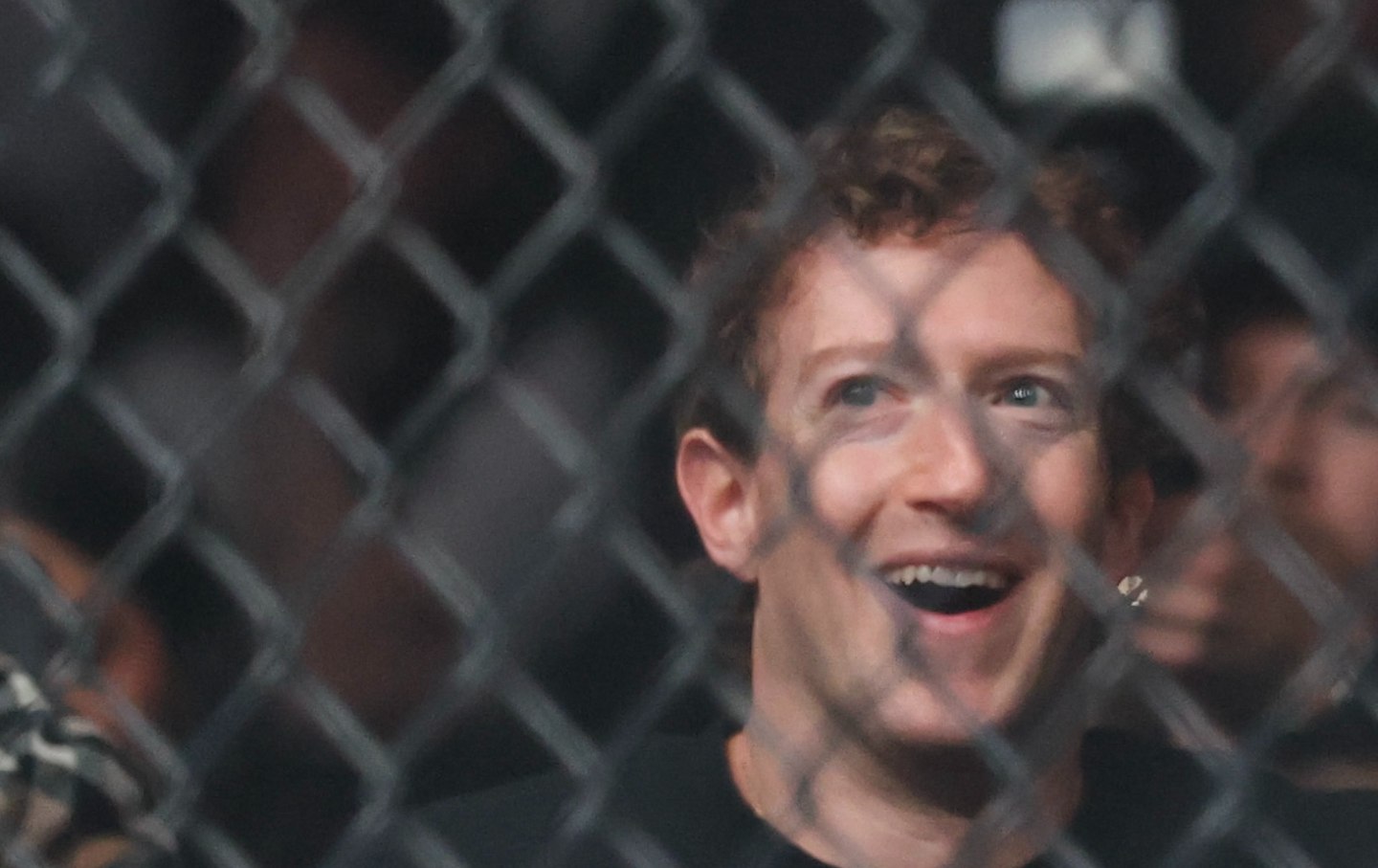
Mark Zuckerberg at T-Mobile Arena on March 07, 2026 in Las Vegas, Nevada.
(Sean M. Haffey / Getty Images)On Wednesday, eight days into a landmark social-media-addiction trial that hadn’t really been going its way, and facing the unenviable prospect of having to put its weirdo chief executive on the stand, Meta evidently decided to cut its losses, agreeing to pay out $17 billion to a coalition of 47 states and four additional jurisdictions (plus another $1 billion to Texas, which settled separately) to make the case go away. Meta also agreed to assorted changes to Facebook and Instagram that could make both platforms less wildly addictive and toxic to teens.
Given that Meta could have been on the hook for as much as several hundred billion dollars had it lost the case outright, investors not unreasonably concluded that an $18 billion solution was a pretty decent deal for the company, sending shares up modestly for the day.
Meta is trying to spin the settlement in a distinctly Meta-esque way, which is to say a thoroughly dishonest one. In an utterly surreal statement on Wednesday, the company claimed that the changes it is being forced to make are just another happy chapter in its “longstanding efforts to empower parents and support teens.” Never mind that Mark Zuckerberg has always bitterly resisted anything that might curtail engagement time on his platforms for the sake of safety. Forget that the company had tried no less than six times, over the course of three years, to have this court case thrown out. Pay no attention to the $2.4 billion Meta spent on legal proceedings in the second quarter of 2026 alone.
Nope! They’re making changes, basically, out of the goodness of their hearts. “Ensuring teens have a safe and productive experience on our platforms is an absolute imperative for Meta,” the statement declares, in flagrant contradiction to everything we know to be true about Meta. “We want to get this right for parents and teens, and that’s why we partnered with state attorneys general to set a new industry standard.” That’s right—Meta and the coalition of attorneys general aren’t adversaries; they’re basically pals! “We’re pleased to launch these new protections, and we’ll continue to work with parents, policymakers, and regulators around the world to further our shared goal of supporting teens and empowering parents online,” the statement continues. I feel as though I’ve stepped into Bizarro World.
As for the $18 billion the attorneys general extracted from Meta? Think of it as a sort of present, “which can be used to fund youth online safety initiatives, among other state priorities.”
Meta, the company that cares? Hardly. As former Facebook global public policy director Sarah Wynn-Williams has so persuasively argued in Careless People, her bestselling 2025 memoir of her time at the company then known as Facebook, Meta is actually a company that couldn’t care less.
As I think we all know, Facebook’s infamous slogan back in the day was “move fast and break things,” a phrase that for a time adorned omnipresent motivational posters in Facebook’s offices. In a 2009 interview, Zuckerberg told Business Insider that this was his “prime directive to his developers and team,” adding a sharper corollary that makes the callousness explicit: “Unless you are breaking stuff, you are not moving fast enough.” Nonetheless, Zuckerberg retired the slogan after several years, replacing it with the much less memorable “move fast with stable infrastructure.” (Yes, that was the real slogan.) He hadn’t changed his mind about the desirability of breaking things, nor was he trying to curtail social harms; he just wanted to reassure developers that he wouldn’t saddle them with broken code.
And in fact Facebook (and then Meta) had only just begun breaking things. For Zuckerberg, nothing seems to matter more than maximizing the level of engagement on his platforms. He seems willing to endorse almost any ethical shortcut that will drive clicks, and ultimately revenue. And when the company’s mistakes and oversights—whether driven by haste or greed or just plain carelessness— began to break things in the real world, Facebook and later Meta seemed less interested in fixing things than covering them up. For instance, Facebook didn’t care that its infrastructure enabled the sleazy political consultancy Cambridge Analytica to collect the personal information of tens of millions of Facebook users without their consent.
In 2017, Facebook decided to amp up engagement by algorithmically promoting posts that drew the most emotional reactions from users, turning what was then called its “news feed” into a curated buffet of rage bait and misinformation, in the process transforming countless boomers into budding conspiracy theorists. The company only got around to reverting the algorithm in 2020 but the damage was done; a certain degree of conspiratorial misinformation was baked into the platform. Now, of course, the site is overrun with AI slop that too many users think is real. In the most extreme example of the company’s carelessness, Facebook was so bizarrely lackadaisical in how it dealt with hate speech in Myanmar that it ultimately helped to foment a literal genocide.
Pedophiles, scam ads, “beauty” filters that inspire eating disorders: The history of Meta, from the Facebook days to the present, has been one ethical catastrophe after another. We can only hope that the company is ultimately nibbled to death by lawsuits, $18 billion at a time.