
New Hampshire Primary Voters Can Send Biden a Powerful Message About Gaza
A campaign to write in the word “cease-fire” seeks to pressure the administration to shift its policy.
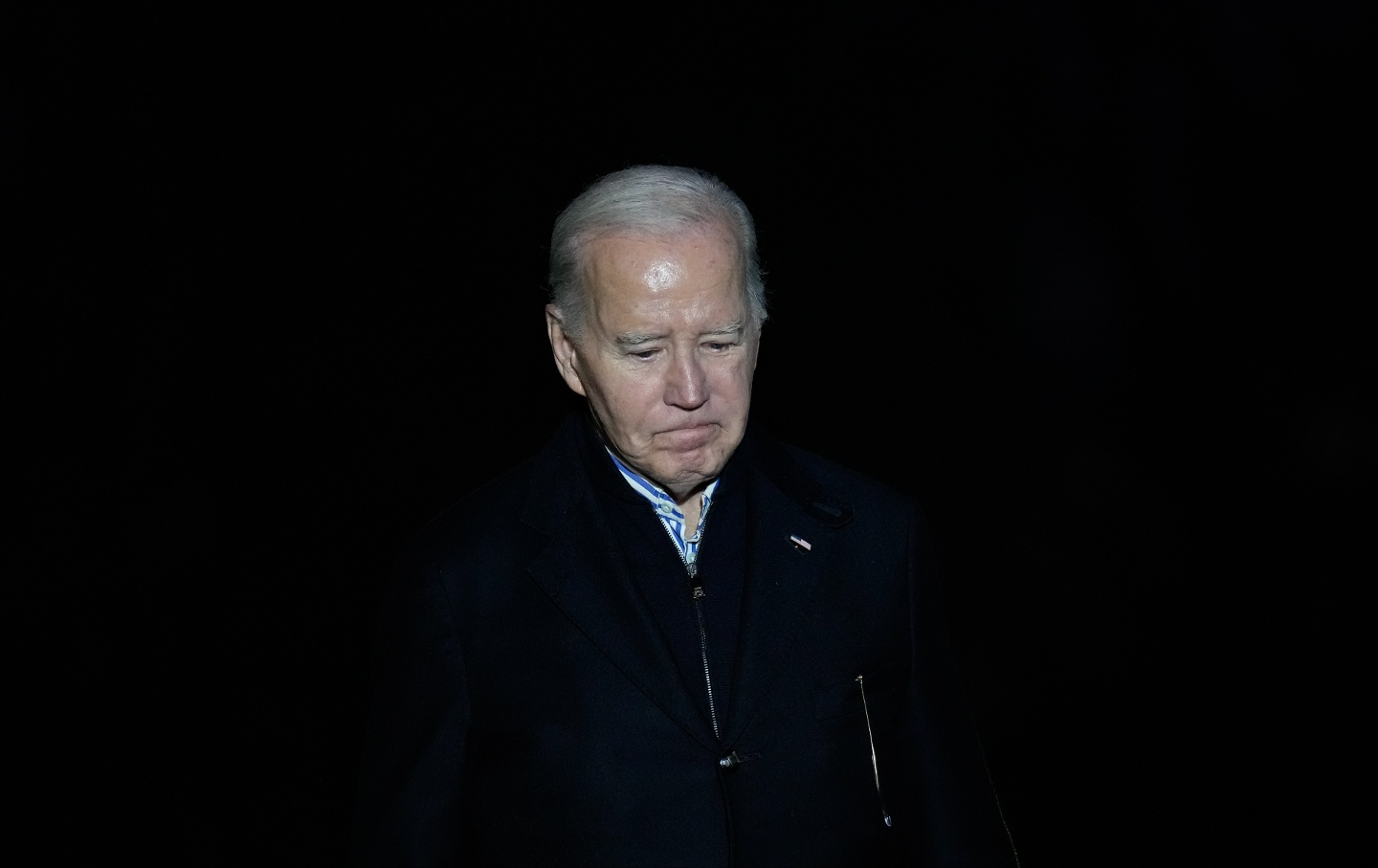
President Joe Biden returns to the White House December 20, 2023 in Washington, D.C.
(Drew Angerer / Getty Images)Andru Volinsky is a prominent New Hampshire Democrat. He served as a member of the state’s elected Executive Council, and nearly won the race to become the party’s gubernatorial nominee in 2020.
But on Tuesday, when New Hampshire holds its traditional first-in-the-nation presidential primary, Volinsky won’t be voting for President Biden. Instead, he will take his Democratic ballot, find the line for presidential write-ins, and print the word “cease-fire.”
“I’m not interested in replacing Biden,” says Volinsky, who expects that he will be voting for the president in November. “This is about getting a message to Biden about the urgent need for a cease-fire in Gaza.”
Volinsky won’t be alone. A grassroots movement has taken shape in the Granite State, one that’s urging voters in Tuesday’s primary to use their ballot to send a “cease-fire” signal in support of “de-escalation, humanitarian aid to Palestinians, and a just solution to the conflict in the Middle East.”
New Hampshire’s Vote Ceasefire campaign seeks to “draw attention to the urgent need to stop the violence in Palestine and the Middle East,” and let President Biden know that the United States must take action to end the killing in Gaza. And it’s gaining traction.
Organizers have been fielding calls from across the state and around the country. They’re spreading the word on social media and distributing signs that urge voters to take a pen to the polls and register their discontent with the administration’s support of Israeli Prime Minister Benjamin Netanyahu and the brutal assault on Gaza that has left more than 24,000 Palestinians dead, severely wounded tens of thousands, and displaced an estimated 1.9 million men, women, and children.
That assault on Gaza, which followed the October 7 Hamas attack on Israeli kibbutzim and a music festival, has sparked an international outcry. In the United States, it has inspired mass demonstrations by American Muslims, Jews, and Christians calling for an end to the violence. It has also sparked significant dissension within Biden’s Democratic Party, as close to 60 members of the House and four Democratic senators have expressed support for a cease-fire.
But the Biden administration has not shifted its stance on the war. It continues to provide military aid for the Israel Defense Forces, as well as to push for Congress to fund additional aid. It’s also kept providing diplomatic cover for Netanyahu’s government at the United Nations. That’s led to frustration in New Hampshire, where Biden will face the first test of his 2024 reelection campaign.
This year’s New Hampshire primary is not sanctioned by the Democratic National Committee, and Biden’s name will not appear on the ballot with those of his most prominent challengers, author and 2020 presidential candidate Marianne Williamson and US Representative Dean Phillips (D-Minn.). But there’s an active and reasonably well-financed campaign to write in Biden’s name. If there is a substantial anti-Biden vote in the primary, it’s likely to get the president’s attention—and that of Democratic strategists and pundits—at a point when his approval ratings are already low.
So the Vote Ceasefire campaign is seizing the opening. “We have tried to make our voices heard in Washington. We have been ignored,” says Morgan Brown, a New Hampshire activist who was busy organizing efforts to distribute posters, yard signs and flyers urging New Hampshire Democrats to send their message to Biden by writing in “Cease-fire.” “The problem is the Democratic Party only cares about their votes, and that’s why we need to take this to the polls.”
The write-in vote won’t be the only way to send a pro-cease-fire message. Williamson, who for months has been calling for de-escalation and who has made a progressive critique of the Biden administration’s foreign policy central to her candidacy, says the best way to pressure Biden is by backing her, “a candidate who has demanded a ceasefire from the very beginning.” Phillips has also indicated that he’s supportive of a cease-fire.
“I think that the combined votes for the ‘cease-fire’ write-in and for Marianne Williamson could send a powerful message on Tuesday,” says Alan Minsky, the executive director of Progressive Democrats of America. “I don’t know if it will be as big as the Eugene McCarthy ’68 anti-war vote, but people will certainly notice if activists can point to a significant number of votes that were cast in protest against the administration’s approach on Gaza.”
A 1968 challenge to Democratic President Lyndon Johnson by McCarthy, an anti-war senator from Minnesota, drew support from 42 of New Hampshire Democratic primary voters and shocked the political world, beginning a chain of events that would eventually lead to Johnson’s decision to end his reelection bid. Few are predicting that the grassroots Vote Ceasefire campaign, which started late and has almost no money behind it, will get that level of support. But if a significant percentage of New Hampshire voters write in “cease-fire,” it is likely that Vote Ceasefire campaigning will spread beyond the border of the Granite State, says Minsky.
“I think you could see efforts like this in a number of other primary states,” says the head of PDA, which has historically been one of the most anti-war groupings working within the Democratic Party.
Volinsky says organizers of the New Hampshire campaign have already heard from activists in other states. But, for now, they are focused on spreading the word to New Hampshire voters, and on making sure that the national media takes note if there is a large “cease-fire” vote on Tuesday. To that end, campaigners will be closely monitoring the count of so-called “scattered” write-in votes to ensure that their message is delivered to the White House
“The Biden administration was able to veto the United Nations resolution on a humanitarian cease-fire,” says Volinsky. “But on Tuesday they won’t be able to veto my vote demanding a cease-fire.”
More from The Nation
We Don’t Need an Autopsy to Tell Us the Democrats Failed on Gaza We Don’t Need an Autopsy to Tell Us the Democrats Failed on Gaza
The DNC is allegedly hiding a report showing that Kamala Harris’s Gaza policy helped cost her the 2024 election. But that report won’t tell us anything we don’t already know.
Texas’s Senate Primary Has Already Made History—and It’s Not Over Yet Texas’s Senate Primary Has Already Made History—and It’s Not Over Yet
Democratic nominee James Talarico is getting national media attention, but the real story is sky-high voter turnout, even amid GOP bids to suppress balloting
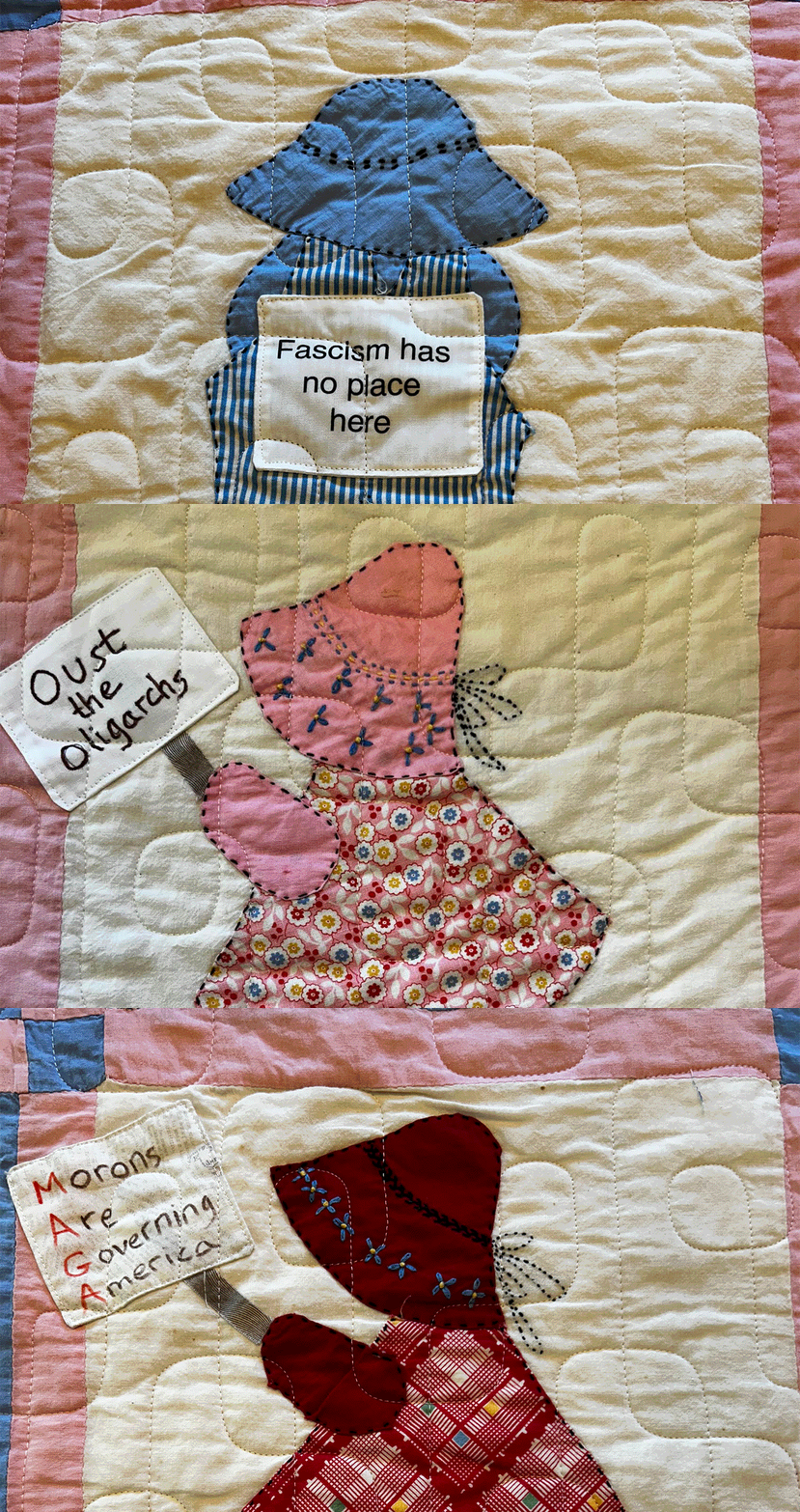
Quilted Messages Quilted Messages
Sunbonnets carrying not-so-sunny truths.
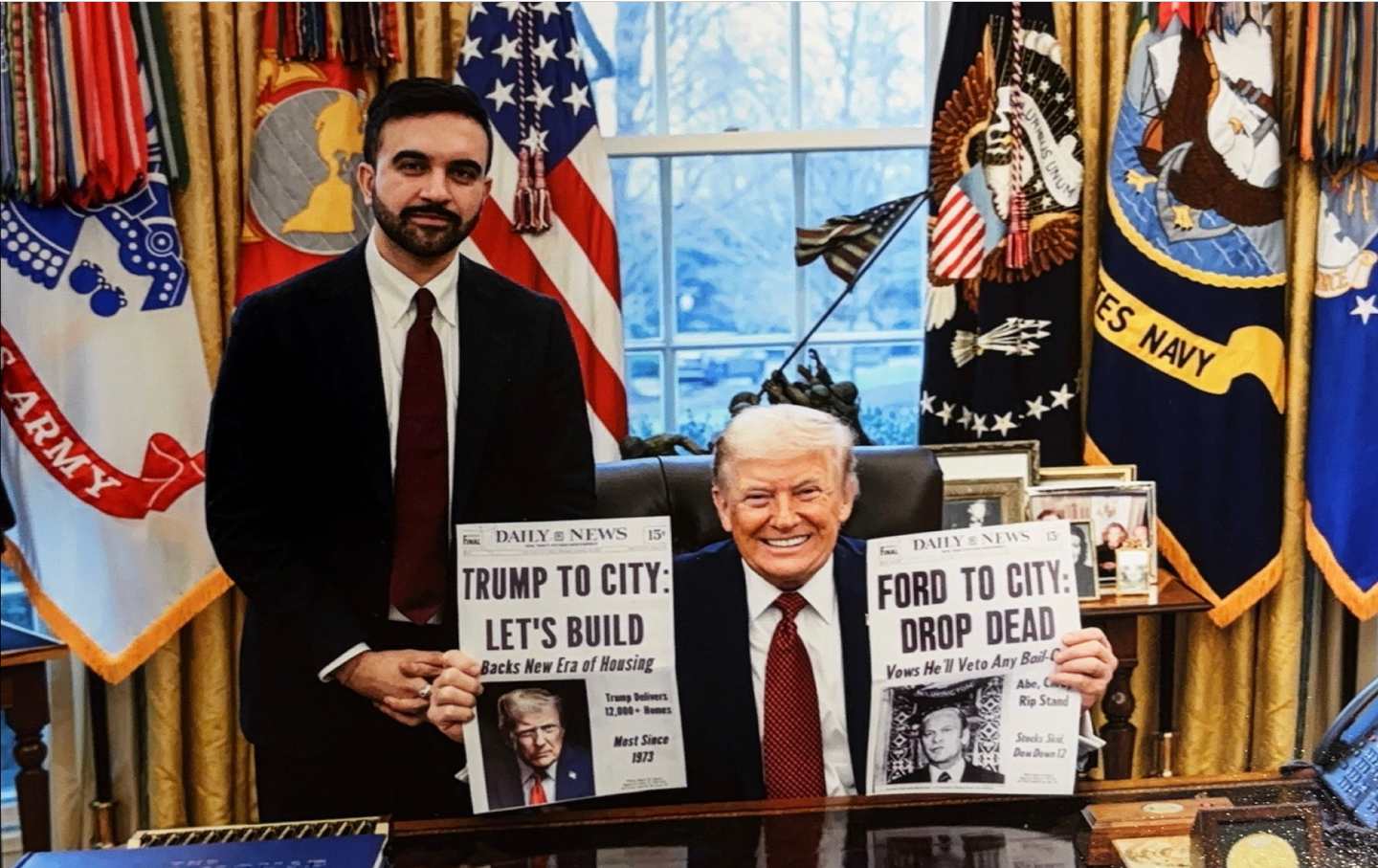
How the Theatrics of Mamdani’s Trump Meeting Backfired How the Theatrics of Mamdani’s Trump Meeting Backfired
By pandering to the president’s vanity, the New York mayor reinforced Trump’s image as a strongman commanding deference—an especially bad look on the eve of Trump’s war with Iran

Students in New York Are Going Hungry. How Can Mamdani Help? Students in New York Are Going Hungry. How Can Mamdani Help?
With plans for city-owned grocery stores and a focus on affordability, the new mayoral administration offers fresh hopes of successfully confronting the food crisis among students...

We Are the Fire That Melts the ICE We Are the Fire That Melts the ICE
Oaxaca, Mexico, street art.

