
USAID Is Not Worth Blindly Defending
Trump and Musk’s war against the agency should be opposed on principle. But we can’t overlook that USAID has been a destructive arm of American imperialism for decades.
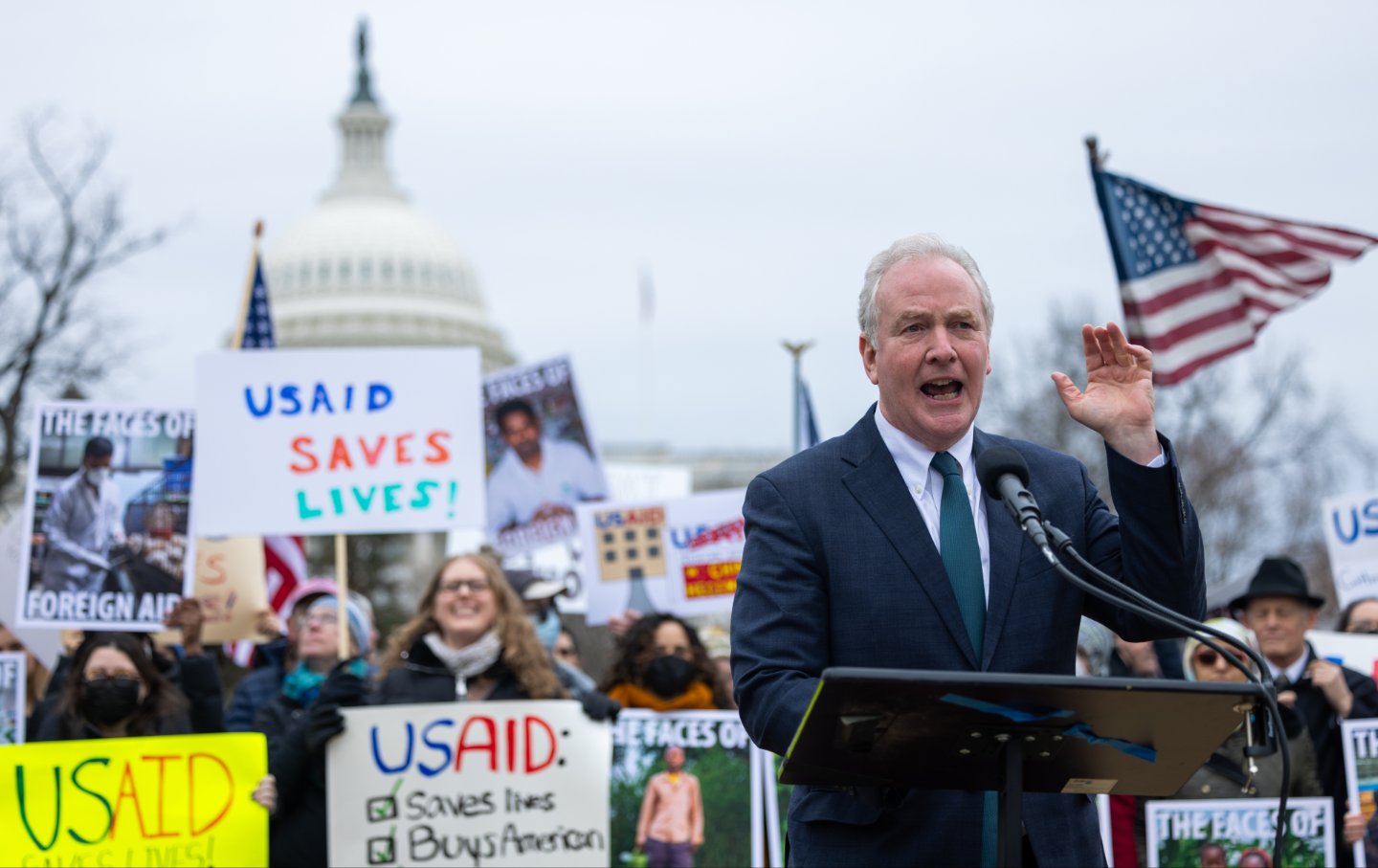
Senator Chris Van Hollen (D-MD) speaks at a rally outside of the US Capitol in support of USAID in Washington, DC, on February 5, 2025.
(Nathan Posner / Anadolu via Getty Images)Earlier this month, congressional Democrats held one of their first major protests of the new Trump era. Prominent Democratic lawmakers rallied outside the shuttered headquarters of the United States Agency for International Development (USAID), which is in the process of being decimated by Elon Musk and President Donald Trump. The politicians railed against Musk’s efforts to remove almost all of the agency’s staffers and denounced the takeover of the federal government by a single private citizen.
But as they rushed to USAID’s defense, the Democrats also inadvertently highlighted an uncomfortable truth about the agency: that, for decades, it has been an essential arm of American imperialism that often serves as a tool for regime change, election interference, and the destabilization of countries around the world.
Democratic Senator Chris Murphy of Connecticut, for instance, boasted that USAID “fights terrorist groups all across this world,” chases China around the globe to make sure it doesn’t “monopolize contracts for critical minerals and port infrastructure,” and “supports freedom fighters” wherever they may be (and however the US defines that term). Maryland Senator Chris Van Hollen, meanwhile, called the effort to shut down USAID “an absolute gift to our adversaries, to Russia, to China, to Iran and others.”
Samantha Power, the former director of USAID, also laid bare how the US weaponizes humanitarian aid by masking its strategic interests with the rhetoric of altruism. In a recent New York Times op-ed, Power acknowledged that the agency has “generated vast stores of political capital” in the countries where it works and uses its leverage to bolster American financial interests, like helping a US company “enter a new market.” New Jersey Senator Andy Kim, a Democrat who once worked for USAID, was even more blunt. “USAID isn’t charity,” he wrote in a post on X. “It’s a foreign policy tool with bipartisan origins that is critical in this dangerous global environment. Gutting it means gutting our ability to compete and keep America safe.”
To be clear, Musk’s attempt to destroy the agency isn’t cause for celebration. Musk and Trump’s assault on USAID, and the federal bureaucracy writ large, is illegal and undemocratic. Lifesaving programs around the world have been thrown into chaos, including health and HIV services and nearly half a billion dollars worth of food aid that is now at risk of spoilage. The Trump administration is also planning to absorb the agency into the State Department, which would be far worse. (These moves are already facing a series of legal challenges.)
Musk has tried to justify the crackdown from several different angles, pushing conspiracies, misleading claims, and outright falsehoods. He has called USAID “a viper’s nest of radical-left marxists who hate America” and a “criminal organization.” He lied about Power’s salary at the agency and falsely claimed that USAID funds Politico. At one point, Musk even boosted a post calling the agency “the most gigantic global terror organization in history,” appearing to refer to USAID’s well-documented role as a vehicle for regime change and political interference.
But this is not a principled anti-imperialist reckoning. In 2020, Musk declared in a since-deleted tweet: “We will coup whoever we want! Deal with it,” referring to the US-backed coup against Evo Morales in Bolivia—a country rich in lithium and other minerals essential to the production of Musk’s electric vehicles.
But all the same, there is no reason to blindly defend USAID.
It’s no secret that the agency is an extension of America’s aggressive foreign policy. It was first created by President John F. Kennedy in 1961 to counter influence from the Soviet Union during the Cold War. In the decades since, USAID has played a key role in efforts designed to crush socialist movements, foment regime change, and safeguard US corporate interests worldwide. It has also been remarkably ineffective at actual development. Most USAID spending goes strictly to American companies or sources, and not local organizations, which actively undermines development in these nations and keeps the vulnerable dependent on the United States. The US government is also known to use the agency to fund and disguise its propaganda outlets abroad. In 2010, for example, USAID reportedly led a project to secretly create a “Cuban Twitter” aimed at stirring unrest to trigger regime change.
The US frequently condemns groups like the Houthis, who have accused the US and Israel of using humanitarian aid as a cover for espionage, attacking aid convoys, or blocking humanitarian access. But how can Washington claim the moral high ground when its own officials are proudly admitting that its aid programs are strategic tools rather than purely humanitarian ones? If US aid is often a trojan horse for broader geopolitical ambitions, then it’s reasonable for any foreign government to be skeptical of US-linked aid programs. The moment the US openly ties aid to mineral extraction, political manipulation, and its global power plays, that aid ceases to be benevolent in any meaningful sense.
The Carnegie Endowment for International Peace, a DC-based think tank, recently published a piece on the “heartlessness” of the Trump administration’s upheaval of American foreign aid. Yet in making their case in defense of USAID, they confirm what critics of US foreign policy have long argued.
“The idea that U.S. foreign aid has been some sort of festival of generous charity disconnected from U.S. interests is laughable,” wrote Thomas Carothers, director of Carnegie’s Democracy, Conflict, and Governance Program. “Just look at the list of the largest recipients of U.S. aid—it is no coincidence they are almost all security partners or countries of security concern.”
He’s right. And while it’s important for people to stand against Musk and Trump’s illegal assault on the government, it’s equally important not to pretend that these institutions are beacons of decency. We need to move beyond these simplistic binaries and push for a model that rejects both Trump’s fascism and the kind of imperialism that has defined USAID for so long.
Support independent journalism that does not fall in line
Even before February 28, the reasons for Donald Trump’s imploding approval rating were abundantly clear: untrammeled corruption and personal enrichment to the tune of billions of dollars during an affordability crisis, a foreign policy guided only by his own derelict sense of morality, and the deployment of a murderous campaign of occupation, detention, and deportation on American streets.
Now an undeclared, unauthorized, unpopular, and unconstitutional war of aggression against Iran has spread like wildfire through the region and into Europe. A new “forever war”—with an ever-increasing likelihood of American troops on the ground—may very well be upon us.
As we’ve seen over and over, this administration uses lies, misdirection, and attempts to flood the zone to justify its abuses of power at home and abroad. Just as Trump, Marco Rubio, and Pete Hegseth offer erratic and contradictory rationales for the attacks on Iran, the administration is also spreading the lie that the upcoming midterm elections are under threat from noncitizens on voter rolls. When these lies go unchecked, they become the basis for further authoritarian encroachment and war.
In these dark times, independent journalism is uniquely able to uncover the falsehoods that threaten our republic—and civilians around the world—and shine a bright light on the truth.
The Nation’s experienced team of writers, editors, and fact-checkers understands the scale of what we’re up against and the urgency with which we have to act. That’s why we’re publishing critical reporting and analysis of the war on Iran, ICE violence at home, new forms of voter suppression emerging in the courts, and much more.
But this journalism is possible only with your support.
This March, The Nation needs to raise $50,000 to ensure that we have the resources for reporting and analysis that sets the record straight and empowers people of conscience to organize. Will you donate today?
More from The Nation
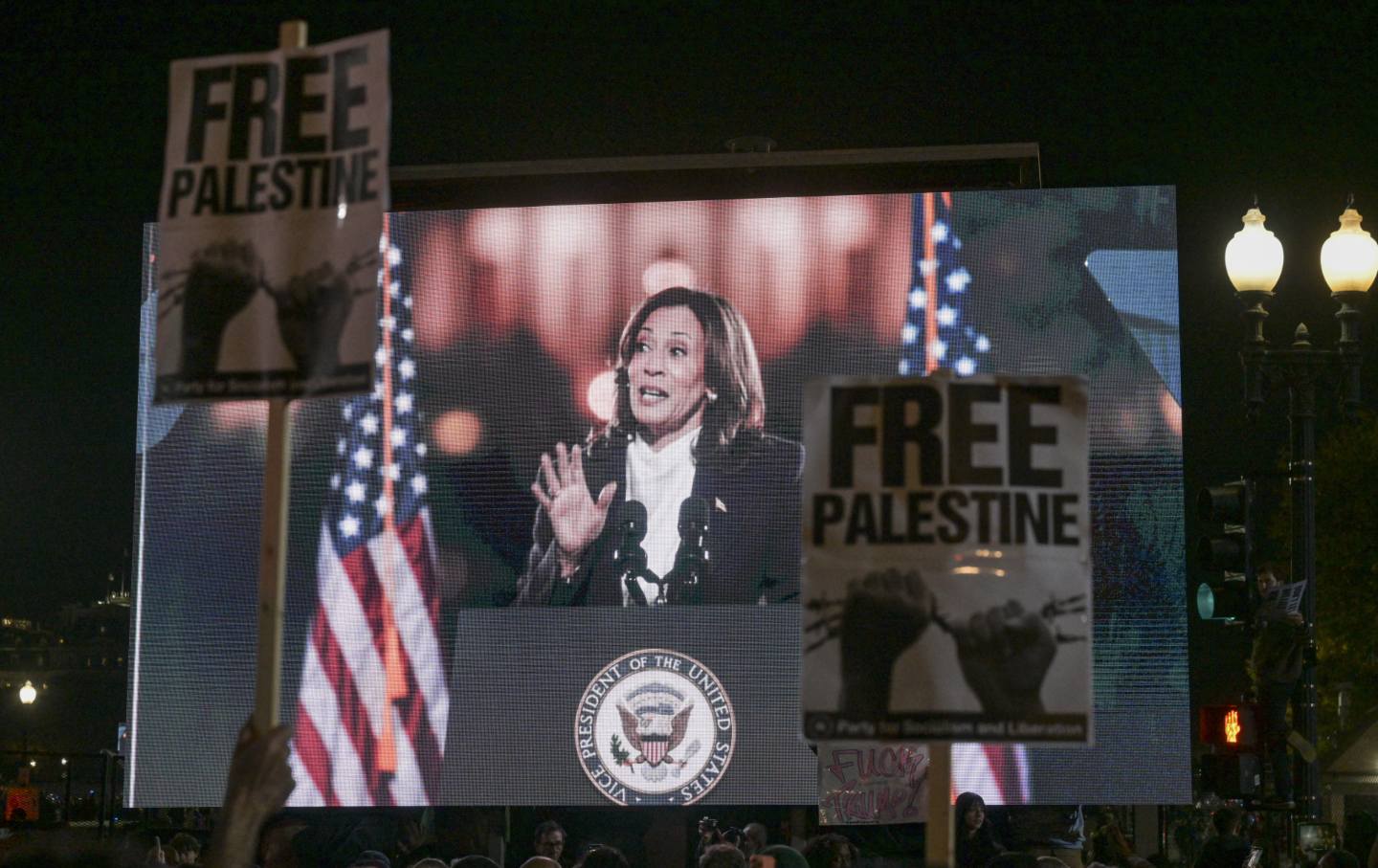
We Don’t Need an Autopsy to Tell Us the Democrats Failed on Gaza We Don’t Need an Autopsy to Tell Us the Democrats Failed on Gaza
The DNC is allegedly hiding a report showing that Kamala Harris’s Gaza policy helped cost her the 2024 election. But that report won’t tell us anything we don’t already know.
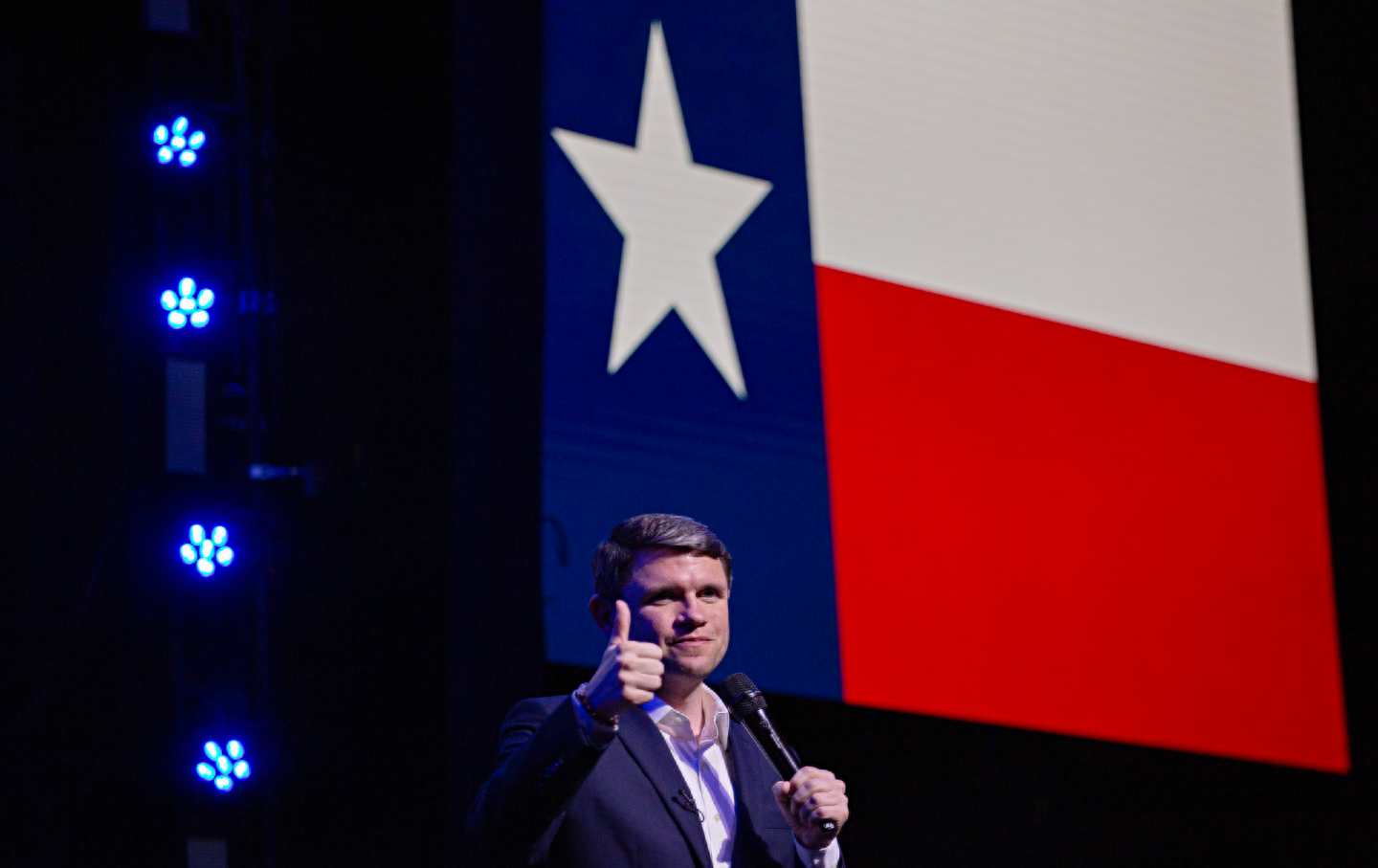
Texas’s Senate Primary Has Already Made History—and It’s Not Over Yet Texas’s Senate Primary Has Already Made History—and It’s Not Over Yet
Democratic nominee James Talarico is getting national media attention, but the real story is sky-high voter turnout, even amid GOP bids to suppress balloting
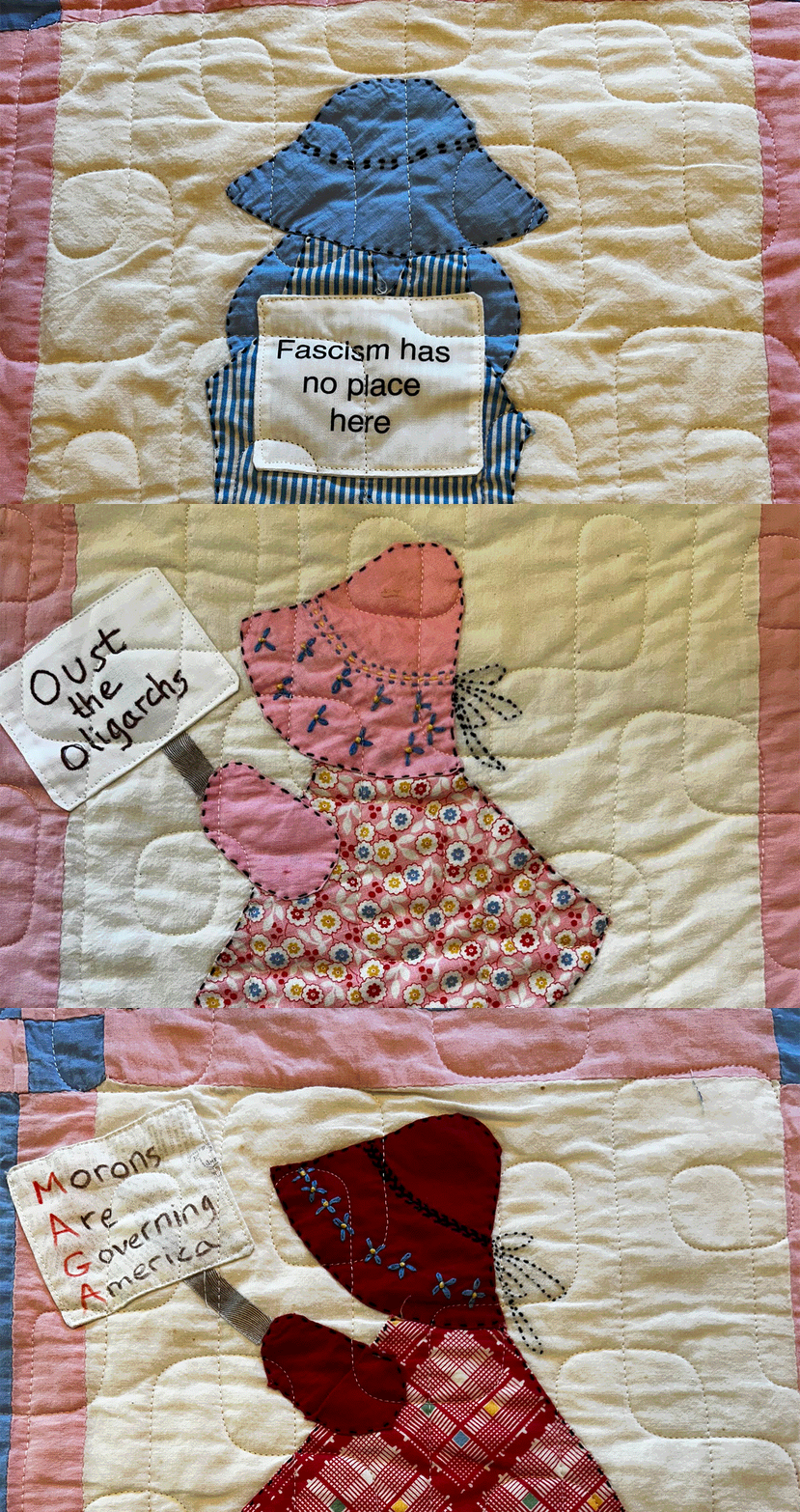
Quilted Messages Quilted Messages
Sunbonnets carrying not-so-sunny truths.
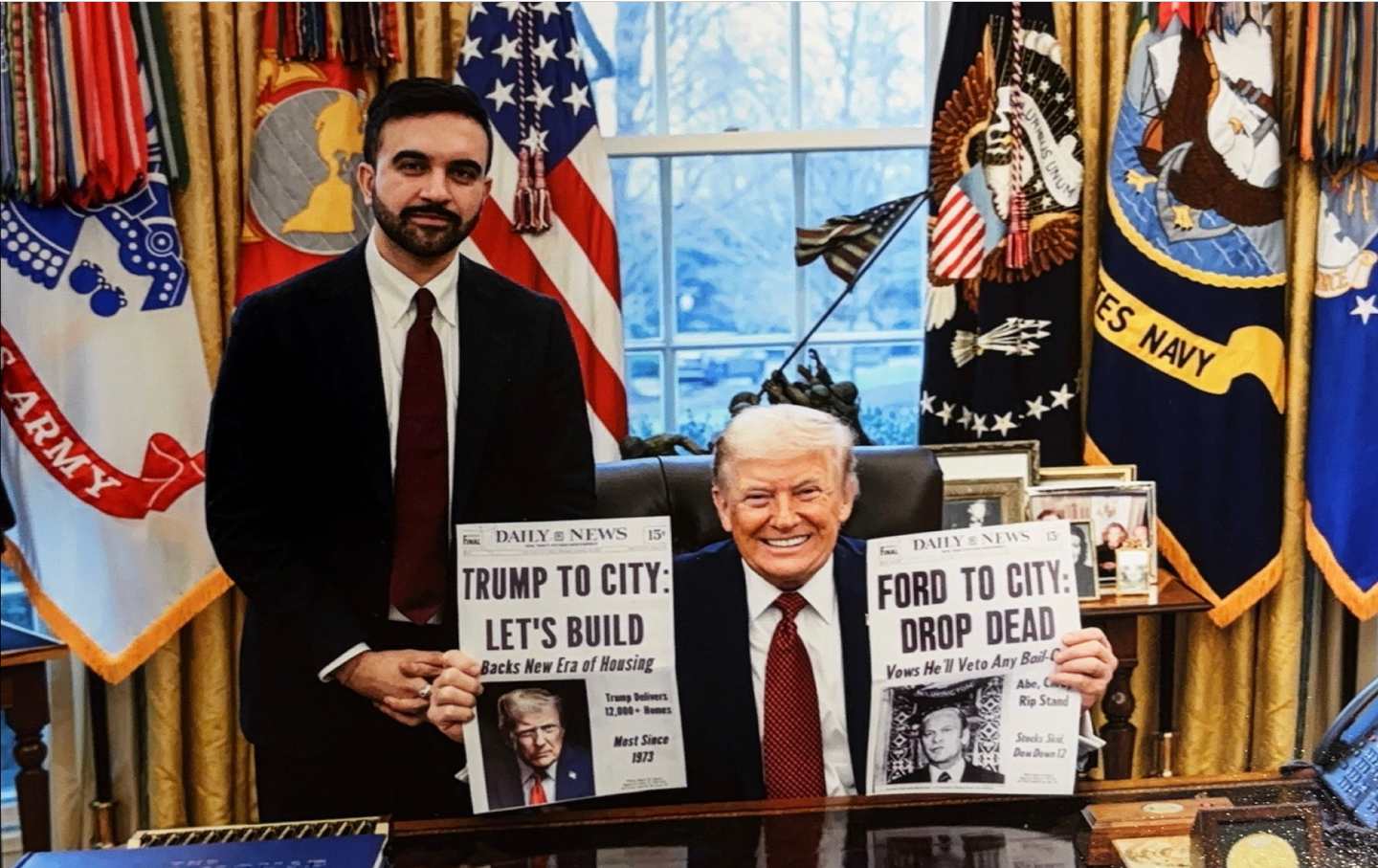
How the Theatrics of Mamdani’s Trump Meeting Backfired How the Theatrics of Mamdani’s Trump Meeting Backfired
By pandering to the president’s vanity, the New York mayor reinforced Trump’s image as a strongman commanding deference—an especially bad look on the eve of Trump’s war with Iran

Students in New York Are Going Hungry. How Can Mamdani Help? Students in New York Are Going Hungry. How Can Mamdani Help?
With plans for city-owned grocery stores and a focus on affordability, the new mayoral administration offers fresh hopes of successfully confronting the food crisis among students...
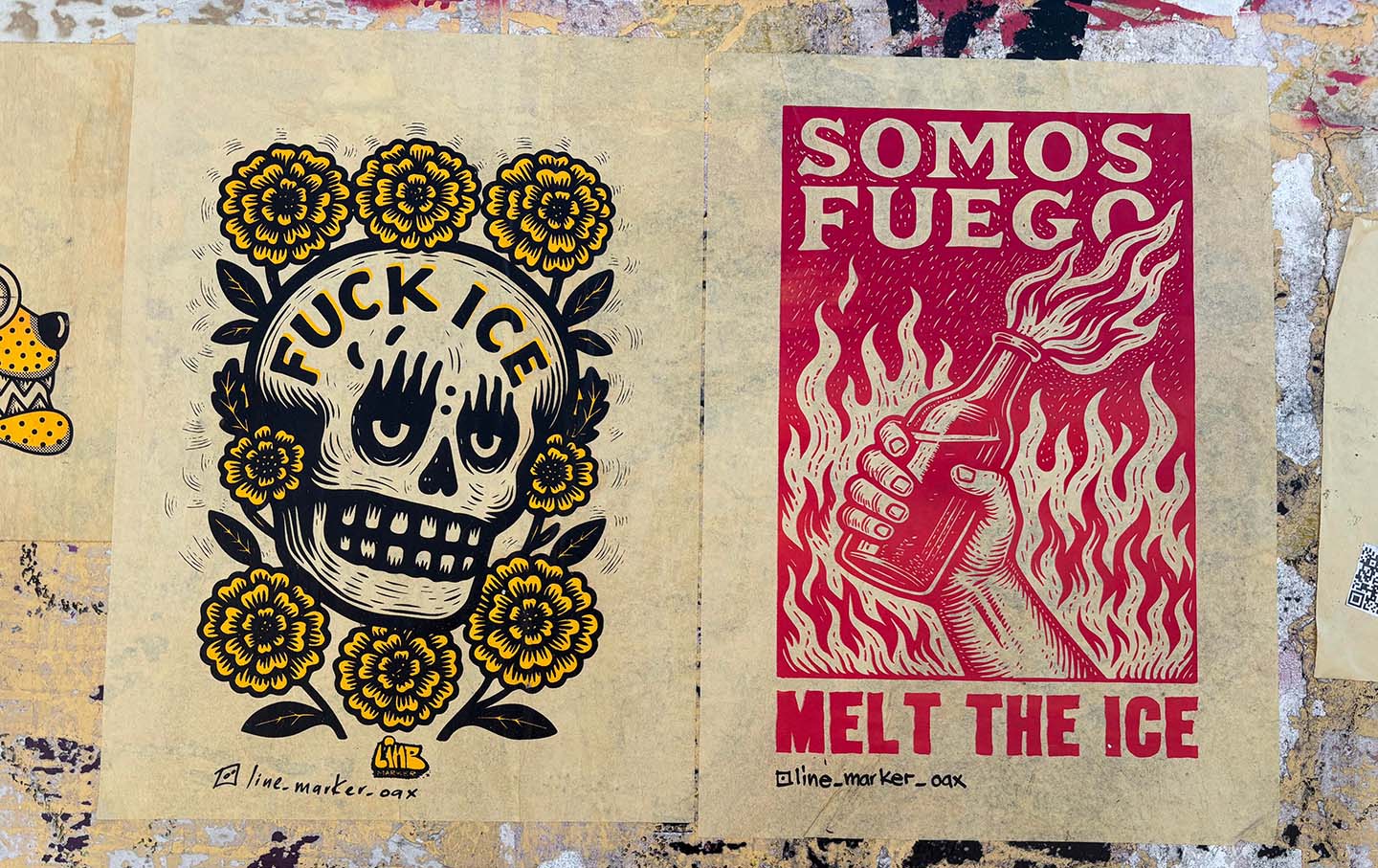
We Are the Fire That Melts the ICE We Are the Fire That Melts the ICE
Oaxaca, Mexico, street art.

