
Trump’s War on Public Lands Moves to its Second Phase
The Great Firing continues—and the next round of layoffs will reveal how much power over public lands the Trump administration will cede to corporations.
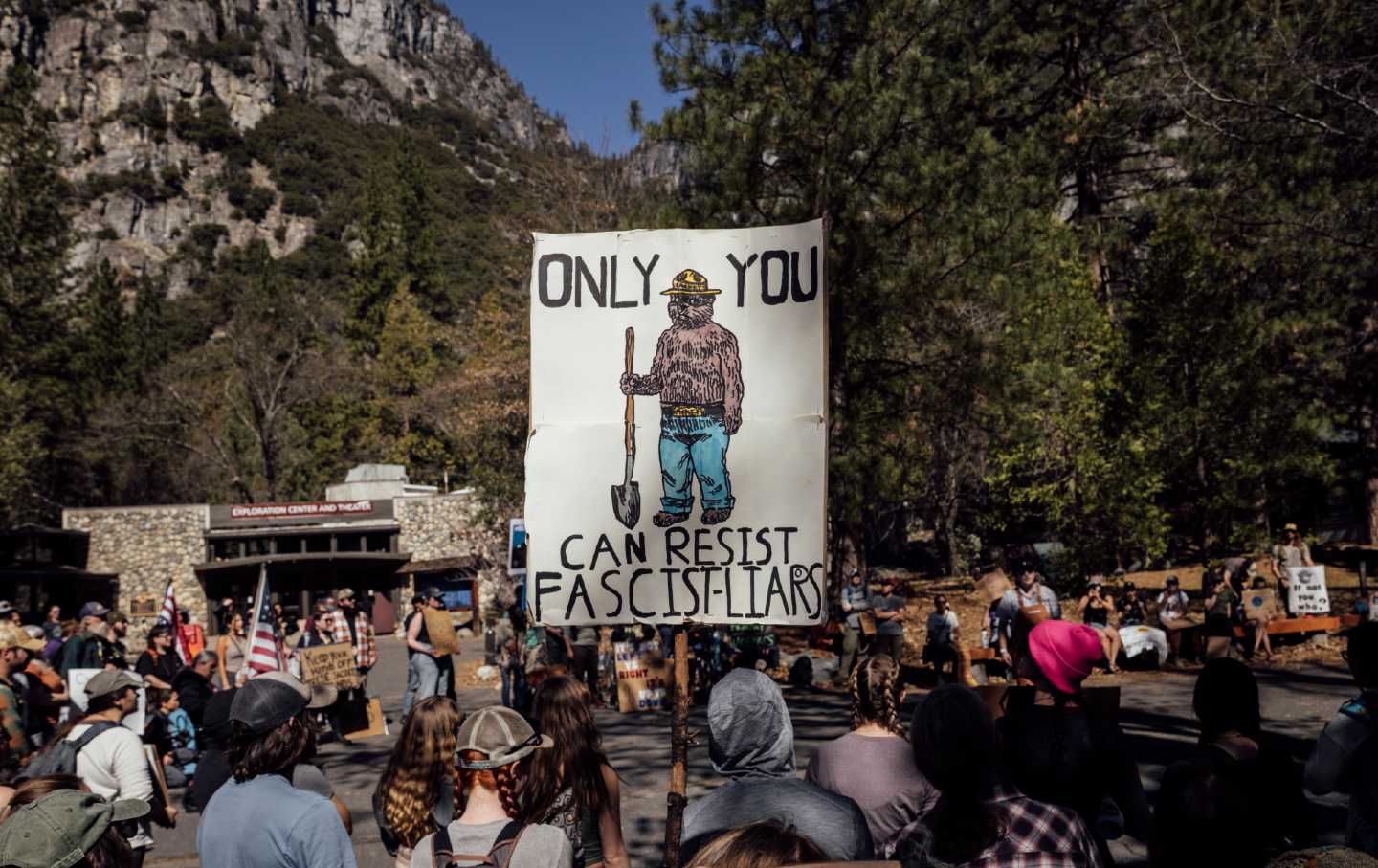
Protesters hold signs during a national day of action against Trump administration’s mass firing of National Park Service employees at Yosemite National Park, California, on March 1, 2025.
(Stephen Lam / San Francisco Chronicle via Getty Images)
An oft-heard description of the tens of thousands of federal job cuts that the Department of Government Efficiency made over the last several weeks is “cutting muscle when they mean to cut fat.” In the case of the US Forest Service, National Park Service, and other public land agencies, Elon Musk’s department sliced through to the bone. But after a round of likely illegal mass firings, DOGE is now turning to increasingly legal—and effective—ways of undermining essential services. DOGE directed all federal agencies to submit plans for Reduction in Force (RIF) layoffs by March 13. But as of March 17, USFS and several other agencies had not submitted their plans. This time, Musk is clearing the way to lawfully dismiss workers.
On March 12, under orders from the Merit Systems Protection Board, the US Department of Agriculture reinstated the 6,000 probationary workers it had fired. These workers, mostly from the ranks of the Forest Service, included a large portion of the country’s backup firefighters who serve in the wildland fire “militia” when needed. DOGE hastily determined that probationary employees, including career civil servants who had been promoted to new positions within the last year or two, would be a target. The reinstatement of these employees within the Forest Service (with back pay) was a result of the haphazard tactics that have defined the first months of the Trump administration.
But the Great Firing continues. The next wave of RIF layoffs will give us a glimpse into how far DOGE and the Trump administration will go to cede power to corporations and shirk its responsibility to manage the country’s public lands.
The United States’ vast network of federal public lands are supported and maintained by public servants who, on budgets totaling less than 0.5 percent of total federal spending for the USFS and the Bureau of Land Management combined, care for and protect more than 430 million acres of the country’s most precious ecosystems. Removing federal employees from their jobs prevents the functions that keep the land intact. From clearing downed trees from trails and campgrounds to ensuring that all land uses comply with federal laws, public lands employees are the backbone of “America’s best idea.”
Gregg Bafundo, who was laid off last month from his position as lead wilderness ranger for the Okanogan-Wenatchee National Forest in Washington State, was nearing his 11th season as a ranger. Last year, he was promoted to the lead position, initiating a one-year probationary period. Bafundo applied to the wilderness ranger position through a veteran preference program after a career in the Marine Corps. When he was considering what to do after the military, he asked himself “‘Gregg, when you were 8 years old, what did you want to do with your life?’ Well, I wanted to be a Marine, and I checked that box. What else? I wanted to be a park ranger.”
At work, Bafundo assisted on search-and-rescue operations, led a team of rangers that maintained trails and public-use sites, and educated visitors about safe and responsible wilderness recreation. For him, despite living in a trailer away from home during the field season and the regular missions to haul out human feces by helicopter-load from popular areas near Leavenworth, the job was a dream. “Working in public service and working for the federal government is an opportunity, regardless of race, creed, or orientation,” he told me. “It gives [an] opportunity for everyone to succeed.” As of March 17, five days after the USDA said the reinstatements would take effect, Bafundo had not heard anything from his former employer. Even if he is hired back, it doesn’t mean his job is secure. He said in a text message, “RIFs are on the horizon.”
The mass layoffs clear the way for for-profit extraction to go on unsupervised and in increasingly destructive ways. If conservatives get their way, public land will be sold into private hands so it can be mined, logged, drilled, and walled off however corporations and the ultra-wealthy see fit. The public’s access could be revoked and the land destroyed. Trump’s secretary of the interior, Doug Burgum, who has deep financial ties to oil-industry tycoons and a history of suing the department he now runs over its environmental decisions, believes public lands are, foremost, a line item on the country’s “balance sheet.”
On his first full day in office, Burgum stripped environmental protections from public lands, reopening many to oil and gas drilling. Then, in a flurry of executive and secretarial orders, Trump and Burgum brought oil, gas, timber, and mineral extraction back to the forefront of land management, and returned climate change (which government scientists aren’t allowed to talk about anymore) to the sidelines. Days later, thousands of federal employees learned that their jobs would no longer exist.
These actions are a part of an effort to end public land ownership at the national level. While it seems that Forest Service employees have been reinstated, many at the Department of Fish and Wildlife, Bureau of Land Management, and other agencies remain jobless, their positions unfilled. And all federal agencies faced a deadline to submit detailed plans to cut their workforces last Thursday, though only some did so.
Firing workers who steward public land makes it easier to carry out an extractive agenda on that land in two ways. First, hazardous and illegal activity that breaks laws like the Environmental Protection Act or the Endangered Species Act can go on without oversight or checks to prevent irreversible harm.
Second, as land previously maintained by public employees falls into disrepair, the prospect of private maintenance and ownership will begin to look more favorable, said Teal Lehto, a conservation advocate with the nonprofit Resources Legacy Fund. Lehto told me there is a fundamental gap in the public’s understanding of federal land. The problem, she said, is the false idea that there are only two ways to govern public land: by “mutually agreed-upon mutual coercion—basically laws—or privatization.” In reality, most public land management involves local actors, like rangers and biologists, using their specialized knowledge to do what is best for the land and its inhabitants, balancing the interests and needs of fish, plants, trees, and humans. “If you make that coercion so ineffective that the resource is being managed into detriment,” Lehto said, “people will entertain the idea of privatization.”
Lehto uses her Instagram and TikTok account @WesternWaterGirl’s tens of thousands of followers to promote public land conservation and responsible land stewardship. In early March, she helped organize a protest at the San Juan National Forest Service headquarters in Durango, Colorado. Despite a blizzard, more than 200 people showed up, she said. Like her, they were angry. At the time, no fired employees had been reinstated.
The attacks on public lands didn’t begin with Trump, Musk, or Burgum. Republican politicians have long favored defunding public land and privatizing it, by resource leasing, land swaps, or outright selloff. “It’s not a new thing [for public lands] to be underfunded and understaffed,” said Arianna Knight, the former wilderness trails supervisor in the Custer-Gallatin National Forest. “We have been for 50 years.”
Popular
“swipe left below to view more authors”Swipe →Until mid-February, Knight managed almost 800 miles of trails in her district, as well as a team of trail workers and all other wilderness trail projects. She began working on the trail crew for the Ranger District seven years ago, and about 21 months ago, she was promoted to head the crew, a bump that came with a two-year probationary period. She, like an estimated 3,300 of the more than 4,000 United States Forest Service employees fired in February, was a qualified wildland firefighter with a “red card,” meaning that she and her crew stepped up to fight wildfires that threatened her district and nearby forests.
Her district, she said, has not only lost its wilderness trail crew—which last year alone cleared more than 4,000 downed trees from recreation trails—but also most of its backup firefighters with local topographical and ecological knowledge. As of March 12, Knight had also not heard anything from her supervisors about reinstatement. Her district, she noted, was primarily funded through front-country fee sites like campgrounds and parking areas, costing taxpayers almost nothing to maintain access and facilities. Like the targeting of probationary employees, many of the firing decisions are hardly “efficient.”
With fewer staffers in the field, it becomes difficult to ensure that projects like timber thinning are following the law. In the case of timber projects on National Forest land, Bafundo told me, there likely won’t be anyone to mark the larger trees that should be left standing. Loggers, he said, rely on rangers and other government employees to mark “leave trees,” and if those trees don’t get marked, all the large trees—which can fetch thousands of dollars at the sawmill—will get cut down, creating hazardous conditions for wildfires and landslides, and destroying essential habitat. Without proper government oversight, private extraction and commercial activity could ravage huge swaths of the United States. Mining pollution already chokes public land across the country, and oil drilling is known to compromise water safety in vulnerable ecosystems and communities.
In Oregon’s Deschutes and Malheur National Forests, ensuring that forestry projects followed the law was an essential part of the job for Caroline Beshears, a wildlife biologist who was also fired last month. Like Bafundo and Knight, she has heard nothing about reinstatement beyond the USDA’s public press release. Beshears, who stressed her love for public land and her commitment to access for all, worked on habitat reconstruction and long-term monitoring projects. She also worked on the Malheur grazing program, whereby cattle ranchers with permits can responsibly graze animals on public land for a tiny fraction of the cost of owning that land. If that land is abused or sold off, as the House signaled it was open to in January, the grazing system would disappear. With it, one of many public benefits of common ownership. Some of the people making these decisions, she said, are “really disconnected from nature. All they see are dollar signs. I’ve never looked at a mountain range and said, ‘Wow, I want to stripmine that.’”
Several laid-off workers told me that what fossil fuel–compromised politicians and efficiency-crazed zealots fail to realize is that public lands aren’t a discrete, investment-style good that the country owns. Taking care of the land provides a service to everyone, whether they make use of it or not, and the value of that service is not easy to quantify. Compromising public land is a one-way path trod by the shortsighted and money-hungry, at an incalculable expense to the rest of us.
What’s easy to see is that once the land is taken away, either through neglect or sale, it will contribute to the inequality in access to a clean and healthy environment. As Bafundo told me, “Our public lands are the great equalizer.”
Support independent journalism that does not fall in line
Even before February 28, the reasons for Donald Trump’s imploding approval rating were abundantly clear: untrammeled corruption and personal enrichment to the tune of billions of dollars during an affordability crisis, a foreign policy guided only by his own derelict sense of morality, and the deployment of a murderous campaign of occupation, detention, and deportation on American streets.
Now an undeclared, unauthorized, unpopular, and unconstitutional war of aggression against Iran has spread like wildfire through the region and into Europe. A new “forever war”—with an ever-increasing likelihood of American troops on the ground—may very well be upon us.
As we’ve seen over and over, this administration uses lies, misdirection, and attempts to flood the zone to justify its abuses of power at home and abroad. Just as Trump, Marco Rubio, and Pete Hegseth offer erratic and contradictory rationales for the attacks on Iran, the administration is also spreading the lie that the upcoming midterm elections are under threat from noncitizens on voter rolls. When these lies go unchecked, they become the basis for further authoritarian encroachment and war.
In these dark times, independent journalism is uniquely able to uncover the falsehoods that threaten our republic—and civilians around the world—and shine a bright light on the truth.
The Nation’s experienced team of writers, editors, and fact-checkers understands the scale of what we’re up against and the urgency with which we have to act. That’s why we’re publishing critical reporting and analysis of the war on Iran, ICE violence at home, new forms of voter suppression emerging in the courts, and much more.
But this journalism is possible only with your support.
This March, The Nation needs to raise $50,000 to ensure that we have the resources for reporting and analysis that sets the record straight and empowers people of conscience to organize. Will you donate today?
More from The Nation
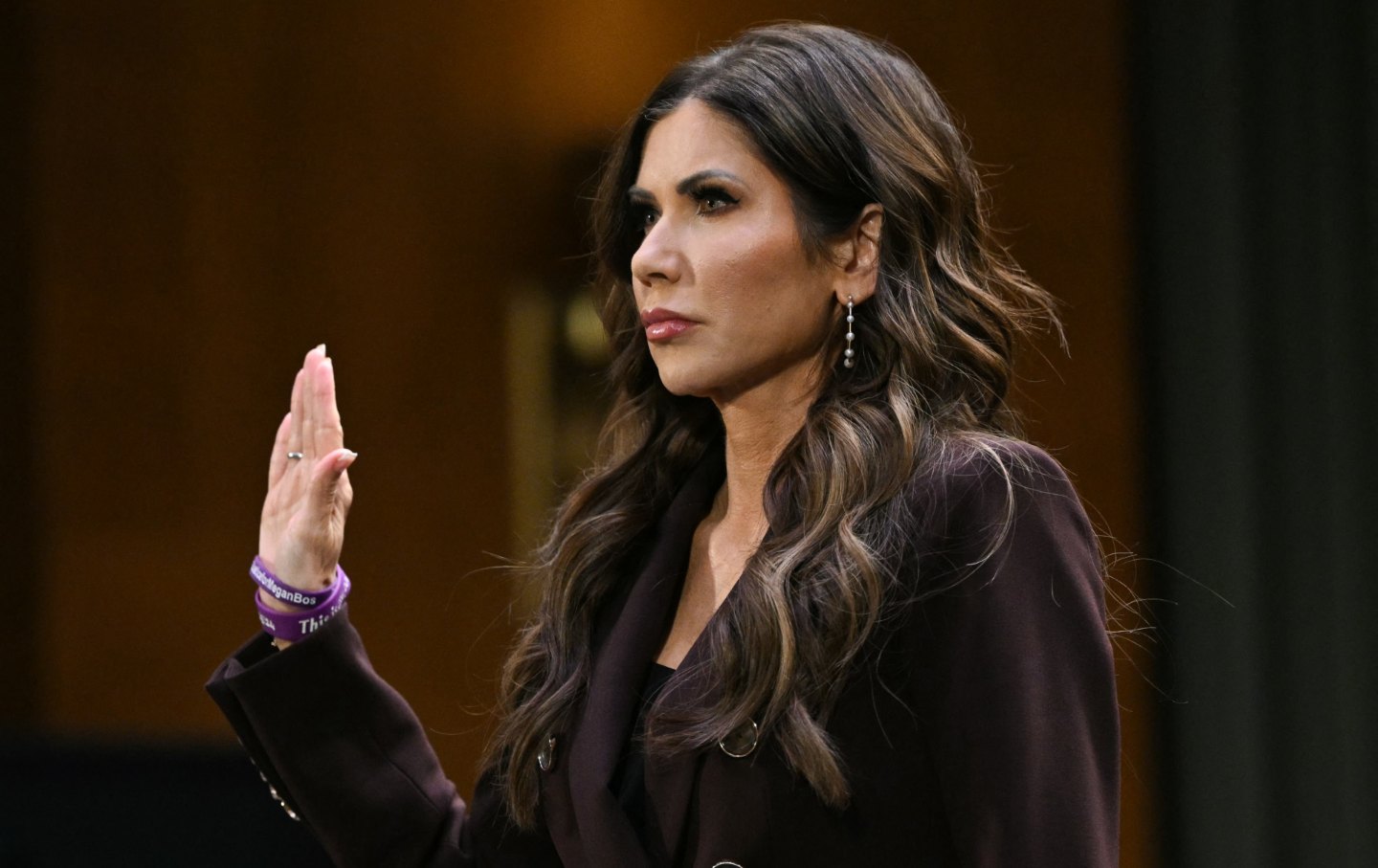
Celebrate Kristi Noem’s Firing. But Keep Protesting ICE. Celebrate Kristi Noem’s Firing. But Keep Protesting ICE.
Finally, someone in the administration is paying for their cruelty and incompetence.

We Don’t Need an Autopsy to Tell Us the Democrats Failed on Gaza We Don’t Need an Autopsy to Tell Us the Democrats Failed on Gaza
The DNC is allegedly hiding a report showing that Kamala Harris’s Gaza policy helped cost her the 2024 election. But that report won’t tell us anything we don’t already know.

Texas’s Senate Primary Has Already Made History—and It’s Not Over Yet Texas’s Senate Primary Has Already Made History—and It’s Not Over Yet
Democratic nominee James Talarico is getting national media attention, but the real story is sky-high voter turnout, even amid GOP bids to suppress balloting
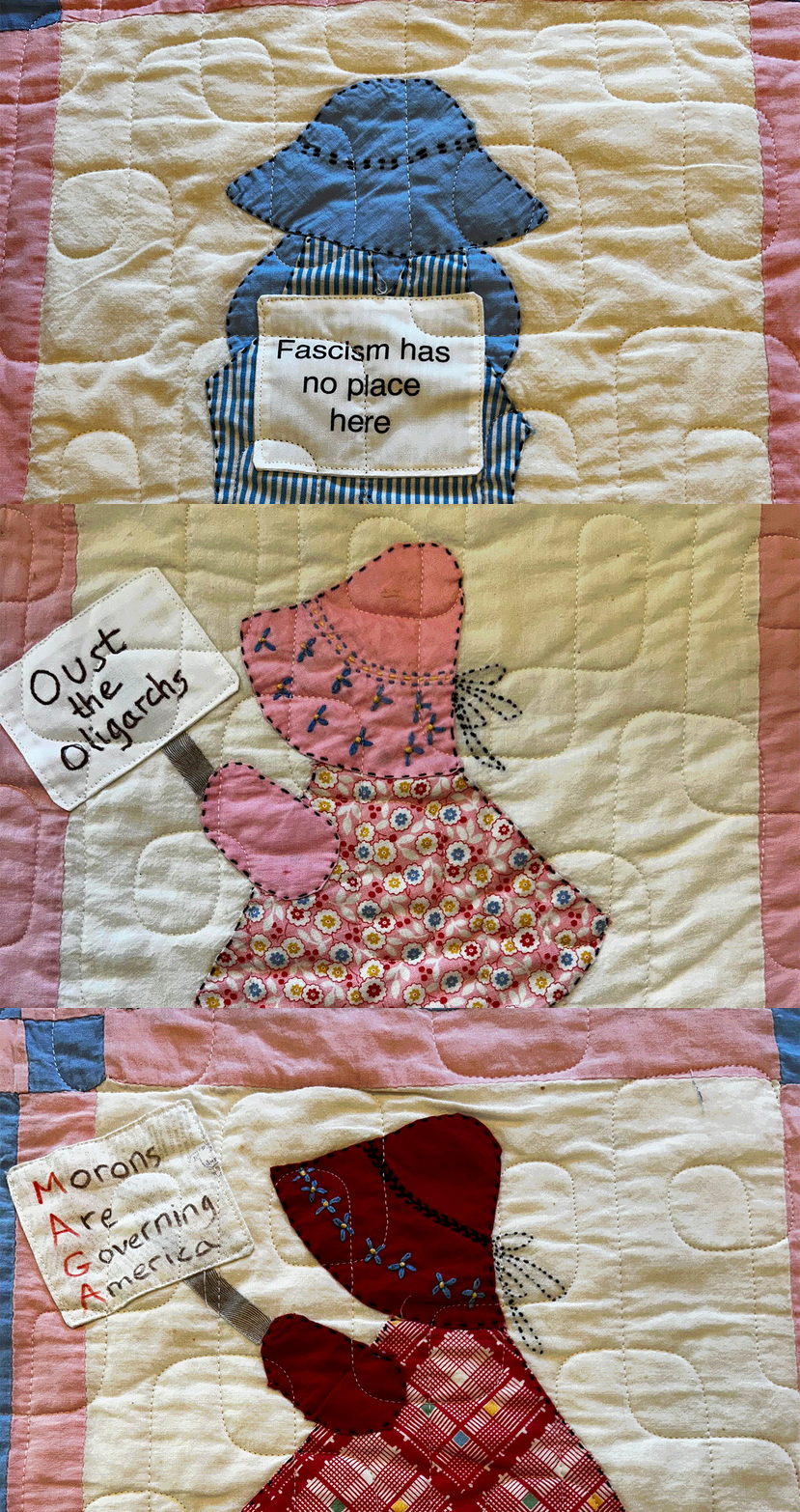
Quilted Messages Quilted Messages
Sunbonnets carrying not-so-sunny truths.
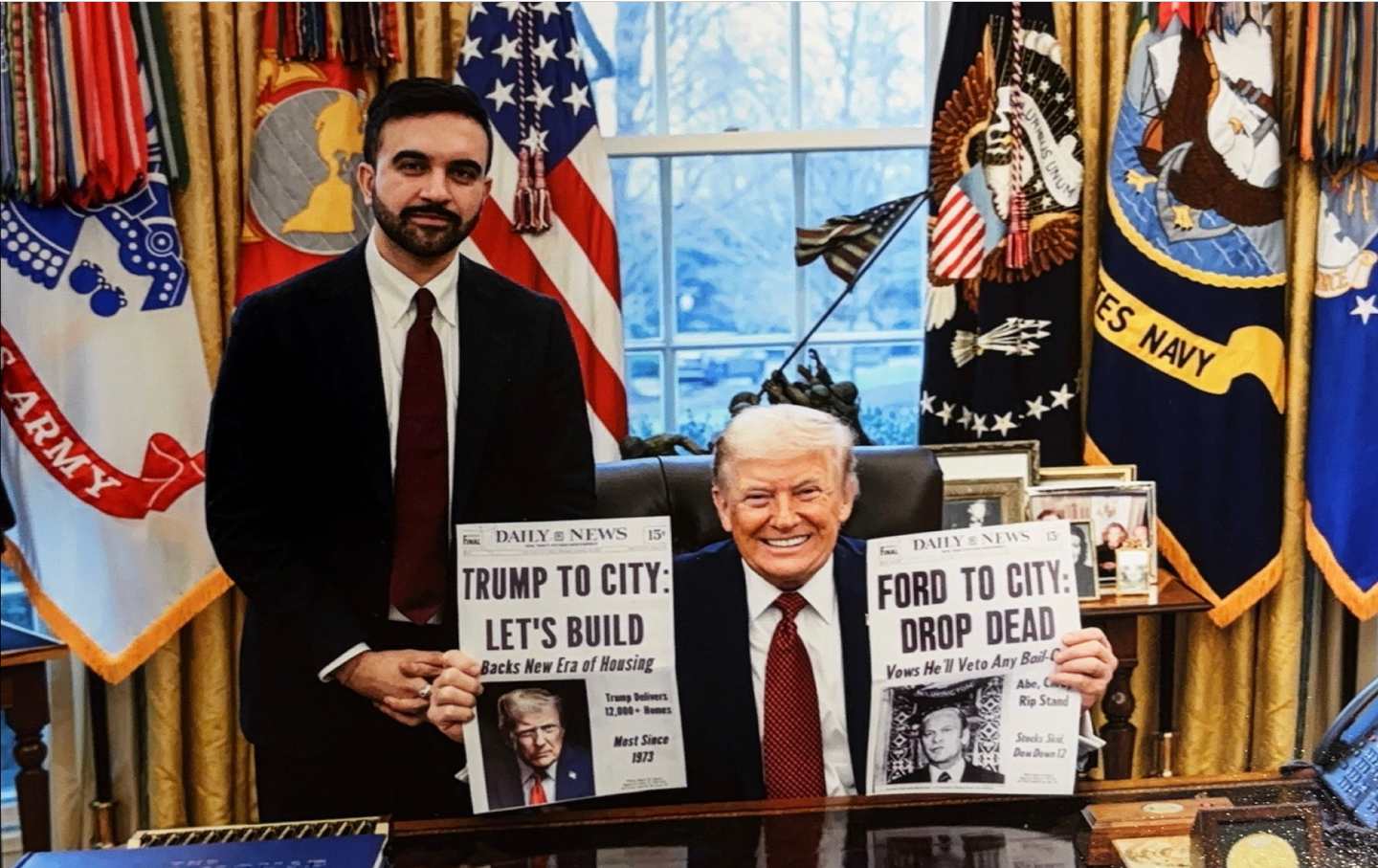
How the Theatrics of Mamdani’s Trump Meeting Backfired How the Theatrics of Mamdani’s Trump Meeting Backfired
By pandering to the president’s vanity, the New York mayor reinforced Trump’s image as a strongman commanding deference—an especially bad look on the eve of Trump’s war with Iran

Students in New York Are Going Hungry. How Can Mamdani Help? Students in New York Are Going Hungry. How Can Mamdani Help?
With plans for city-owned grocery stores and a focus on affordability, the new mayoral administration offers fresh hopes of successfully confronting the food crisis among students...

