
The Press Has the Trump Campaign’s E-mails. Why Haven’t We Seen Them?
The media went berserk over Hillary Clinton’s leaked e-mails in 2016. But when Trump campaign messages leaked this year, standards changed.
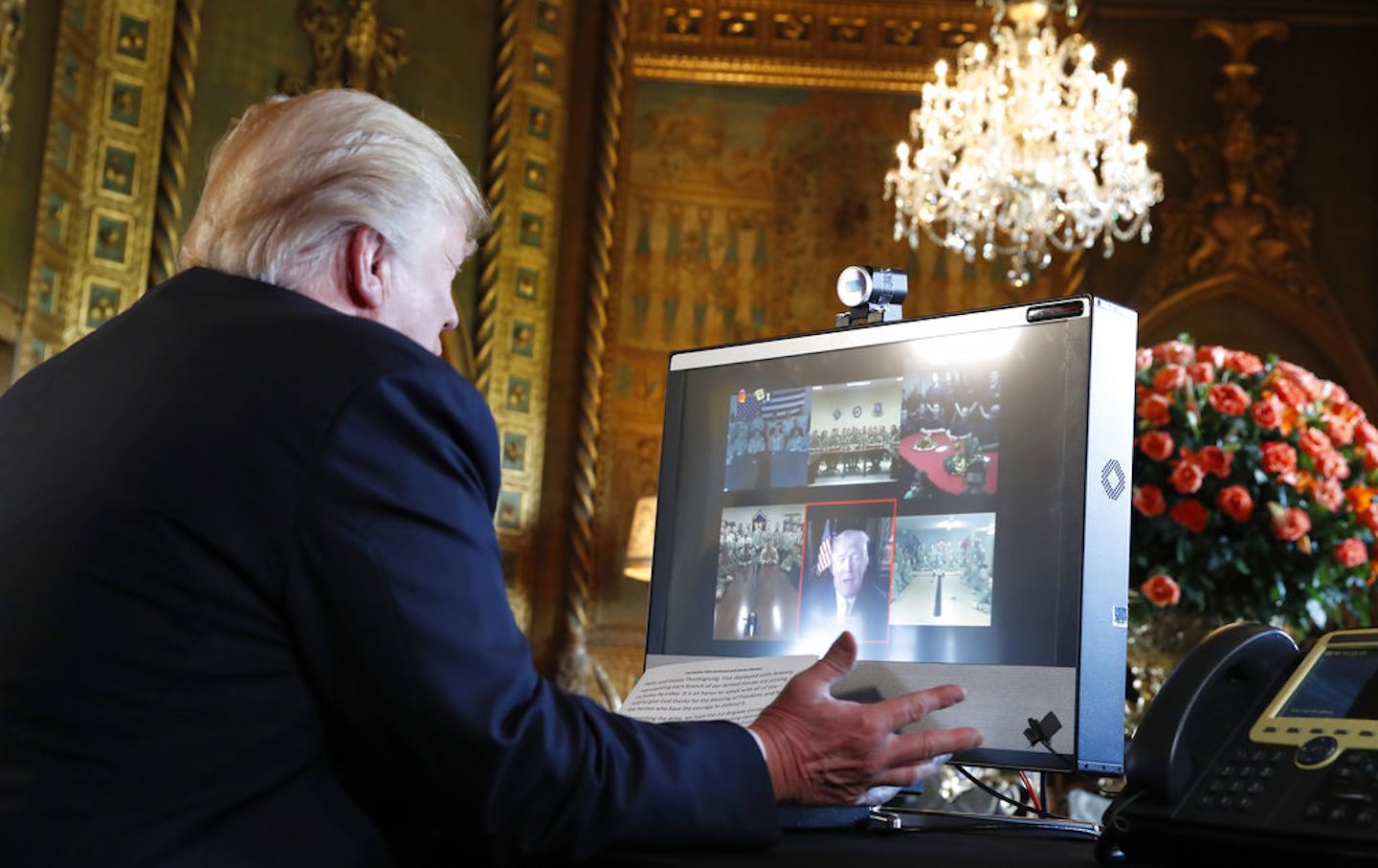
President Donald Trump speaks with troops via video conference at Mar-a-Lago, on Thanksgiving, Thursday, November 23, 2017, in Palm Beach, Florida.
(Alex Brandon / AP Photo)The 2024 presidential campaign has seemed in many ways like a reprise of 2016, but with the lead coordinates reversed. Donald Trump’s MAGA-fied GOP now is the sclerotic establishment force—slow to adapt to changed circumstances, hidebound in its signature policy obsessions, and tone-deaf to challenges in the social media sphere. Meanwhile, the Harris-Walz ticket is capitalizing on the race’s movement energy, drawing historic crowd sizes at its rallies, developing resonant campaign themes, and perfecting nimble attack strategies on the fly.
It seems fitting, then, that the race’s first big media saga involves a reported hack of Trump campaign e-mails—the mirror image of the 2016 Wikileaks dump of communications stolen from the servers of the Democratic National Committee. In a surreal twist, Trump campaign flack Steven Cheung warned would-be publishers of the leaked documents that “any media or news outlet reprinting documents or internal communications are doing the bidding of America’s enemies.” Suffice it to say that this was not the Trump campaign’s view of the Wikileaks dump.
Initial reports about the hack indicate that it may have originated from Iran, and that Harris campaign documents were also compromised. The FBI says that it has launched an investigation into the leak. Yet the most noteworthy thing about the story has been the media’s own response—or rather, non-response. Politico, The New York Times, and The Washington Post all received materials from the hack, and have apparently confirmed their authenticity. But all these outlets have only reported on the fact of the document release, not its contents, which are only referenced in exceedingly general and vague language.
The leak evidently includes a full vetting dossier on Trump’s running mate, JD Vance, along with portions of a similar candidate review for Vance’s erstwhile rival for the second spot on the ticket, Florida GOP Senator. Marco Rubio. But that’s all the knowledge the public’s been vouchsafed by the editors and publishers who fielded the leaks—again, a striking contrast with the Wikileaks trove, which fueled daily coverage for weeks, and turned John Podesta’s risotto recipe into readily repurposed clickbait fodder.
There are, in fairness, some salient differences between the two campaign leaks; Wikileaks had apparently fielded the DNC leaks from a foreign hacking outfit with Russian ties, and released the e-mail cache in one fell swoop. That meant news outlets were racing to stay on top of a story already in the public domain; the ensuing breathless coverage of the DNC leaks was, from this vantage, just one more instance of rival press organizations maniacally seeking to create the impression of world-shaking scoops in a vacuum. The controlled nature of the present leak has triggered a more chastened mood, it seems, in the sanctums of serious news judgment; hence the deliberate sidestepping of the actual substance of the leaked materials.
Commentators so far have hailed the diffidence of the news organizations shepherding the stolen documents. Thomas Rid, a cybersecurity analyst with Johns Hopkins University, told the Associated Press that the event of a foreign entity interfering with the 2024 election is all that’s newsworthy here. Semafor editor Ben Smith—who helped preside over the leak of the infamously sketchy Steele dossier while he was at Buzzfeed—hails the decision not to publish as “a reasonable call,” with the proviso that the same news organizations avow that “we screwed up last time.”
This is precisely the jaunty sort of self-assurance from news executives that should arouse suspicion. First off, without knowing more about what’s actually in the leak, we can’t reflexively deem the consensus on non-publication a reasonable call; that’s not how news judgment works. What’s more, for all the sound and fury surrounding the 2016 Wikileaks saga, there’s little evidence that the documents at the bottom of it were any more newsworthy than a Vance or Rubio dossier might be; they mostly confirmed the Democratic leadership caste’s diehard hostility to the Bernie Sanders campaign, which was something less than a breathtaking revelation.
There’s likewise little indication that the 2016 leaks turned the election decisively Trumpward; like other single-bullet explanations of Hillary Clinton’s defeat, such as Sanders’s ongoing primary challenge or the Comey press conference, the hype around the Wikileaks dump seems like a frantic search for alibis on the part of a colossally mismanaged and vision-challenged Democratic campaign. After making due allowances for a leaker’s agenda and motives, a news organization should decide whether to publish compromised materials on the chief basis of their claim on the public interest. Marginal as the claim may have been in the Wikileaks case, there’s still no firm basis to designate that decision a screw-up.
Which is not to say, of course, that mainstream news organizations haven’t been cowed by the decades-long plaint of media bias on the right into carrying water for conservative activists and causes. In this respect, the relevant point of comparison isn’t so much the Wikileaks dump as the New York Times’ decision to feature repurposed excerpts from Peter Schweizer’s 2015 diatribe on the foundation work of Bill and Hillary Clinton, Clinton Cash, in the run-up to the 2016 campaign. On its merits, that editorial choice was indefensible: Schweizer’s book was produced by the Government Accountability Institute (GAI), a group mounting character-based attacks on Democratic federal nominees that Schweizer cofounded with Steve Bannon, then the head of Breitbart News. Production and distribution costs for the book were underwritten by the UK-based Mercer Foundation, which funneled $1.7 million—more than the group’s total annual budget—through the GAI. The book was flagged for serial errors and misstatements shortly after its publication, prompting a batch of hurried corrections from the publisher.
Such is the craven and counter-journalistic logic of managerial fealty to right-wing charges of media bias: In the Clinton Cash episode, the clear diktat from the Times politburo was to embrace harebrained and unproven charges of self-dealing within the Clinton Foundation as a pre-election sweetener for the right. Times reporters could appease recalcitrant flacks from any Republican presidential hopeful’s campaign by reminding them of the yeoman’s work the paper had done in bringing Peter Schweizer’s indictment of the Clintons to such prominence.
Behind such twisted reasoning is a whole generation’s worth of inflammatory bullshit charges from the right that the American corporate media is a manufactory of Maoist agitprop. More than 30 years ago, Republican Party chairman Rich Bond conceded that the media bias industry on the right was simply an exercise in “working the refs” to skew mainstream press coverage rightward. That model of favor-seeking has since burgeoned into its own media counter-establishment, captained by Fox News, and directly stoked the resentment-fueled heart of the MAGA movement.
It’s striking, to put things mildly, that the same “paper of record” that went out of its way to treat Schweizer’s shoddy partisan hackwork as an urgent major political story now wanly reports that the leaked Vance dossier, “like many such vetting documents…contained past statements with the potential to be embarrassing or damaging, such as Mr. Vance’s remarks casting aspersions on Mr. Trump.” The slightest critical scrutiny gives the lie to such callow been-there-done-that posturing: If it is indeed the case that the Trump campaign’s file on Vance reprises previously reported accounts of Vance’s earlier career as a Never Trump Republican, that actually makes the deliberations surrounding his elevation to the veep spot more, not less, newsworthy. What, exactly, were Trump and his inner circle thinking when they tapped Vance as Trump’s running mate in the face of more than 270 pages of adverse intra-campaign analysis? The New York Times, Politico, and The Washington Post have apparently all decided that it’s their solemn civic mandate to ensure that we’ll never know. As usual, Trump, Vance, and their moneyed right-wing enablers are sneering all the way to the bank—and possibly the White House.
Support independent journalism that does not fall in line
Even before February 28, the reasons for Donald Trump’s imploding approval rating were abundantly clear: untrammeled corruption and personal enrichment to the tune of billions of dollars during an affordability crisis, a foreign policy guided only by his own derelict sense of morality, and the deployment of a murderous campaign of occupation, detention, and deportation on American streets.
Now an undeclared, unauthorized, unpopular, and unconstitutional war of aggression against Iran has spread like wildfire through the region and into Europe. A new “forever war”—with an ever-increasing likelihood of American troops on the ground—may very well be upon us.
As we’ve seen over and over, this administration uses lies, misdirection, and attempts to flood the zone to justify its abuses of power at home and abroad. Just as Trump, Marco Rubio, and Pete Hegseth offer erratic and contradictory rationales for the attacks on Iran, the administration is also spreading the lie that the upcoming midterm elections are under threat from noncitizens on voter rolls. When these lies go unchecked, they become the basis for further authoritarian encroachment and war.
In these dark times, independent journalism is uniquely able to uncover the falsehoods that threaten our republic—and civilians around the world—and shine a bright light on the truth.
The Nation’s experienced team of writers, editors, and fact-checkers understands the scale of what we’re up against and the urgency with which we have to act. That’s why we’re publishing critical reporting and analysis of the war on Iran, ICE violence at home, new forms of voter suppression emerging in the courts, and much more.
But this journalism is possible only with your support.
This March, The Nation needs to raise $50,000 to ensure that we have the resources for reporting and analysis that sets the record straight and empowers people of conscience to organize. Will you donate today?
More from The Nation
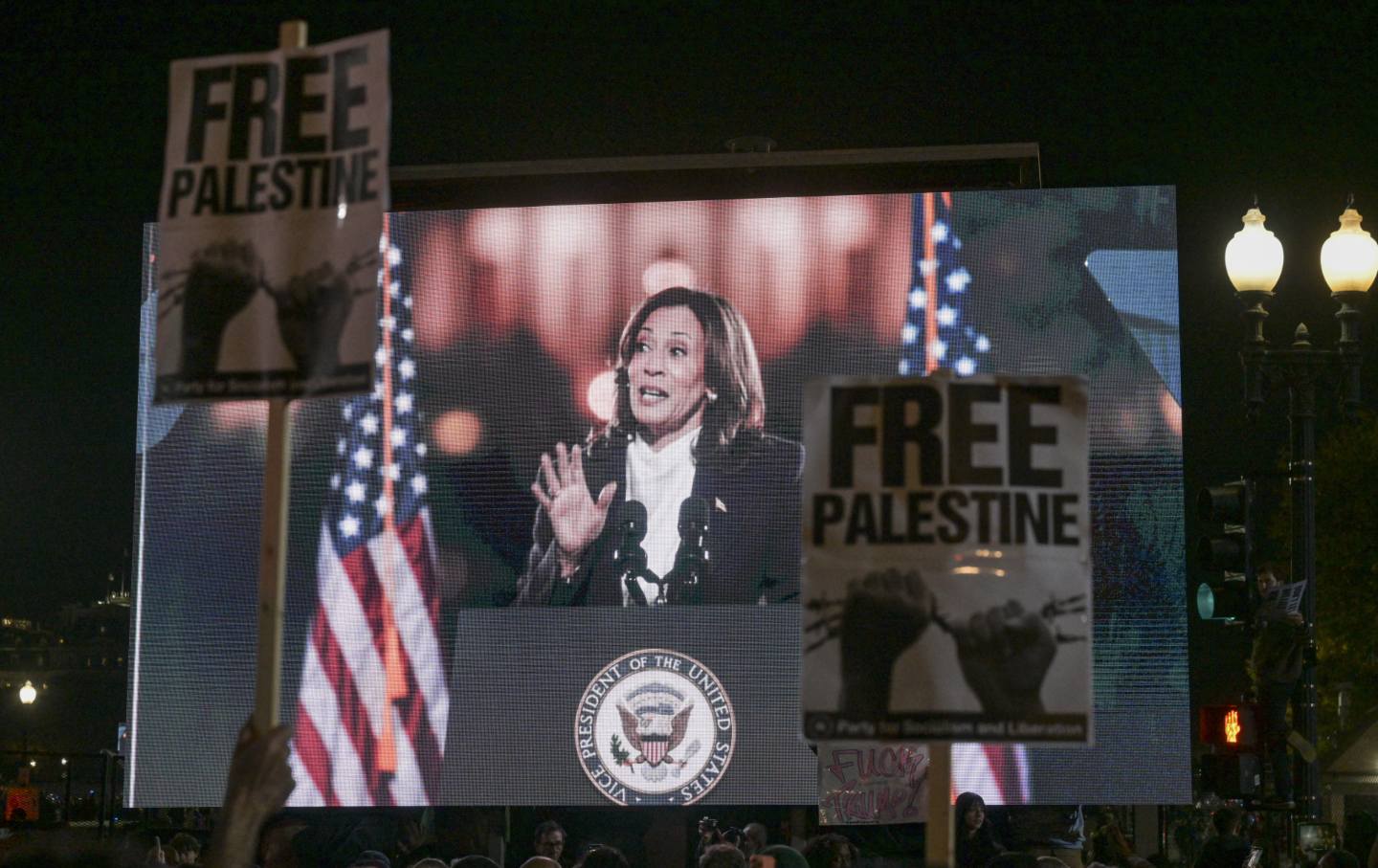
We Don’t Need an Autopsy to Tell Us the Democrats Failed on Gaza We Don’t Need an Autopsy to Tell Us the Democrats Failed on Gaza
The DNC is allegedly hiding a report showing that Kamala Harris’s Gaza policy helped cost her the 2024 election. But that report won’t tell us anything we don’t already know.
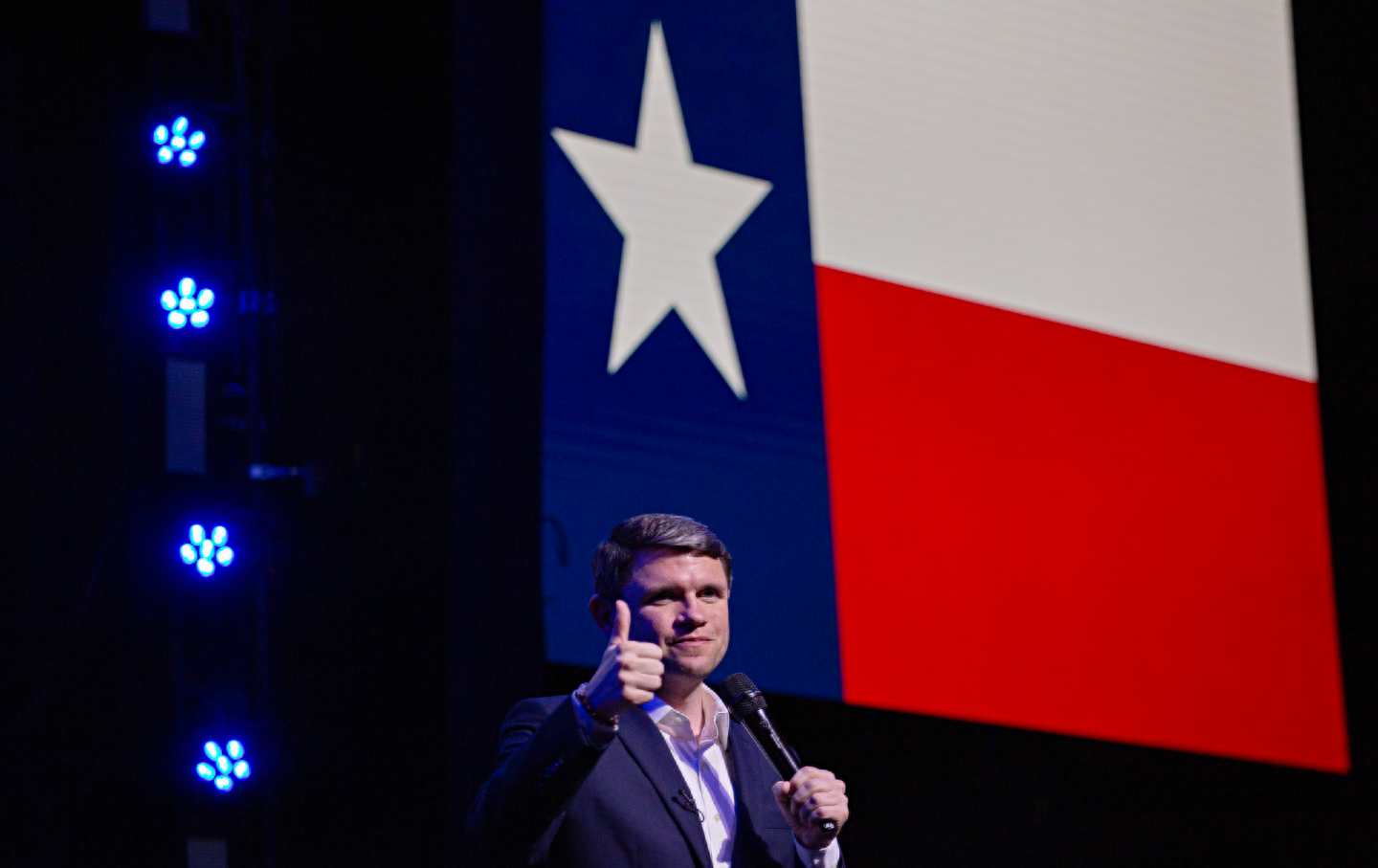
Texas’s Senate Primary Has Already Made History—and It’s Not Over Yet Texas’s Senate Primary Has Already Made History—and It’s Not Over Yet
Democratic nominee James Talarico is getting national media attention, but the real story is sky-high voter turnout, even amid GOP bids to suppress balloting
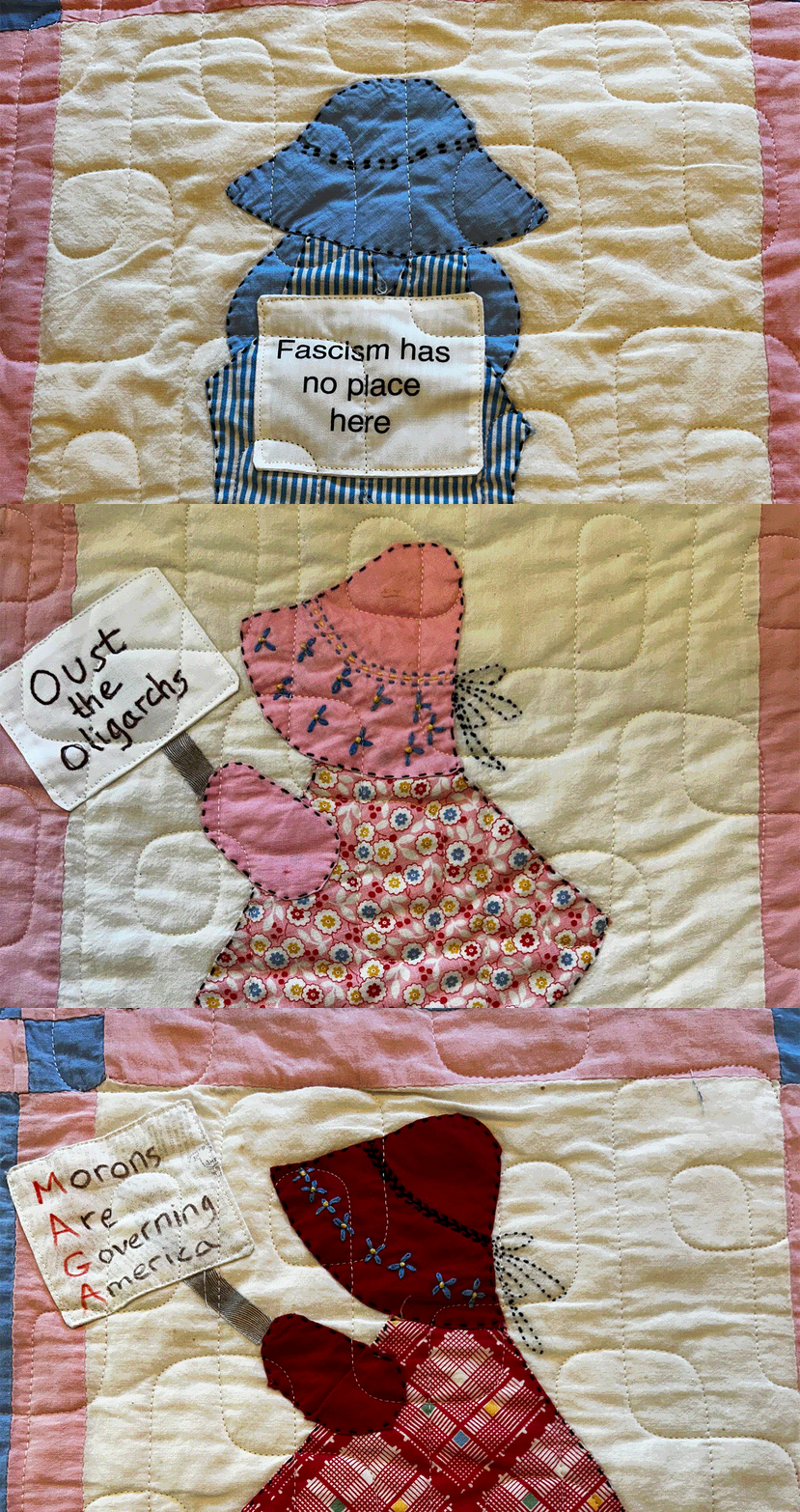
Quilted Messages Quilted Messages
Sunbonnets carrying not-so-sunny truths.
How the Theatrics of Mamdani’s Trump Meeting Backfired How the Theatrics of Mamdani’s Trump Meeting Backfired
By pandering to the president’s vanity, the New York mayor reinforced Trump’s image as a strongman commanding deference—an especially bad look on the eve of Trump’s war with Iran

Students in New York Are Going Hungry. How Can Mamdani Help? Students in New York Are Going Hungry. How Can Mamdani Help?
With plans for city-owned grocery stores and a focus on affordability, the new mayoral administration offers fresh hopes of successfully confronting the food crisis among students...
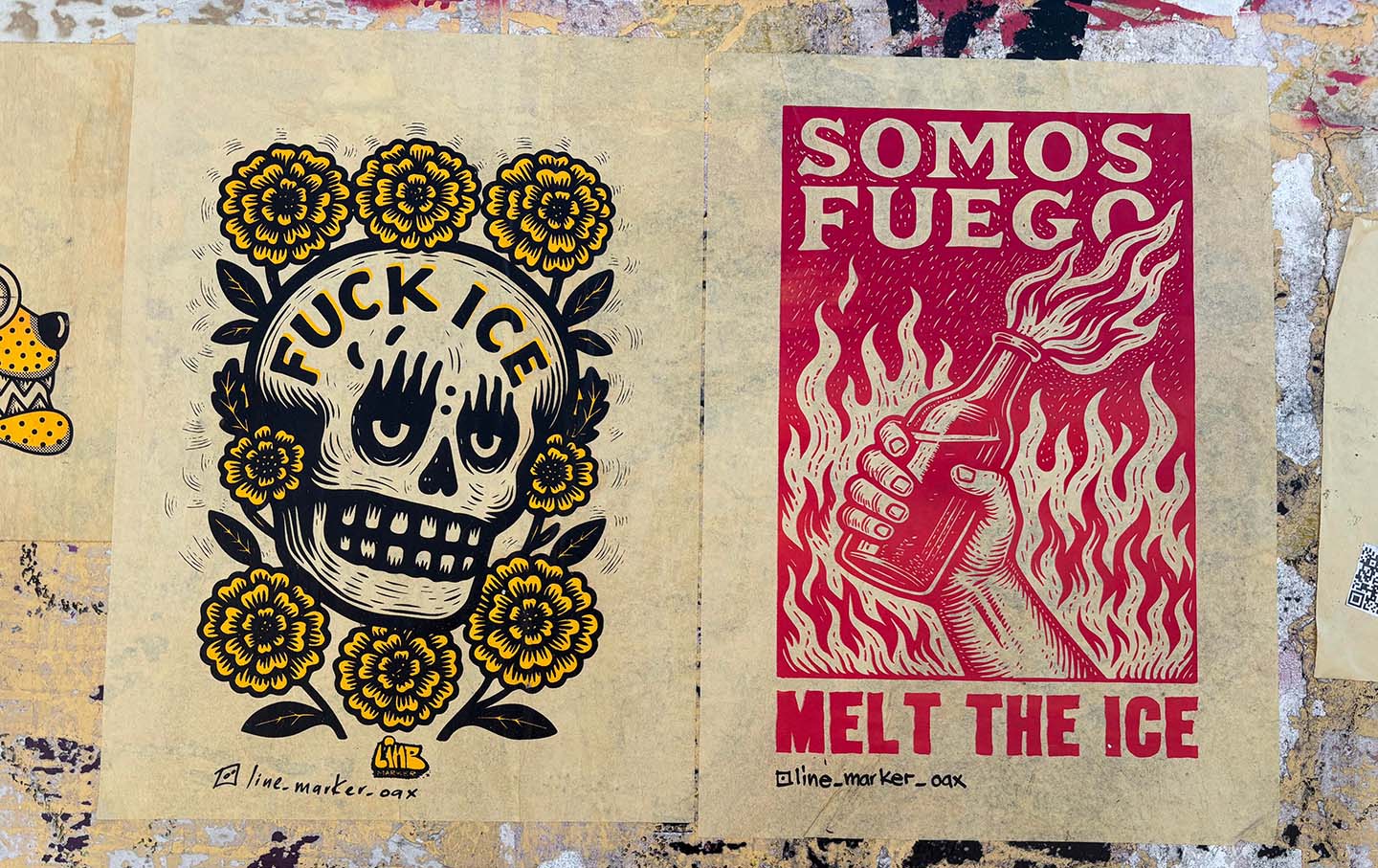
We Are the Fire That Melts the ICE We Are the Fire That Melts the ICE
Oaxaca, Mexico, street art.

