
The Only Way Trump Stays on the Ballot Is if the Supreme Court Rejects the Constitution
It’s simple: Amendment 14, Section 3 bars Trump from the ballot. The question today is whether the justices will accept this reality.
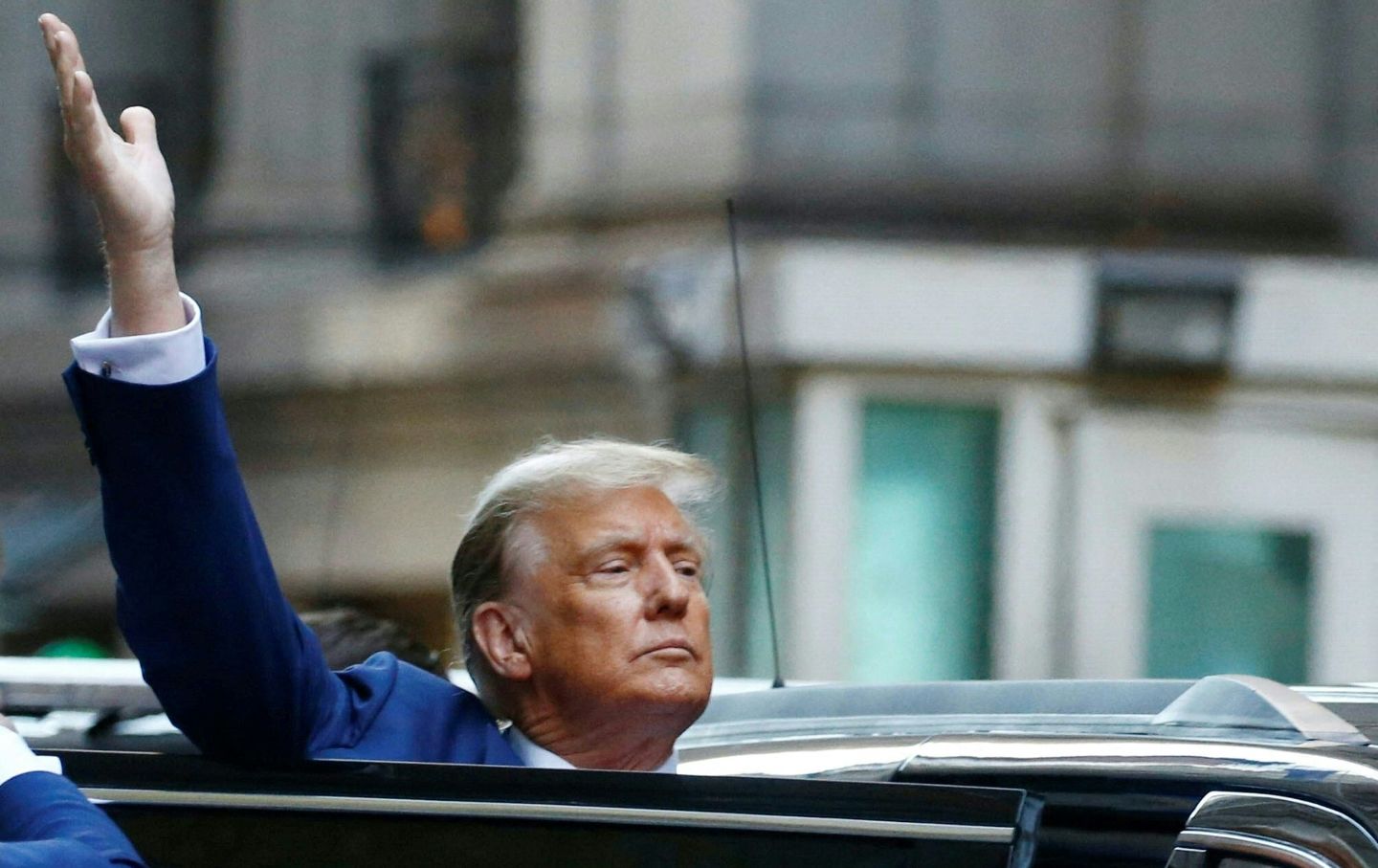
Former US president Donald Trump departs after attending the civil fraud trial against the Trump Organization in New York State Supreme Court, in New York City on January 11, 2024.
(John Lamparski / AFP via Getty Images)The US Supreme Court faces a simple question when it comes to today’s hearing on whether Donald Trump’s name should appear on primary and general election ballots this year: Is Trump constitutionally qualified to seek and hold the office of the presidency?
The answer to that question—if the justices honestly interpret the clear language of the United States Constitution—is equally simple: No.
The nation’s founding document outlines a series of qualifications for Americans who endeavor to obtain the presidency. They are not all found in one place. Rather, the requirements are spread throughout the document: some at the beginning where the framework of the federal government was spelled out, and others added as circumstances demanded.
Most Americans are aware that Article II, Section 1, Clause 5 of the Constitution declares, “No Person except a natural born Citizen, or a Citizen of the United States, at the time of the Adoption of this Constitution, shall be eligible to the Office of President; neither shall any Person be eligible to that Office who shall not have attained to the Age of thirty five Years, and been fourteen Years a Resident within the United States.”
But there are other requirements. Section 1 of the 22nd Amendment establishes a term limit for presidential candidates. stating, “No person shall be elected to the office of the President more than twice, and no person who has held the office of President, or acted as President, for more than two years of a term to which some other person was elected President shall be elected to the office of the President more than on.”
And, of course, Section 3 of the 14th Amendment—which the court will be considering today—bars insurrectionists and their supporters from holding positions of public trust: “No person shall be a Senator or Representative in Congress, or elector of President and Vice-President, or hold any office, civil or military, under the United States, or under any State, who, having previously taken an oath, as a member of Congress, or as an officer of the United States, or as a member of any State legislature, or as an executive or judicial officer of any State, to support the Constitution of the United States, shall have engaged in insurrection or rebellion against the same, or given aid or comfort to the enemies thereof.”
Only if Congress votes by a two-thirds majority to lift the ban can an individual who has so violated his or her oath of office again serve, according to the clearly defined dictates of the amendment.
The work of interpreting these constitutional requirements does not have to be complicated.
For instance, the name of US Representative Maxwell Alejandro Front, the Florida Democrat who is the youngest member of Congress, cannot be placed on a presidential ballot this year because, at 27, he does not meet the age requirement. No congressional resolution or court ruling is necessary to settle the issue. Reality is sufficient.
The name of Barack Obama cannot be placed on a presidential ballot this year because, as someone who has already served two full terms in the Oval Office, he is not allowed to bid again. No congressional resolution or court ruling is necessary to settle the issue. Reality is sufficient.
Similarly, any good-faith reading of the Constitution would show that the name of Donald Trump cannot be placed on a presidential ballot this year because, as the bipartisan Select Committee to Investigate the January 6th Attack on the United States Capitol determined, “President Trump or his inner circle engaged in at least 200 apparent acts of public or private outreach, pressure, or condemnation, targeting either State legislators or State or local election administrators, to overturn State election results.” No congressional resolution or court ruling is necessary to settle the issue. Reality is sufficient.
As US Representative Jamie Raskin, the constitutional law professor who served as a member of the January 6 committee, points out with regard to the 14th Amendment, “The language is totally plain. If you’ve sworn an oath to support the Constitution and you violate that oath by engaging in insurrection or rebellion, you can never hold office again, unless the Congress votes by a two-thirds margin to essentially reinstate your eligibility. That’s what the Constitution itself says.”
Lawyers on both sides of the issue will, undoubtedly, go into considerable detail during today’s Supreme Court hearing on Trump’s appeal of a ruling by the Colorado Supreme Court that declared him ineligible to appear on that state’s 2024 presidential ballot.
It is expected that Trump’s legal representatives will roll out the fantastical argument that, because the amendment does not mention the presidency, it does not apply to Trump—as if it the framers of the amendment, which was written with the initial goal of barring those who supported the 1861–65 Confederate rebellion against the United States from holding office in the post–Civil War era, intended to carve out an exception for former Confederate States of America president Jefferson Davis. (In an 1868 court trial, Davis’s own lawyers filed an affidavit acknowledging that he had sworn an oath to the Constitution in 1845, which, an analysis published by the National Constitution Center explained, “placed him within Section 3’s disqualification.”)
Trump’s lawyers are also expected to argue that an insurrectionist must be convicted in the courts or by Congress to be disqualified—as if a 27-year-old like Frost could mount a presidential bid as long as he weren’t convicted of underage campaigning. Lawyers with the Citizens for Responsibility and Ethics in Washington have explained in briefs for cases involving efforts to remove Trump from state ballots:
Both the Fourteenth Amendment’s text and Supreme Court precedent confirm that Section 3 is self-executing and can be enforced without federal legislation. Under the Supremacy Clause of the Constitution, state courts must enforce Section 3 where state law allows, and historically state courts have done exactly that. The Supreme Court has also consistently held the substantive provisions of the Reconstruction Amendments—including the Fourteenth Amendment—to be self-executing. Supreme Court precedent also makes clear that congressional action cannot be required to activate Section 3.
Today’s Supreme Court hearing will uncork plenty of partisan punditry and positioning. But legal scholars recognize the issue at hand as a question of whether the court is prepared to embrace “a very straightforward textualist application of the Constitution,” as conservative judges are always saying they do.
Popular
“swipe left below to view more authors”Swipe →“This is a chance for these justices to show that they really mean it when they talk about textualism, when they talk about originalism. The plain text of the Constitution could not be any clearer,” Raskin—who was a professor of constitutional law at American University’s Washington College of Law for more than 25 years before his election to the House—told CNN in December.
Of course, textualism does not always rule the day on the current high court. In fact, the safest bet is that this court, with its supermajority of Republican-appointed justices—three of them picked by Trump himself—and a history of blatantly partisan conflict of interest scandals, will bow to the demands of the party’s presumptive 2024 presidential nominee.
But they do not have to do so, says Raskin. They could recognize the reality of the situation: “If Donald Trump is not disqualified from holding office again after what he did on January 6 and in the weeks leading up to it, then who is disqualified? Why would they read an entire provision out of the Constitution?”
As the House’s preeminent constitutional scholar says, “This is their opportunity to behave like real Supreme Court justices.”
Support independent journalism that does not fall in line
Even before February 28, the reasons for Donald Trump’s imploding approval rating were abundantly clear: untrammeled corruption and personal enrichment to the tune of billions of dollars during an affordability crisis, a foreign policy guided only by his own derelict sense of morality, and the deployment of a murderous campaign of occupation, detention, and deportation on American streets.
Now an undeclared, unauthorized, unpopular, and unconstitutional war of aggression against Iran has spread like wildfire through the region and into Europe. A new “forever war”—with an ever-increasing likelihood of American troops on the ground—may very well be upon us.
As we’ve seen over and over, this administration uses lies, misdirection, and attempts to flood the zone to justify its abuses of power at home and abroad. Just as Trump, Marco Rubio, and Pete Hegseth offer erratic and contradictory rationales for the attacks on Iran, the administration is also spreading the lie that the upcoming midterm elections are under threat from noncitizens on voter rolls. When these lies go unchecked, they become the basis for further authoritarian encroachment and war.
In these dark times, independent journalism is uniquely able to uncover the falsehoods that threaten our republic—and civilians around the world—and shine a bright light on the truth.
The Nation’s experienced team of writers, editors, and fact-checkers understands the scale of what we’re up against and the urgency with which we have to act. That’s why we’re publishing critical reporting and analysis of the war on Iran, ICE violence at home, new forms of voter suppression emerging in the courts, and much more.
But this journalism is possible only with your support.
This March, The Nation needs to raise $50,000 to ensure that we have the resources for reporting and analysis that sets the record straight and empowers people of conscience to organize. Will you donate today?
More from The Nation
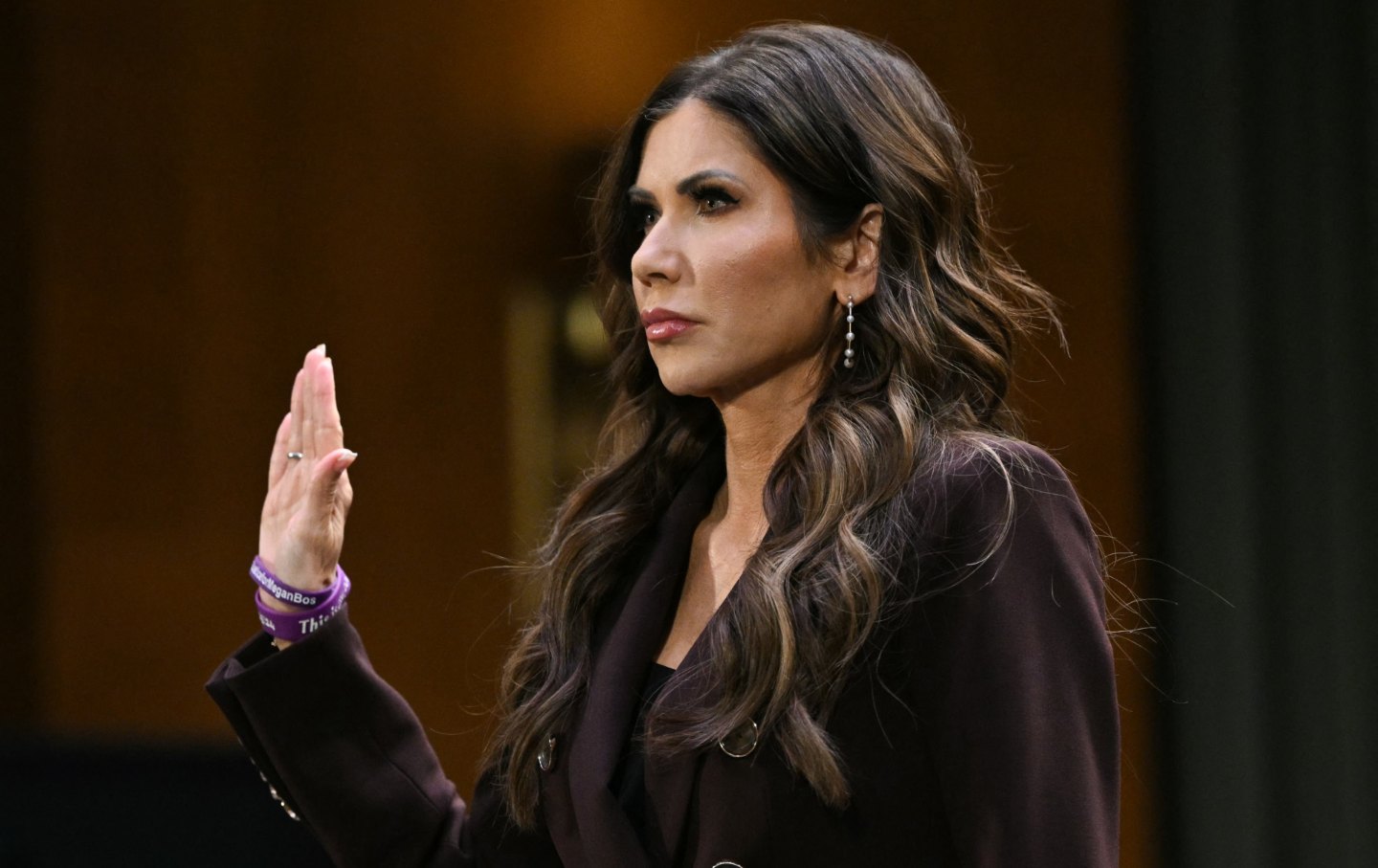
Celebrate Kristi Noem’s Firing. But Keep Protesting ICE. Celebrate Kristi Noem’s Firing. But Keep Protesting ICE.
Finally, someone in the administration is paying for their cruelty and incompetence.
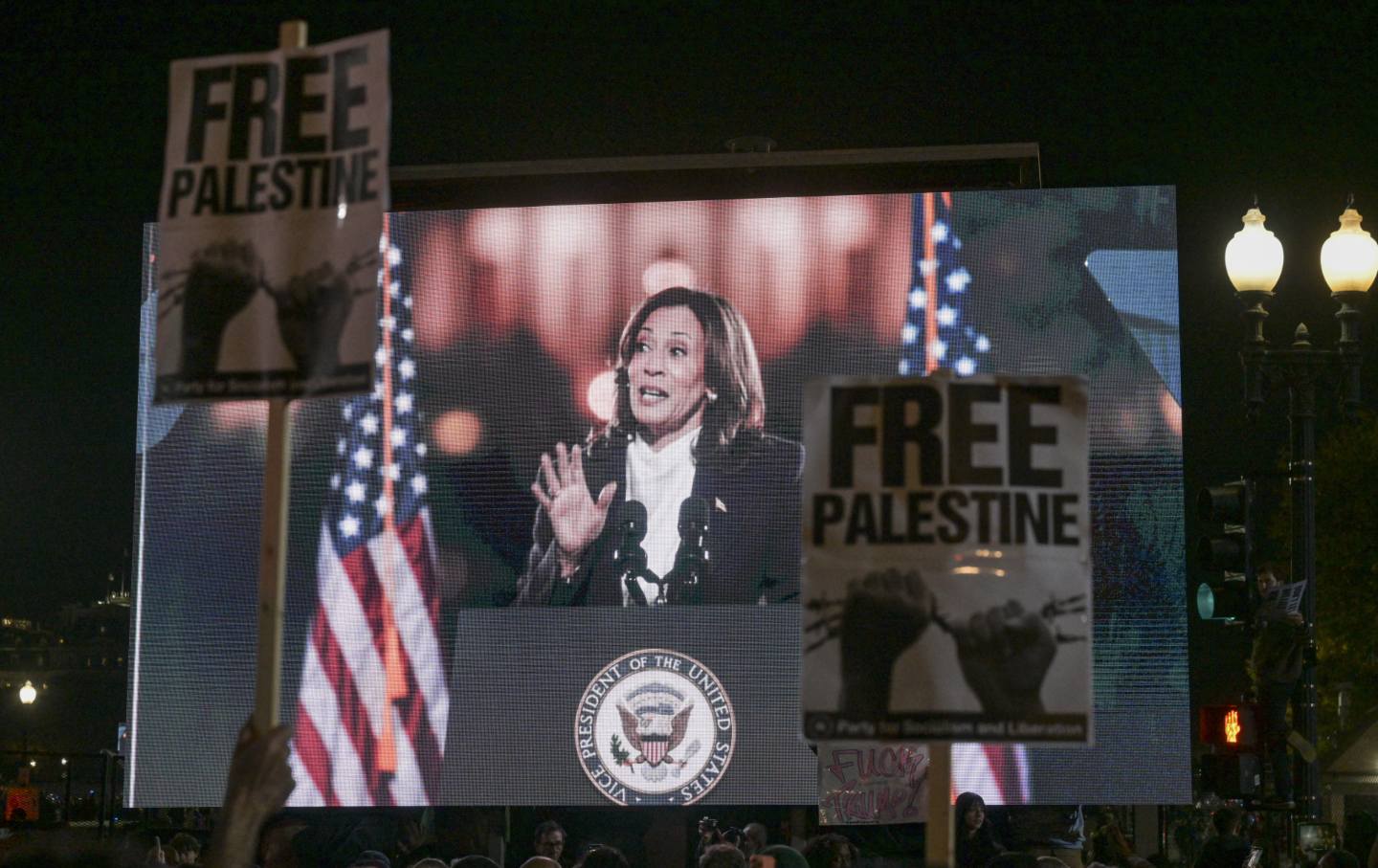
We Don’t Need an Autopsy to Tell Us the Democrats Failed on Gaza We Don’t Need an Autopsy to Tell Us the Democrats Failed on Gaza
The DNC is allegedly hiding a report showing that Kamala Harris’s Gaza policy helped cost her the 2024 election. But that report won’t tell us anything we don’t already know.
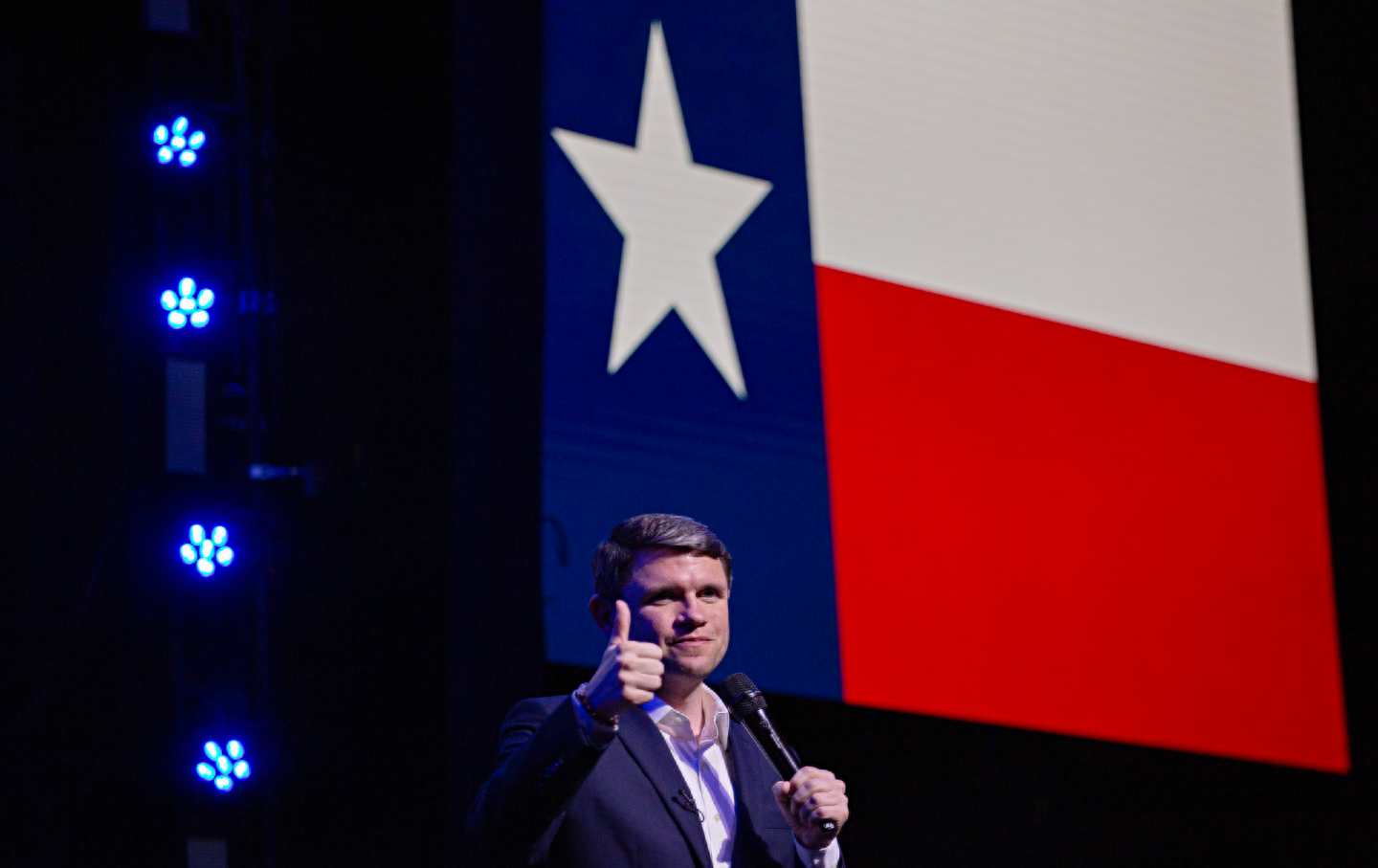
Texas’s Senate Primary Has Already Made History—and It’s Not Over Yet Texas’s Senate Primary Has Already Made History—and It’s Not Over Yet
Democratic nominee James Talarico is getting national media attention, but the real story is sky-high voter turnout, even amid GOP bids to suppress balloting
Quilted Messages Quilted Messages
Sunbonnets carrying not-so-sunny truths.
How the Theatrics of Mamdani’s Trump Meeting Backfired How the Theatrics of Mamdani’s Trump Meeting Backfired
By pandering to the president’s vanity, the New York mayor reinforced Trump’s image as a strongman commanding deference—an especially bad look on the eve of Trump’s war with Iran

Students in New York Are Going Hungry. How Can Mamdani Help? Students in New York Are Going Hungry. How Can Mamdani Help?
With plans for city-owned grocery stores and a focus on affordability, the new mayoral administration offers fresh hopes of successfully confronting the food crisis among students...

