
The Real Tragedy of Rudy Giuliani
The disgraced former mayor was a racist authoritarian—even back when he was being celebrated by the mainstream media.
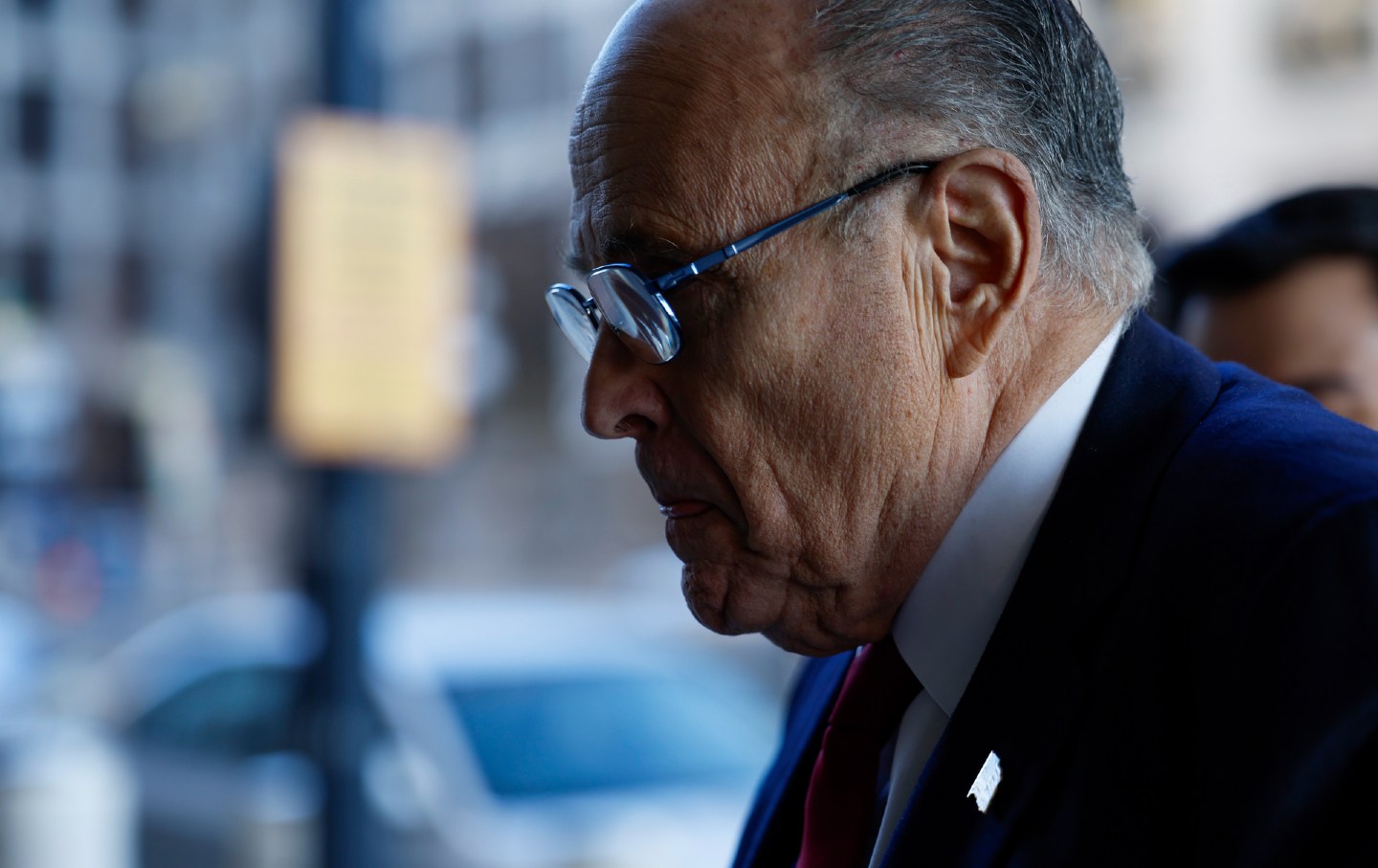
The disgrace of Rudy Giuliani is one of the most dramatic decline-and-fall stories in American history—all the more startlingly precipitous because he was in the recent past a figure whose popularity seemed to transcend normal partisan divides. On Friday, a federal jury in Washington, D.C., ordered that the former New York City mayor pay $148 million to two Georgia election workers whom, as determined by the judge in the case, Giuliani had defamed by claiming they had helped steal the election from Donald Trump. The case, along with Giuliani’s other ongoing legal troubles—such as the push to have him disbarred in Washington, D.C.—is an outgrowth of his role as one of Donald Trump’s key enablers in the failed coup attempt of January 6, 2021. The election workers won’t collect more than a minuscule fraction of the judgment because, although Giuliani refuses to disclose his finances to the court, there’s every evidence that he’s broke. A man whose net worth in 2007 was estimated to be $30 million is now effectively penniless, reduced to making money by recording voice messages for the service Cameo.
Giuliani’s name is now a byword for corruption, dishonesty, and buffoonery—especially after he had been pranked by the comedian Sacha Baron Cohen for a particularly humiliating scene in the satirical film Borat 2 (2020). Yet, not too long ago, Giuliani was one of the most admired public figures in America, celebrated not just for his seemingly dauntless leadership after the 9/11 terrorist attacks but also credited for the revival of New York during his two terms as mayor from 1994 to 2001. The city in those years enjoyed both a robust economic recovery and a sharp decline in crime, for which a broad swath of the mainstream press was happy to credit the mayor.
Giuliani was Time magazine’s Person of the Year in 2001, with a cover that proclaimed him a “tower of strength.” Not to be outdone, Newsweek enthused that Giuliani was “our Winston Churchill” and “setting a new global standard for crisis leadership.” The mayor, Newsweek cheered, “was strong, sensitive, straightforward and seriously well informed about every meaningful detail of the calamity. The mayor is unmistakably in command, and every New Yorker—even those who still dislike him—is gratefully in his debt.” In 2006, a poll showed Giuliani was the most popular politician in the country, outranking Barack Obama and John McCain. That pinnacle didn’t last. As The Washington Post reported in September, “Giuliani’s actions as New York’s mayor on Sept. 11, 2001, and in the days after earned positive marks from nearly 8 in 10 Americans, but his image rating has steadily deteriorated since, to the point where a new CNN poll shows just 16 percent of Americans now view him favorably. A majority—51 percent—view him unfavorably.”
It’s common to describe Giuliani’s evolution from hero to bozo as “tragic.” But tragedy implies that Giuliani was a noble figure brought low by some regrettable flaw in his character. As such it validates the earlier panegyrics to Giuliani as being essentially accurate when they were written.
But in truth, Giuliani was never quite the hero he was made out to be. The true tragedy of his career is that the mainstream media, eager to have a socially moderate Republican to lionize, consistently whitewashed his record for decades, both before 9/11 and after. As my Nation colleague Spence Ackerman noted in his 2021 book Reign of Terror, “Guiliani had always been a media creation, propelled by journalists who might have found him incorrigible but generally treated him as a necessity to control an out-of-control city—something that, in practice, meant repressing Black, brown, and poor New Yorkers.”
Giuliani’s career as a media darling started in the early 1980s, after he became US Attorney for the Southern District of New York in 1983. He quickly earned a reputation as a tough-as-steel prosecutor who wasn’t afraid to go after mobsters, Wall Street inside traders, and even political crooks in his own party. A 1986 profile in Vanity Fair by Gail Sheehy was typical of the unvarnished hero worship Giuliani received. According to Sheehy,
Rudolph Giuliani is the biggest face in New York law enforcement. That bloodless white face with dark steady eyes and goofy haircomb turns up everywhere, like a death mask, announcing the demise of the Mafia, promising punishment for crooked politicians, springing swift and terrible justice on blue-chip Wall Street traders. Most people are still fuzzy on his title—U.S. attorney for the Southern District of New York—but they know his monk’s face and his altar-boy lisp. Rudy Giuliani has become a force.
In retrospect, it’s striking that even the excellent late investigative reporter Wayne Barrett, later to be Giuliani’s most scathing and devastating critic, helped build the Giuliani myth in the 1980s. Both in his Village Voice columns and in the 1988 book City for Sale (cowritten with Jack Newfield), Barrett would present Giuliani as a righteous force for justice and decency. In City For Sale, Barrett and Newfield write that for Giuliani the US Attorney job “was an opportunity to return to the city of his birth and affection, to run the biggest U.S. Attorney’s office in the country, with a staff of 130 lawyers, and to be his own boss, to feel free to use the office as a pulpit for his ideas about the law and about values.” They also describe Giuliani as a “priestly prosecutor.”
Both Barrett and Newfield would dramatically revise their judgment of Giuliani—especially after his first term as mayor revealed a deep-seated racism. Barrett would write two thoroughly researched books: Rudy! (written with the assistance of Adam Fifield in 2001) and Grand Illusion: The Untold Story of Rudy Giuliani and 9/11 (cowritten in 2006 with Dan Collins). In 2002, Newfield weighed in with his own debunking book, The Full Rudy.
In his Village Voice column and in Rudy!, Barrett expressed special outrage at Giuliani’s racism, which was both personal and political (seen in Giuliani’s welfare-state austerity that targeted people of color, as well as his unwavering defense of police violence and racial profiling). In a 1999 column (with reporting from Nicole White), Barrett linked the political and the personal, noting that “his world is as a white as Seinfeld’s, a slice of the city so comfortably one-dimensional that even the popular star of the ongoing Giuliani serial cannot see his own, peculiarly un-New York, isolation. Not since Vincent Impellitteri nearly half a century ago…have there been so few black faces in high places in a city administration.” Barrett went on to note the media’s complicity in this racism, pointing out that The New York Times’ endorsement of Giuliani in 1998 “did not make a single cautionary mention of race.”
Barrett’s account is complemented b Newfield’s analysis in The Full Rudy, which traced Giuliani’s racism to his bitterness at his 1989 loss in the mayoral race to David Dinkins, New York’s first Black mayor. Newfield reports that in a 1992 conversation, Giuliani said, “They stole that election from me. They stole votes in the black parts of Brooklyn, and in Washington Heights. Illegal Dominican immigrants were allowed to vote in Washington Heights.” This type of unfounded conspiracy theory about stolen elections, of course, is the very same thinking that led to Trump’s attempt to overturn the results of the 2020 presidential race.
In Grand Illusion, Barrett and Cohen challenge the myth of Giuliani’s heroic leadership on 9/11. They document his failure to fix systemic problems that were visible after the earlier 1993 attack on the World Trade Center, particularly the fact that the radios of the fire department and police department weren’t in sync. This reporting was iconoclastic at the time but is now part of the conventional wisdom, endorsed by subsequent Giuliani biographer Adam Kirtzman and publications such as The New Yorker.
Barrett made amends for his earlier celebrations of Giuliani by doing the shoe-leather reporting needed to make clear how truly terrible the former mayor was. But while Giuliani’s reputation has continued to sink to new lows, few of the other media enthusiasts for Giuliani have ever done any expiation. Giuliani is now facing a reckoning for his actions related to January 6. But still unsettled is the wider reckoning of the media accomplices who built up the baseless myth of Rudy Giuliani.
More from
Jeet Heer 
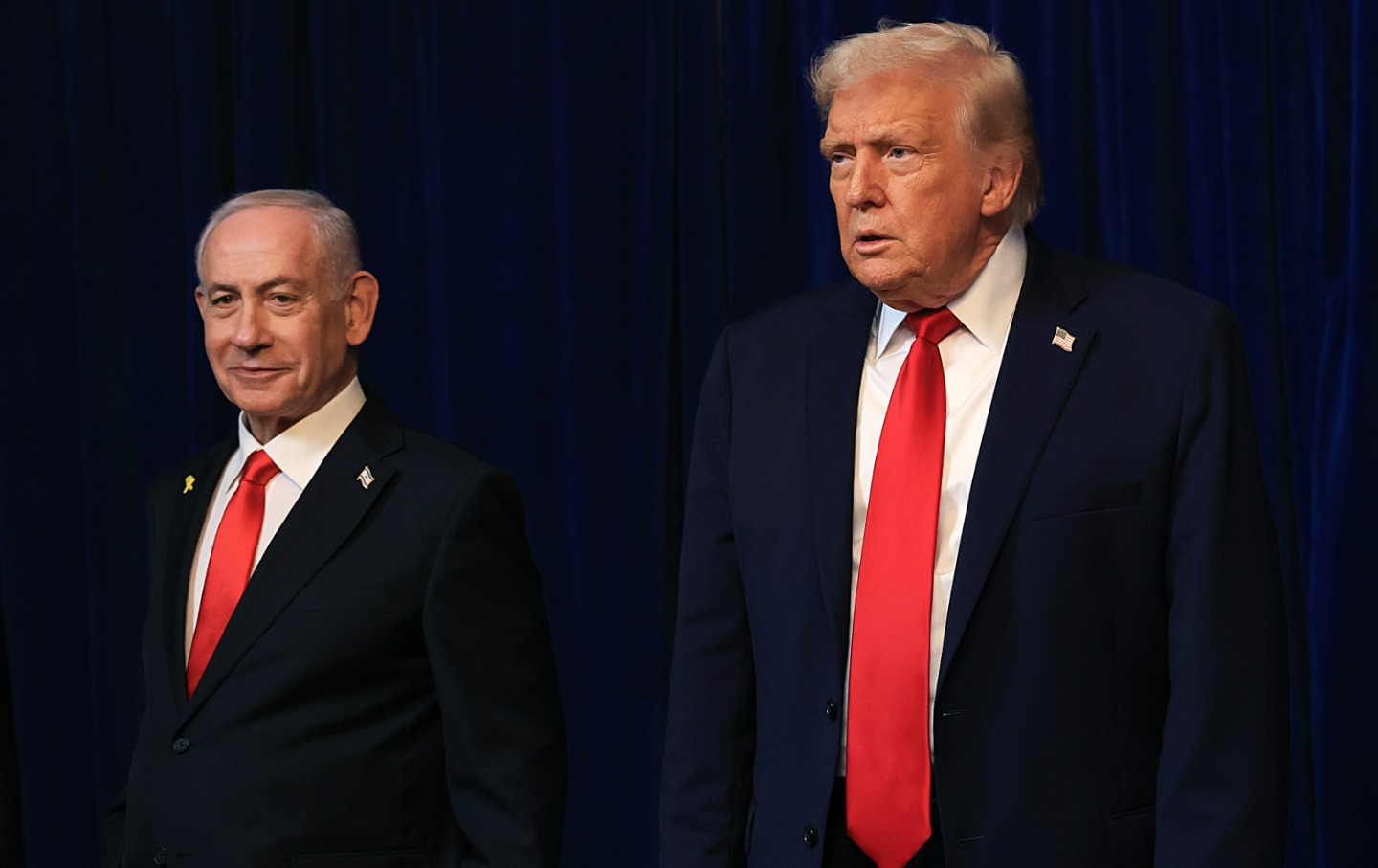
Trump and Netanyahu Want to Turn Iran Into a Failed State Trump and Netanyahu Want to Turn Iran Into a Failed State
This war looks designed to cause maximum chaos and instability. The world will pay a high price.
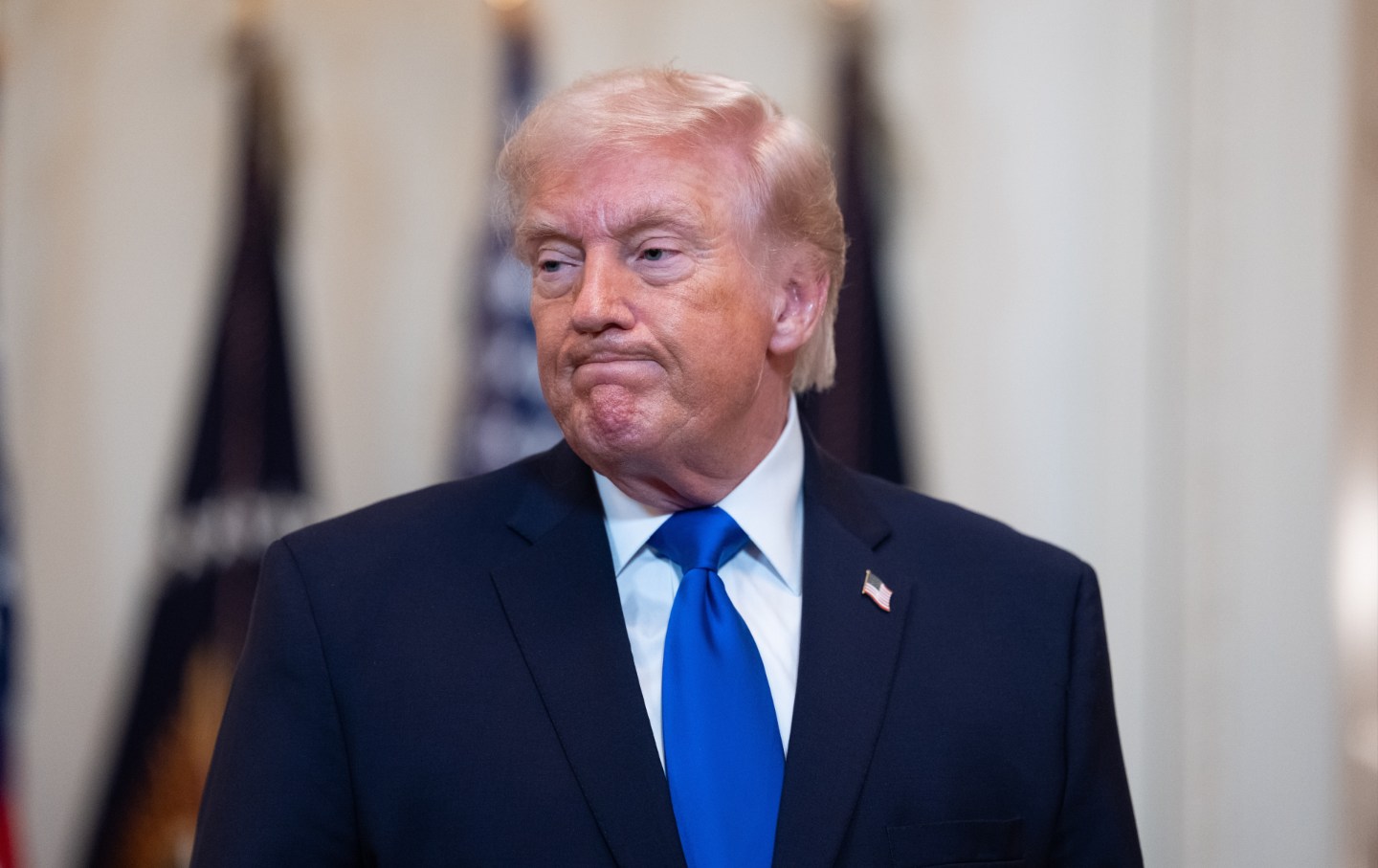
The State of the Union Will Be Even Worse Than Trump’s Polling Numbers The State of the Union Will Be Even Worse Than Trump’s Polling Numbers
What’s a flopping demagogue to do? Lash out at his enemies, pretend he’s doing great, and bore us all into submission.
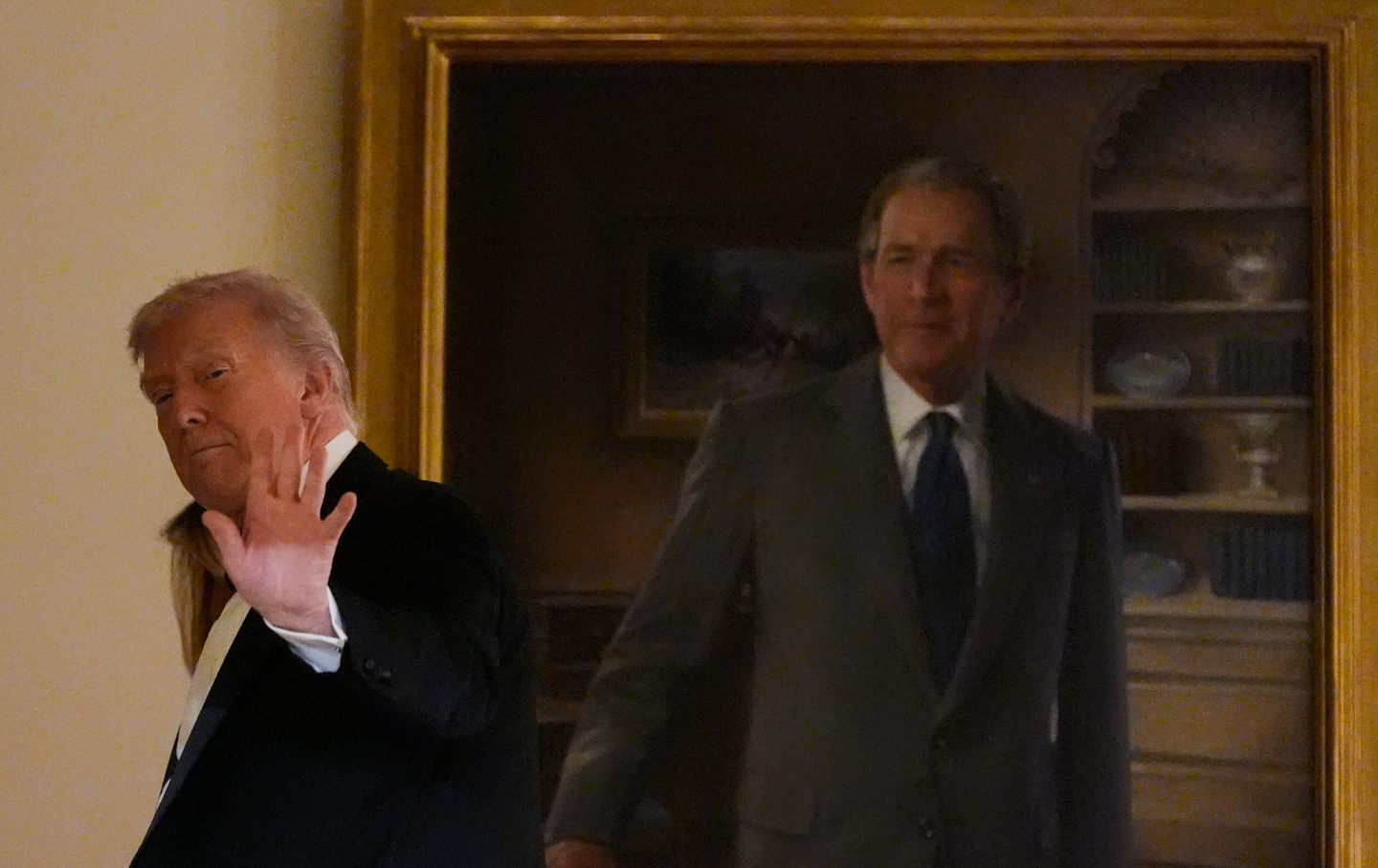
Trump’s Iran War Could Be an Even Bigger Catastrophe Than Iraq Trump’s Iran War Could Be an Even Bigger Catastrophe Than Iraq
Remarkably, Trump seems on the verge of outdoing George W. Bush in reckless, stupid militarism.
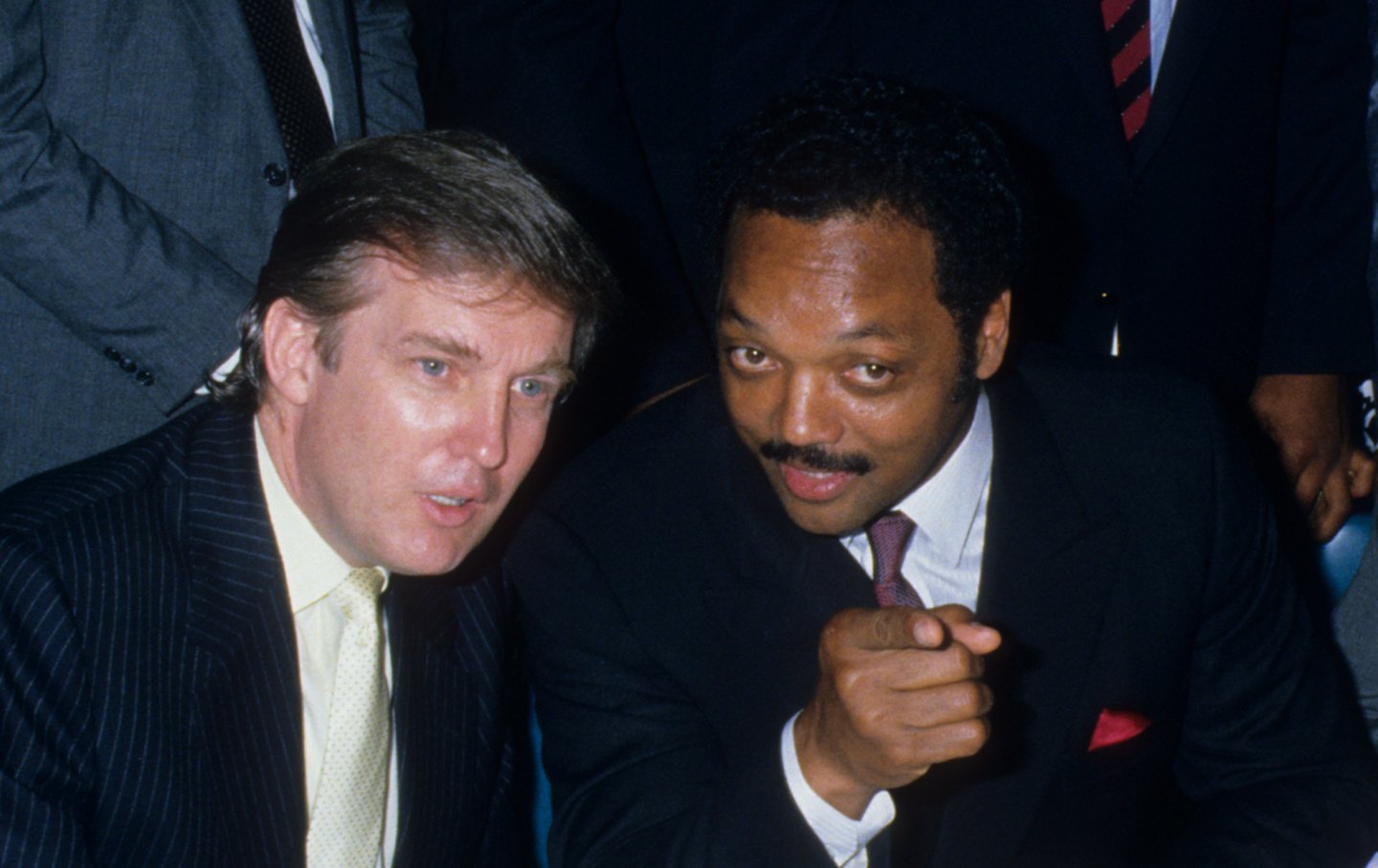
Why Trump Is Trying to Steal Jesse Jackson’s Glory Why Trump Is Trying to Steal Jesse Jackson’s Glory
The president wants you to know he had a Black friend, sort of.
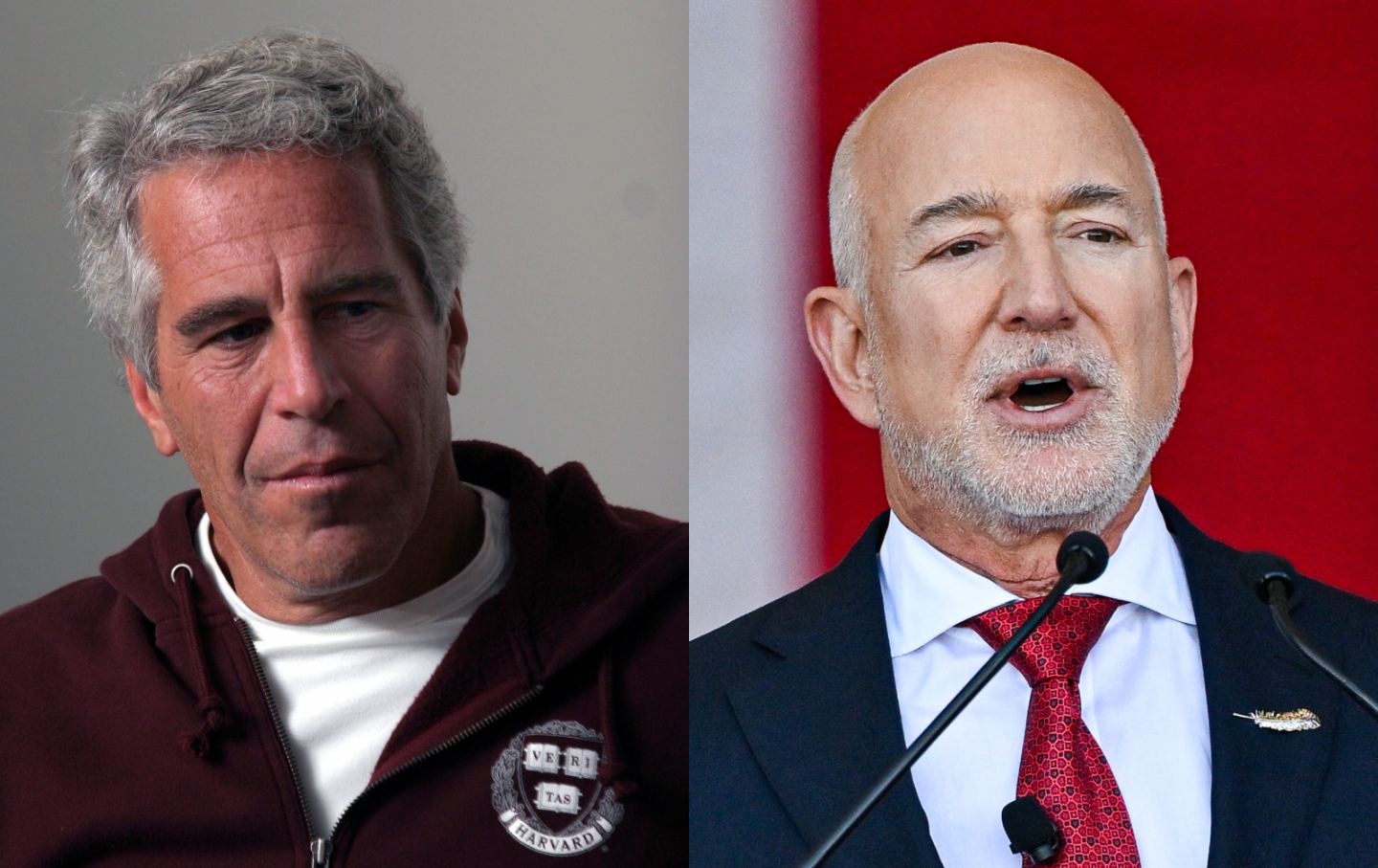
From Epstein to Bezos, the Ruling Class Is Rotten to the Core From Epstein to Bezos, the Ruling Class Is Rotten to the Core
Let this week be yet another reminder that plutocrats are a threat to democracy, not its saviors.
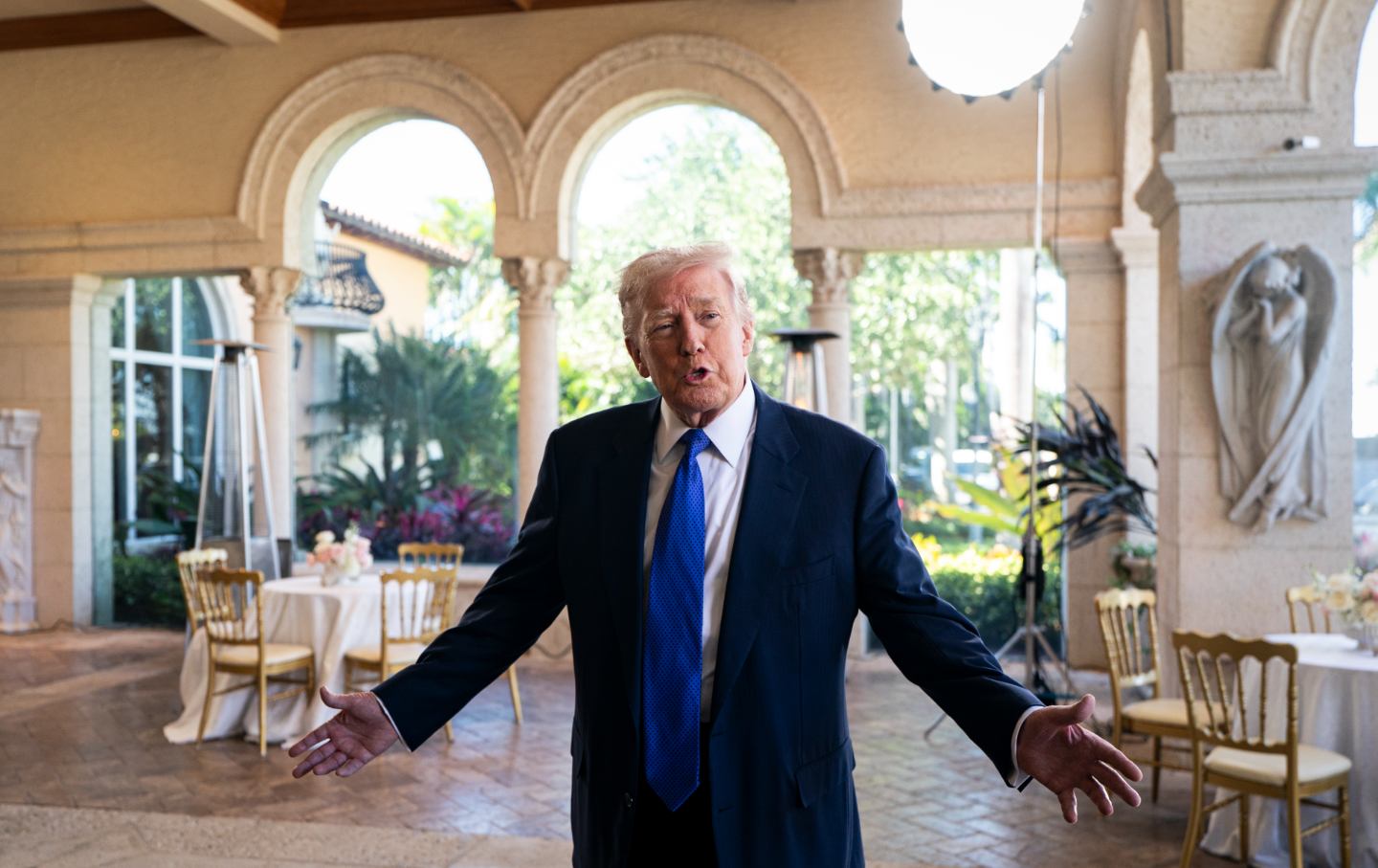
How Trump Became the Biggest Crook in the History of Democracy How Trump Became the Biggest Crook in the History of Democracy
The penny-ante bribes of his first term have given way to billions in graft.

