Pete Hegseth Is Scapegoating Career Soldiers for His Own Failures
Trapped in a disastrous war, the defense secretary is intensifying a purge of the military.
Two prominent government officials were fired on Thursday, a civilian and a military commander. Donald Trump removed Attorney General Pam Bondi, long the subject of presidential displeasure because of her politically maladroit handling of the Jeffrey Epstein case (which has only served to embarrass the president) and her failure (despite the president’s wishes and her own servility) to fully weaponize the Department of Justice against Trump’s partisan enemies. The Bondi firing is symptomatic of Trump’s increasing frustration at his inability to implement his agenda. It follows the ouster of Homeland Security Secretary Kristi Noem last month, and Trump may not be done wielding the axe. Politico reports that Commerce Secretary Howard Lutnick and Labor Secretary Lori Chavez-DeRemer might also be on the chopping block, with Trump eager to find replacements while the GOP still controls the Senate.
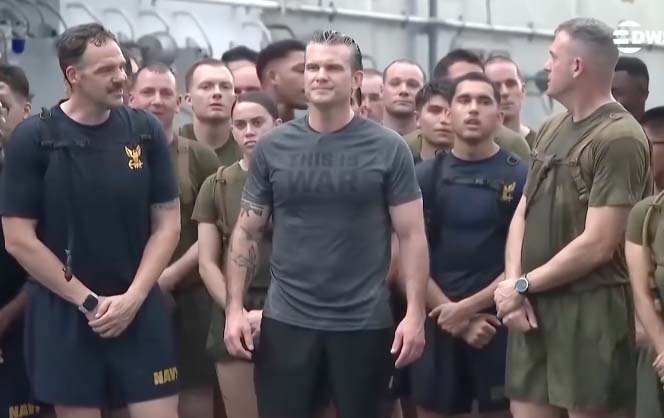
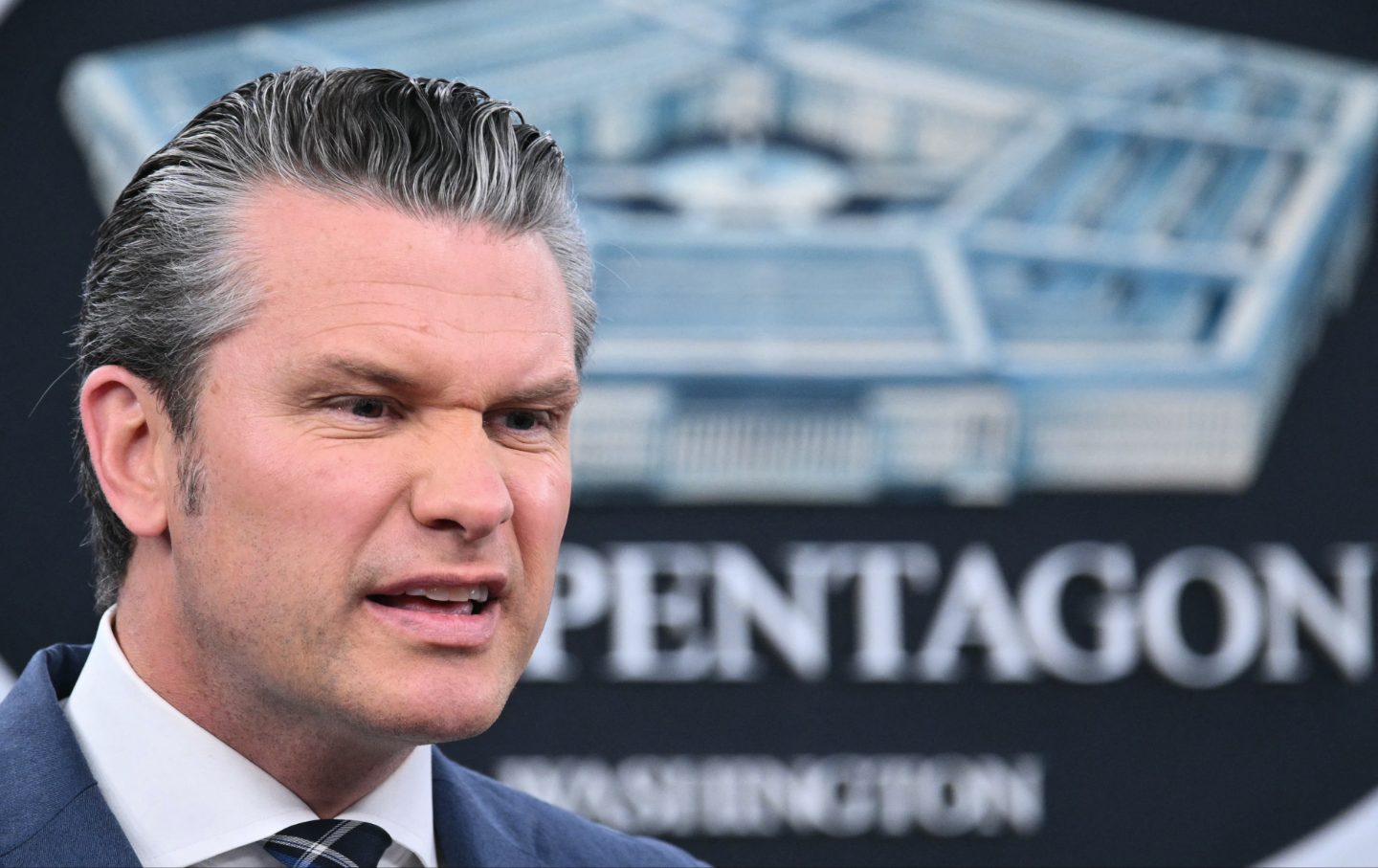
But the political purge of Trump’s cabinet is less significant than what is happening in the Pentagon, where Defense Secretary Pete Hegseth is intensifying his campaign to get rid of officers who disagree with him. As Axios reported in August, “Decades of experience have been wiped from the highest levels of the U.S. military, the result of retirements and removals in the first year of the second Trump administration.” And on Thursday, Hegseth added to this brain drain, firing three generals, including Gen. Randy George, the top-ranking general in the Army. The news site Military.com called it “one of the most significant wartime leadership shakeups during active U.S. combat operations in recent years.”
These moves take place against the backdrop of a flailing military campaign in Iran. Both Trump and Hegseth appeared to think the war would be a cakewalk that would take just a few days to wrap up. In fact, the war has lasted more than a month, and in a speech on Wednesday night that was alarmingly detached from reality, Trump offered no plausible account of how it could end, although he predicted another two or three weeks of fighting.
But while the Iran debacle was a factor in the firing, it was also not the only factor. In truth, Hegseth’s entire tenure as defense secretary has been marked by an ideologically motivated campaign of high-level firings and refusals to promote deserving candidates. A right-wing zealot who first made his mark as a Fox News host, Hegseth strongly believes that the military has been infested by what he calls “woke” ideology, which he has fought by removing officers he suspects of being excessively liberal or supporters of DEI hiring.
Among those purged under Hegseth were Lt. Gen. Jeffrey Kruse, Gen. Charles “CQ” Brown Jr., Gen. Tim Haugh, Adm. Lisa Franchetti, Adm. Linda Fagan, Gen. James Slife, Vice Adm. Nancy Lacore, Vice Adm. Shoshana Chatfield, and Adm. Jamie Sands.
The officers targeted by Hegseth tend to be women, people of color, or trans. On Thursday, NBC reported that “Hegseth has taken steps to block or delay promotions for more than a dozen Black and female senior officers across all four branches of the military, some of whom are seen as having been targeted because of their race, gender or perceived affiliation with Biden administration policies or officials.”
An additional political factor in the case of Randy George is that Hegseth is engaged in a feud with Army Secretary Daniel P. Driscoll (who would be one of the top candidates to replace Hegseth if he himself were fired). George is known to be a Driscoll ally. Both George and Driscoll refused Hegseth’s orders to remove four officers (two Black men and two women) from a promotion list.
Beyond these internal Pentagon politics, Hegseth has good reason to fear he is on shaky ground. Recent leaks from the Pentagon have depicted him as an unprepared leader who went into the Iran War with the faulty belief that it would be a quick and easy victory.
In its latest cover story, Time reported,
Key Trump officials, including Defense Secretary Pete Hegseth, were surprised by the barrage of retaliatory attacks Tehran launched against U.S. and Israeli targets across the region, including in countries long assumed to be off-limits: Kuwait, Bahrain, Saudi Arabia, the United Arab Emirates, and Qatar, a state that had both harbored Iran’s terrorist proxies and served as a conduit for backchannel diplomacy between the U.S. and Hamas. The response shattered the assumption that Tehran would confine itself to performative retaliation. In internal deliberations before the war’s launch, Hegseth had pointed to Iran’s muted reaction to Trump’s past attacks as evidence that calibrated force could impose costs on Tehran without triggering a broader war.
One unnamed source told Time that Hegseth “was caught off guard. There’s no question.” The same source added, “He was expecting the Iranians to fight back in some form. When they started attacking virtually the entire region, it sort of hit him like, ‘Whoa, we’re really in this now.’”
Leaks of this sort should unnerve Hegseth. If the war continues to go badly and drags down the US economy, he would be an easy fall guy for Trump. Hegseth would be following in the footsteps of Defense Secretary Donald Rumseld, who fell on his sword in 2006 when the Iraq War turned into a political catastrophe. Aside from his long-running vendetta against the career military, Hegseth is intensifying his purge as a preemptive attack. He wants to undermine his possible replacements and scapegoat them, before he becomes the scapegoat.
Become a Sustaining Donor This September
Between the reemergence of right-wing red-baiting and Donald Trump’s use of the chilling National Security Presidential Memorandum–7 to criminalize left political organizing, we’re seeing McCarthyism reborn before our eyes.
This assault on democracy cannot be ignored or wished away. Resisting it requires bravery in the face of threats and repression, a steadfast commitment to the truth, and the unwavering belief that we can—and will—overcome this darkness.
We must have an independent media that sets the record straight, unearths corruption and abuses of power, and advances a politics of justice and dignity for all if we’re to win this fight.
That’s why I’m writing to you today. This September, The Nation needs to add 100 monthly donors to sustain our progressive journalism. Your contribution makes the next investigative report, the next truth-speaking column, and the next pathbreaking essay all possible.
I hope you’ll support our work with a recurring donation today. If you donate $10 or more a month, we’ll send you a brand new “Hands Off the Free Press!” sticker to recognise your commitment to our cause. Please, donate today.
Onward,
Katrina vanden Heuvel
Editor and Publisher, The Nation