What the DSA Influx Means for Albany
The DSA bloc in the Assembly can become a significant chunk of the Democratic majority.
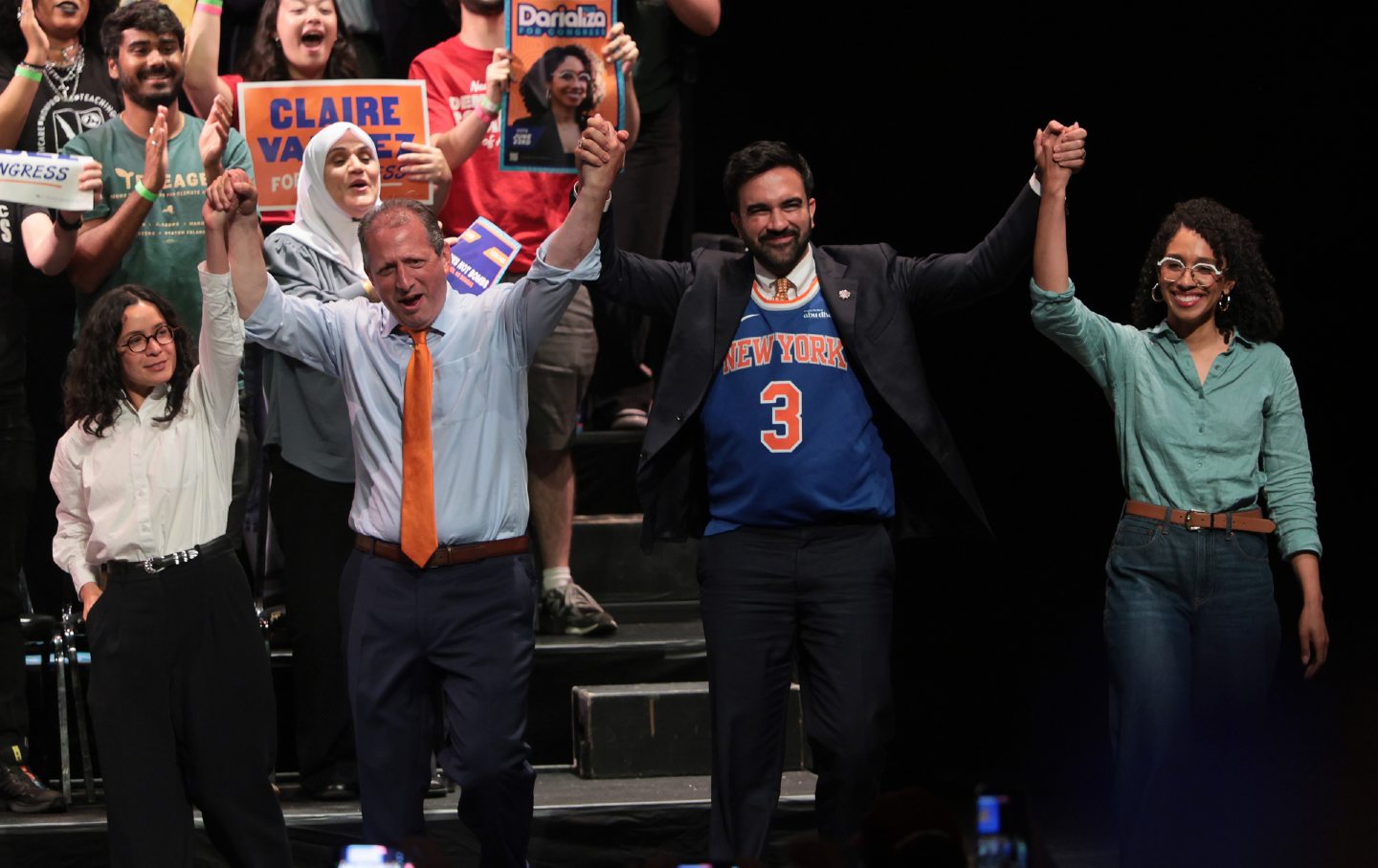
Come next year, the contingent of self-identified socialists in the New York State capital will have dramatically expanded. The democratic socialist wave, a product of one of the more remarkable election nights for the New York left in history, may mean 16 Democratic Socialists of America members in Albany: four state senators and 12 Assembly members. DSA, in New York City, won every single race but one. All of this came as Claire Valdez and Daraliza Avila Chevalier won seismic victories in their congressional primaries.
If Zohran Mamdani’s triumph in the mayoral primary represents the most stunning victory over the Democratic establishment that progressives and socialists have ever won in New York, the primaries of last week were a proper sequel, affirmation of the socialist left’s growing strength and the frailty of a Democratic elite that was used to, for many decades, always getting its way. Mamdani did not endorse all the DSA members who won—he specifically avoided primaries where insurgents were taking on sitting Assembly members because he did not want to anger his ally, Assembly Speaker Carl Heastie—but he is plainly thrilled that all of these candidates pulled through. Future lawmakers like David Orkin, Christian Celeste Tate, and Eon Huntley will be staunch allies for the socialist mayor, who will need leverage in Albany to ensure that the full policy agenda he campaigned on becomes reality.
As Mamdani well knows, as a former Assembly member, New York City is a creature of the state government. Mayors cannot raise income taxes without state approval. The state controls the subway and the buses. Most tenant law and criminal justice law is determined by Albany. At least two major 2025 campaign planks—universal childcare and free buses—cannot happen without the strong backing of the governor and the state legislature.
(Disclosure: In 2018, when I ran for office, Mamdani was my campaign manager.)
In his first year, Mamdani has calculated that when it comes to Albany, appeasement and backroom negotiating works better than open warfare. And he hasn’t been wrong; Governor Kathy Hochul, a centrist running for reelection, has provided state cash for the start of his universal childcare program and also helped close a budget deficit that was left behind by Eric Adams. Hochul steadfastly refused to raise income and corporate taxes, a major Mamdani ask, but she did agree to a new tax on luxury second homes. She was amenable, in part, because it was Mamdani who helped ensure that she didn’t have a primary challenger, quickly endorsing her over Antonio Delgado, her own lieutenant governor, who was plotting a campaign from the left. Some progressives were quietly miffed that Mamdani kneecapped Delgado, but it was understandable, at the time, that Mamdani was trying to be cautious.
Next year, he may not have to tread so lightly. Hochul will breeze to reelection, but there’s no guarantee that she’ll ever have it so easy again. For one, there will be the socialist bloc in the Assembly, which cannot dominate the body but can become a significant chunk of the Democratic majority. Heastie, who has backed raising taxes on the wealthy and didn’t seem too perturbed about the DSA victories, could be a stronger partner for Mamdani. The Senate, already the more progressive body, will have the four socialists plus several Democrats, like Jessica González-Rojas, who was aligned with the democratic socialists.
What legislation will DSA fight for in Albany? There are bills the socialists ran on passing, like the New York Health Act—a single-payer healthcare system for New York State—and the creation of a Social Housing Development Authority, but it’s likely, in the very short term, that they will be united around pushing Hochul to implement an income tax hike on millionaires. Hochul has been the singular opposition, beating back both legislative leaders, and she’s got the state’s powerful business community on her side. The question is how long this opposition will hold out, especially against a popular mayor who seems to be only gaining more momentum.
One reason Hochul may want to start catering more to Mamdani and DSA is her next reelection. She’s an ambitious politician who will likely want to match or exceed Andrew Cuomo’s tenure—the scandalous ex-governor dominated the state for slightly more than a decade—and to do that, she’ll have to win again in 2030. That’s already looking like much more of a challenge than 2026. She could be sharing a ballot with Kirsten Gillibrand, the junior senator who is probably going to get a strong primary in that cycle after the left ignored her in 2024. Chuck Schumer, up for reelection in two years and already experiencing cratering approval ratings, is sure to be challenged, too.
The best way to ensure comity between herself and the socialist left is to stop roadblocking Mamdani on taxes and make a strong effort to subsidize fare-free MTA buses in New York City. Cost estimates are under $1 billion annually, a very small slice of the state budget, and a tax increase or even reallocated funds could pay for it. Some transit wonks don’t like free buses—there’s a feeling service could deteriorate, or simply not be prized enough—but that’s thinking too small. Mamdani is already overseeing ambitious street redesigns that should speed up bus times. Why not also make them free? In a city as expensive as New York, a bus ride should be like checking a book out of a library or attending a nearby public school—a right, and not a privilege.
More than a century ago, Republicans and Democrats united in the state legislature to expel duly elected socialists. Such was the power of the post–World War I Red Scare then, and the fear that socialists struck in the heart of capital. Once more, establishment Democrats and Republicans are panicking, but their leverage, a century on, is much reduced. American voters are far less terrified of the left; there is no Red Scare, and many are too young to have memories of the Soviet Union. DSA politicians also differ from their Socialist Party ancestors because they aren’t competing on third-party ballot lines. The early-20th-century Socialists created a separate party to wage war against Republicans and Democrats. If this made them less likely to be co-opted by the mainstream, it also meant a deep vulnerability in the US’s first-past-the-post political system. Republicans and Democrats could team up to crush them.
DSA, competing in Democratic Party primaries, needn’t fret about that. And the political machines themselves are also much weaker. In the 1920s, urban Democratic organizations could control large voting blocs, making it difficult for the Socialists to build up a durable base of support. Even the great Socialist machine in Milwaukee eventually collapsed. If DSA still hasn’t matched the old Socialist peak, it has a brighter future because the Democratic establishment is weaker, third-party victories aren’t required, and the anti-socialist fervor is gone. DSA’s Albany contingent isn’t shrinking any time soon. It’s easy to imagine another boom, with the help of Mamdani, in the very near future. DSA has every reason to be excited about 2028.