
Mitt Romney’s Lonely Exit
The former GOP presidential nominee is now a pariah in his own party.
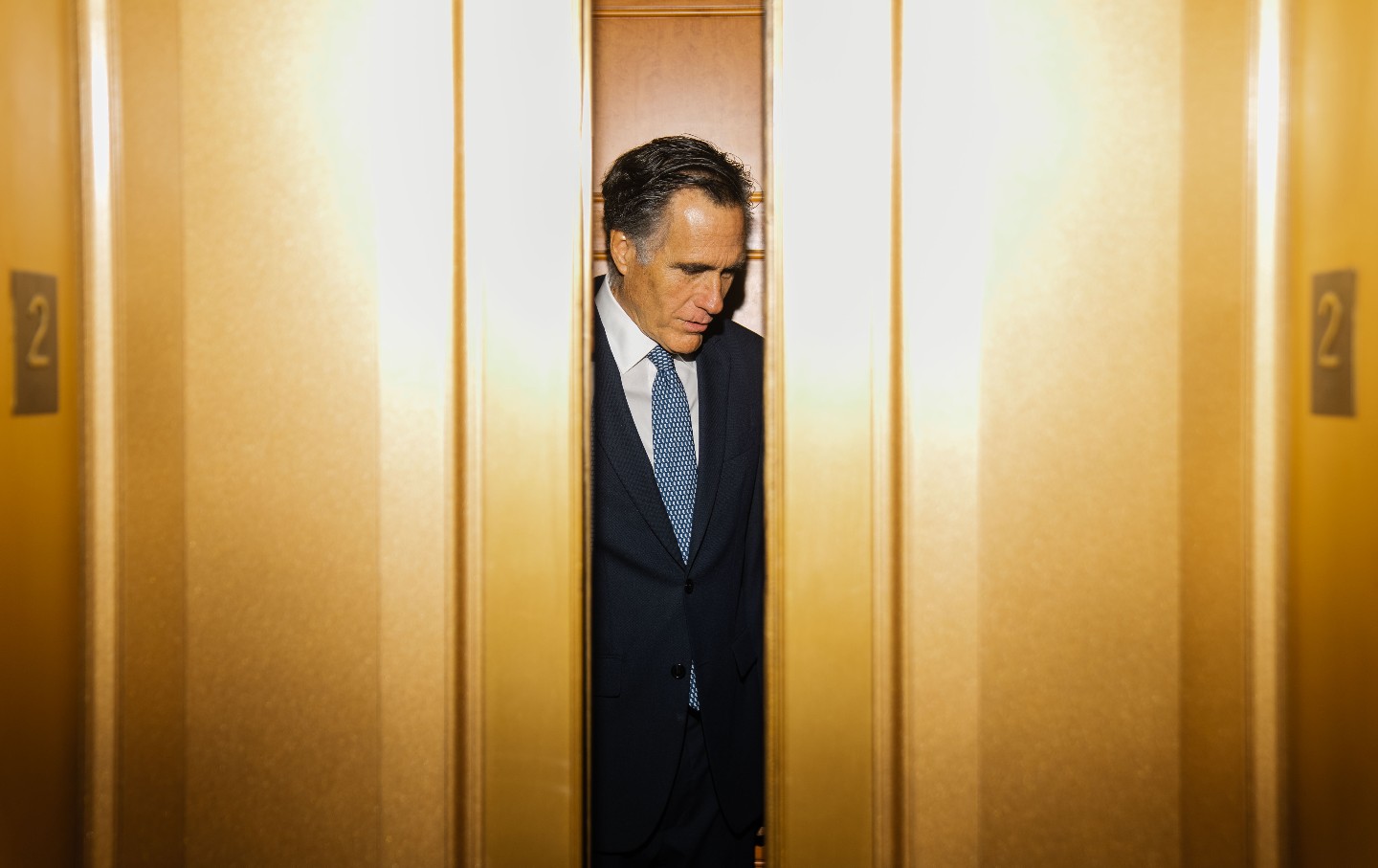
Mitt Romney is ill-fitted for the role of an outcast. By upbringing, by temperament, and by lifelong habit, he is an institutionalist.
Romney is an organization man to the marrow of the bones that give him his finely chiseled features. His father was George Romney, a president of American Motors who became a Michigan governor and perennial presidential hopeful. From that formidable patriarch, Mitt Romney inherited an intertwined series of loyalties: to corporate capitalism, the Republican Party, and the Mormon Church. Of these identities, the religious one is surely central. The Romneys have been pillars of the Church of Jesus Christ of Latter Day Saints since the early 19th century, when the prophets Joseph Smith and Brigham Young were still looking for a haven for the prosecuted fledgling faith.
Mormonism is among the most communal of American creeds, with a strong emphasis on civic engagement and private philanthropy (especially toward the poorer members of the faith). Romney, by all accounts, has remained true to this moral imperative, although critics will argue that it exists in tension with his other loyalty, to capitalism at its most cutthroat. Certainly, as cofounder of Bain Capital, Romney showed how easy it was for venture capitalism to turn into vulture capitalism, profiting from leveraged buyouts that supercharged downsizing and offshoring. (This point was forcefully if ironically made in a documentary released in 2012 by supporters of his Republican primary opponent Newt Gingrich.)
From Romney’s point of view as a right-wing institutionalist, this contradiction is easy enough to solve: Bain Capital is good for the economy and a pillar of the social order, functioning in parallel with church and party.
The great drama of Romney’s life was not his loss in 2012, when his role at Bain Capital surely played a decisive role in turning a crucial swath of the electorate against him. More painful than that election loss was the rise of Donald Trump, which unexpectedly alienated Romney from the party he once led. A firm believer in Republican Party orthodoxy and the virtues of the established order, Romney couldn’t stand Trump’s various rhetorical swipes against foreign policy alliances and trade policy (although, in fact, Trump governed until the January 6 insurrection almost exactly as a conventional Republican would, albeit with nastier tweets). Like many in the establishment, Romney took Trump’s incivility as a personal affront, a denial of the clubby consensus that Romney had spent a lifetime supporting.
In the early days of Trump’s presidency, Romney started to style himself as a critic of Trumpism within the party. In 2018 he announced that he was running for the open Senate seat in Utah. As he explained to Atlantic writer McKay Coppins (author of a soon-to-be-released biography of Romney), he felt he “had the potential to be an alternative voice for Republicans.” True to his words, he did serve as a Trump rebuker. In 2019, after Trump was impeached by the House of Representatives over abuse of power, Romney was the sole Republican in the Senate to vote for Trump’s removal. No Republicans in the House voted for impeachment, so Romney’s vote set him apart from his party. In 2021, after the January 6 attack on the Capitol, Romney was one of only five Republican senators to vote for removal, joining the 10 Republicans in the House who voted for impeachment.
On Wednesday, Romney announced that he will not be running for reelection. At age 76, Romney cited his age as a factor—an admirable acknowledgement of human frailty in the age of gerontocracy, with figures like Dianne Feinstein and Mitch McConnell maintaining a death grip on power as if it were life itself. But Romney’s isolation from the Republican Party was just as important a factor. As Romney told reporters,
“Trump is the leader of the greatest portion of the Republican Party. It’s a populist, demagogue portion of the party. I represent a small wing of the party. I call it the wise wing of the Republican Party.”
Leaving aside the self-congratulation of “wise” this is accurate. Romney, presidential nominee only a little over a decade ago, is the voice of a minuscule faction that is barely a presence in the GOP.
Coppins, in a lengthy excerpt from his book published in The Atlantic, describes Romney as a “party pariah.” Romney’s disillusionment with the party is thorough. He told Coppins, “A very large portion of my party really doesn’t believe in the Constitution.” Romney is justifiably furious that fellow GOP senators would in private completely agree with his criticisms of Trump but refuse, for fear of alienating their MAGA-loving constituents, to go public about it. They would tell Romney, “I sure wish I could do what you do,” or, “Gosh, I wish I had the constituency you have.” Romney’s stock response: “There are worse things than losing an election. Take it from somebody who knows.”
Popular
“swipe left below to view more authors”Swipe →During most of Trump’s term, political fear of election losses was the prime motivator. After January 6, physical fear of mob violence became paramount. Romney himself now spends $5,000 a day (or nearly $2 million a year) on security for his family.
As McKay reports:
One Republican congressman confided to Romney that he wanted to vote for Trump’s second impeachment but chose not to out of fear for his family’s safety. The congressman reasoned that Trump would be impeached by House Democrats with or without him—why put his wife and children at risk if it wouldn’t change the outcome? Later, during the Senate trial, Romney heard the same calculation while talking with a small group of Republican colleagues. When one senator, a member of leadership, said he was leaning toward voting to convict, the others urged him to reconsider. You can’t do that, Romney recalled someone saying. Think of your personal safety, said another. Think of your children. The senator eventually decided they were right.
Romney is worried about the future of American democracy—rightly so. How can democracy survive if one of the two major parties has lawmakers who live in fear of being lynched by their own voters? That means Republicans will always be captive to their most extreme members, vigilantes who reject democracy itself.
It’s hard not to respect the genuine nobility of Romney’s principled and lonely stance against his own party’s submission to Trumpism. Even so, we must also remember that it was predatory capitalism of the type practised by Bain made the United States ripe for authoritarian demagoguery. It’s not hard to see why many Americans would prefer even Trump’s crude demagoguery to the plutocratic disdain of Romney’s swipe at 47 percent of the population as “victims” who mooch off the government. Romney’s own role in 2012 in welcoming the support of Trump—already a loutish racist birther—should never be forgotten either.
As Romney exits the Senate, he’s pondering a post-Republican future. Unfortunately, none of his plans are good ones. According to Coppins, Romney
privately approached [West Virginia Senator] Joe Manchin about building a new political party. They’d talked about the prospect before, but it was always hypothetical. Now Romney wanted to make it real. His goal for the yet-unnamed party (working slogan: “Stop the stupid”) would be to promote the kind of centrist policies he’d worked on with Manchin in the Senate.
But the “centrist” policies that Romney supports (hawkishness against China and Russia, entitlement reform) are prime examples of how the elite loves ideas that are both banal and dangerous. He does say he also wants action on climate change, but is vague on what that would entail. Indeed, the new cold war against China that Romney advocates is itself likely to doom any chance of dealing with climate change, with fragile international cooperation giving way to competing camps.
How much does Romney’s centrism break from the status quo? Biden himself is a hawk on Russia and China—even as the public tires of foreign policy interventionism. According to a recent CNN poll, a majority of Americans (55 percent) oppose sending more money to Ukraine. Opposition to entitlement reform (in plain language: cutting Social Security and Medicare) helped Trump win the 2016 primaries, although he’s walked back that position. In other words, Romney isn’t offering that much of an alternative to Biden or Trump on the substance. However personally admirable Mitt Romney might be, his version of centrism has no future. A pariah should have the boldness to offer something more than an exhausted consensus.
More from
Jeet Heer 
Trump and Netanyahu Want to Turn Iran Into a Failed State Trump and Netanyahu Want to Turn Iran Into a Failed State
This war looks designed to cause maximum chaos and instability. The world will pay a high price.
The State of the Union Will Be Even Worse Than Trump’s Polling Numbers The State of the Union Will Be Even Worse Than Trump’s Polling Numbers
What’s a flopping demagogue to do? Lash out at his enemies, pretend he’s doing great, and bore us all into submission.
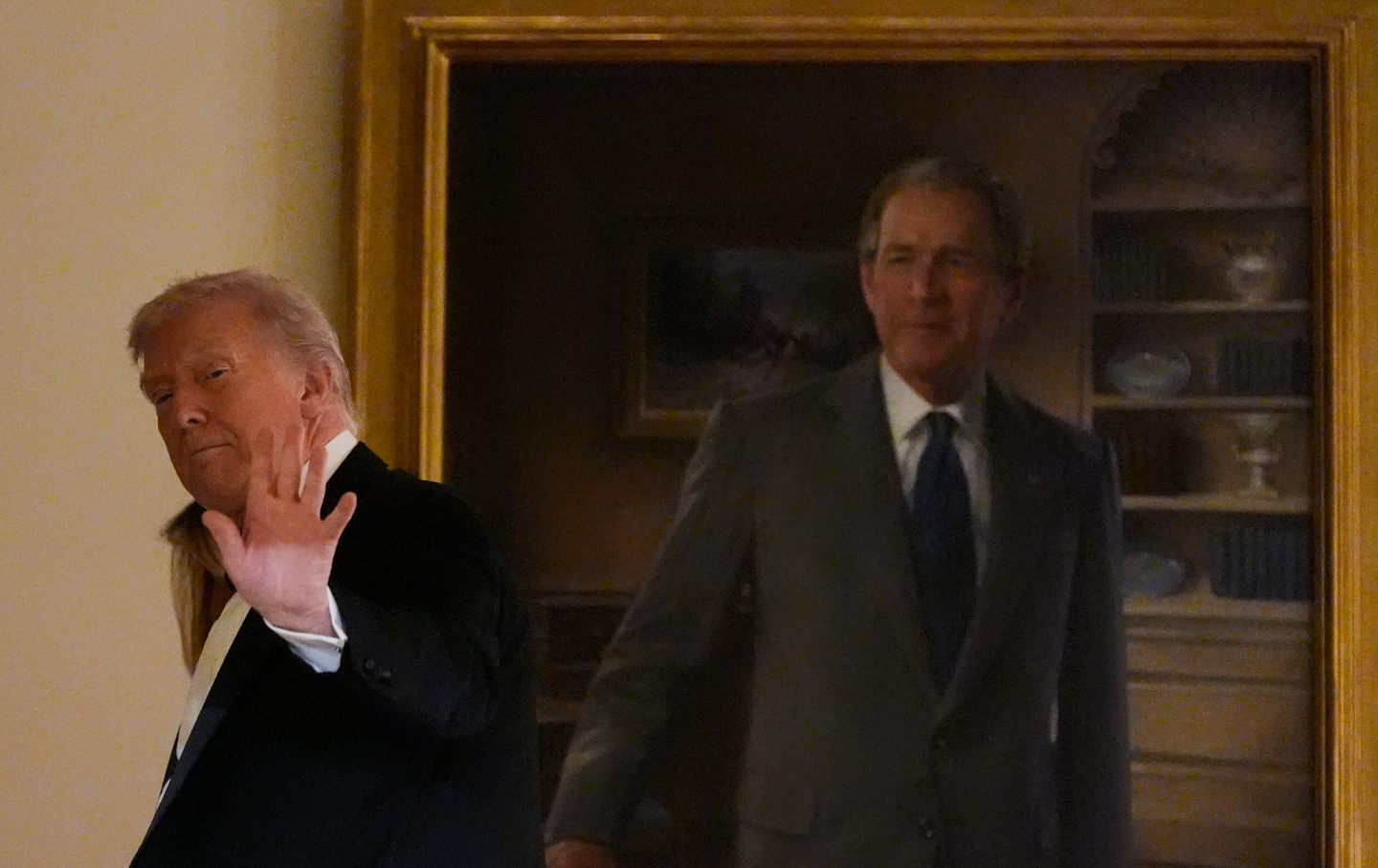
Trump’s Iran War Could Be an Even Bigger Catastrophe Than Iraq Trump’s Iran War Could Be an Even Bigger Catastrophe Than Iraq
Remarkably, Trump seems on the verge of outdoing George W. Bush in reckless, stupid militarism.
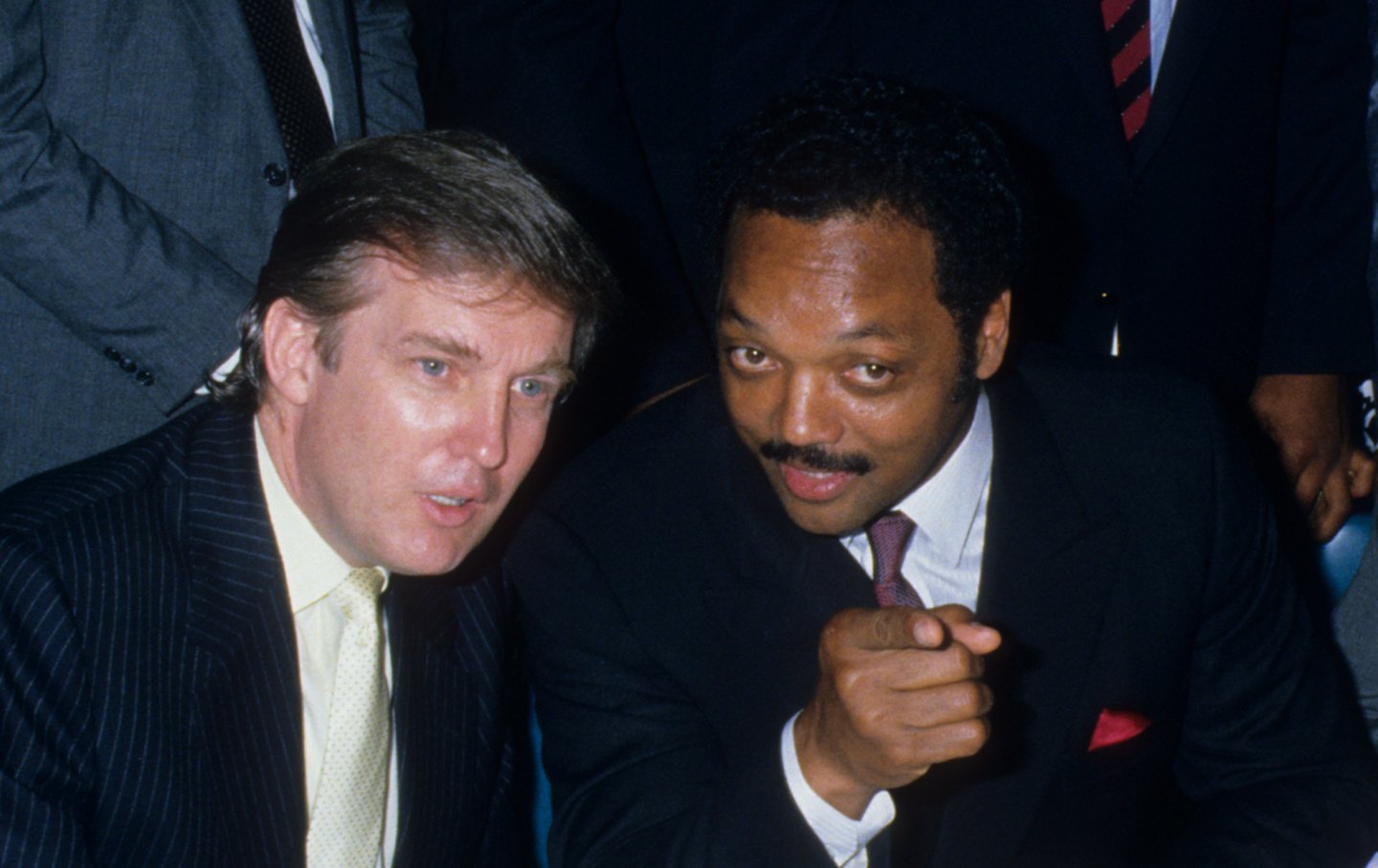
Why Trump Is Trying to Steal Jesse Jackson’s Glory Why Trump Is Trying to Steal Jesse Jackson’s Glory
The president wants you to know he had a Black friend, sort of.
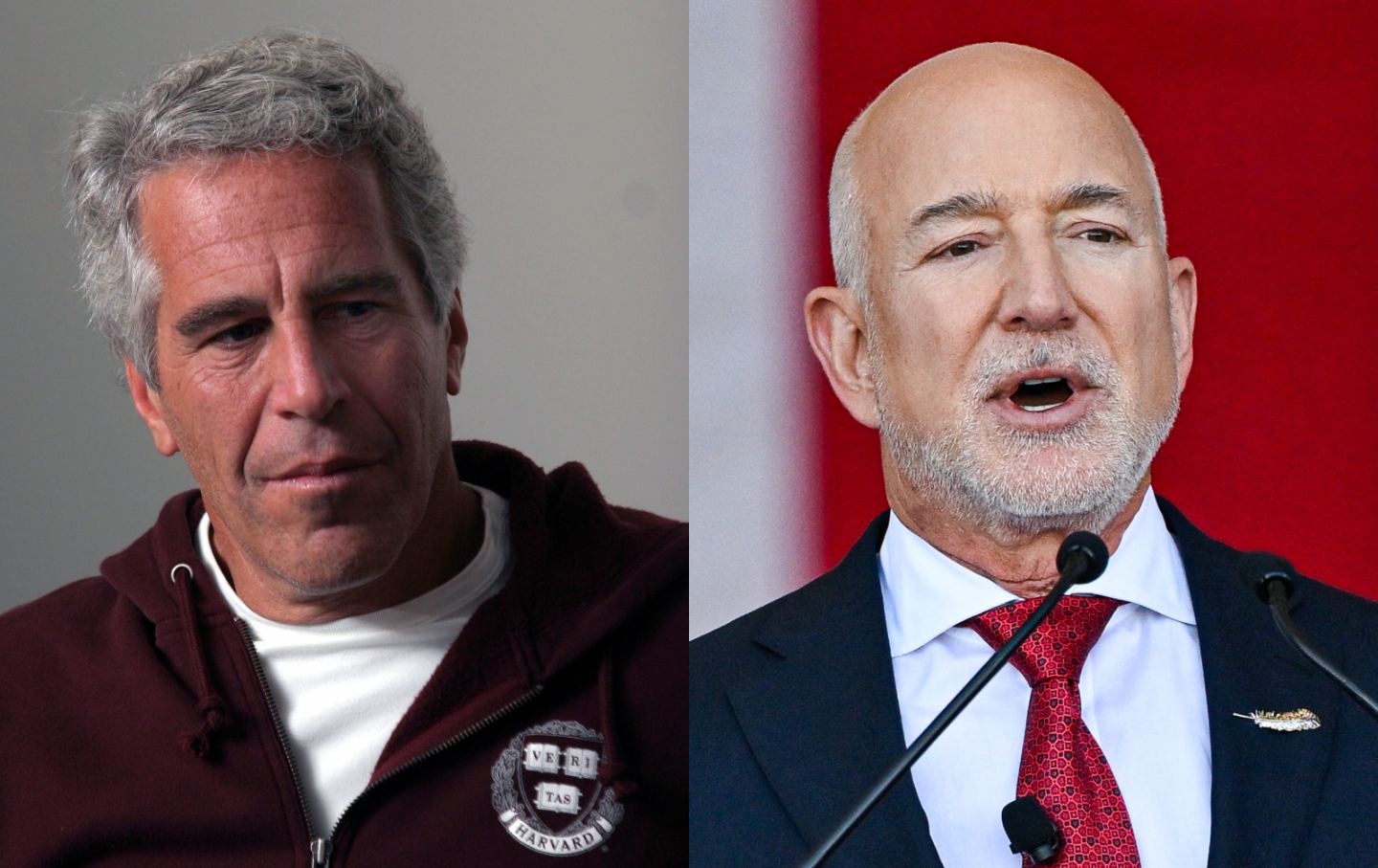
From Epstein to Bezos, the Ruling Class Is Rotten to the Core From Epstein to Bezos, the Ruling Class Is Rotten to the Core
Let this week be yet another reminder that plutocrats are a threat to democracy, not its saviors.
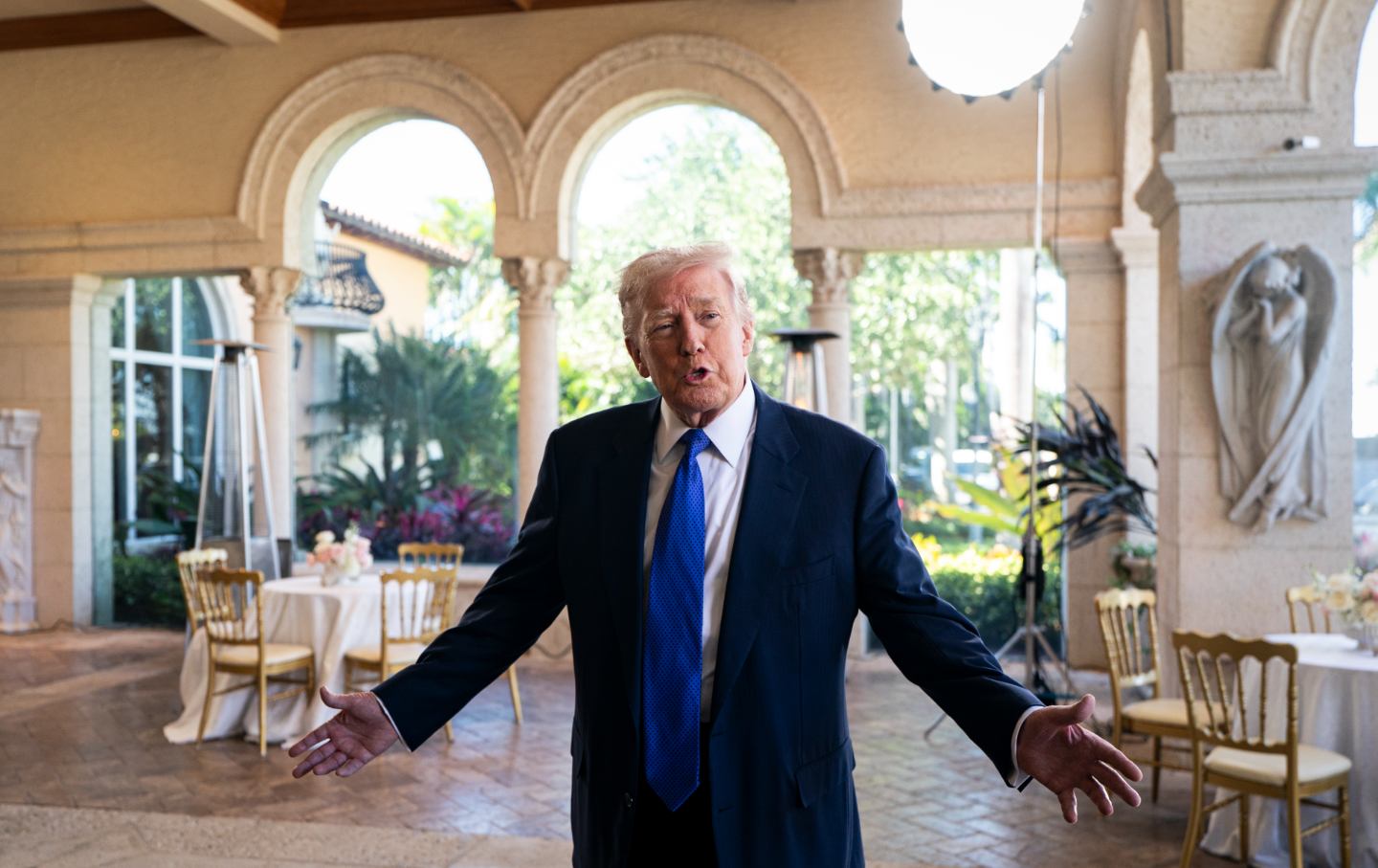
How Trump Became the Biggest Crook in the History of Democracy How Trump Became the Biggest Crook in the History of Democracy
The penny-ante bribes of his first term have given way to billions in graft.

