
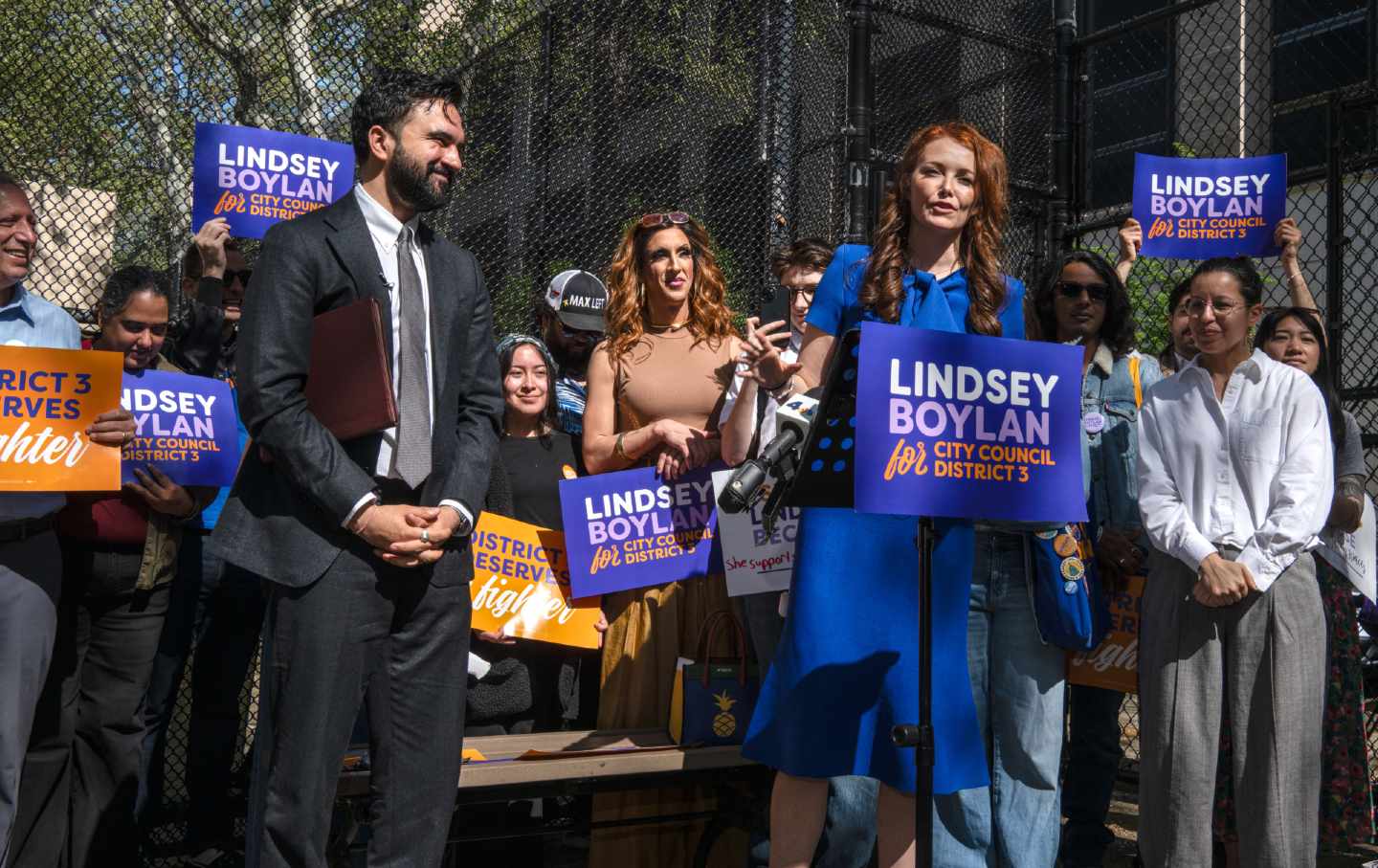
Only a few years ago, Lindsey Boylan, former deputy secretary for economic development and special adviser to the governor of New York, became known as the first woman to speak out against former Governor Andrew Cuomo for sexual harassment. Yet Boylan has refused to let her abuser define her even after she helped ensure his defeat in the New York City mayor’s race. On her New York City Council campaign, she wants the voices of survivors—and more broadly, the voices of marginalized communities—to come first.
Now Boylan is running a sewer socialist–style campaign that has resonated beyond the Lower West Side of Manhattan, which she is running to represent. From Trump-proofing New York to supporting myriad progressive policies, including pledges to establish a $20 million City fund for gender-affirming care and pass a vacancy tax on landlords who keep rent-stabilized and affordable units empty, her campaign feels designed to serve a diverse and inequality–riddled city.
She has also made her intent to follow in Zohran Mamdani’s footsteps clear. Like the incumbent mayor—from whom she recently earned an endorsement—Boylan self-identifies as a democratic socialist, is running with the backing of the Working Families Party, and is embracing big, bold ideas to make city life more affordable. She says that all of her campaign staff and field leads are former Mamdani volunteers and that, so far, she has personally knocked on over 2,500 doors. District 3 is, on average, whiter and wealthier than the city as a whole, but as Boylan’s campaign has emphasized, the locale has pockets of deep poverty and is home to massive public housing developments that have fallen into major disrepair.
On Tuesday, April 28, Boylan faces off against Democratic Assembly District 75 leader Layla Law-Gisikio, Community Board 4 chair Leslie Boghosian Murphy, and Carl Wilson, former chief of staff to the district’s former Council member. Early voting in the district is already underway.
This interview took place on April 20 and has been edited and condensed for space and clarity.
—Ilana Cohen
Ilana Cohen: If you had to explain to a voter in between subway stops what the most important reason you’re running to represent District 3 is and why you’re the best candidate, what would you say?
Lindsey Boylan: We just elected a progressive direction for the city with the mayor’s election. To accomplish all of these incredibly important things we just fought for—universal childcare, fast and free buses, taxing the rich—we need a City Council to support the mayor’s and New Yorkers’ agenda…and we need that seat to get things done. [Mamdani’s] already had an amazing win on universal childcare, with the pilot program and the governor announcing it. Now we need to make sure all of the relevant implementation pieces around each of his agenda items can happen.
IC: You were the first woman to expose former Governor Andrew Cuomo for sexual harassment. Today, women continue speaking out against abusers, including those in elected office. What would it mean to you as a survivor to join the City Council, and how would you seek to shape the Council into a force for ending sexual violence and advancing justice for survivors?
LB: Survivors writ large, not just women, are being penalized for speaking up and silenced. So I am going to use every single moment, every single opportunity, to support change on that front. I think it’s powerful. You know, people ask me often, “Is #MeToo dead?” And I think that’s wish-casting that accountability is over, and it’s not…. The way this used to work is you would have something horrible happen to you. You would tell no one else until you were maybe in your 80s or 90s—after your career was over [and] the abuser was most times out of power and gone. So, it was telling your truth, but the impact would be limited, because that’s how society treated us. Well, I was in my 30s when I came forward. I’ve got 50 more years at least, and other survivors do, too. We are not going away. We are going to have careers. We are going to use our voices; we are going to make an impact and change. I think that’s incredibly important, and I would love to be yet another example of how that looks.
IC: The accelerating climate crisis poses a pressing issue for New Yorkers, especially amid federal climate regulatory rollbacks and Governor Hochul’s attempt to water down the state’s leading climate law. Your environmental experience often gets less attention, but you were involved in storm recovery efforts from Hurricane Sandy in New York and in Puerto Rico after Hurricane Maria, and sit on the Board of The Battery. You’ve also been endorsed by Sunrise Movement NYC. How would you seek to advance climate adaptation, especially to extreme weather events, and bolster the City’s commitments to climate and environmental justice?
LB: [The climate crisis] is front and center. I have seen the governor and, in some cases, members of the City Council try to roll back incredibly important legislation. We will not let that happen. I’ve rallied with the Sunrise Movement, pushing back against the governor on these proposed rollbacks. I’ve also pushed back on the rate hikes from the Public Service Commission, which…is hitting our most vulnerable first. At a local level, we have to implement [the emissions-reducing] Local Law 97, which is incredibly important.
We are already at the zero hour. Most of my closest endorsers and supporters have come to the campaign in part because of the climate crisis, so that is going to be a top issue. And I’m not going to bend to whoever says “we can’t afford to do these changes that support reduced emissions.” We don’t have time for that; we can’t afford not to do it.… That is going to be a part of everything I do.
IC: You have said you support a wealth tax on the richest New Yorkers. Given that the median household income in District 3 is significantly higher than the citywide average, do you see any conflict between supporting this kind of tax for the benefit of all New Yorkers and representing the interests of your potential constituents?
LB: No, I think it’s incredibly important.… We’re talking about [taxing]…a very small number of companies and individuals running our entire world.… A 2 percent increase on people making a million dollars or more is not going to cause people to leave [the city]. Massachusetts did the exact same thing, but actually taxed their wealthiest more, and what they found is that, [on] net, people did not leave. I do like to go back to my experiences as [deputy] secretary for economic development, because people are making an economic development argument that people will leave if we do this corporate and personal tax increase. And that is just not true. I was the jobs person, an economic development person, and I’m saying it from that perspective. Candidly, my family will be one of those that is taxed. So I’m not telling people to do something that I’m not going to also do.
In order to continue to serve our community, we need to be taxing our wealthiest to cover what is an extreme and growing wealth gap. So while we may have some of our wealthiest in our community, we also have some of the people who are struggling the most because of the rent burden [and] the challenges of staying in this district. If people want a safe, good quality of life, [and a] place to live in that benefits everyone, it doesn’t just benefit our most vulnerable. If you want good public parks, a good public education system, [and] a good subway system that works for everyone, you’re going to benefit from that just as much as someone who is living in deeply affordable housing and is not paying the 2 percent increase.
IC: District 3 has significant amounts of rent-burdened households and constituents living in public housing, including the Fulton and Elliott-Chelsea Houses. You have called for social housing and strengthened tenant protections. How would you work to implement these policies and meet the district’s housing needs, while advancing more affordable housing citywide?
LB: About a little over 40 percent of this district is rent-burdened. People think of it as a wealthy district. And we do have extreme wealth here, but we have a tremendous number of people suffering. And I see it and hear it every day…. I was supportive of the housing ballot measures [to change the affordable housing land use process, passed in the last mayoral election] because I think part of that equation is to build more deeply affordable housing, and move away from programs that really didn’t move the needle, like [the] 421-a [tax exemption]. [We should instead be] building protections and support for affordable housing that exists, extending programs like Mitchell-Lama, making sure that we have robust support in the budget for city [programs like] SEPS, SCRIE, and DRIE, and making sure the public knows about those [resources].
And then on NYCHA, I luckily oversaw the entire housing portfolio for the State of New York when I worked in state government, and we were proud at the time to get hundreds of millions of dollars I helped secure through the budget process. Well, for NYCHA, that’s a drop in the bucket. We have, you know, a total of almost $80 billion of deferred maintenance and need in the system as a whole. That’s almost an annual budget for the city. So we have to figure out as many ways to continue to refurbish and make sure that the homes people are living in at NYCHA are safe and working. I think we have a lot of challenges, particularly in this district with Fulton and Elliott-Chelsea, because the community has really lost faith and trust in the process that we have going here.
IC: District 3 is both a historic and contemporary hub for LGBTQ+ communities in the city. How are you standing up for LGBTQ+ constituents amid a federal crackdown on such rights?
Popular
“swipe left below to view more authors”Swipe →LB: I will and always have fought for the LGBTQI+ community. I think in particular, the attacks on our trans community are disgusting, and not enough people are speaking up about it. The idea that our healthcare systems, like New York Presbyterian, would obey, in advance, ending gender-affirming care, to me, is unacceptable, and we need to hold these institutions accountable. They get access to public support, and that is unacceptable to be withholding and harming the human rights of people who have made very careful health decisions for themselves and their families.… Folks know that I have been showing up for years, and I will say, we have a number of field leads and volunteers who are trans, and they deserve to be heard in city government and to be advocated for…. I am very passionate about that, because, to me, it’s a complete civil rights abuse that this is all happening now and not enough people are speaking out.
IC: Council speaker Julie Menin is backing your main opponent, Carl Wilson. She has also reportedly butted heads with Mamdani during his first 100 days in office. How would you work productively with the speaker from day one if you’re seen as the mayor’s ally?
LB: We had a nice call the day I decided to get in the race because I knew that she was supportive of [Carl], and I wanted to make sure to say that I was looking forward to working with her should I win.… We’re both women who are passionate about the work that we do, and so I don’t see any reason to assume that we’re not going to be able to work together, and I have agreed with a lot of the things that she’s done.
IC: Right now, the Trump administration is attacking the inclusivity and diversity that the city has long stood for, as well as many of the progressive policies that you’re running on and democratic socialism in general. How would joining the City Council at this moment enable you to participate in a broader resistance to the Trump administration?
LB: The most exciting place to be [right now], in my view, is in local government in New York City. [That’s] because of the mayoral election we just had [and] because we have a robust fight against what the Trump administration is doing to our immigrant communities [and] doing to dismantle the federal government…. In New York, we can fight back directly against Trump’s hateful policies, by showing that government does work for people and it should work for people.
Become a Sustaining Donor This September
Between the reemergence of right-wing red-baiting and Donald Trump’s use of the chilling National Security Presidential Memorandum–7 to criminalize left political organizing, we’re seeing McCarthyism reborn before our eyes.
This assault on democracy cannot be ignored or wished away. Resisting it requires bravery in the face of threats and repression, a steadfast commitment to the truth, and the unwavering belief that we can—and will—overcome this darkness.
We must have an independent media that sets the record straight, unearths corruption and abuses of power, and advances a politics of justice and dignity for all if we’re to win this fight.
That’s why I’m writing to you today. This September, The Nation needs to add 100 monthly donors to sustain our progressive journalism. Your contribution makes the next investigative report, the next truth-speaking column, and the next pathbreaking essay all possible.
I hope you’ll support our work with a recurring donation today. If you donate $10 or more a month, we’ll send you a brand new “Hands Off the Free Press!” sticker to recognise your commitment to our cause. Please, donate today.
Onward,
Katrina vanden Heuvel
Editor and Publisher, The Nation
More from The Nation
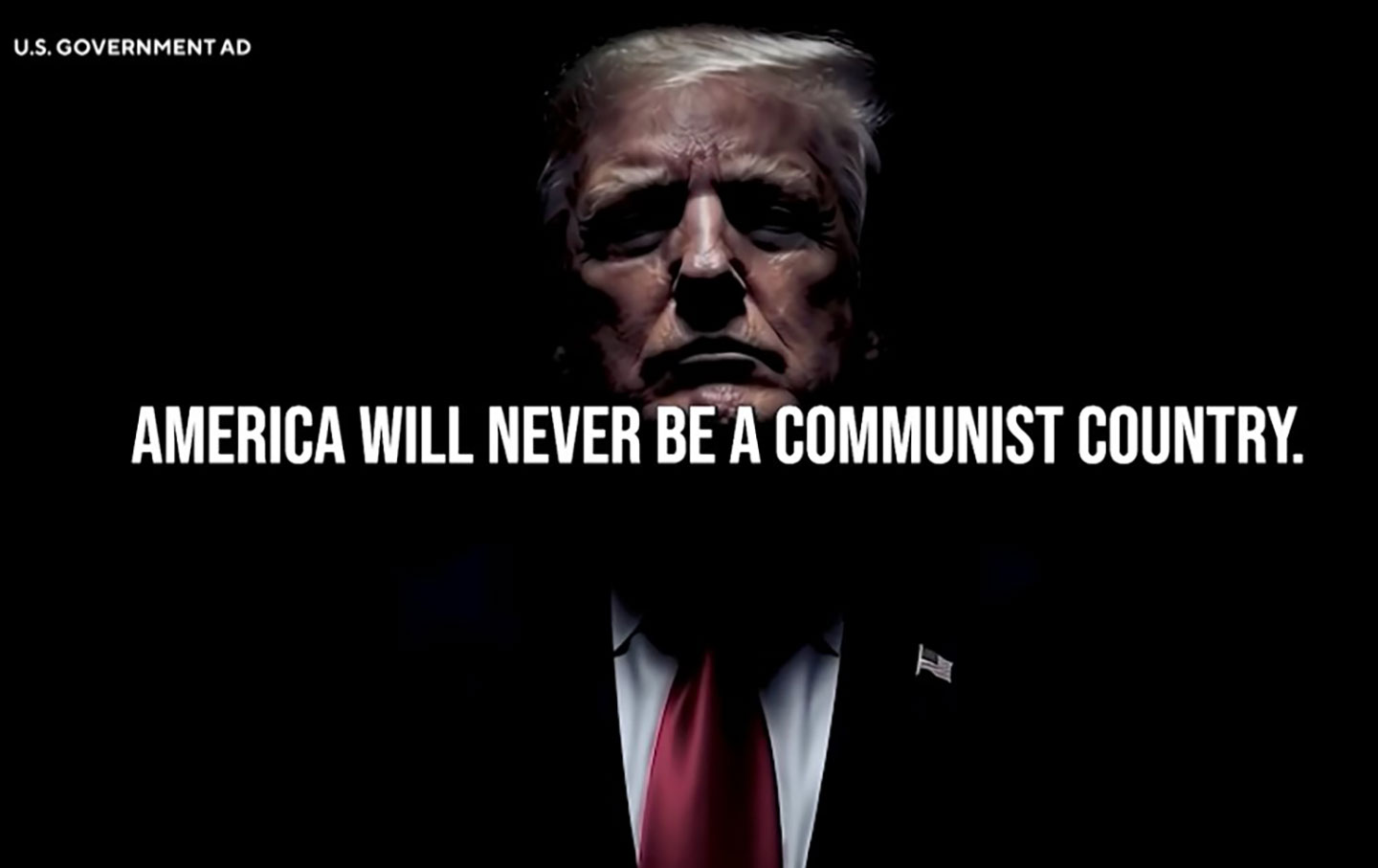
Trump Is Using Your Taxpayer Money to Pay for Illegal Election Propaganda Trump Is Using Your Taxpayer Money to Pay for Illegal Election Propaganda
But as brazen and authoritarian as these ad spots are, they seem likely to backfire.
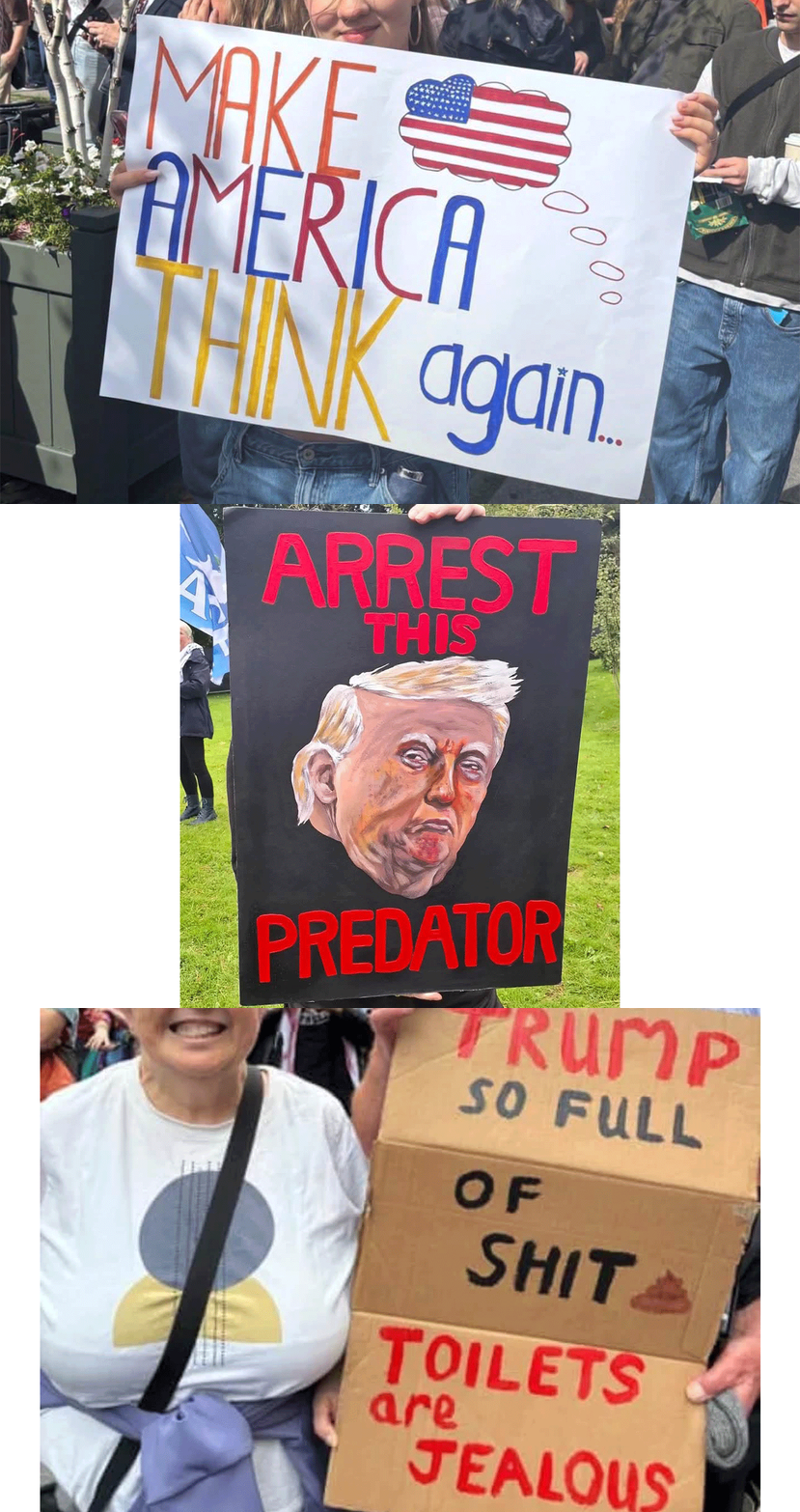


Clavicular’s Charges Are One Thing. Rape Culture Is Another. Clavicular’s Charges Are One Thing. Rape Culture Is Another.
Braden Peters consistently acts as though the autonomy of women is a maladaptive trait, and dogmatically dismisses any claim to female equality as an outlying aberration.
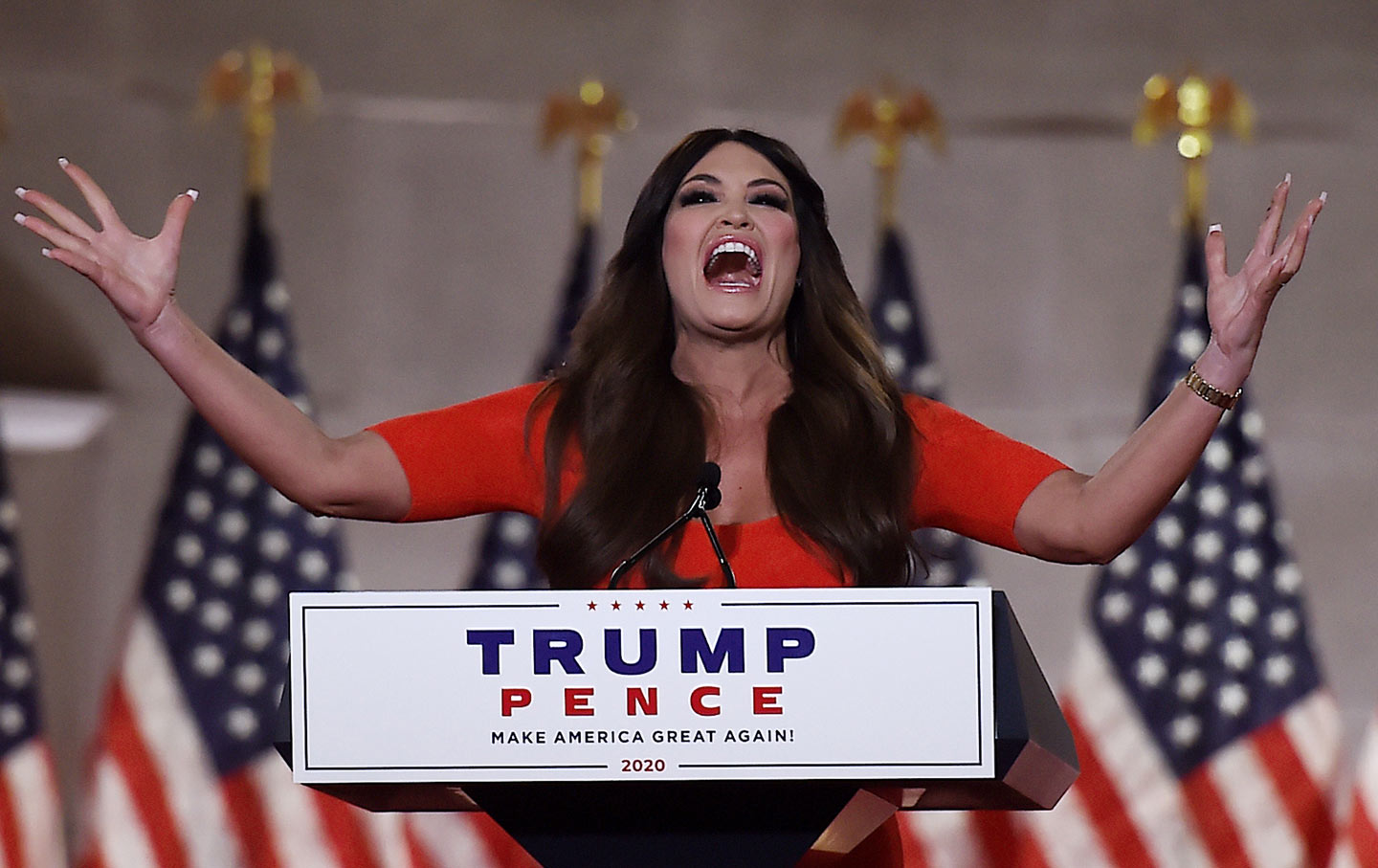
Kimberly Guilfoyle Is a Master of Mafia Diplomacy Kimberly Guilfoyle Is a Master of Mafia Diplomacy
The US Ambassador to Greece is making suspicious deals for her buddies.
Missing Guardrails for AI Missing Guardrails for AI
Trump ignores the threat of extinction.

