
Why Ilhan Omar Makes the Right Lose Its Mind
Trump and his MAGA allies want people like Omar to vanish from this country—and they hate her for refusing to do so.
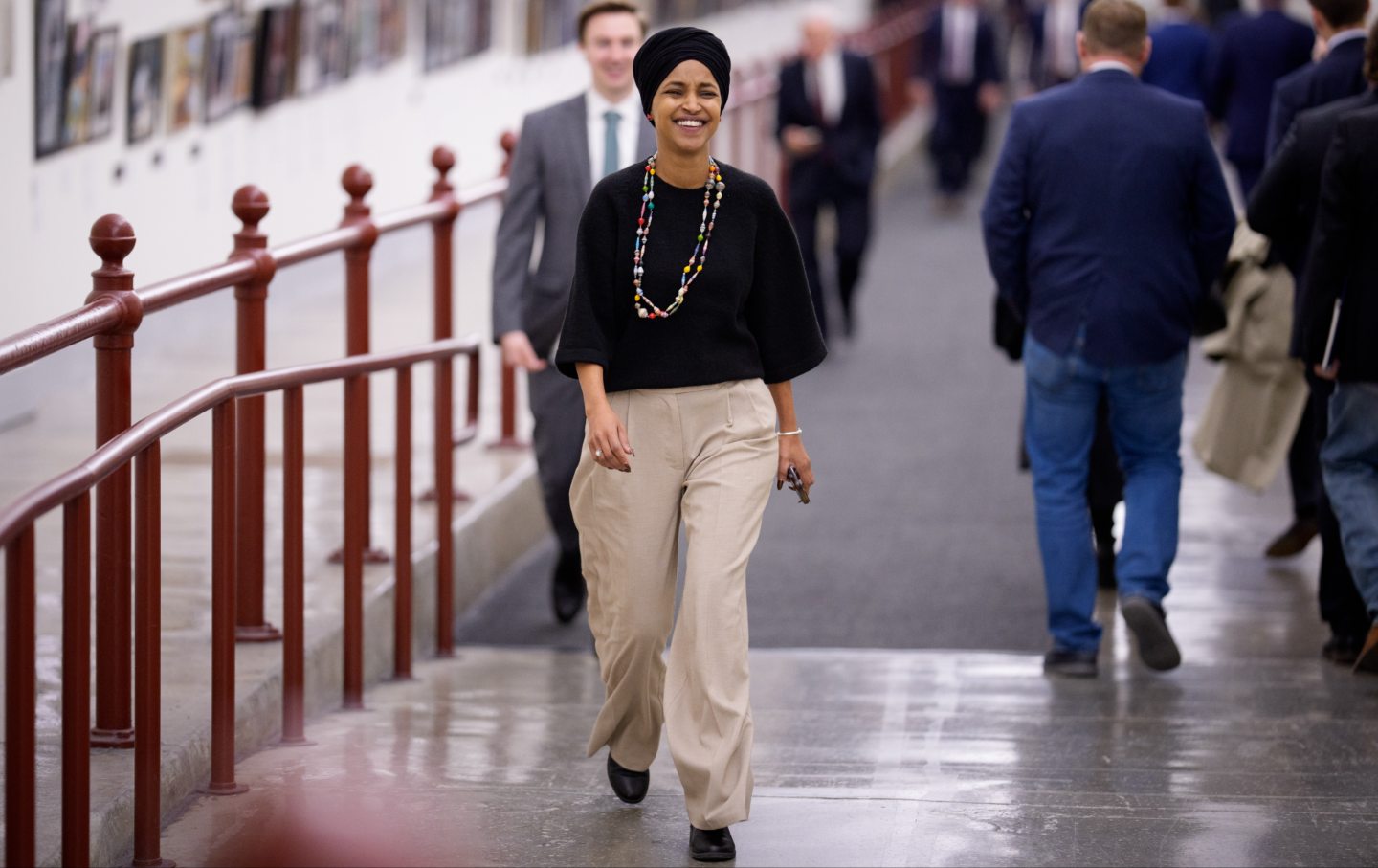
Representative. Ilhan Omar (D-MN) walks toward the Capitol on December 10, 2025.
(Andrew Harnik / Getty Images)President Donald Trump went to Pennsylvania last week to give a speech about “affordability.” It was sold as an economy speech, which is to say it was supposed to be about money and how people don’t have enough of it.
Trump did talk about how the math isn’t his fault, and about whose fault the math is. He even announced a new policy designed to make the math even worse. Pretty bog-standard American political fare.
But he also did something else, which turned out to be just as American as that other stuff: scapegoating in place of answers, grievance politics in place of policy, and gutter racism. The speech was, in that familiar Trumpian way, about permission: who gets to be here, who gets to be counted, who gets to be treated as American. And, to illustrate this, Trump reached for one of his favorite targets: Minnesota Representative Ilhan Omar, a Somali American citizen whose presence in this country has infuriated Trump for nearly a decade (and for whom I used to work as a political communications operative):
I love this Ilhan Omar, whatever the hell her name is, with the little turban. I love her. She comes in, does nothing but bitch…I love it. She comes to our country and she’s always complaining about the constitution…she should get the hell out, throw her the hell out.
Right on cue, the audience played the chorus. An old classic. “Send her back.”
As I said, Trump’s hatred of Omar is nothing new. But his obsessive, almost devotional hostility towards her is still notable. What is it about Ilhan Omar that makes the MAGA movement so apoplectic?
You can start with the obvious: She’s a Black Muslim woman, a refugee-turned-citizen, a living symbol of the demographic and political changes the right has built its modern identity around resisting. But there’s a deeper reason, too. The reason the attacks keep coming even when the “scandals” don’t land: Omar collapses the right’s most useful story with nothing more exotic than her continued existence as a working member of Congress.
Think about that “send her back” chant. It isn’t just ugly. It’s instructional. It’s the crowd rehearsing the idea that some people’s membership in the US can be revoked purely because of what they look like, where they come from, or whom they pray to. Once you see all this, you start to see the whole enterprise—Trump’s attack, the recycled lie, the ritual chant—not as spontaneous outrage but as machinery. The smear is the strategy: make belonging conditional. Keep the target permanently on probation. The real message is to everyone watching: Some Americans are always provisional.
And Ilhan Omar refuses to accept that. She refuses to follow the script Trump wants her to.
The script says immigrants arrive only to take. The script says Muslims cannot be loyal. It says refugees are permanent guests. It says “real” Americans are the people who never have to say they’re real. Omar, unhelpfully, keeps being a member of the House of Representatives anyway. And she keeps doing the unglamorous job of governing, which is, in a healthier democracy, supposed to be the least surprising thing in the world.
Here’s the part that never survives the national caricature: in Minnesota’s Fifth Congressional District, Ilhan is not a cable-news cipher or an argument-starter. To people who live in her district, she’s “their guy.” Locally, her electoral record is what political consultants call “not a problem.” She wins, and she gets stuff done.
She is popular where she actually has to be popular: among the people who can fire her.
One small, clarifying detail about Omar is that she’s a genuine combat sports fan. She posts about boxing with the kind of family-memory specificity that does not come from a PR brainstorm. Actually, she brought it into work this month, pressing a UFC executive in a hearing about fighter pay and protections.
I mention this because combat sports teach a lesson that politicians, for some reason, keeps pretending not to know. If you back up from a bigger bully, it does not make the bully gentler. It usually just tells them the tactic works. Omar doesn’t swing wild, but she also doesn’t retreat just because the other side is louder, richer, or surrounded by cameras. She understands rounds, and she understands that composure is not the same thing as concession.
Minneapolis and its inner-ring suburbs are a complicated place of union households and public-sector workers, service workers and students, immigrants and multigenerational Midwesterners. Inconveniently for the right, the fifth looks a lot like “average America.” And those average Americans, the people dealing with school funding and healthcare billing and public safety and transit, and, just this month, rumors and footage and citywide nerves about masked thugs with plate carriers and automatic weapons, not to mention the annual existential crisis of municipal snow removal— these people keep choosing Omar.
A representative’s job is to deliver. She does.
I know how easy it is to sound naïve saying that out loud, as if “delivering” is some quaint relic of civics class. But I used to work closely with Omar (and for her predecessor, Keith Ellison, who was known far and wide for this same reason). I have seen the pace up close, the way the work doesn’t end when the cameras do. The meetings that run long, the constituent problems that don’t resolve cleanly, the local priorities that require not just a statement but persistent, repetitive follow-through.
At risk of stanning too hard, I’m not going to talk about how courageous Omar is for doing the job she does, given how genuinely dangerous it can be for a person like her to do it. I’ll let her constituents and her work speak for themselves.
That steadiness is not just temperament. It’s a governing style. It’s a refusal to treat the district as a backdrop. For Omar, the fifth district isn’t a brand; it’s a responsibility. And she approaches it like someone who believes that representation is a verb. She holds at least one town hall a month. Which is exactly why the attack machine can’t stop.
So what explains the gap between the caricature and the district reality?
One explanation is that the caricature is made for an audience that will never see the work—never sit through a community meeting, never watch a district office navigate an immigration case or a benefits nightmare, never talk to the nonprofit director who needed federal dollars to keep a community center open or keep programs thousands depend on alive. For that audience, Omar becomes a symbol first and a politician second (and a human being often not at all). She becomes a screen for anxieties about identity, power, and change.
But the other explanation, the one that matters, is that Omar’s effectiveness is precisely what makes her so threatening to the people who need her to be a fraud. It’s one thing to target an immigrant politician who looks isolated in Washington, alienated from constituents, clinging to a seat by a thread. It’s another thing entirely to target someone who keeps demonstrating what representation is supposed to look like: showing up, listening, fighting, delivering, and then doing it again next week.
This is the part that gets erased by the caricature. The right needs Omar to be a parasite. The reality is more dangerous to them: She’s a legislator doing the job, well, in public, with a base that notices.
None of this means you have to agree with Ilhan Omar on every issue. The point is to understand what is actually happening when the president uses the presidency to revive old lies about an elected congresswoman, and a crowd answers with deportation fantasies.
When the country’s most powerful political figure turns a Somali Muslim congresswoman into a public enemy, the consequence is not limited to cable news. It spills into schools and workplaces and public spaces where people learn, again, that harassment can be framed as patriotism, that cruelty can be laundered as “concern,” that the line between “politics” and “threat” is thinner than we like to admit.
And in that environment, there’s a trap that Democrats, especially the party’s self-appointed grown-ups, keep stepping into. The trap is to treat the smear as a tone problem. To condemn the chant, deplore the bigotry, and then pivot to scolding Omar for being too sharp, too polarizing, too much—too something—as if the right is simply reacting to her style rather than to her existence as an American who refuses to be conditional.
But there is no version of Ilhan Omar that will satisfy a politics premised on conditional belonging. The condition is the point.
If you want to talk about what is “un-American,” start here: a politics that treats citizenship as revocable based on identity. A politics that hears “send her back” and doesn’t recoil—not because the target is Ilhan Omar but because the target is the premise of equal membership in a democracy. A politics that insists some Americans must constantly audition for belonging while others are granted it by default, like an inheritance.
Popular
“swipe left below to view more authors”Swipe →Omar’s biography is not a loophole in the American story. It is the American story, told in a way that makes certain people furious: A person arrives, survives, becomes part of a community, earns trust, then leads. There is a tradition in Midwestern politics—call it prairie populism; call it neighborliness with teeth—that says democracy is not a spectator sport and that representation is supposed to look like solidarity, not hierarchy. Paul Wellstone’s plainspoken moral math, “We all do better when we all do better,” is the opposite of the zero-sum worldview that powers chants like “send her back.”
That’s why the obsession is so intense. The right can survive policy losses. What it cannot survive, at least not without escalating, is a living rebuttal: a refugee turned citizen who keeps winning in the Midwest, who keeps doing the work, who keeps proving that the America they mourn is not the only America there is.
Which is why they need Ilhan Omar to be a villain.
Not because she’s uniquely dangerous but because she’s uniquely clarifying. If she can be an American, fully, loudly, unapologetically, then the whole nativist story collapses. If her constituents can know her as principled and effective while the national right sells her as a foreign contaminant, then it becomes obvious that the national story isn’t describing reality; it’s trying to manufacture it.
Omar’s opponents want an America where belonging is conditional. The fifth district keeps insisting otherwise. And Ilhan Omar, in the most American way possible, keeps showing up to fight for the people who sent her there.
More from The Nation

What Are Democrats Prepared to Do if Trump Rigs the Election? What Are Democrats Prepared to Do if Trump Rigs the Election?
In this week’s Elie v. U.S, our justice correspondent challenges Democrats' lack of a plan if Trump steals the midterms. Plus: the most racist, and honest, AI add ever.
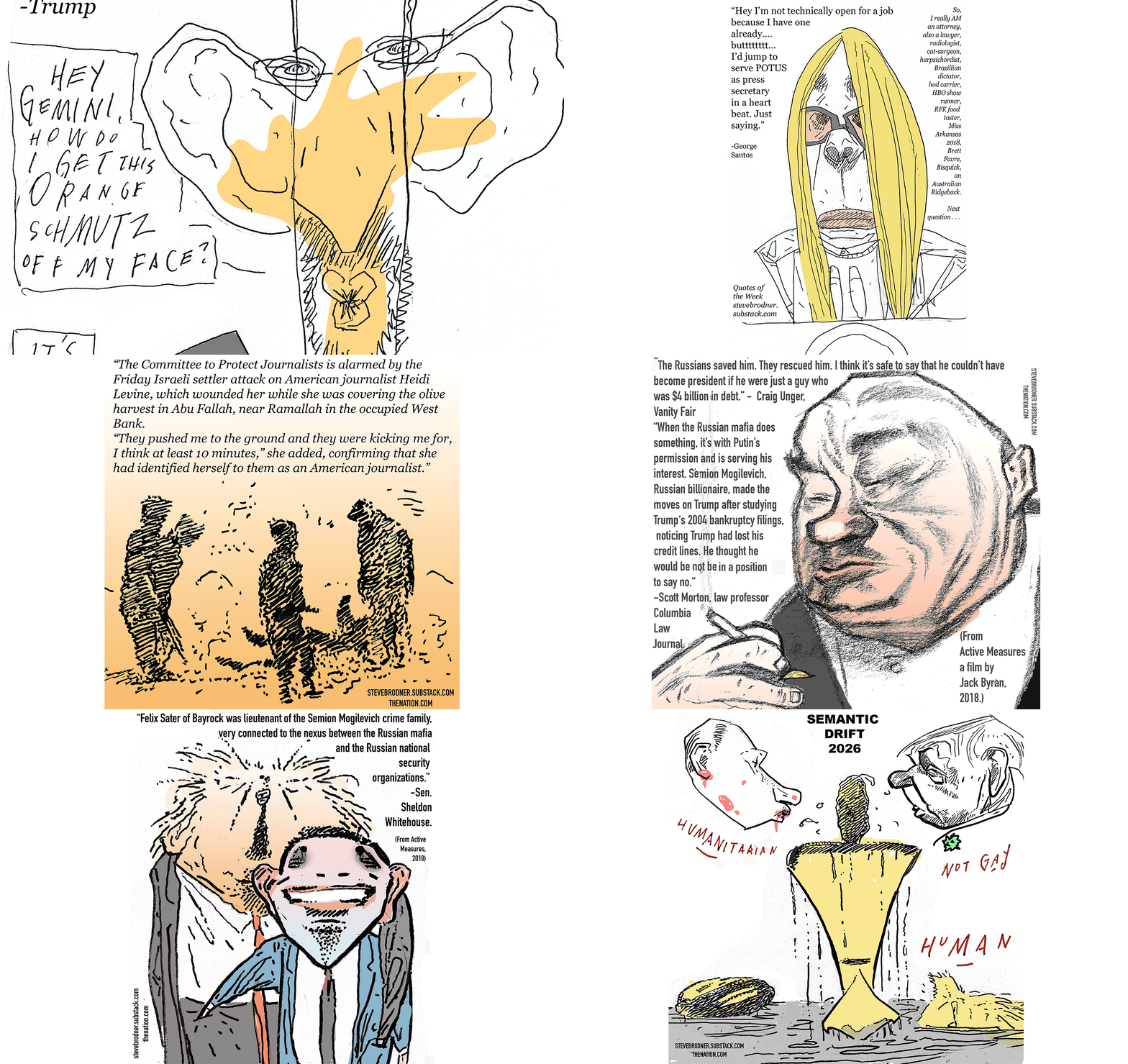
Ramaswamy’s Guide to a Better Vocabulary Ramaswamy’s Guide to a Better Vocabulary
Quotes of the Week.
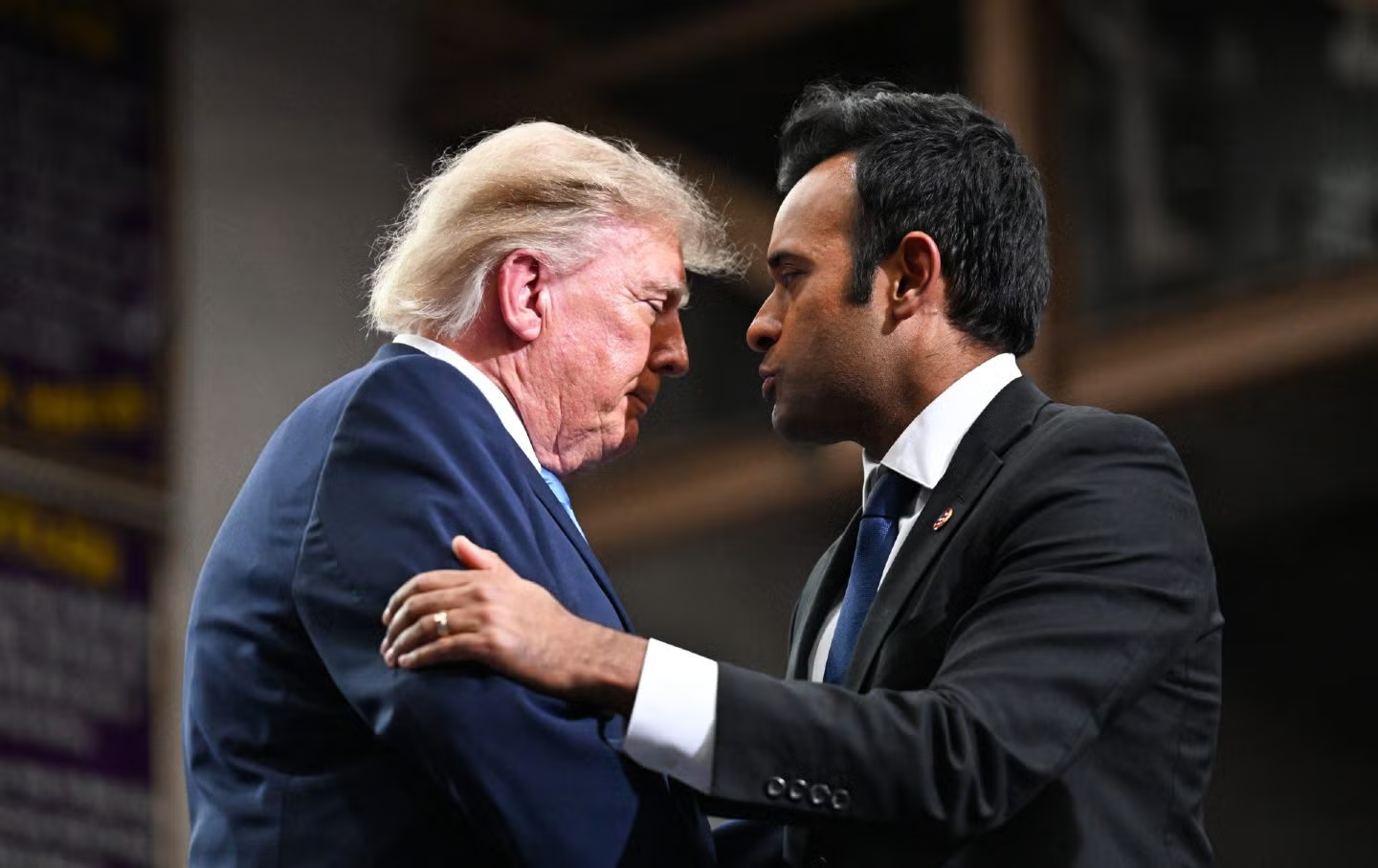
Why Trump Is Embracing Vivek Ramaswamy’s Vile Ad Why Trump Is Embracing Vivek Ramaswamy’s Vile Ad
The president is leaning into the politics of toxic parenting.

The Shadow Knows The Shadow Knows
High-tech weapons, low-tech intelligence.
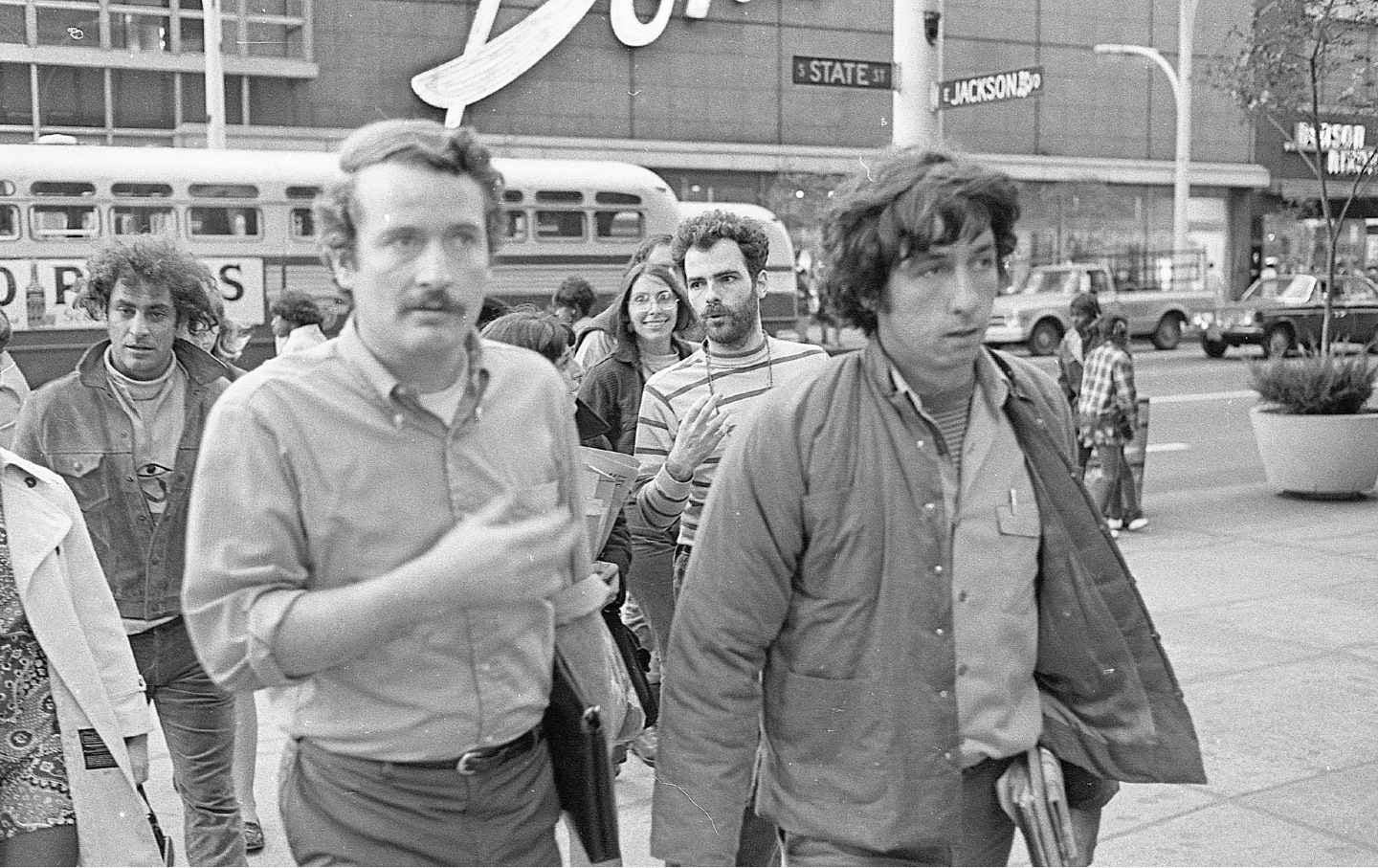
Tom Hayden’s Legacy and the New American Left Tom Hayden’s Legacy and the New American Left
It’s been 10 years since he passed away.
The Decades-Long Battle Within the Democratic Party Establishment Between the Heirs of Dean Acheson and Franklin Roosevelt The Decades-Long Battle Within the Democratic Party Establishment Between the Heirs of Dean Acheson and Franklin Roosevelt
The calamitous history of America’s wars of choice.

