Economists Support Zohran Mamdani’s Plan for New York City
Zohran Mamdani’s mayoral platform is a practical blueprint to tackle some of New York City’s most pressing problems.
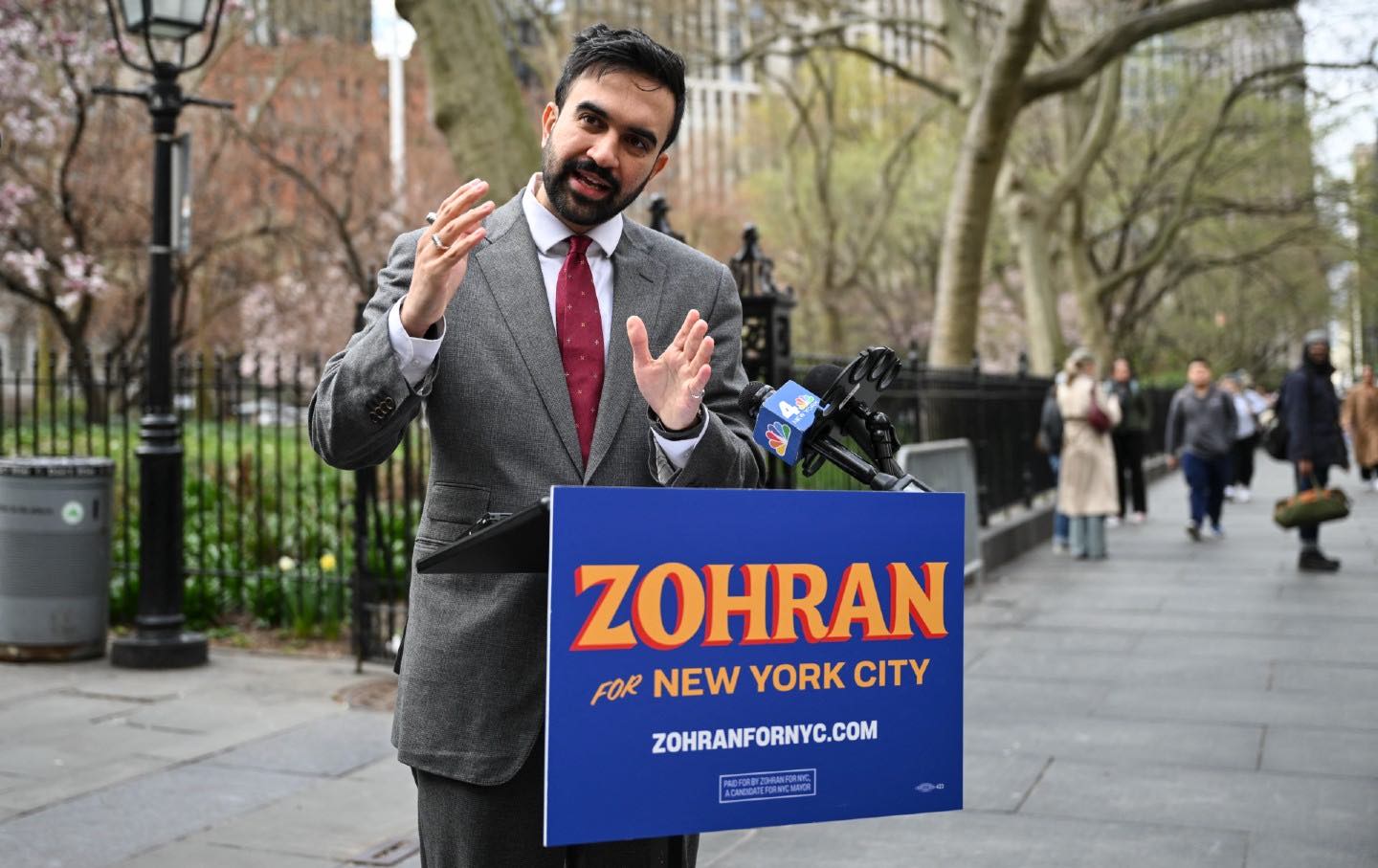
We write, as economists from across the world, to support Zohran Mamdani’s mayoral platform as a bold yet practical blueprint to tackle some of New York City’s most urgent challenges—above all, the cost of living. His platform proposes targeted, responsible interventions that would immediately improve millions of lives while building a fairer and prosperous New York.
At the heart of Mamdani’s platform is his plan for a rent freeze, offering urgent relief to over 2 million tenants in rent-stabilized apartments facing inflationary shocks and displacement. As economists, we recognize that unchecked rent spikes destabilize neighborhoods, increase homelessness—a far costlier public burden—and drain local economies. A rent freeze, together with long-term commitments to building at least 200,000 additional rent-stabilized and public units, is commonsense policy that pairs immediate relief with structural problem-solving.
Mamdani’s prioritization of free buses builds on the success already demonstrated by the fare-free bus pilot program on five lines in each borough of New York City. Eliminating fares was shown to increase bus ridership by more than 30 percent, markedly reduce violence against bus drivers, and provide real economic relief for low-income New Yorkers. The data from the pilot confirm that the fare-free bus model works and Mamdani’s proposal to expand it citywide makes clear fiscal sense.
His platform’s commitment to universal no-cost childcare is both an imperative for gender equity and an economic necessity. Exorbitant prices of childcare prices out parents, especially women, from the workforce, stifling productivity, and driving families out of the city. By lifting the crushing financial burden on families, Mamdani’s plan would create quality jobs in the care economy and generate a multiplier effect to benefit the entire city. Study after study demonstrates that public investment in childcare yields some of the highest returns of any social spending.
To combat skyrocketing food prices, Mamdani proposes city-owned grocery stores—a “public option,” utilizing economies of scale to supply healthy food at affordable rates. These municipal grocers would sell staples at wholesale prices, leveraging public purchasing power and economies of scale, eliminate food deserts, and provide New Yorkers immediate relief from price gouging. The economic data is clear: When the public sector steps in to correct market failures in the provision of essential goods, consumers benefit.
Taken together, Mamdani’s responsibly costed economic policies form a coherent agenda that rejects austerity and embraces the city’s power to make life more affordable for New Yorkers. While any ambitious policy agenda requires careful planning in its implementation, we encourage policymakers and voters to evaluate these proposals, which stand up to rigorous scrutiny, on their economic merits. We support Mamdani’s bold vision for a more affordable New York.
Signed,
Isabella Weber, Professor of Economics, University of Massachusetts at Amherst
James K. Galbraith, Professor of Economics, University of Texas at Austin
Ha-Joon Chang, Professor of Economics, SOAS University of London
Jayati Ghosh, Professor of Economics, University of Massachusetts at Amherst
José Gabriel Palma, Emeritus Senior Lecturer, University of Cambridge; Professor of Economics, University of Santiago
Daniela Gabor, Professor of Economics, SOAS University of London
Yanis Varoufakis, Former Minister of Finance, Greece
Full list of signatories here.
Support independent journalism that does not fall in line
Even before February 28, the reasons for Donald Trump’s imploding approval rating were abundantly clear: untrammeled corruption and personal enrichment to the tune of billions of dollars during an affordability crisis, a foreign policy guided only by his own derelict sense of morality, and the deployment of a murderous campaign of occupation, detention, and deportation on American streets.
Now an undeclared, unauthorized, unpopular, and unconstitutional war of aggression against Iran has spread like wildfire through the region and into Europe. A new “forever war”—with an ever-increasing likelihood of American troops on the ground—may very well be upon us.
As we’ve seen over and over, this administration uses lies, misdirection, and attempts to flood the zone to justify its abuses of power at home and abroad. Just as Trump, Marco Rubio, and Pete Hegseth offer erratic and contradictory rationales for the attacks on Iran, the administration is also spreading the lie that the upcoming midterm elections are under threat from noncitizens on voter rolls. When these lies go unchecked, they become the basis for further authoritarian encroachment and war.
In these dark times, independent journalism is uniquely able to uncover the falsehoods that threaten our republic—and civilians around the world—and shine a bright light on the truth.
The Nation’s experienced team of writers, editors, and fact-checkers understands the scale of what we’re up against and the urgency with which we have to act. That’s why we’re publishing critical reporting and analysis of the war on Iran, ICE violence at home, new forms of voter suppression emerging in the courts, and much more.
But this journalism is possible only with your support.
This March, The Nation needs to raise $50,000 to ensure that we have the resources for reporting and analysis that sets the record straight and empowers people of conscience to organize. Will you donate today?