You Can’t Understand Black Music Without Sly Stone
His songs, for generations of listeners, provided community, solace, and a sense of understanding.
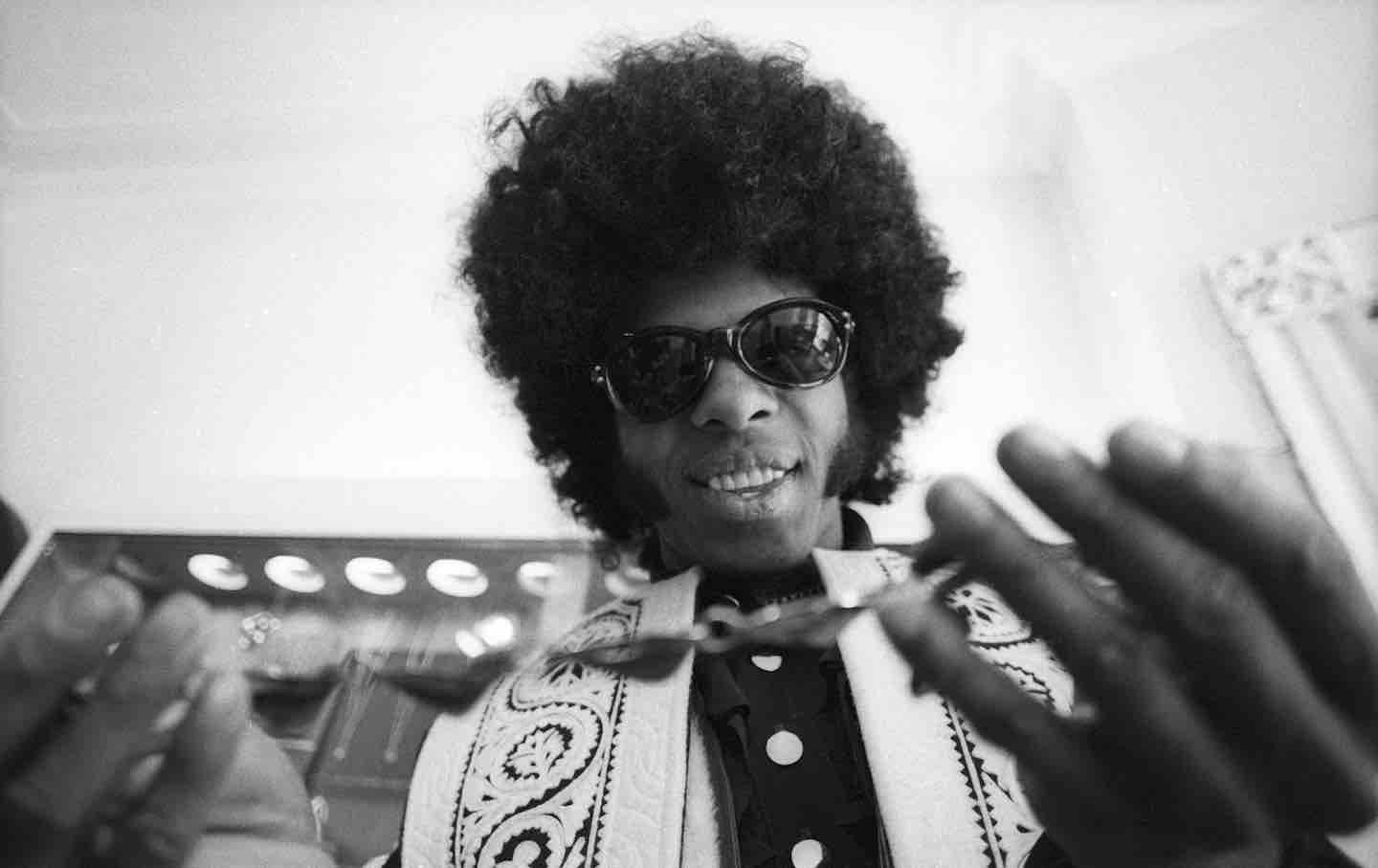
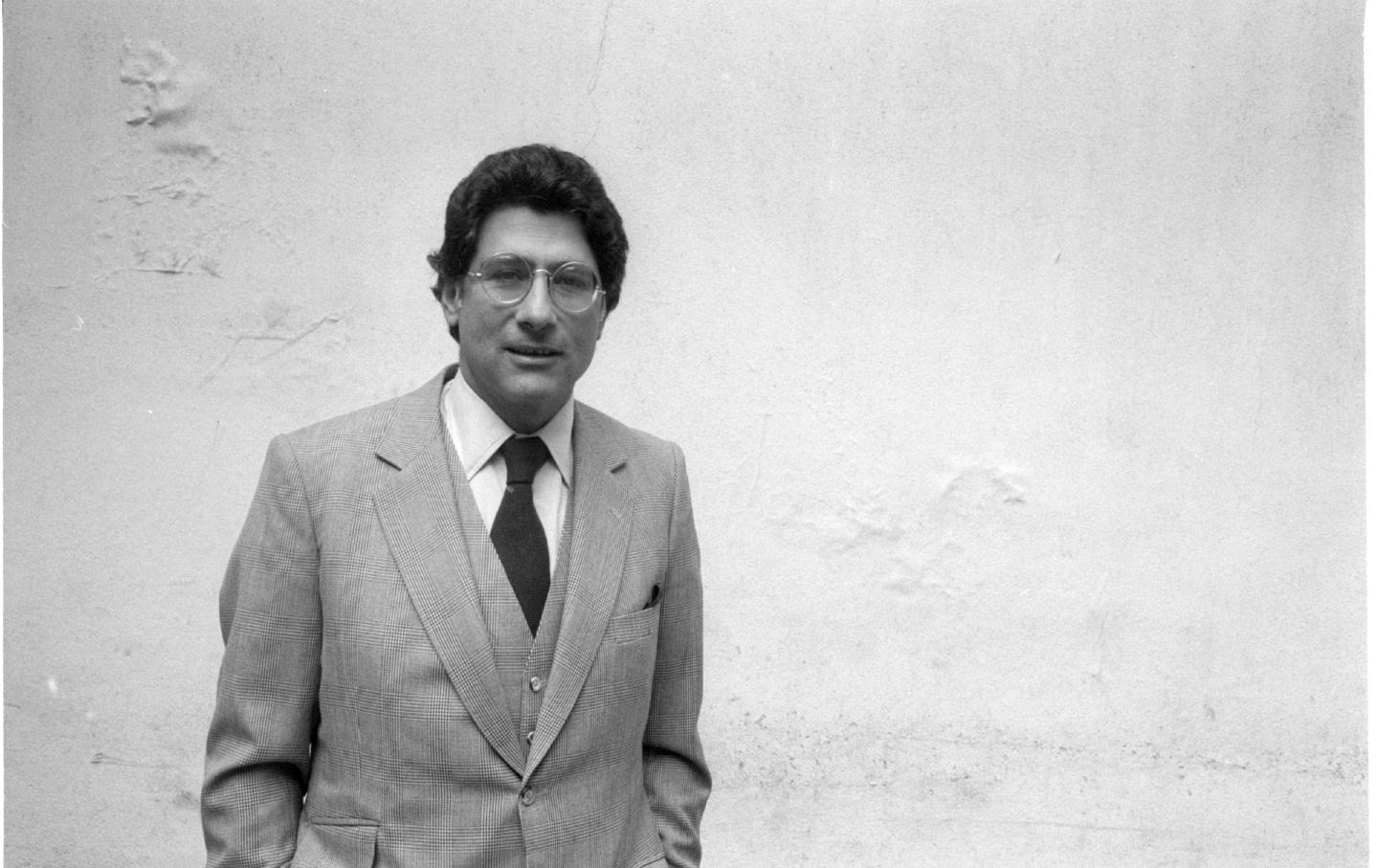
Sly Stone, 1969.
(Michael Ochs Archives / Getty Images)
If you want to see my aunt Pam stop what she’s doing and dance, play Sly and the Family Stone’s “Stand!” on full blast. I’m not talking about a cool, sophisticated two-step; I’m talking a head-back, arms-out lyrics recital, like it’s 1969 and she’s in the front row of a Sly Stone concert. When it was announced this week that Sly, the pioneering funk-rock maestro, had died at 82, I couldn’t help but think of Pam. I wondered if she grieved like I grieved, if she flipped through her vinyl collection and dropped the needle on Stand!, There’s a Riot Goin’ On, or Fresh. Volume up. Arms out. Hips and feet moving. Because she’s lost a lot over the past two years, namely her three sisters: Claudette and Delores (my mother) within a week of each other in 2023, and Claudia this past February. As I wrestle with the notions of family and legacy, especially as my dearest ones fade away so quickly, I find myself mourning Sly’s loss in the same way—he was a member of the family. Sly was always there, the vinyl spinning on the turntable of my grandparents’ home, singing to us while we ate overcooked hot dogs off white paper plates.
For a certain generation of Black people, Sly was everything: a fearless free-thinking creator at a time when such courage wasn’t prevalent. Sure, you had the likes of Jimi Hendrix and Little Richard in traditional rock, but Sly’s music catered to more listeners—he bridged the mainstream and the esoteric. Sly felt like one of us—wholly and unabashedly—and despite his stature as a beacon of equality, thanks to his integrated band of men and women both Black and white, he never seemed so hung up on arbitrary accolades given to his music.
Did Sly like the attention his band received? Sure. But listening to his provocative works—“Don’t Call Me N****r, Whitey,” for instance—dispelled any doubts of where he stood. The brother wasn’t afraid to go there, and for those who want their heroes to speak candidly about societal ills, especially in the late 1960s, Sly was a hero and an idol. As my aunt told me recently, Sly and the Family Stone was unlike anything she and her sisters had ever heard before. And in his wake, the entire music of life might not have been possible—from George Clinton to Prince to D’Angelo and André 3000, they all took sonic cues from Sly.
When you’re a successful Black musician, you’ll have to remind people that you’re Black at some point. That moment came two years after the breakthrough success of Stand! in 1971. On the follow-up album, There’s a Riot Goin’ On, Sly traded the acoustic technicolor of his previous studio album for a bleak and isolated atmosphere powered by Moog drums and not much else. Facing pressure from Epic Records to submit his next LP and from the Black Panthers to make more overtly militant music, Sly turned inward, instead making an album that reflected his own inner turmoil alongside that of the streets outside.
My “stop what you’re doing” song has always been “Family Affair,” the hypnotic, head-nodding first single of There’s a Riot Goin’ On, with its rhythmic electronic drums and spare electric keys. For me, my relatives, and others who didn’t always identify with the high-flying nature of Stand!, the track spoke to the everyday struggle of daily life for some Black Americans. “One child grows up to be somebody that just loves to learn,” Sly declared, his voice all groggy and strained. “And another child grows up to be somebody you’d just love to burn.” Emphasis on burn. In the ’80s and early ’90s, when my family was intact and Sly wafted through the speakers on Saturdays, we knew neighbors who lived the song’s narrative. In the Black suburbs of Washington, DC, we identified more with what we saw down the street, not the imagined veil of togetherness.
A month or so ago, I was in my aunt Pam’s driveway washing my mom’s old car, a task I’ve done countless times. I set up a speaker in the garage and played There’s a Riot Goin’ On and let it run: “Just Like a Baby,” “Poet,” “(You Caught Me) Smilin’,” “Time.” Then came “Spaced Cowboy,” with those stampeding drums and that rumbling electric bass. Pam walked outside just as Sly started yodeling over it. A flash of recognition came across her face, even in this fragment of a song—all yodeling and beats. There we were—the whole of my family, in spirit and in the flesh—sharing memories while Sly serenaded us again. Ultimately, this is how I will remember Sly, as the architect of my life’s soundtrack, following me wherever I go. The music still sounds new, dotting the nuances of quiet and loud moments, his voice and influence just as pronounced as ever.
Become a Sustaining Donor This September
Between the reemergence of right-wing red-baiting and Donald Trump’s use of the chilling National Security Presidential Memorandum–7 to criminalize left political organizing, we’re seeing McCarthyism reborn before our eyes.
This assault on democracy cannot be ignored or wished away. Resisting it requires bravery in the face of threats and repression, a steadfast commitment to the truth, and the unwavering belief that we can—and will—overcome this darkness.
We must have an independent media that sets the record straight, unearths corruption and abuses of power, and advances a politics of justice and dignity for all if we’re to win this fight.
That’s why I’m writing to you today. This September, The Nation needs to add 100 monthly donors to sustain our progressive journalism. Your contribution makes the next investigative report, the next truth-speaking column, and the next pathbreaking essay all possible.
I hope you’ll support our work with a recurring donation today. If you donate $10 or more a month, we’ll send you a brand new “Hands Off the Free Press!” sticker to recognise your commitment to our cause. Please, donate today.
Onward,
Katrina vanden Heuvel
Editor and Publisher, The Nation