Farewell to Allende
From the September 24, 1973 issue of The Nation.
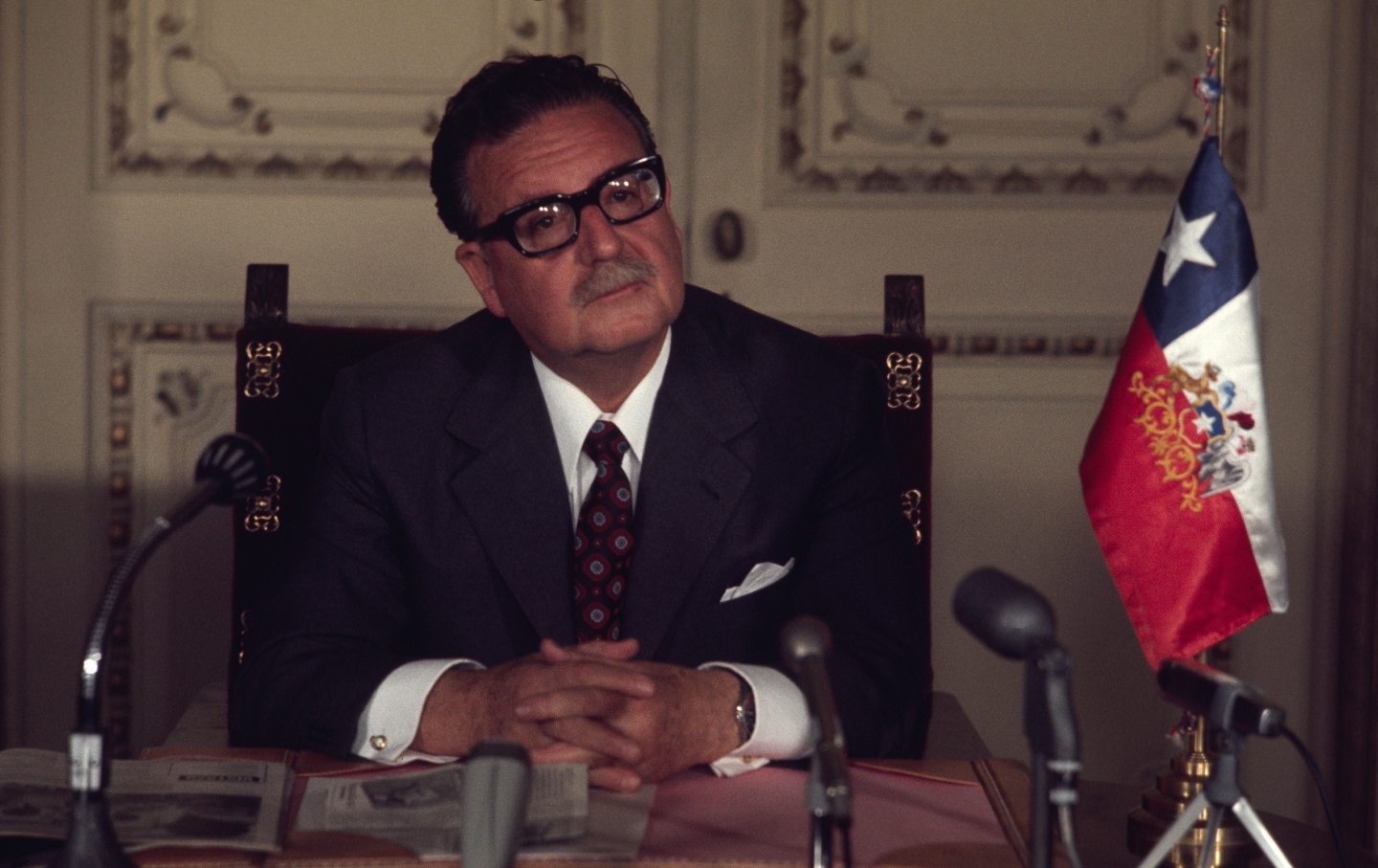
Salvador Allende posing for a portrait on June 10, 1971 in Santiago, Chile.
(Santi Visalli / Getty)Salvador Allende, the Marxist doctor, who squeaked into the presidency of Chile in 1970 by a narrow margin, has now been deposed by a military coup and is dead, allegedly by his own hand. His regime had been in deep trouble from its inception, in part because of Dr. Allende’s lack of political cunning and ideological flexibility—he took his constitutional Socialist convictions seriously—and the predictable opposition of the wealthy and middle-class businessmen who feared for their perquisites and property.
But from the outset many of Allende’s woes originated from up north. The story of the International Telephone and Telegraph Corporation’s efforts to influence the election, and its barefaced million-dollar attempt to bribe the CIA to intervene, is well known.
Throughout Allende’s three years in office, U.S. official bodies and private firms continued to relentlessly wage economic war. The large copper companies whose properties had been expropriated not only refused technical aid but tried to have Chilean copper excluded from European markets. The US-dominated World Bank cut off all credits and even refused communication with the Chilean Government. Attempts were made to persuade European banks and lending agencies to discontinue financial support. U.S. economic aid was severely cut, amounting in 1973 to only $3 million, largely for school lunches. Hostility was total with one significant exception: military aid, continued unslackened. The tanks that fired on the Presidential palace and the planes that bombed it were made in America and cheerfully supplied. And now the military is in charge.
Officials of the Nixon Administration have initially declined to comment. Such silence upon the death of a head of state is scarcely the diplomatic norm, but one wonders what in diplomatic terms they could find to say now.
Support independent journalism that does not fall in line
Even before February 28, the reasons for Donald Trump’s imploding approval rating were abundantly clear: untrammeled corruption and personal enrichment to the tune of billions of dollars during an affordability crisis, a foreign policy guided only by his own derelict sense of morality, and the deployment of a murderous campaign of occupation, detention, and deportation on American streets.
Now an undeclared, unauthorized, unpopular, and unconstitutional war of aggression against Iran has spread like wildfire through the region and into Europe. A new “forever war”—with an ever-increasing likelihood of American troops on the ground—may very well be upon us.
As we’ve seen over and over, this administration uses lies, misdirection, and attempts to flood the zone to justify its abuses of power at home and abroad. Just as Trump, Marco Rubio, and Pete Hegseth offer erratic and contradictory rationales for the attacks on Iran, the administration is also spreading the lie that the upcoming midterm elections are under threat from noncitizens on voter rolls. When these lies go unchecked, they become the basis for further authoritarian encroachment and war.
In these dark times, independent journalism is uniquely able to uncover the falsehoods that threaten our republic—and civilians around the world—and shine a bright light on the truth.
The Nation’s experienced team of writers, editors, and fact-checkers understands the scale of what we’re up against and the urgency with which we have to act. That’s why we’re publishing critical reporting and analysis of the war on Iran, ICE violence at home, new forms of voter suppression emerging in the courts, and much more.
But this journalism is possible only with your support.
This March, The Nation needs to raise $50,000 to ensure that we have the resources for reporting and analysis that sets the record straight and empowers people of conscience to organize. Will you donate today?