At the Doorstep of Tomorrow
Faced with endlessly narrowing possibilities, I return to my diary in an attempt to dream, to imagine a future.
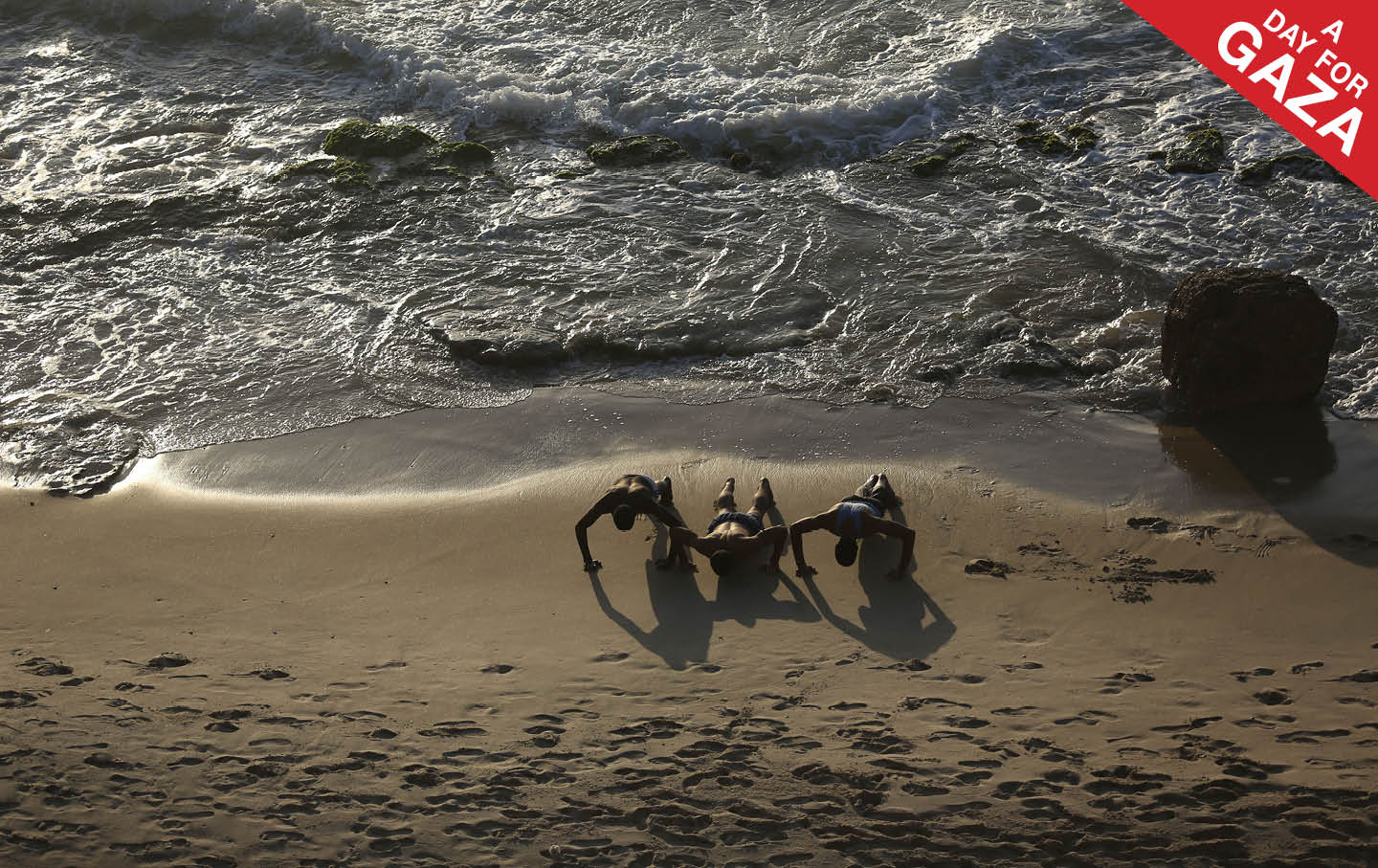
This piece is part of A Day for Gaza, an initiative in which The Nation has turned over its website exclusively to voices from the Gaza Strip. You can find all of the work in the series here.
This diary entry was written shortly after a ceasefire was declared. I wrote this between the sounds of bombardment and shellfire, but also between dreams of study and families reunited. This is not a story of individual survival, but an attempt to encapsulate a generation that has lived the war in all its horror and, at the same time, insists on dreaming:
The war began the week of my 26th birthday. There was a lightness on that day, something born from what remained of our childhood. Sparks like candy, crackling in our mouths: colorful letters; laughter leaking out through voice notes; hearts adorning our text chats; an abundance of cake. But the days that followed are laid out like burnt matchsticks; once the first one was lit, the flames consumed the rest. The war spared nothing on the calendar; I have had no other birthdays since.
I am trying to put this all behind me. I am trying to extricate myself from those heavy details, to move forward. I want a future whose sky does not tend toward warplanes. I want a future severed from whatever “The Strip” has come to mean. A truthful and hopeful future where there is no Strip.
There is a dream I have held. A wave breaks on the shores of Accre before bending towards Jaffa, and I am suddenly on a small motorboat. We are chanting first, then laughing. Sweet sounds drown out the roar of the engine. My grandmother used to speak of this place—the Bride of the Sea—a wide, blue, expanse that did not always look out toward barbed enclosures.
I want a future whose sky does not tend toward warplanes. I want a future severed from whatever “The Strip” has come to mean. A truthful and hopeful future where there is no Strip.
We step off at the harbor and walk toward those old houses whose balconies sway along the seashore. A familiar scent weeps: A vendor is selling Kaa’ak. He welcomes me in our Gazan dialect, his voice thick with familiar reassurance, and I run my fingers along the sesame seeds. “Mati’la’qish,” he says, don’t worry. This is a scene too familiar to be cliché. It is a fixture entrenched in our minds, an inheritance so ubiquitous that it could never be encountered for the first time.
In this dream, I’m home by nightfall. I’m incessantly chatty, desperate to announce a happiness to my mother that cannot contain itself. I doze off considering this miracle: to have reached those two cities not through a search engine or some anthropological study, but to have taken the short journey that began in a harbor and ended, again, with Gaza’s embrace. Two halves of the proverbial orange mended in the tenet of Return.
Next, I gather my three sisters. Exile has scattered us across a distance far greater than what appears on a map. This reunion is endless, as if time itself is finally atoning for every dinner table that was not whole, every celebratory occasion that was incomplete, every moment we chased their garbled voices through an international call. We sit in a single house, their bodies squished onto a couch made only for two. I sit on the floor circling the children: Eileen, Ahmad, Tamim, Elias. We whisper the names of different fast foods we plan on ordering—careful so my mother doesn’t catch us. She who has always been careful to feed us only what is good for the body. I tell them stories of those nations that passed through us and those dreams that passed us by, an appraisal of the years that have somehow managed to continue without them. I steal a piece of chocolate from each of the children and slip it into my pocket. Small testimonies that a family, no matter how scattered, can gather again, can gather only in a city known by the stories we tell of it.
I have come to the end of today’s lines. I have a sense that this is not so much a record of a dream deferred but a test of my imagination, a measure of my ability to envision a life despite all that has tried to uproot us.
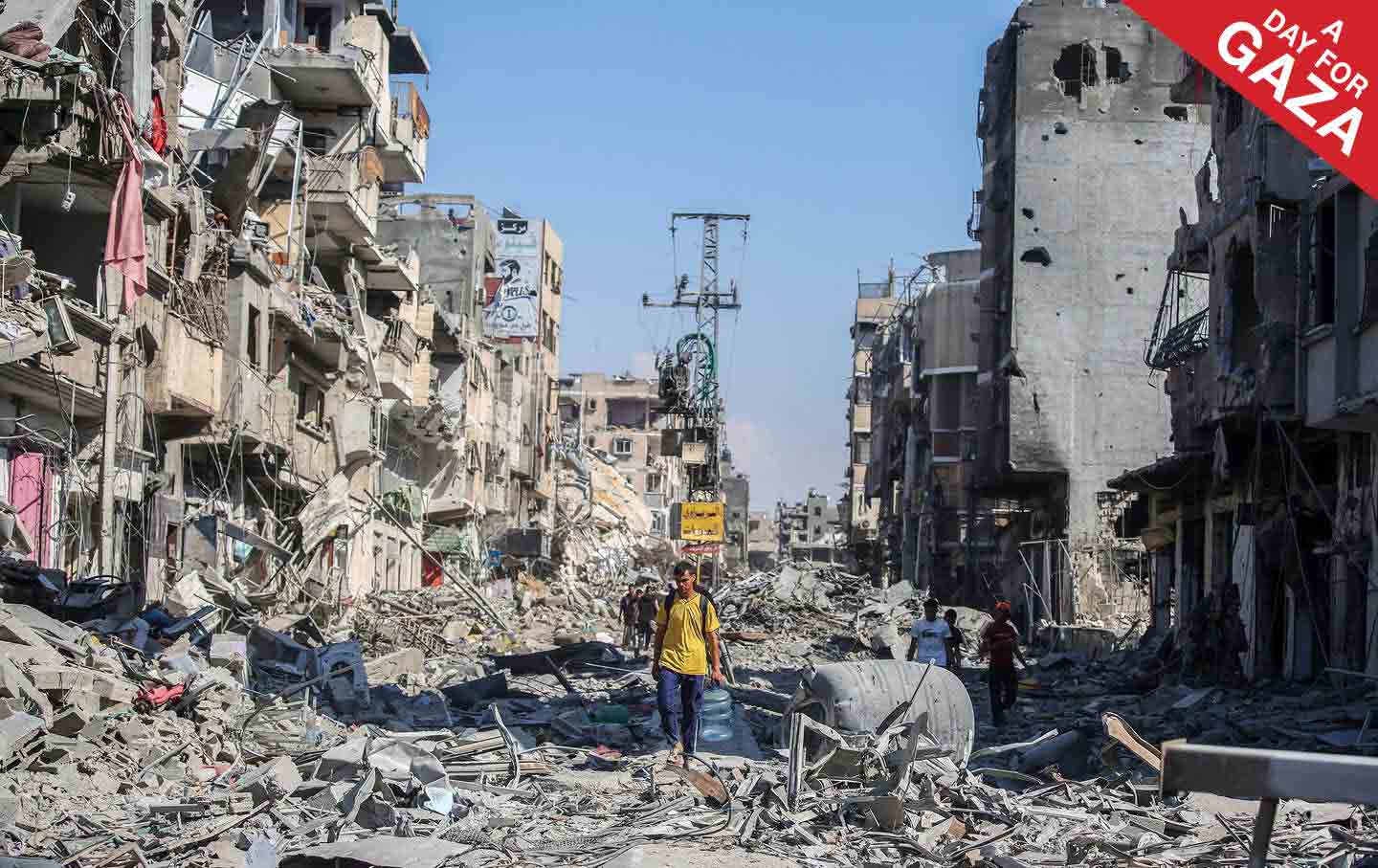
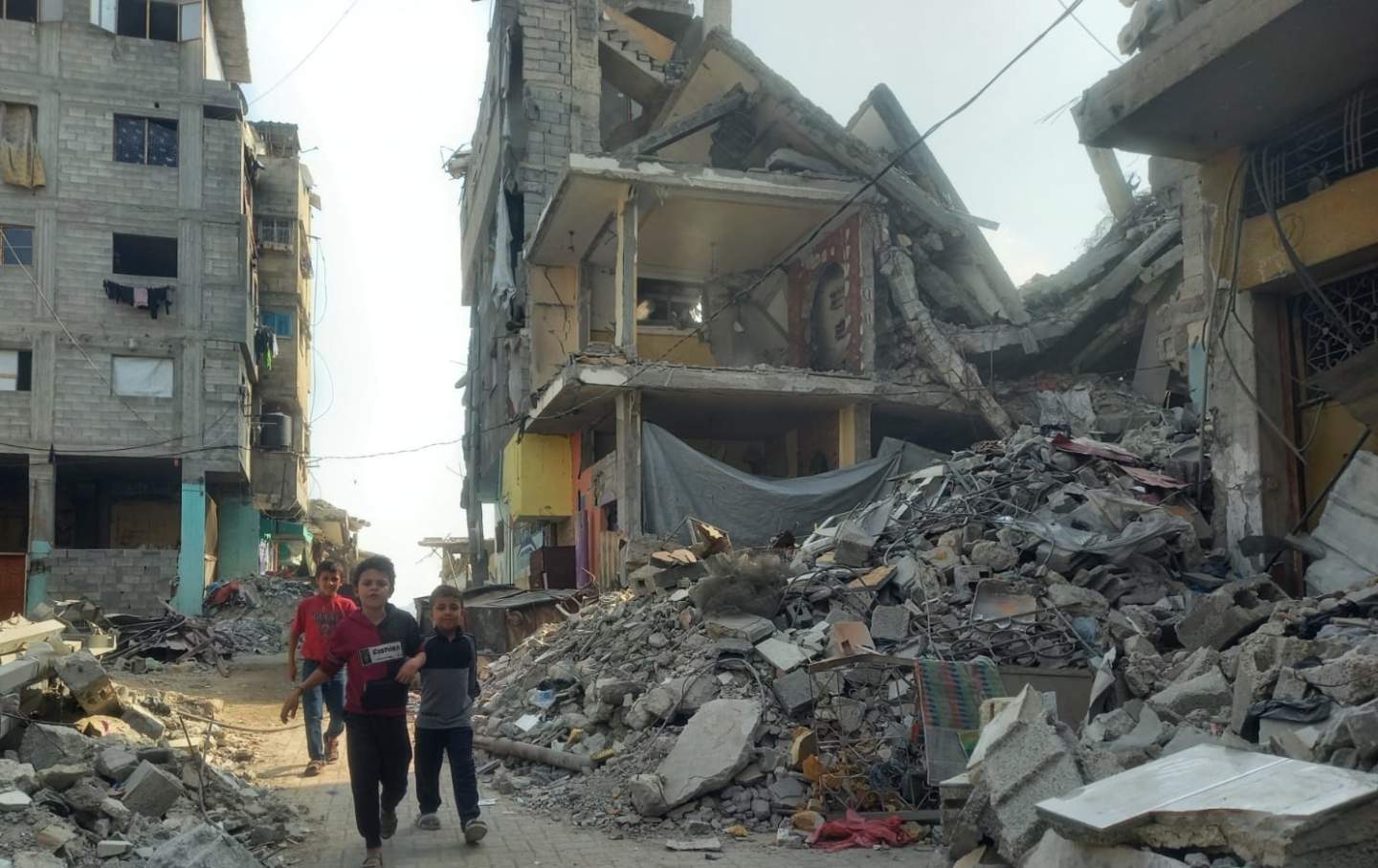
From my window I can see Gaza as it is now: weary, exhausted, bent in prayer and desperate for salvation. But there remains life; the capacity to dream, to hope, to resist. These diaries are not a comfort. They are an attempt to tell the world that I have a future just as you may understand that I have had a past. We come from a land that ought to be seen, not captured. A life that is deserving of more than rubble, while they take their warring turns on us.
Your support makes stories like this possible
From Minneapolis to Venezuela, from Gaza to Washington, DC, this is a time of staggering chaos, cruelty, and violence.
Unlike other publications that parrot the views of authoritarians, billionaires, and corporations, The Nation publishes stories that hold the powerful to account and center the communities too often denied a voice in the national media—stories like the one you’ve just read.
Each day, our journalism cuts through lies and distortions, contextualizes the developments reshaping politics around the globe, and advances progressive ideas that oxygenate our movements and instigate change in the halls of power.
This independent journalism is only possible with the support of our readers. If you want to see more urgent coverage like this, please donate to The Nation today.