
Elizabeth Hinton’s celebrated new book, From the War on Poverty to the War on Crime (Harvard, 2016) comes at an electric political moment. “I hope,” says Hinton, “that my research can help us learn from policy-makers’ mistakes—and their racist assumptions about black Americans, poverty, and crime—and envision a more inclusive future.” Here, she recommends five books that do the same.
 COLORED AMAZONS
Crime, Violence, and Black Women in the City of Brotherly Love, 1880–1910
by Kali N. Gross
Duke University Press, 2006
Buy this book
Kali Gross reminds us that there are two sides to every crime in this examination of how perpetrators and state actors together constructed black female criminality in Philadelphia at the turn of the 20th century. Although Gross’s nuanced analysis is rooted in prison records, trials, and mug shots from more than a hundred years ago, the implications of her groundbreaking study still resonate.
 CHAINED IN SILENCE
Black Women and Convict Labor in the New South
by Talitha L. LeFlouria
University of North Carolina Press, 2015
Buy this book
In this widely acclaimed book, Talitha LeFlouria traces the way in which black women modernized the South as prison laborers after the Civil War. At times it is hard to plow through LeFlouria’s descriptions of the violent and exploitative conditions these women faced. Yet she leaves us with a radically new understanding of the historical dimensions of racism, gender, and state violence.
 CAPTIVE NATION
Black Prison Organizing in the Civil Rights Era
Popular
"swipe left below to view more authors"Swipe →
by Dan Berger
University of North Carolina Press, 2014
Buy this book
Most accounts of the civil-rights and Black Power era leave out the crucial role black prisoners played in shaping social movements. Thanks to Dan Berger’s illuminating book and Heather Thompson’s recent account of the Attica uprising, we can no longer tell the history of the black freedom struggle—and the 20th-century United States more broadly—without taking into account the organizing tradition inside prisons.
 THE CONDEMNATION OF BLACKNESS
Race, Crime, and the Making of Modern Urban America
by Khalil G. Muhammad
Harvard University Press, 2011
Buy this book
The role of social-science research in creating the myth of black criminality is the focus of this seminal work by historian Khalil Muhammad. The book shows how progressive reformers, academics, and policy-makers subscribed to a “statistical discourse” about black crime almost immediately after Emancipation, one that shifted blame onto black people for their disproportionate incarceration and continues to sustain gross racial disparities in American law enforcement and criminal justice.
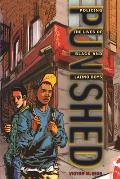 PUNISHED
Policing the Lives of Black and Latino Boys
by Victor M. Rios
New York University Press, 2011
Buy this book
What happens when teachers and law enforcement mark black and Latino youth as “troubled” or “dangerous” from an early age? Victor Rios follows 40 young men of color in Oakland, California, illuminating the way increased surveillance and a culture of punishment within urban social institutions increases crime and social harm in vulnerable communities. Gang ethnographies have become something of a cottage industry, but this one stands out—in part because Rios belonged to an Oakland-area gang before joining the academy.

