
Kamala Harris Has Her Eye on Today’s Gubernatorial Races
The former vice president reminds The Nation that, even if government is divided in DC, “a governor, as the chief executive of a state, can actually make things happen.”
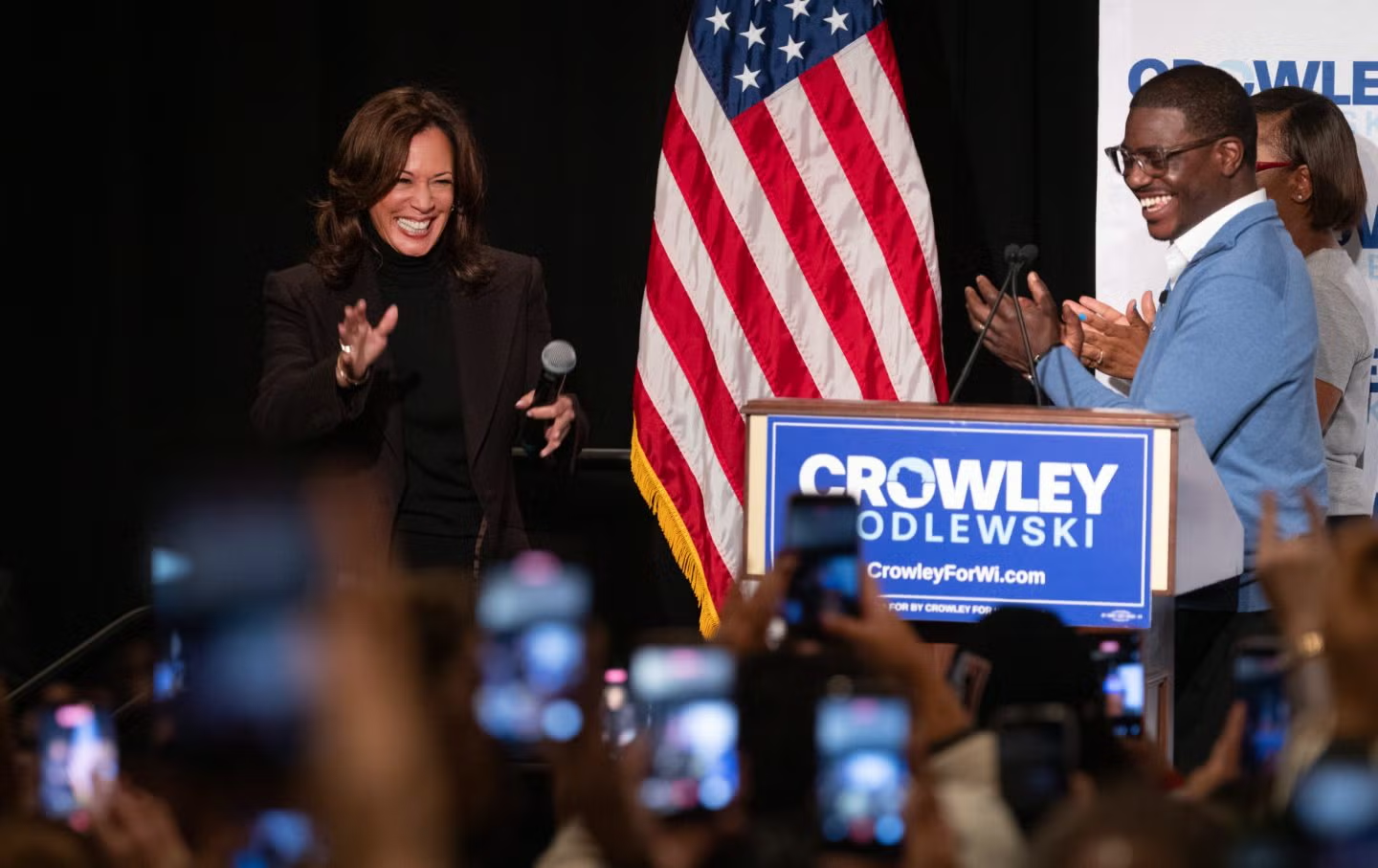
Wisconsin Democratic gubernatorial candidate David Crowley introduces former vice president Kamala Harris during a “Women for Crowley” campaign event at the Pfister Hotel on October 26, 2026, in Milwaukee, Wisconsin.
(Scott Olson / Getty Images)
Today’s midterms will mark the end of one election cycle and the beginning of another. As soon as the votes from 2026 are counted, the 2028 presidential race will take center stage. But that’s just a formality.
For all intents and purposes, the 2028 contest began during the course of the midterm campaign. Several dozen prospective contenders for the Democratic nomination hit the midterm trail to boost their national profiles—campaigning in states across the country and positioning themselves as allies of the candidates who could flip control of Congress and check President Trump in the last two years of his term.
Most of these 2028 hopefuls zeroed in on Senate races, which grabbed the spotlight in final weeks of the 2026 campaign. Nobody doubts the importance of these contests, whether in Michigan, which saw a chaotic close to the race between progressive Democrat Abdul El-Sayed and Trump Republican Mike Rogers, or in Texas, where Democratic James Talarico could become the first Democratic senator from the state in more than three decades.
But the front-runner in several surveys that tested the strength of 2026 Democratic presidential prospects has placed an emphasis on today’s gubernatorial races, which will define the direction of states across the country.
That prospect is former Vice President Kamala Harris, who, in a national Harvard-Harris poll released one week ago, garnered 34 percent support among likely Democratic presidential primary and voters—16 points ahead of the second-place finisher, California Governor Gavin Newsom. It was the same story in two other polls that were released in October—one for the Financial Times and one by the Echelon Insights firm—both of which gave the 2024 Democratic presidential nominee a clear lead.
Harris—whose 75,017,613 vote total in 2024 was the highest in history for any candidate except for the Republican who narrowly beat her that year, Donald Trump (77,302,580), and for the Democrat with whom she served as vice president, Joe Biden (81,283,501) in 2020—told The Nation that she has not decided whether to mount a new bid for the presidency. That’s a genuine response, as is Harris’s insistence that the top factor in making that decision will be her family. But she has little doubt that she could do the job, as someone with significant White House experience who recalls that she has “spent a lot of time with foreign leaders, thinking about America’s responsibility and role globally, as well as our responsibility as a government to our own people.”
To a greater extent than many prominent political figures, Harris thinks about the duties of executives—in Washington and in statehouses across the country. So while Harris made plenty of 2026 campaign appearances with Senate candidates—including El-Sayed in Michigan, late-surging Mississippi Senate candidate Scott Colom, and Georgia Senator Jon Ossoff—she also focused on some of the 36 gubernatorial races that will be decided today.
For Democrats, the chance to win control of statehouses is especially important. Even if they secure majorities in the House and Senate, they will still have to operate with divided government at the federal level—given that Trump is still in the White House. Democratic governors and legislatures can move far more immediately and far more effectively to address economic concerns, expand access to healthcare, invest in education, regulate data centers and artificial intelligence, and protect the rights of women and the LGBTQ+ community. They can also defend democracy by moving to address gerrymandering and to defend against voter suppression in the runup to the 2028 election.
This understanding led Harris to Milwaukee, Wisconsin, in the days before the midterm election, where she campaigned with David Crowley, the Milwaukee County Executive who this year is the Democratic nominee to replace outgoing Democratic Governor Tony Evers.
Harris appeared on October 26 with Crowley—who’s in a tight race with MAGA Republican US Representative Tom Tiffany—at a packed Democratic campaign headquarters in a neighborhood on Milwaukee’s northwest side and then at a huge “Women for Crowley” event in a downtown hotel. As always, Harris came prepared, with plenty of insights regarding the Democrat she was supporting and plenty to digs at the Republican he was opposing. And the crowds loved it.
Harris has her share of critics, and there are certainly Democrats who would rather she sit out the 2028 race. But her fans are ardent, and they have been out in force this fall as she hit the trail on behalf of Democratic candidates from Michigan to Mississippi to New Hampshire and Georgia. That was certainly the case in Milwaukee, where Harris was greeted by enthusiastic crowds of Democrats who held cameras aloft, waved posters, and cheered her every remark.
“She’s a huge mentor of mine,” declared Crowley.
For her part, Harris was effusive in her praise of the candidate, whom she described to The Nation as someone who is “in it for all the right reasons.”
“He is a true public servant,” she said of Crowley, who grew up in a Milwaukee neighborhood that is one of the poorest in the country. “He has had the experience of being hungry and knowing that you can’t assume that the very basic needs that you have will be fulfilled—without the government playing its part to help those in need. at a time when they need it most.”
In the closing days of a campaign where candidates on both sides of the partisan aisle are talking about affordability, Harris recognized Crowley’s authenticity.
“It’s not lip service. It is a lived experience for him—in a way that he sees the pain that people are experiencing right now. There’s a whole lot of pain right now. It is about affordability of the basic needs that people have. And that pain is compounded with a real legitimate belief [on the part of so many Americans] that their needs are unimportant, as compared to the powerful and the rich.”
Crowley, she said, “gets it. He understands what the priority should be.”
Popular
“swipe left below to view more authors”Swipe →Crowley is one of eight Black gubernatorial candidates who are running in states across the country today. Five of them are Democrats: Maryland Governor Wes Moore, who is seeking reelection, and former Atlanta mayor Keisha Lance Bottoms in Georgia, state Attorney General Aaron Ford in Nevada, state Representative Jermaine Johnson in South Carolina, and Crowley. Three are Republicans: US Representative Byron Donalds in Florida, US Representative John James in Michigan, and state Representative Lisa Demuth in Minnesota.
“The eight Black nominees in governor’s races this year are seeking to force change that has been slow in coming, long after the ends of slavery and the Jim Crow era,” noted CNN. “While some carry favorable odds and others are long shots, taken together, they represent a record number of candidates in one cycle.”
Harris, the first Black person to serve as vice president and the first Black woman to be nominated for president, simply said, “It’s about time.”
She has campaigned not just with Crowley but with Ford and Lance Bottoms too—all three of whom would make history if they’re elected as the first Black governors of their states. “I am a witness to her grace and her greatness as a leader,” said Harris when she traveled to Georgia to appear with Bottoms. “Georgia has Keisha Lance Bottoms who will be the first Black woman governor in the history of the United States.” With Ford in Las Vegas, she urged Black voters to “honor the ancestors” by electing the attorney general as the first Black governor of Nevada and the first Black governor of a state located west of the Mississippi River.
While Harris made reference in campaign stops with the gubernatorial candidates to the civil rights era and to contemporary struggles for justice, she also spoke with fervor about the economic pain and chaos created by the Trump administration, which she describes as “the most callous, corrupt, and incompetent presidential administration we’ve ever experienced.” At every turn, she spoke of the candidates she has endorsed as uniquely qualified. And she reminded people of the power of governors to get things done.
“I was campaigning for Aaron Ford, and he’s been attorney general for two terms. So he knows the state, he knows it from the perspective of fighting for consumers, law enforcement, and all that,” she explained to The Nation. “I think there’s an obvious point, which is that a governor, as the chief executive of a state, can actually make things happen—and these really outstanding candidates want to make things happen in their state.”
More from The Nation
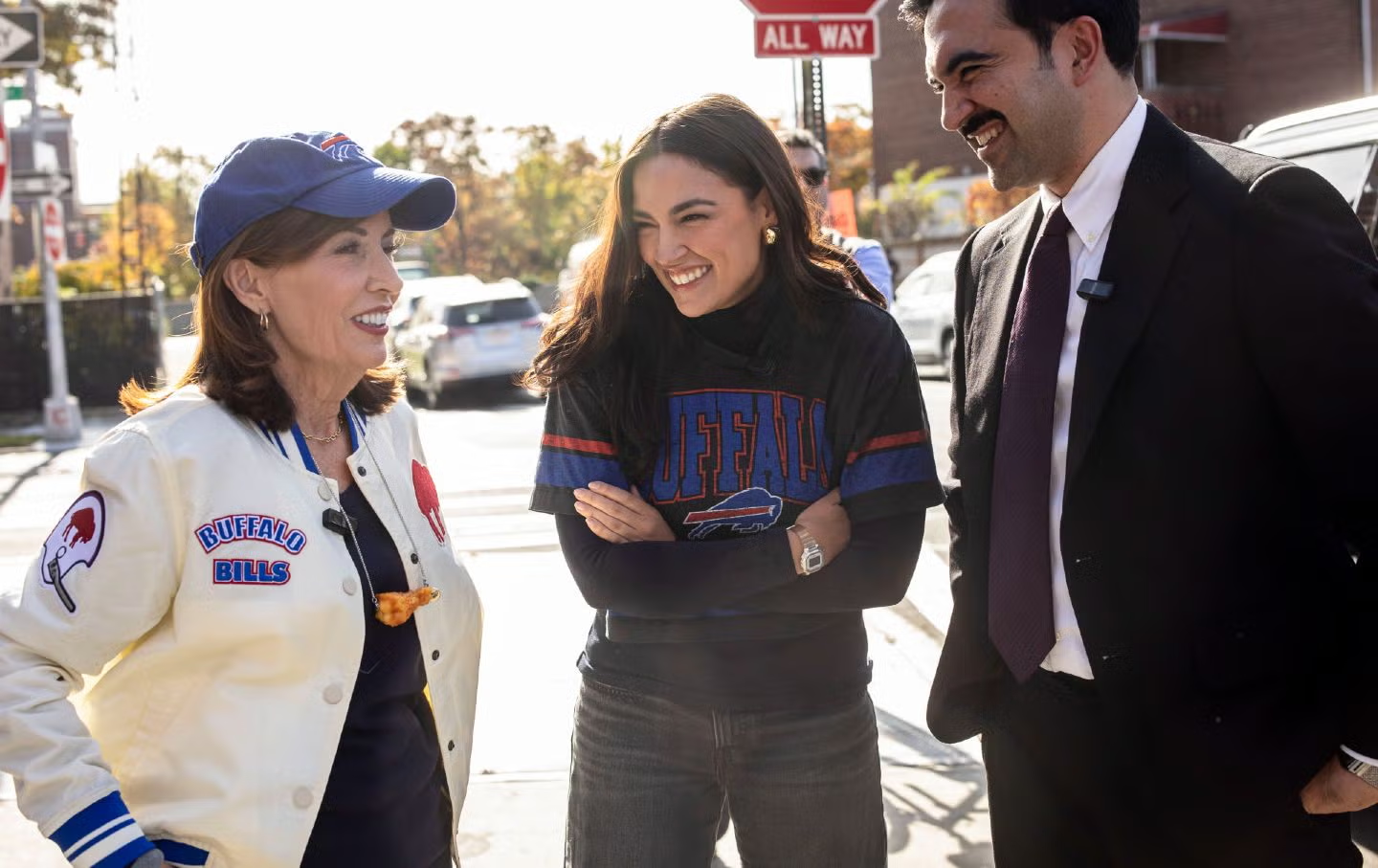
Hochul and Mamdani Teach Democrats a Vital Lesson in Party Unity Hochul and Mamdani Teach Democrats a Vital Lesson in Party Unity
New York State’s governor and New York City’s mayor are illustrating how ideologically diverse Democrats can build winning coalitions.

I Am a UMich Student From Texas. Choosing Where to Vote Was Impossible. I Am a UMich Student From Texas. Choosing Where to Vote Was Impossible.
Despite Michigan being a battleground for one of the most contentious midterm races this cycle, I couldn’t help but feel a draw to my native Texas.
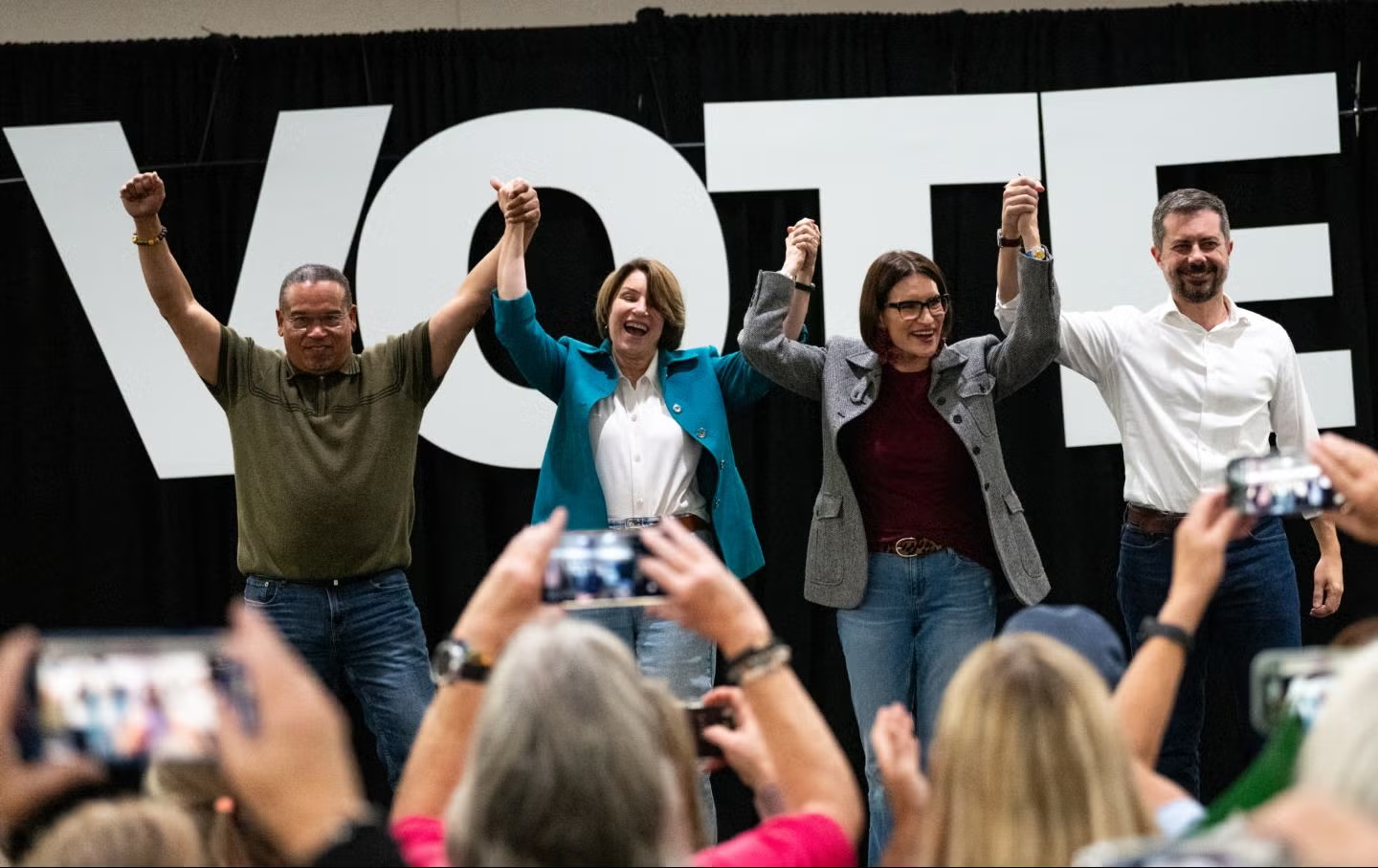
Peggy Flanagan Makes Her Closing Argument Against Trump’s “Cruelty and Chaos” in the Minnesota Senate Race Peggy Flanagan Makes Her Closing Argument Against Trump’s “Cruelty and Chaos” in the Minnesota Senate Race
Flanagan opponent Michele Tafoya’s extreme and erratic stands on Operation Metro Surge may well cost her the Senate seat.
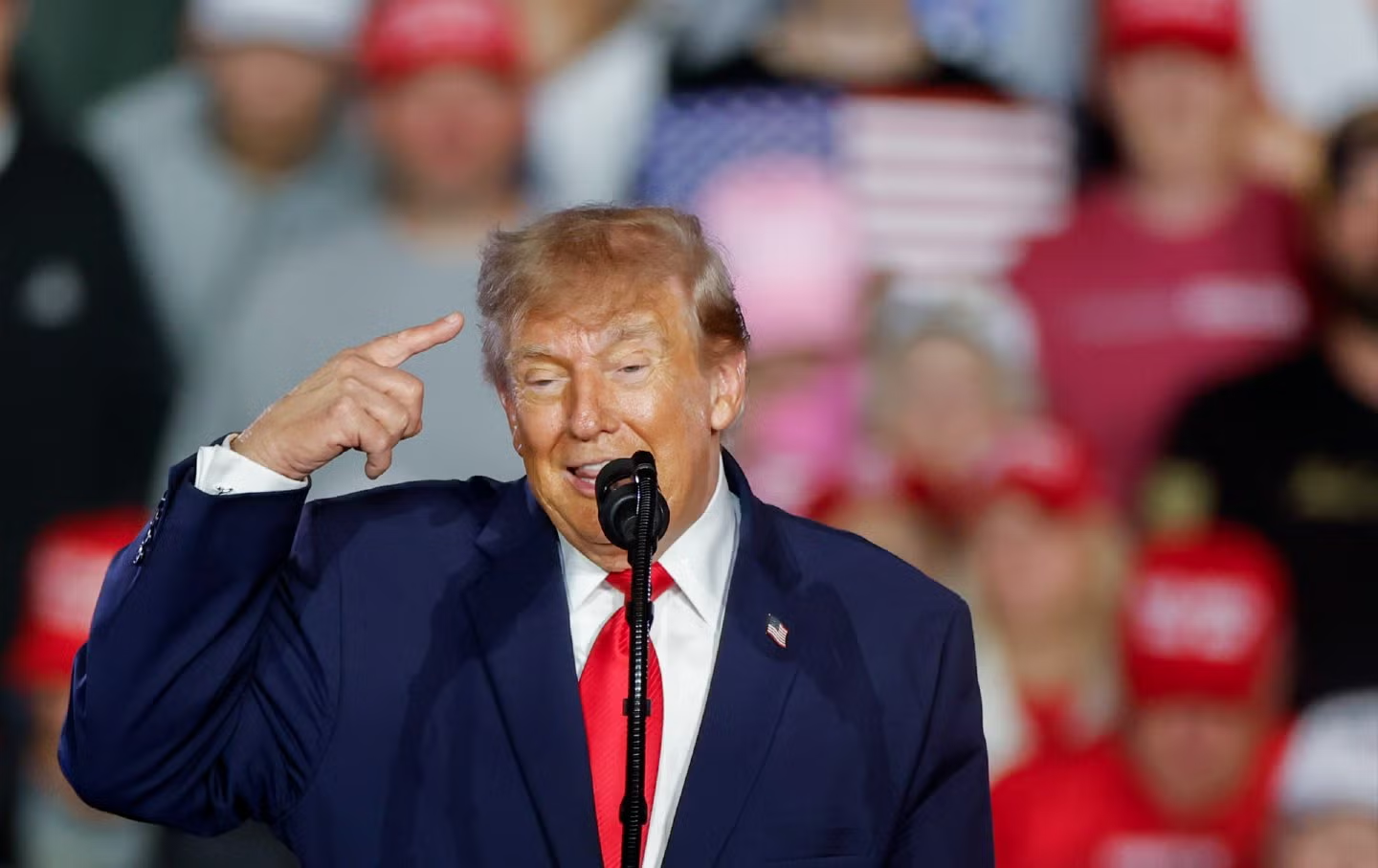
Donald Trump Has Lost It Donald Trump Has Lost It
At one of his final midterm rallies, the president showed just what a spent political force he has become—and what little grip on reality he still has.
Haley Stevens’s Betrayal Is a Fiasco for the Democratic Establishment Haley Stevens’s Betrayal Is a Fiasco for the Democratic Establishment
Centrist, pro-Israel Democrats helped Stevens undermine Abdul El-Sayed for months. Now they are reaping the consequences.
Ilhan Omar: “Trump Has an Unhealthy and Creepy Obsession With Me” Ilhan Omar: “Trump Has an Unhealthy and Creepy Obsession With Me”
The Minnesota representative tells The Nation that her targeting is “a deliberate attempt to distract the American people from the failures of this administration.”

