
Senator J. William Fulbright Is Remembered Today Primarily for the Scholarship Program That Bears His Name
But a broader look at Fulbright’s legacy reveals him as one of the most prescient critics of militarism and the “imperial presidency”—lessons that apply more than ever today.
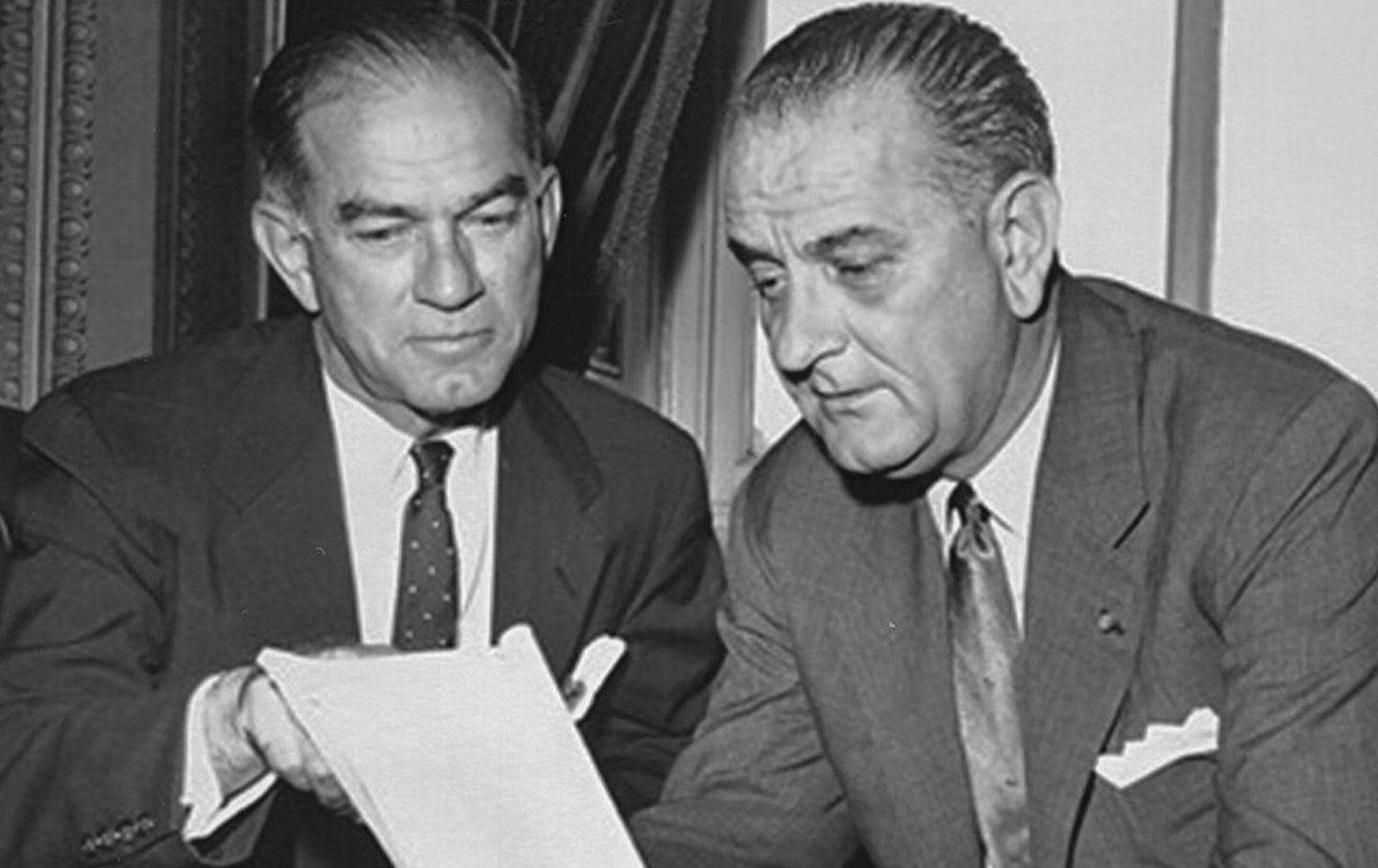
On August 1, 1946, President Truman signed the Fulbright Act into law, creating what would become one of the world’s most prestigious educational exchange programs. Eight decades later, “Fulbright” has become shorthand for international scholarship, as hundreds of thousands of students, researchers, and educators have crossed borders under its banner. But somewhere along the way, we forgot the philosophy that animated the program—a radically different vision of how the United States should engage the world.
Its architect, Senator J. William Fulbright, was one of the 20th century’s most incisive critics of American militarism. As chairman of the Senate Foreign Relations Committee during the Cold War and the Vietnam era, Fulbright watched US global leadership grow through overwhelming military power and concentrated executive authority. Long before phrases like “forever wars” or the “national security state” entered the political lexicon, he warned that the greatest danger facing American democracy was not adversaries abroad but the gradual acceptance of militarism as the central orientation of foreign policy. That warning deserves another hearing.
In the aftermath of World War II, Senator Fulbright introduced Senate Bill 1440 in order to establish an international educational exchange program as a form of peace-building and grassroots diplomacy. The legislation declared its purpose to “exchange students, create a better understanding of our mutual problems, and promote friendly relations, while avoiding possible ill feelings between Nations resulting from inability to meet obligations set up in accordance with traditional methods.”
It is these “traditional methods” of foreign policy—zero-sum competition, military intervention, and covert operations—that Fulbright spent nearly his whole career challenging.
Writing in his 1989 book The Price of Empire, Fulbright called attention to the failures of US foreign policy by outlining the central pathologies he believed had come to define US engagement abroad. Fulbright argued that a “Cold War psychology” had conditioned Americans to mistake confrontation for security. Nuclear weapons had fundamentally changed the nature of international politics, he wrote, yet policymakers continued to rely on orthodox assumptions about balance-of-power competition and military superiority. Rather than recognizing humanity’s shared interest in avoiding catastrophe, the United States locked itself into an arms race whose logic was, in Fulbright’s words, “suicidally irrational.”
Fulbright was equally troubled by what militarism was doing to American democracy. He argued that Congress had steadily ceded its constitutional responsibilities over foreign policy while presidents—from Kennedy’s Bay of Pigs invasion to Reagan’s Iran-contra affair—had accumulated extraordinary authority to shape America’s role in the world with limited democratic oversight. Fulbright warned that an “imperial presidency” was expanding beyond meaningful legislative accountability in foreign affairs.
This concern feels remarkably contemporary. Recent US strikes against Iran—which Americans overwhelmingly oppose—illustrate how familiar the pattern has become: The executive office increasingly claims broad authority to initiate military operations while Congress debates after the fact. Fulbright condemned this dynamic across the Cold War–era interventions in Cuba, Guatemala, the Dominican Republic, and Vietnam, and understood that this normalization, beyond any single decision, posed a deeper threat for the future of American democracy and global leadership.
His critique also extended beyond foreign policy to the underlying structures of political economy. Building on President Eisenhower’s warning about the military-industrial complex, Fulbright argued that militarization had become so deeply embedded that it distorts America’s national interest. Communities grew economically dependent on defense spending. Industries that profited from military expansion gained enormous influence over policymaking. Politicians discovered that advocating larger defense budgets carried few political risks, while questioning military priorities invited accusations of weakness or naïveté.
Fulbright insisted that this consensus carried enormous costs—both democratic and economic. Every dollar devoted to weapons represented resources unavailable for schools, infrastructure, scientific research, or public health. Weapons, he wrote, “are sheer non-productive assets. They do not contribute to the welfare of the country in any positive way. On the contrary, they drain resources—human as well as material.” For Fulbright, weapons do not strengthen a society—nor its national security—in the way investments in the public sector do. This trade-off argument remains strikingly relevant as the Trump administration routinely slashes domestic investments while requesting a Pentagon budget of nearly $1.5 trillion and an additional $67 billion in funds for the war on Iran.
Yet Fulbright’s legacy is more than a critique of American power. What distinguished him from many opponents of military intervention was that he offered an alternative vision of international leadership grounded in mutual understanding.
The Fulbright Program itself was part of that vision. Studying abroad was never, for Fulbright, merely exercise in cultural diplomacy. Educational exchange was also an integral, iterative investment in peace. If militarism depended upon fear, misunderstanding, and the assumption that other societies were fundamentally antagonistic, then repeated grassroots interaction offered another path to sustain relations between nations. Future leaders who had lived abroad, studied another language, and experienced another political culture would be better equipped to resolve disputes through cooperation rather than coercion.
“The essence of intercultural education,” Fulbright wrote, “is the acquisition of empathy—the ability to see the world as others see it.”
Fulbright believed the United States should lead through exchange rather than domination. The scholarship, thus, was never separate from his foreign policy; it was the practical expression of the senator’s anti-militarism.
Appreciating that legacy, however, doesn’t require treating Fulbright as an uncomplicated hero. His early opposition to racial integration and civil rights legislation remain a stain on his record, and any honest assessment must grapple with those shortcomings. Historical figures rarely arrive free of contradiction. But acknowledging those weaknesses should not prevent us from engaging seriously with ideas that continue to illuminate our own political moment. Fulbright’s writings demand attention not because he was right about everything, but because his legacy generates questions that American politics still struggles to answer.
How much executive authority over foreign policy can a democracy surrender before it ceases to be meaningfully accountable? If militarism is a political choice, what would it look like to choose something else? And, perhaps most fundamentally, can the United States practice global leadership rooted less in coercion than in cooperation?
Popular
“swipe left below to view more authors”Swipe →Eighty years after the creation of the Fulbright Program, these questions seem newly urgent. As debates over increasingly aggressive, unilateral foreign policy once again dominate American politics, Fulbright’s central insights deserve renewed reflection.
The 80th anniversary is rightly an occasion for celebration. The Fulbright Program remains one of America’s most long-standing instruments of grassroots diplomacy, fostering generations of scholars, artists, and public servants whose lives have been shaped by international exchange. Yet its future is no longer something Americans can take for granted. While the program is still operational, a combination of previous funding freezes, proposed FY2027 budget cuts to broader State Department educational exchange programs, and public concerns from members of the Fulbright Foreign Scholarship Board call into question the federal government’s commitment to the form of diplomacy Fulbright championed.
This uncertainty makes today’s anniversary more than a commemoration. It is an opportunity to reconsider the political philosophy that animated the program in the first place. Fulbright argued that the greatest threat to American democracy was not the existence of external rivals—as traditional international relations orthodoxy may instruct—but the gradual acceptance of empire as the driving logic of foreign policy. His central warning was that militarism eventually becomes ordinary. His greatest hope was that it does not have to.
Become a Sustaining Donor This September
Between the reemergence of right-wing red-baiting and Donald Trump’s use of the chilling National Security Presidential Memorandum–7 to criminalize left political organizing, we’re seeing McCarthyism reborn before our eyes.
This assault on democracy cannot be ignored or wished away. Resisting it requires bravery in the face of threats and repression, a steadfast commitment to the truth, and the unwavering belief that we can—and will—overcome this darkness.
We must have an independent media that sets the record straight, unearths corruption and abuses of power, and advances a politics of justice and dignity for all if we’re to win this fight.
That’s why I’m writing to you today. This September, The Nation needs to add 100 monthly donors to sustain our progressive journalism. Your contribution makes the next investigative report, the next truth-speaking column, and the next pathbreaking essay all possible.
I hope you’ll support our work with a recurring donation today. If you donate $10 or more a month, we’ll send you a brand new “Hands Off the Free Press!” sticker to recognise your commitment to our cause. Please, donate today.
Onward,
Katrina vanden Heuvel
Editor and Publisher, The Nation
More from The Nation
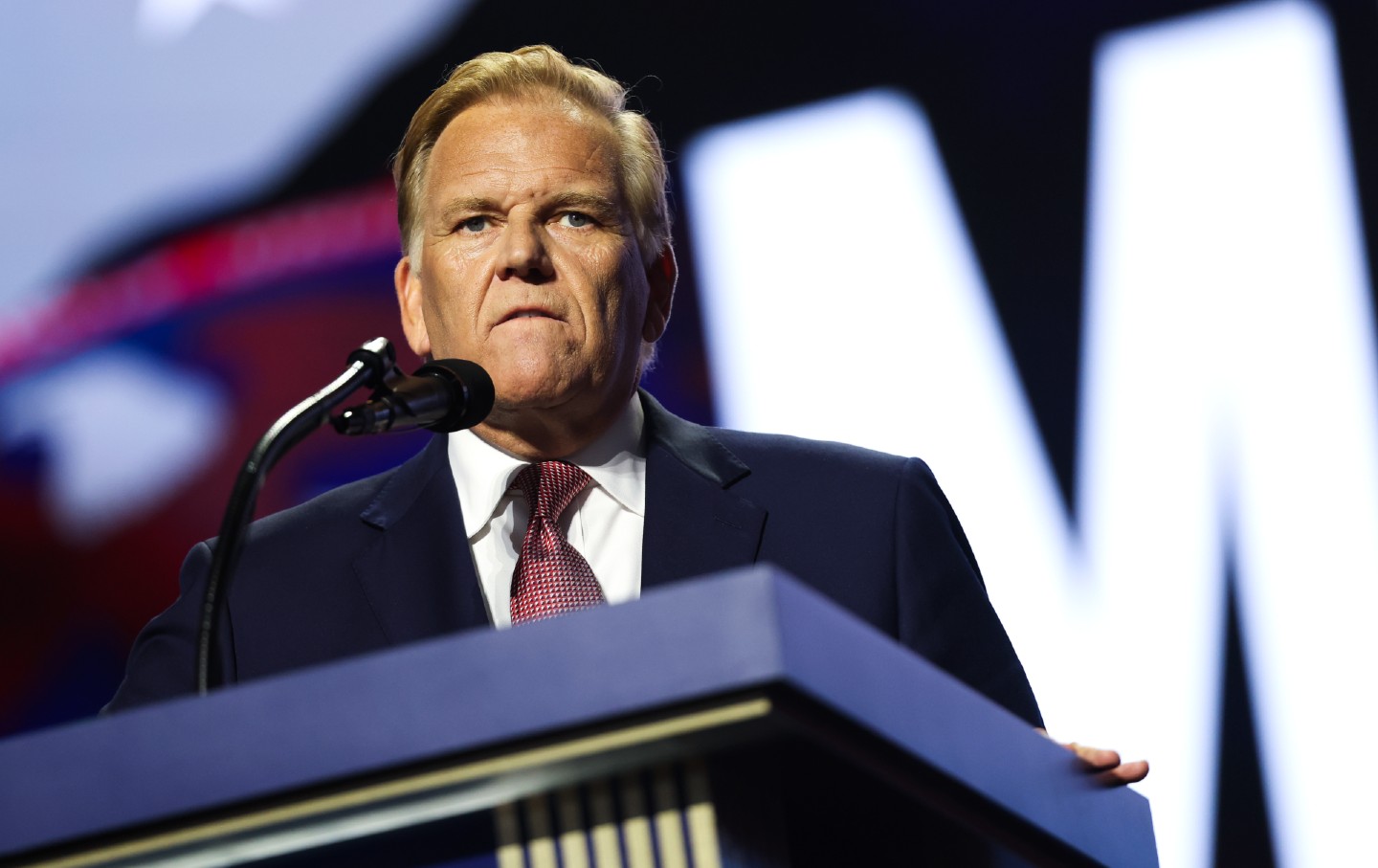
Why Aren’t We Talking About the War-Mongering Lies of Mike Rogers? Why Aren’t We Talking About the War-Mongering Lies of Mike Rogers?
The media's relentless focus on Hasan Piker allows the dishonest GOP hawk (and actual Michigan Senate candidate) to evade scrutiny.
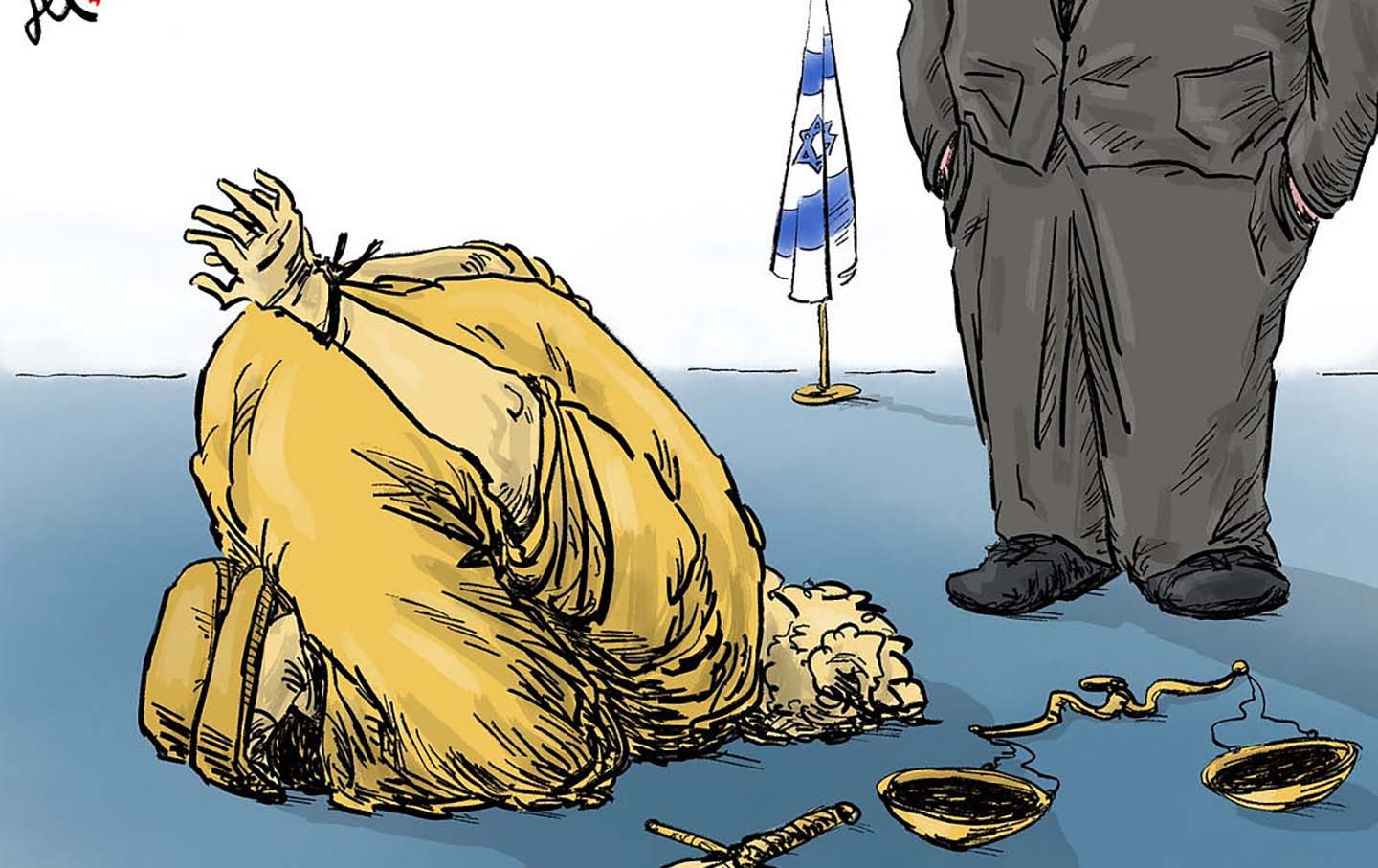
Netanyahu Is Accused of Ignoring Warnings About October 7 Netanyahu Is Accused of Ignoring Warnings About October 7
Will justice be served?
AI Is a Kitchen-Table Issue AI Is a Kitchen-Table Issue
And with the Trump administration encouraging unregulated growth in the industry, Democrats need to start acting like it.
Trump Is a Runaway Train—and Nobody’s Pulling the Brakes Trump Is a Runaway Train—and Nobody’s Pulling the Brakes
Everywhere you look, the president is causing chaos and destruction.

