
“Why Did So Many People Think This War Was a Good Idea?”
The story of how millions of Iranians fell for the regime-change fantasy.
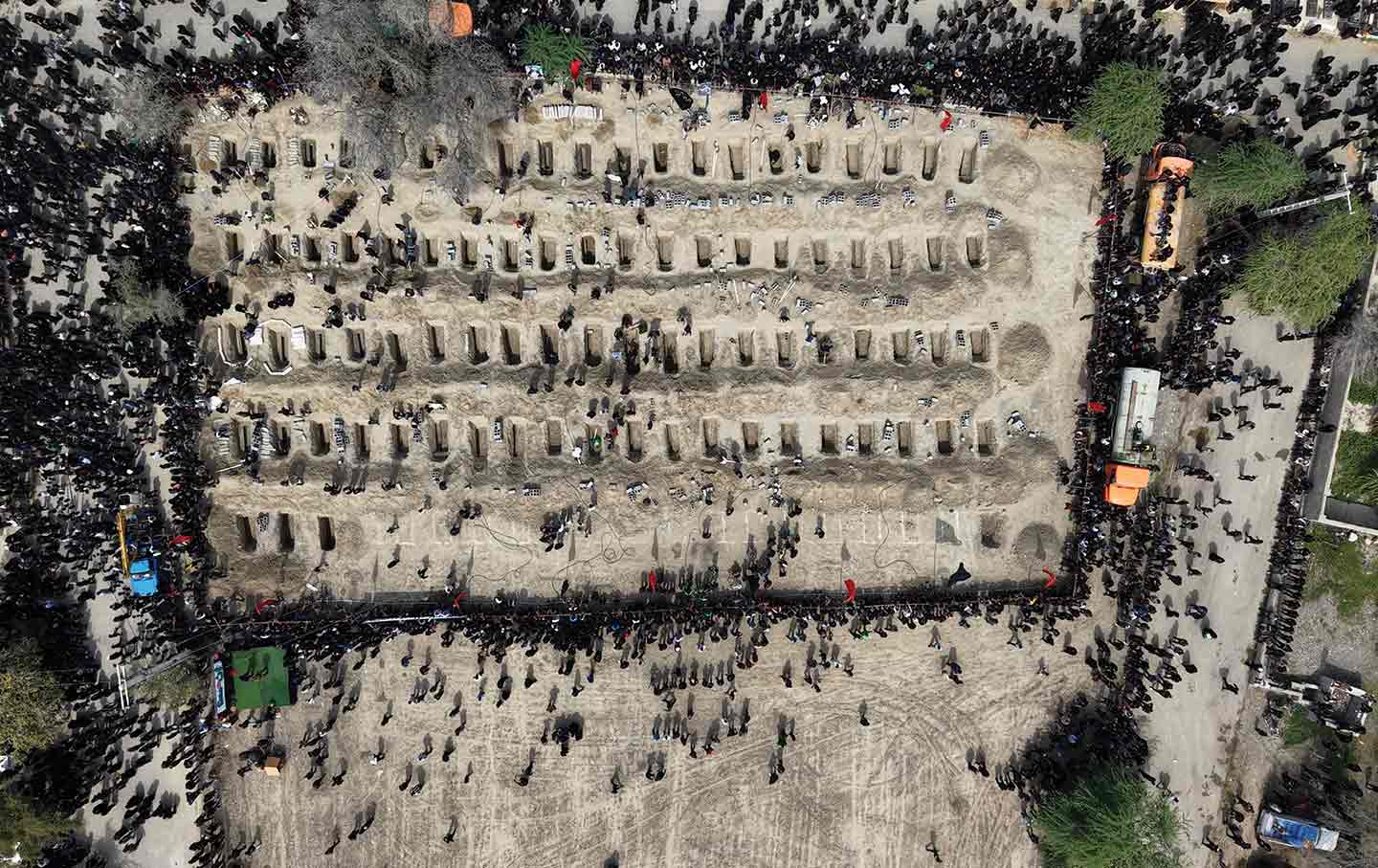
A graveyard in Minab, Iran, for students and staff from an elementary school who were killed in a US-Israeli strike on February 28.
(Handout / Getty Images)“There is nothing to be worried about. Israel and the US are only hitting military targets and bases of government repression. Not a single home has been destroyed. Except for perhaps some minor incidental damage.”
I read Amir’s words once, and then once again.
It was March 5, five days after the United States and Israel had launched a war on Iran. A thousand people had already been killed. Tehran was scarred by bomb blasts.
The Iranian authorities had blocked the Internet, but many Iranians turned to VPNs to bypass the blackout. Some, like my friend Amir, a businessman in his 40s, used that access to celebrate the bombing of their country.
Not everyone shared his sentiment.
“It feels like we’re living the apocalypse,” my friend Maryam, an activist in her 50s, told me over the phone. (Maryam’s name, like those of the other people interviewed for this article inside Iran, has been changed to protect her safety.) “The first day, the bombing started around 9:30 in the morning. Kids had just started school. But when the missiles hit, they closed and sent everyone home. There were children everywhere, screaming with tears in their eyes, as they waited for their parents to pick them up and loud explosions boomed all around. And at that exact moment, the Americans bombed a school in Minab, and more than 100 kids died. I don’t wish upon anyone the horrors we’ve lived.”
I spent the war’s first days contacting everyone I knew in Iran, where my family is from and where I lived for several years. Most messages I sent showed a single check mark on WhatsApp, meaning they went unseen and undelivered.
Over time, however, many got back to me, including my friend Kamyar, an architect in his 30s who lives in northeastern Tehran with his parents: “Our apartment is right next to a military zone, and the missiles were hitting all around us. We had to leave.”
On the second day of the bombing, they drove to the mountains near the Caspian Sea, joining 3 million Iranians who were displaced. It was their second time fleeing US and Israeli bombs in less than a year.
Maryam texted me every night of the war’s first week. The messages were almost identical: “Last night was the scariest so far.”
So did Amir. “This is not a war,” he said, telling me not to worry. “It’s a struggle for freedom. This is the victory of light over darkness.”
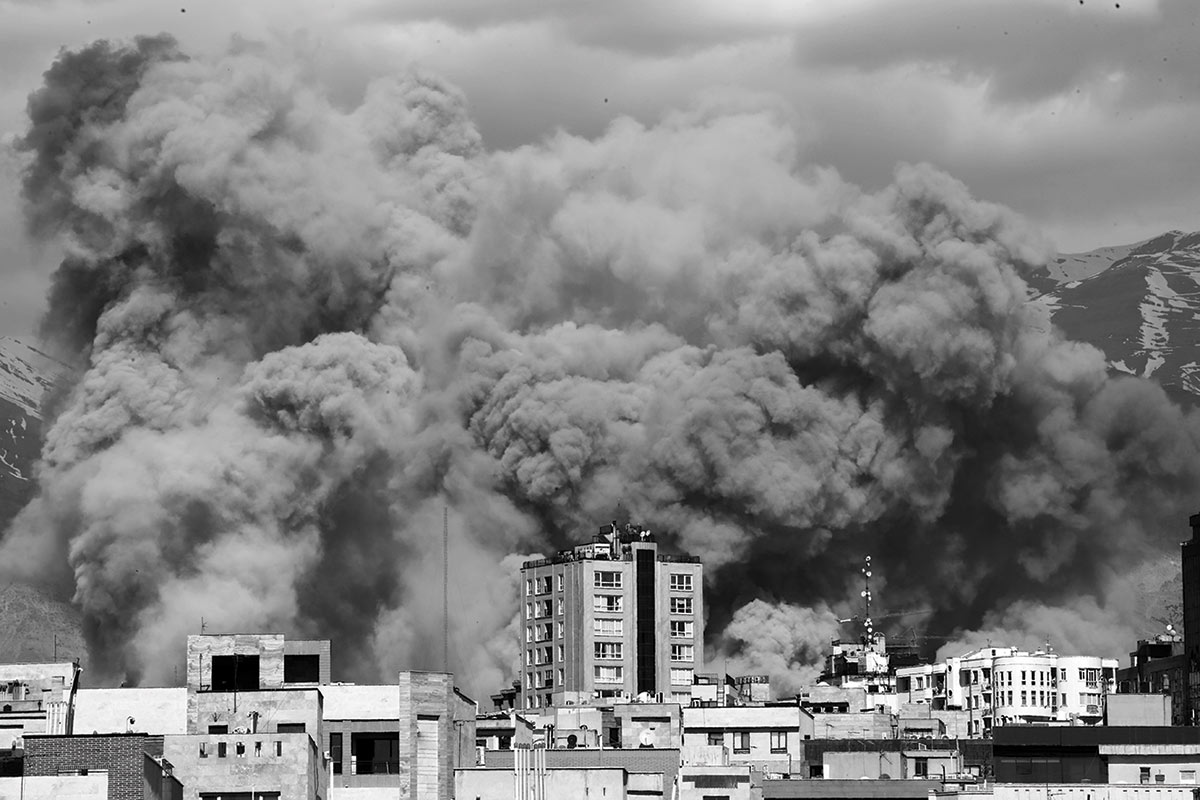
Bombs tore through schools, hospitals, homes, and a gymnasium where teenage girls were playing volleyball. They hit bridges, universities, and mosques. Dead birds fell in Tehran’s streets, and plants shriveled up after Israeli missiles hit oil depots, unleashing massive explosions and a toxic cloud that turned the sky black and showered acid rain.
I managed to reach Maryam the day of the oil-depot strikes; she’d been stuck in bed with a migraine, overpowered by the gasoline smell that had invaded her home even with the windows tightly shut. Her voice was equal parts anger, resignation, and grief: “Why did so many people think this war was a good idea?”
After Israel and the United States launched a surprise attack on Iran on February 28, President Trump posted videos of Iranians dancing in celebration, which then circulated widely in the Western media. They were mostly filmed among the Iranian diaspora. But in Iran, too, some people rejoiced, including Amir.
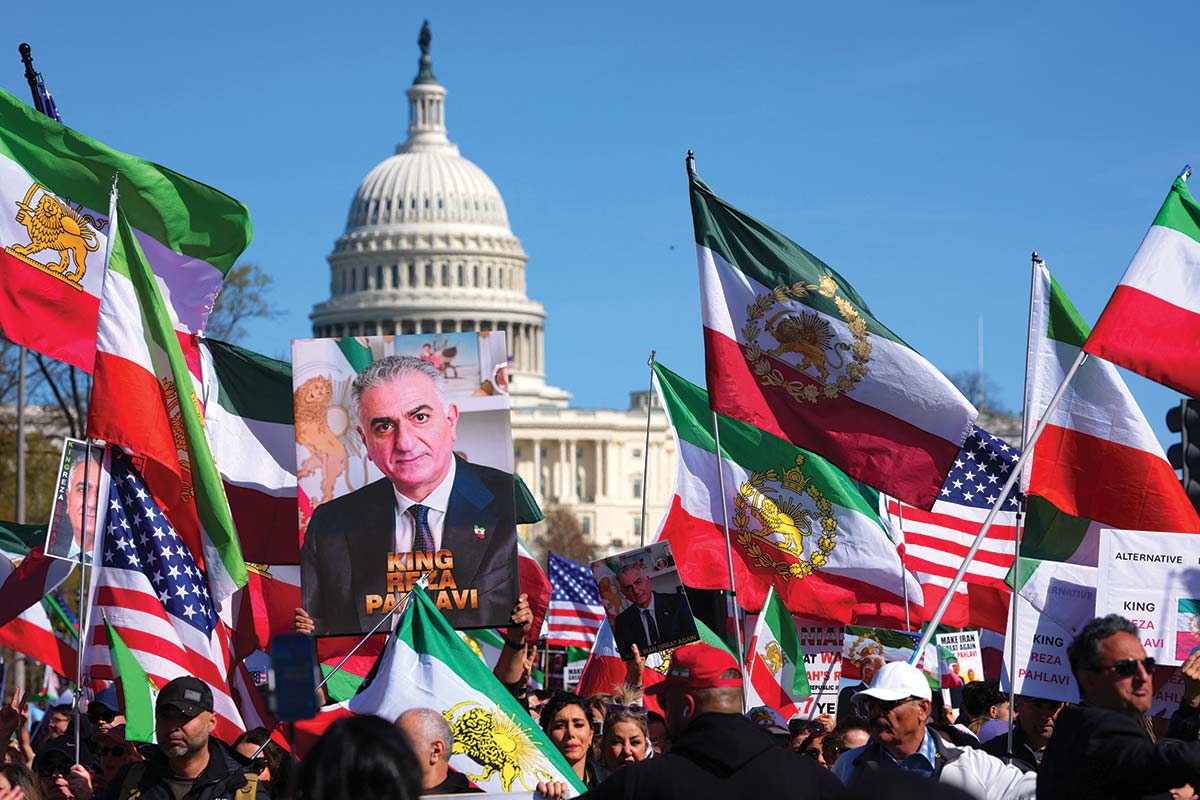
Since early January, when Iranian security forces responded to major anti-government protests by killing thousands of people, Persian-language social media had been lighting up with pleas from the Iranian diaspora for the United States to strike Iran. Reza Pahlavi, the son of the last shah, whom Iranians deposed during the 1979 revolution, led the charge. Styling himself as Iran’s future leader, he called on Trump to “intervene.” He was joined by celebrities like Googoosh, a singer with 6.8 million followers on Instagram, who pressed Trump to take “urgent and decisive” action, and activists like Roya Rastegar, cofounder of the California-based Iranian Diaspora Collective, who urged Trump to use “sophisticated” means to hurt Iran’s leadership and prepare for a “transitional government” that would allow Iranians to return to how things were before 1979. When Trump declared on Truth Social, “We are locked and loaded and ready to go,” they cheered his threat.
These voices were echoed on diaspora satellite-TV channels like Iran International and Manoto, which are both headquartered in London and watched by large numbers of households in Iran. They framed the war as a “rescue mission” that would enable Iranians to overthrow their government. There was little discussion of how exactly military strikes would lead to the collapse of Iran’s government. But the possibility raised unrealistic expectations inside Iran. To millions of people still reeling from January’s mass killings, it offered a fantasy that the US could swoop in, remove the government, and replace it with something else—without touching the Iranian people.
Almost overnight, Iranians who spoke out against war were accused of being “apologists” for the government.
“Where were you when they massacred 40,000 people in January?” was one frequent refrain. (While the number of people killed in the crackdowns has been extensively debated, the reality is believed to be closer to a still-appalling 7,000 people.)
“War will kill fewer people than the regime, so it will save lives in the long term. It’s simple math” was another.
“What’s your alternative?” was yet a third.
A quieter chorus warned against the lure of war. “We stand for peace,” Masoud Nikzadi, a historian in Tehran, wrote on Instagram. “We don’t need to explain a plan for why peace is necessary. Those who support war must explain how exactly it will bring freedom.”
A collective of women from the Baloch minority, formed during the 2022 Woman Life Freedom protests, warned: “War should not be sold as an opportunity to people under oppression. Militarization…leads to social collapse and disintegration, just as happened in Afghanistan, Iraq, Libya, and Syria.”
But these voices in Iran, lacking large social-media platforms, were drowned out by influencers and celebrities abroad, whose message was embraced by those within the country.
“War will be worth it,” Amir told me a few days after the US and Israel began their attack, “because when it’s done, freedom will come.”
Freedom has not come. In the more than two months since the United States and Israel launched the war, their bombs have killed more than 3,500 Iranians, injured 25,000, and damaged 80,000 homes or businesses. Iran has struck back hard, giving the lie to Israeli Prime Minister Benjamin Netanyahu’s claims that “the regime” was on its last legs. Despite the assassination of Ayatollah Ali Khamenei and other political and military leaders, the government remains as entrenched as ever—and now believes it’s negotiating from a position of strength.
To understand how so many diaspora actors were empowered to get things so wrong, it is helpful to consider a recent critical shift within the 5-million-strong community (750,000 in the United States). While many prominent pro-war voices have positioned themselves as representatives of Iran’s people, the reality is more dynamic and complex. The diaspora includes monarchists who fled because of the 1979 revolution—people with close ties to the Pahlavi regime, like Parviz Sabeti, the former head of the SAVAK secret police, who hid in Florida for decades—but also ordinary people who left simply because of the uncertainty that followed. There are people like my father, who arrived in the US in the 1970s to attend college—a cohort that included many who opposed the shah—as well as Iranians who came more recently for the same reason people come from all over the world: economic opportunity and personal freedom. The fact that these emigrants have children and grandchildren who were born and raised in the US adds another layer of nuance.
Within this mix, there has always been a range of politics and perspectives—but for years, diaspora Iranians were a reliably progressive community. A 2008 survey found that Iranian Americans were four times as likely to identify as Democrats than as Republicans. A survey from 2015 showed that nearly two-thirds believed that diplomacy with Iran was better than war or sanctions. Even now, Iranian Americans oppose war by a 2-to-1 margin.
But since Trump first came to power, he has enabled and amplified hard-right Iranian-diaspora voices—including, most notably, that of Pahlavi. And this has helped reshape opinion inside Iran as well.
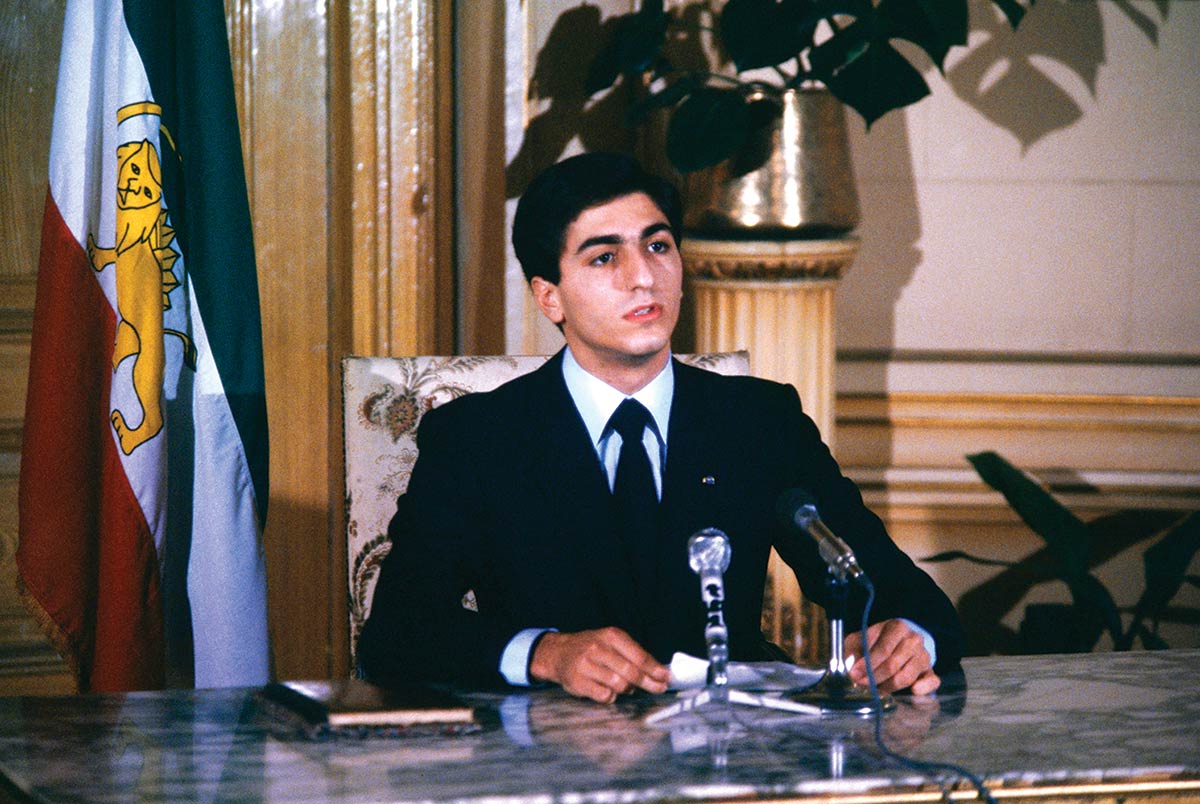
For decades, Pahlavi was a running joke in the Iranian community. His father was so unpopular around the world that even the United States, his former patron, was unwilling to take him in after he fled Iran. During his 47 years of exile, the shah’s son failed to build any kind of political movement to bring together the diverse political views within the diaspora. For the most part, he lived lavishly if quietly in a gated Washington suburb, popping up occasionally to present himself as the heir to Iran’s long-abolished monarchy.
Then, in 2018, Trump ripped up the Obama administration’s nuclear deal with Iran, which had provided a framework for the normalization of relations between the two countries. In its place, he instituted “maximum-pressure” sanctions. Pahlavi responded by positioning himself as the international voice of the Iranian opposition—an effort in which he was aided by the US, Saudi, and Israeli governments, which poured millions of dollars into promoting him. He began giving talks at major universities and think tanks like the Washington Institute for Near East Policy, a fiercely right-wing, pro-Israel think tank. In 2023, he publicly cemented his relationship with Israel during a high-profile visit that included a meeting with Netanyahu. And after years of opposing military intervention in Iran, calling it a “lose-lose” that would undermine democracy and strengthen the government, he embraced the idea of foreign powers attacking the country.
As Pahlavi’s star rose, he was further helped by a rapidly shifting mediascape. A set of sleek satellite-TV channels emerged out of the diaspora landscape, among them Manoto and Iran International, both of which take a strident pro-monarchy line and often feature Pahlavi as a guest. While the two channels have refused to disclose their funding, a 2018 Guardian investigation revealed that Iran International had received significant financial backing from Saudi Arabia. In 2023, its journalists were photographed in a meeting with Israel’s intelligence minister.
At the same time, the Persian-language social-media landscape has been transformed by a network of thousands of bots funded by Israel—along with a new class of diaspora pundits whose voices were amplified as they swung dramatically right. Pahlavi was Iran’s only hope for democracy, they cried in unison.
For these boosters, it didn’t seem to matter that Pahlavi steadfastly refused to denounce the authoritarianism of his father’s regime. Or that he refused to rein in his followers, who developed a reputation for aggression against anyone who refused to pledge allegiance to their leader. Month after month, year after year, his face and words proliferated on Twitter and Instagram. And thousands of miles away, many Iranians—confronted by a legion of commenters and the online illusion of popular consensus—began to warm up to him.
During Trump’s first term, I lived in Tehran and witnessed this shift firsthand. I was conducting research on power and resistance in the contemporary Middle East for my PhD in anthropology from the University of Chicago. It was while I was there that Trump pulled out of the nuclear agreement with Iran, declaring that he wanted a “better” deal and was willing to bring the country to its knees to get it. By the fall of 2018, months after Trump announced that he was going to reimpose sanctions, Iran’s currency had lost two-thirds of its value.
At lunches in Tehran, friends complained that their life savings were evaporating and their families could no longer afford to buy meat. As sanctions choked off supplies of everything from cars to construction materials, necessities like insulin and cancer medications became hard to obtain; on downtown streets where men in sunglasses once sold drugs, they now whispered “medicine” to passersby. I also heard complaints about the Revolutionary Guard, a parallel military force that had developed a commanding stake in Iran’s economy, who were making a brisk profit by smuggling in goods prohibited by the sanctions.
Everyone was mad. But the targets of their anger differed.
I was introduced to Amir through a mutual friend and would join him and his friends for dinner every few months. Amir imported electronics. The currency fluctuations had made business unpredictable, but because he worked mostly with businesses in East Asia, he was surviving the storm.
Amir was loath to blame Trump. “The guy is just doing what’s best for his country,” he would say. His wife, Azita, went further: “Trump needs to hit the regime as hard as he can, make them suffer,” she would say. “They’ve made our lives hell.”
Azita was short on details on how sanctions would lead to the government’s collapse. But she wanted revenge against those she blamed for the country’s woes, ranging from the seemingly intractable economic situation to the broader feeling that Khamenei treated the country as his personal fiefdom, limiting Iran’s democratic institutions, throwing dissidents in jail, and handing sweet economic deals to people with connections in the Revolutionary Guard.
Both Azita and Amir were avid viewers of Iran International and Manoto, where they could enjoy dubbed reality-TV shows, documentaries offering a rosy image of life before the revolution, and interviews with diaspora figures who urged Iranians to give up any hope of reform and embrace the promises of regime change. Like most other Iranians, Azita and Amir had voted for reformists who promised more social and political freedom. But they’d since become disillusioned. At its core, they argued, the system remained oppressive and corrupt. No matter which president wound up in office, the unelected Khamenei refused to allow meaningful change. When Trump offered to punish Khamenei and overthrow his government, Azita and Amir felt that he was providing them a way out of the dead end.
But not all Iranians bought the regime-change fantasy that Trump—and Pahlavi—were selling. “That guy has never done anything in his life,” Maryam said of Pahlavi as we sat in her living room in central Tehran, discussing the pro-Pahlavi hashtags. “We’ve been fighting for years here under difficult conditions, building organizations and networks. But in America, he has built nothing to unite people, even though he lives in total freedom. Now he thinks he can come back and rule this country? Give me a break.”
I had gravitated toward Maryam after moving to Tehran. I admired her work as a veteran of Iran’s grassroots struggles: While others spoke abstractly of change, she spent her life fighting for it. She’d cut her teeth in the student uprising of 1999, participated in the feminist One Million Signatures campaign to reform sexist laws in the 2000s, and marched with millions demanding a recount after the rigged 2009 election. She’d been in and out of prison and now kept a low profile. She was always collecting money for a cause, often linked to Afghan refugees or underprivileged youth in Iran’s marginalized provinces. And she saw firsthand how US policies disproportionately affected the most vulnerable.
“Trump’s sanctions are going to save us? By killing us? No thank you,” she said.
Pahlavi’s supporters seemed less concerned with what Trump was doing or what he was saying than what they wished he was saying. Consumed by rage at Iran’s government, they overlooked the spotty history of foreign intervention in Iran. But it was precisely that history that Maryam called upon to explain her opposition.
Maryam’s hero was Mohammad Mossadegh, the immensely popular, democratically elected prime minister who nationalized Iran’s oil industry in 1953. The Shah saw demonstrations supporting Mossadegh and fled the country in what could have portended a democratic opening. Instead, the CIA paid for a coup to protect US and UK imperial interests, reinstalled the Shah, who used a wave of US funding to launch a wide-ranging crackdown on dissent. He ruled for 25 more years until the 1979 Revolution, relying on the SAVAK secret police to torture dissidents.
Nor was the coup against Mossadegh the first time foreign powers intervened to quash grassroots Iranian democratic aspirations. In 1905, Iranians rose up demanding limits on the absolute Qajar monarchy and an end to concessions to colonial powers. During what became known as the Constitutional Revolution, they successfully established a parliament. But Tsarist Russia and the UK subsequently invaded to defend the project of monarchy, ultimately silencing the revolution in 1911.
More than 100 years later, Reza Pahlavi sought to erase the memory of Iranians’ grassroots struggle and replace it with its antithesis: royal restoration from above.
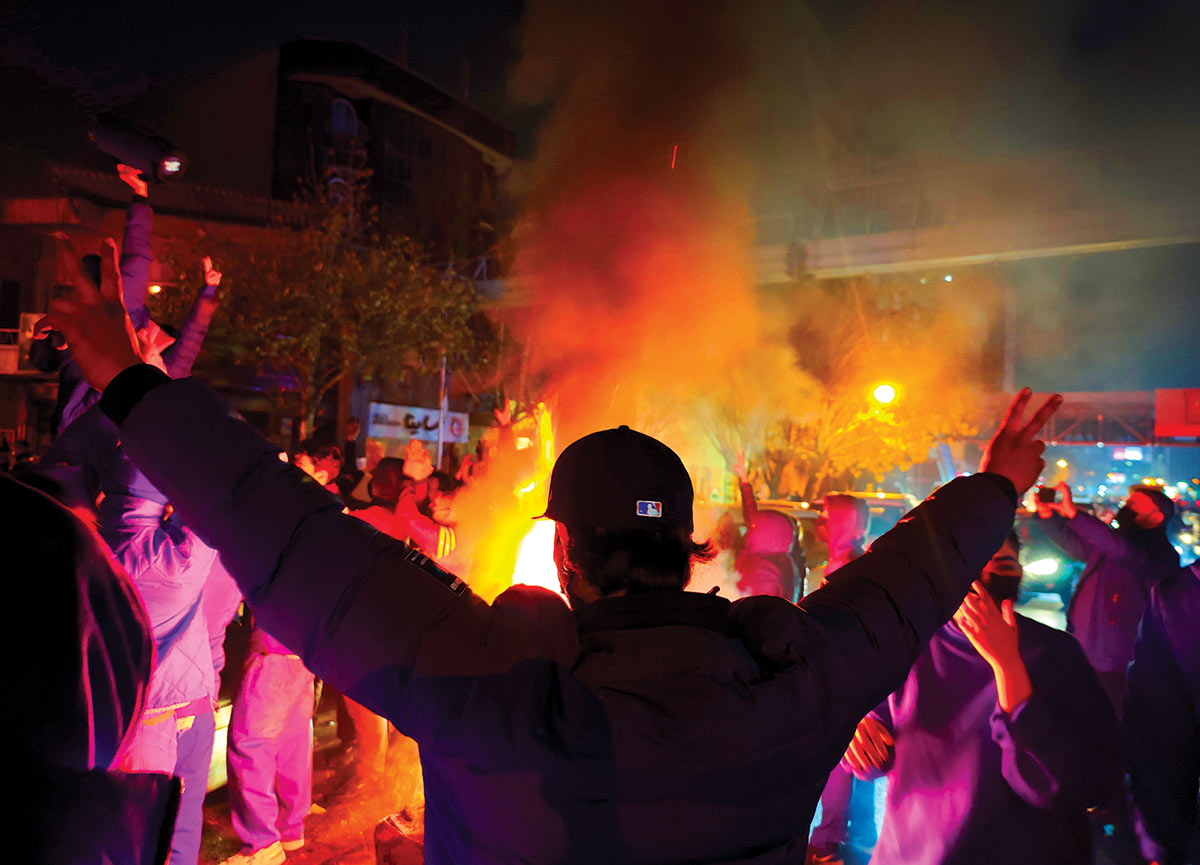
While a variety of actors outside Iran have been selling regime change for years, numerous people I spoke with in Iran described Trump’s abduction of Venezuelan President Nicolás Maduro and his wife in January—coming on the heels of the spiraling conditions within Iran—as a key reason for the rapid uptake of the fantasy at this moment in history.
The backstory begins in late December, when protests erupted in Iran as the value of the rial collapsed in the aftermath of the Twelve-Day War with Israel, a major bank failed, and the US imposed a new round of sanctions. They began in Tehran’s grand bazaar and quickly spread to poorer towns that rarely saw public demonstrations but bore the brunt of the economic suffering. The protesters were angry about rising inequality, especially the flashy consumerism of the aghazadeh, children of officials who had made big fortunes thanks to their government connections.
President Masoud Pezeshkian’s government announced measures to alleviate the economic pain, even as security forces repressed the demonstrations, killing scores of people. By early January, the protests had largely gone quiet, with only sporadic eruptions here and there. And then Trump attacked Venezuela, abducting Maduro and his wife—and sparking the imaginations of some Iranians who thought those actions could easily be replicated in their own country.
Few paid attention to the 100 lives lost during the US operation, or what happened after: Trump did not overthrow Venezuela’s government; instead, he made a deal with Maduro’s second-in-command, allowing the regime to stay in power. Nonetheless, in a case of extreme wishful thinking, some saw the attack optimistically as a blow against an ally of Iran. Images circulated on Iranian social media comparing Khamenei to Maduro. When Trump said he was “locked and loaded,” many imagined that an attack was on the horizon.
In January, Pahlavi repeatedly issued calls for Iranians to take to the streets; these were echoed by groups abroad like the Iranian Diaspora Collective, which described the protests as “the final battle” to bring down the government. Pahlavi told his followers that tens of thousands of Iranian soldiers had said they would defect and join an uprising. Fresh from a vacation in the Bahamas, he called on Iranians to prepare the ground for the coming regime change by seizing government buildings. That weekend, hundreds of thousands of people tried to do exactly that.
Kamyar, the architect who had fled Tehran for the Caspian coast, watched from a hotel window on the Persian Gulf island of Kish. “I had never seen such huge crowds before,” he told me. “Everyone was happy,” he added, “like it was a victory party.” That mood shifted, however, when security forces confronted the protesters. Videos from across Iran show scenes of enraged crowds attacking the security forces, toppling statues, and tearing down flags. “They burned down every police station,” said Kamyar, who had witnessed the events, “and the next day, it was like the protesters controlled the island.”
But the protesters did not control the island, and the regime was not on the verge of collapse.
When I lived in Tehran, Kamyar had often warned me against the idea that the government could fall so easily. He had worked on government-associated architectural projects, and he recognized that “the regime” was not just a couple of people on top; it was the millions employed by or for the government and the millions more who supported its ideology. He knew that burning down police stations wouldn’t bring down the government; instead, it could provoke a worse reaction. And that’s exactly what happened: The security forces regrouped, and this time they implemented shoot-to-kill orders. They slaughtered thousands of people with a ferocity unmatched in modern Iranian history. Many more were injured and arrested.
Even so, Pahlavi continued to announce that the fall of the regime was near. And as videos of body bags at morgues throughout Iran circulated, the deaths became fuel for another campaign: The calls for a “rescue mission” began appearing on social media.
When I spoke to Kamyar in early April, during a tenuous ceasefire, he was taking a walk in a park in central Tehran, enjoying the cool spring weather and the respite from bombardment. He had only recently returned from the Caspian coast. He’d delayed coming back, he told me, less because of the bombs and more because of the checkpoints.
“They are everywhere,” he said. “There’s Basijis [members of the pro-government paramilitary] with Kalashnikovs checking every car, and they can ask you to show your phone whenever they want. If they find anything they don’t like, they can detain you right there. You don’t know what will happen to you.”
Before the war, checkpoints were largely unknown in Tehran, except late at night when the police tried to catch drunk drivers. The last time military checkpoints had been erected in the city was in the 1980s, during the Iran-Iraq War, when authorities crushed all forms of political dissent in the name of national unity against a foreign invader. Now the security forces are checking phones to see if people are posting anti-government content celebrating the war and detaining those who do. And these checkpoints are only one element of a far broader crackdown on dissent.
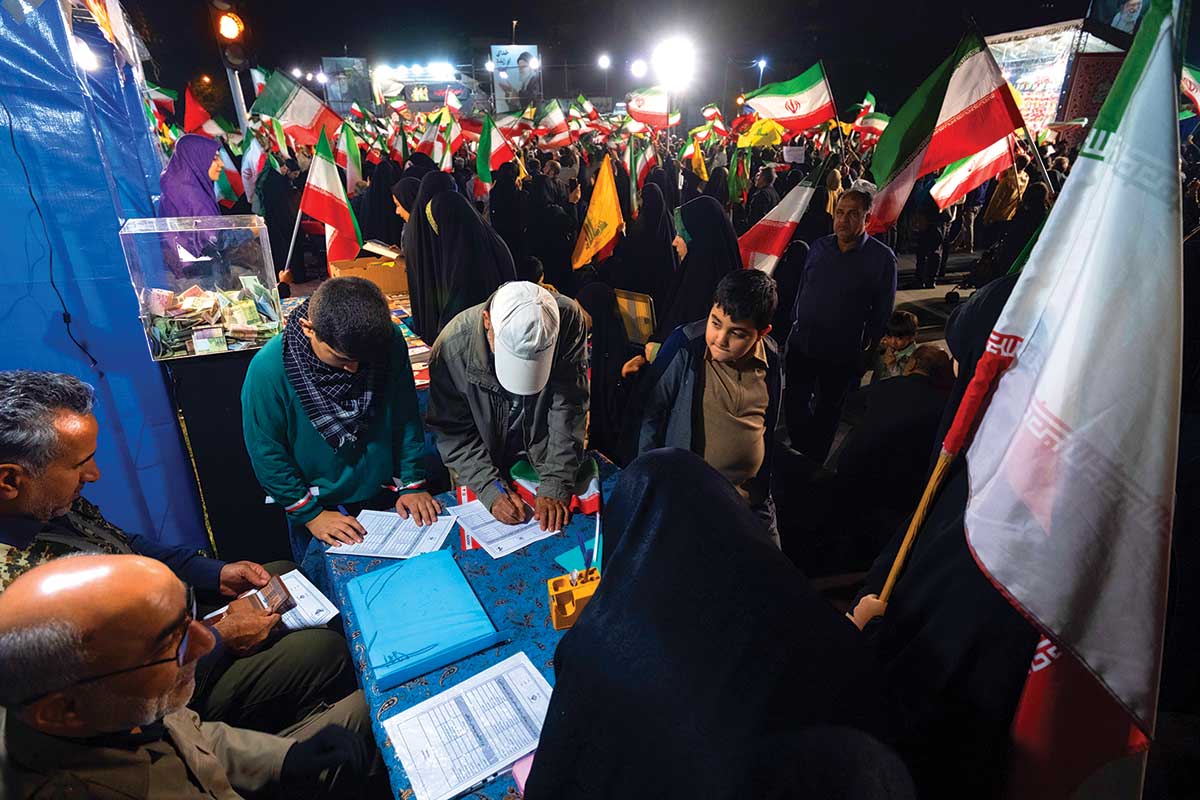
During the evenings, heavily armed members of the security forces patrol the streets of Tehran, while nightly rallies enjoin Iranians to defend their homeland from new foreign invaders. Hundreds have been arrested for anti-government social-media posts. In early March, the authorities announced that they would begin confiscating the properties of diaspora Iranians who had advocated for the war.
And yet, even amid the crackdown, the war has inspired millions of people to support the government by strengthening its legitimacy. For years, authorities had warned of US and Israeli plots to destroy the country, and many Iranians had shrugged them off as throwbacks to another era. But faced with surprise attacks by a man who has threatened to send Iran “back to the Stone Ages” and warned that “a whole civilization will die,” many Iranians who are critical of the government increasingly believe that it’s the only thing stopping the annihilation of their country.
This includes Maryam, who told me she was proud to see Iran’s government firing back at Israel, US bases, and the Gulf countries that host them. “We can’t surrender,” she told me. “Then they’ll just come back and hit us again. I hate the Islamic Republic, but they’re the only ones defending us from destruction.”
The Persian New Year falls on March 20, the first day of spring. Traditionally, Iranians take to the streets and build big bonfires to jump over on the Tuesday night before the new year, a ritual that symbolizes renewal and rebirth.
This year, Reza Pahlavi issued another call for Iranians to take to the streets and bring down their government. Nothing happened. But the government warned any would-be demonstrators that they would be treated as fifth columnists and dealt with harshly.
“We didn’t dare go outside,” Maryam told me.
Since then, Pahlavi’s message has grown increasingly desperate. He urged the armed forces to rise up and commanders in the Revolutionary Guard to betray the government. He offered to help Markwayne Mullin, the new US secretary of homeland security, to identify Iranians in the United States for deportation based on their political beliefs, presumably to make himself seem useful to Trump. He is increasingly detached from reality.
Trump, however, has given up on the idea of regime change, aiming instead for a deal. He’s reportedly taken to calling Pahlavi the “loser prince.”
The diaspora influencers who called for the war are also increasingly adrift. Masih Alinejad, a former grassroots Iranian activist who got a US government job and became a pro-Trump, pro-Pahlavi hard-liner, has urged Trump not to negotiate with Iran’s government. Moj Mahdara, a founding member of the Iranian Diaspora Collective whose previous venture, an event company called Beautycon, nearly went bankrupt, appears regularly on Fox News urging Trump to “finish the job.”
But it is unclear what finishing the job would mean. When asked to explain how they expect bombs to bring freedom, many of the war’s supporters are incapable of articulating a clear theory of change.
Elica Le Bon, née Mojtahedzadeh, a British Iranian attorney and activist, has been one of the loudest online voices for regime change. During a recent appearance on the Triggernometry podcast, she asked why the war hadn’t brought freedom yet. “The precision strikes are so incredible. Why can’t they go for the weaponry that [the government] is using on the protesters?” she ventured.
“Because they’re just assault rifles,” the interviewer said.
“Can’t they target that?”
“No. You’re not going to take out every single AK-47 in Iran.”
She hadn’t lost hope in Pahlavi, she said, because he had lots of support in Iran: “There are 150,000 people within the ranks [of the Iranian army] that are looking to defect to [Reza Pahlavi].”
“What are you basing that on?” he asked.
“His team says that.”
The host went silent.
Those in Iran who bought what Pahlavi was selling are adrift, too.
I spoke with Amir during the ceasefire. He told me that he and the people around him were seized by fear. “Everyone I know is taking sleeping pills every night,” he said, “because we’re afraid Trump is going to let the regime stay in power.”
Pahlavi and the diaspora influencers who boosted him will live to fight another battle. But it is the Iranians inside the country who will pay the price for the war they advocated. Workers have been killed by the missiles targeting refineries, factories, and other infrastructure. Hundreds of thousands have lost their jobs. The value of the currency has plummeted. The economic crisis is far worse than it was before the war.
The day before the ceasefire began, an Israeli missile hit a synagogue not far from where I’d lived in Tehran, a neighborhood that on Friday nights was filled with Orthodox Jewish Iranians walking to Shabbat services, just up the street from Tehran’s largest Christian church, a sleek 1970s modernist-style cathedral. The synagogue was destroyed, and a collection of Torah scrolls that were housed in its ark were buried under the rubble. Photos captured fragile scraps of paper, Aramaic sentences cut short by the jagged burnt edges. Another bomb hit the Pasteur Institute, pulverizing an archive of epidemiological research that dates back a century.
Among those in the diaspora who cheered the war, there is a dawning awareness of the destruction unfolding across Iran. At first, many denied the reality, taking cues from Israeli disinformation, which labeled photos of Iranians killed in the building strikes as “Ayatollahwood.” But as Trump made it clear that he was intentionally hitting civilians, diaspora figures promoted a new slogan: Behtaresho misazim. “We’ll build it back better.”
“Who is going to build it back better?” Kamyar asked me on a phone call. “With what money?
I wondered: Will the Iranian Diaspora Collective start a fundraiser? Will Pahlavi ask Trump to exempt him from the sanctions so he can send the cash? Or was this all a lie, like the fantasy of regime change they had sold to so many Iranians?
A few days later, as Trump appeared to be negotiating a deal with Iran, Pahlavi gave another interview on French TV. “I never asked for military intervention,” he said.
Become a Sustaining Donor This September
Between the reemergence of right-wing red-baiting and Donald Trump’s use of the chilling National Security Presidential Memorandum–7 to criminalize left political organizing, we’re seeing McCarthyism reborn before our eyes.
This assault on democracy cannot be ignored or wished away. Resisting it requires bravery in the face of threats and repression, a steadfast commitment to the truth, and the unwavering belief that we can—and will—overcome this darkness.
We must have an independent media that sets the record straight, unearths corruption and abuses of power, and advances a politics of justice and dignity for all if we’re to win this fight.
That’s why I’m writing to you today. This September, The Nation needs to add 100 monthly donors to sustain our progressive journalism. Your contribution makes the next investigative report, the next truth-speaking column, and the next pathbreaking essay all possible.
I hope you’ll support our work with a recurring donation today. If you donate $10 or more a month, we’ll send you a brand new “Hands Off the Free Press!” sticker to recognise your commitment to our cause. Please, donate today.
Onward,
Katrina vanden Heuvel
Editor and Publisher, The Nation
More from The Nation
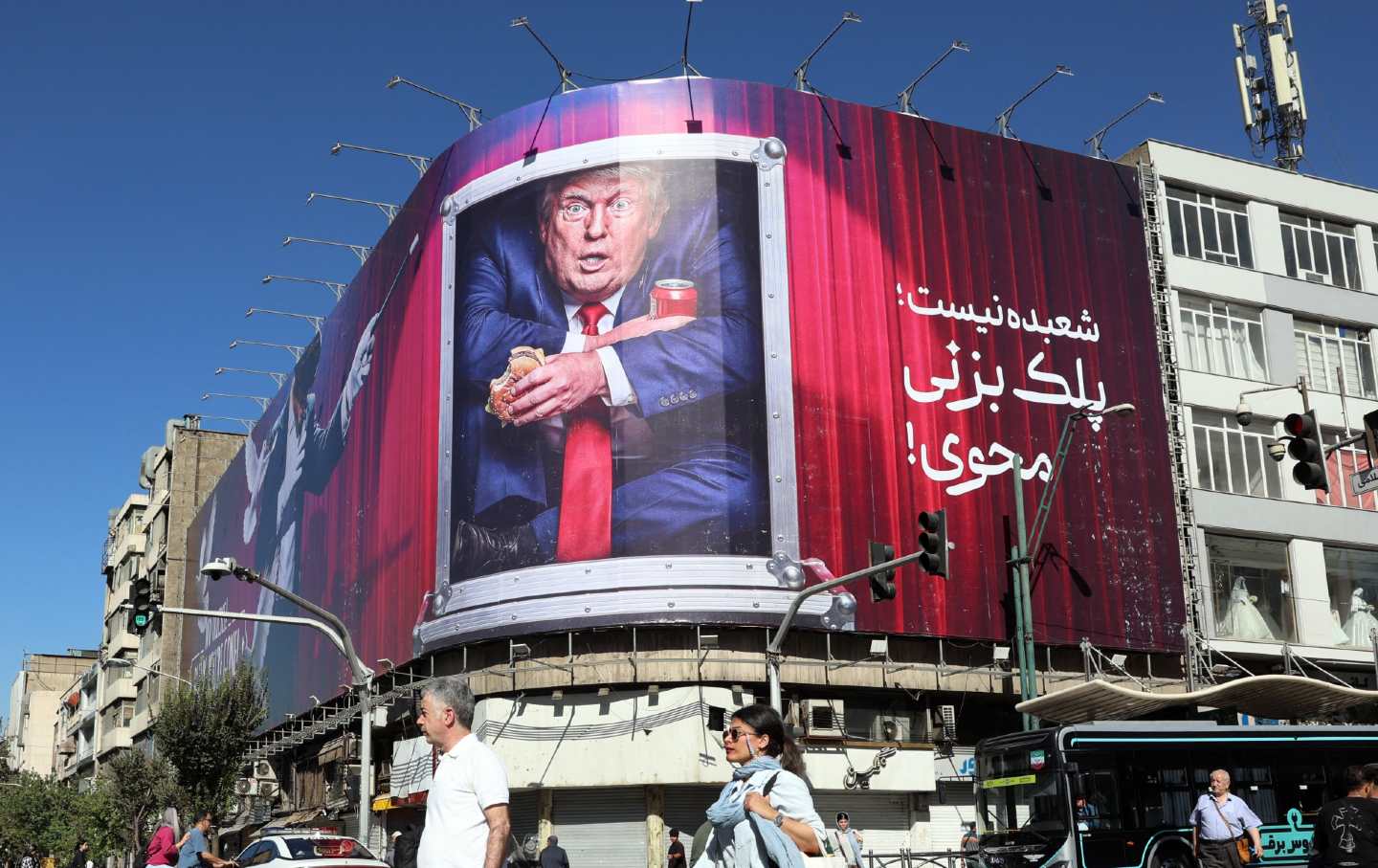
The Decades-Old Roots of Trump’s War on Iran The Decades-Old Roots of Trump’s War on Iran
An interview with historian Behrooz Ghamari-Tabrizi about the generations of US presidents who have tried to destroy the Iranian regime.
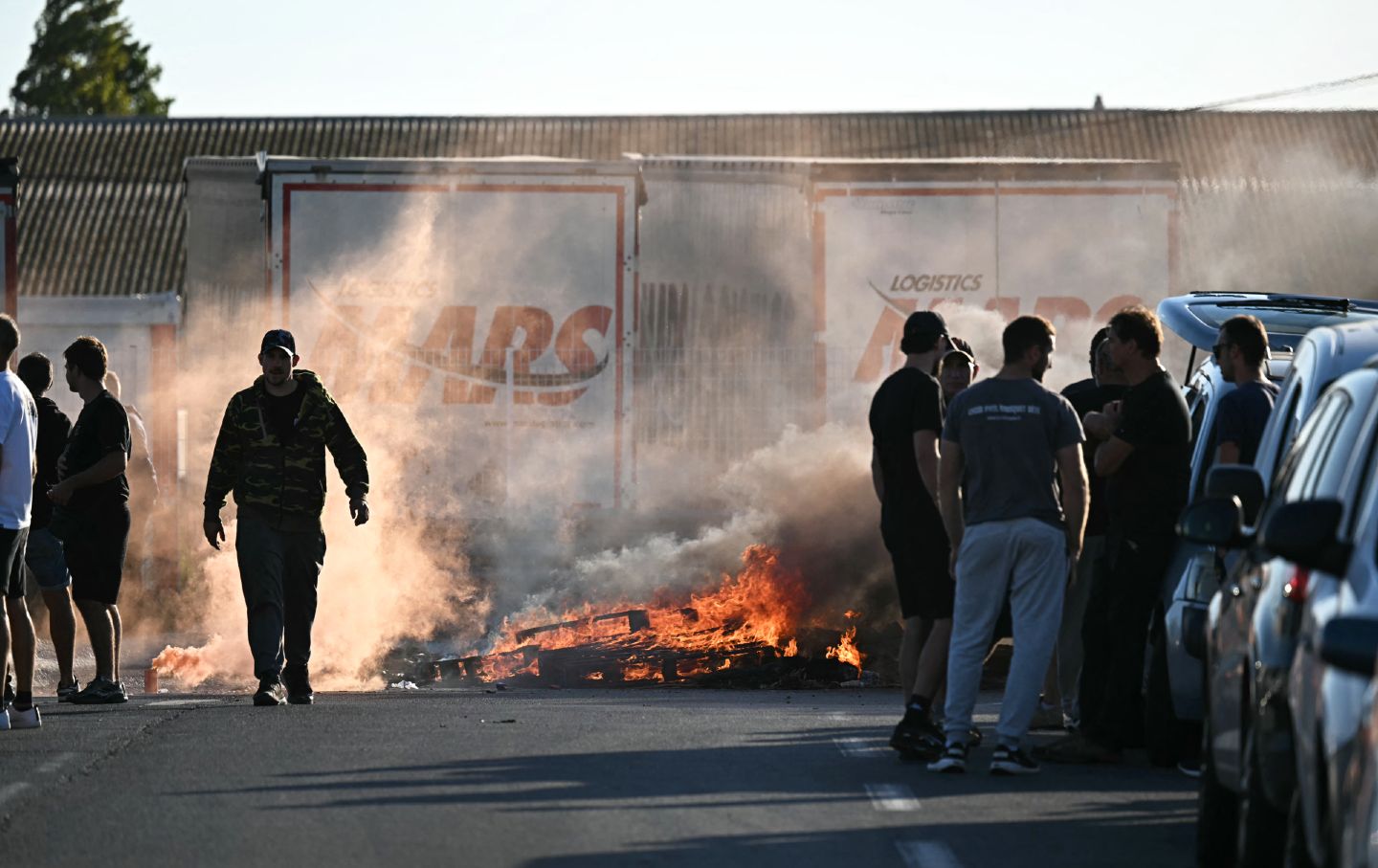
Emmanuel Macron’s Turbulent Exit Emmanuel Macron’s Turbulent Exit
Between a budget crisis and a cost-of-living squeeze, Macron is leaving a country feeling more insecure than ever—and ready to take to the streets.
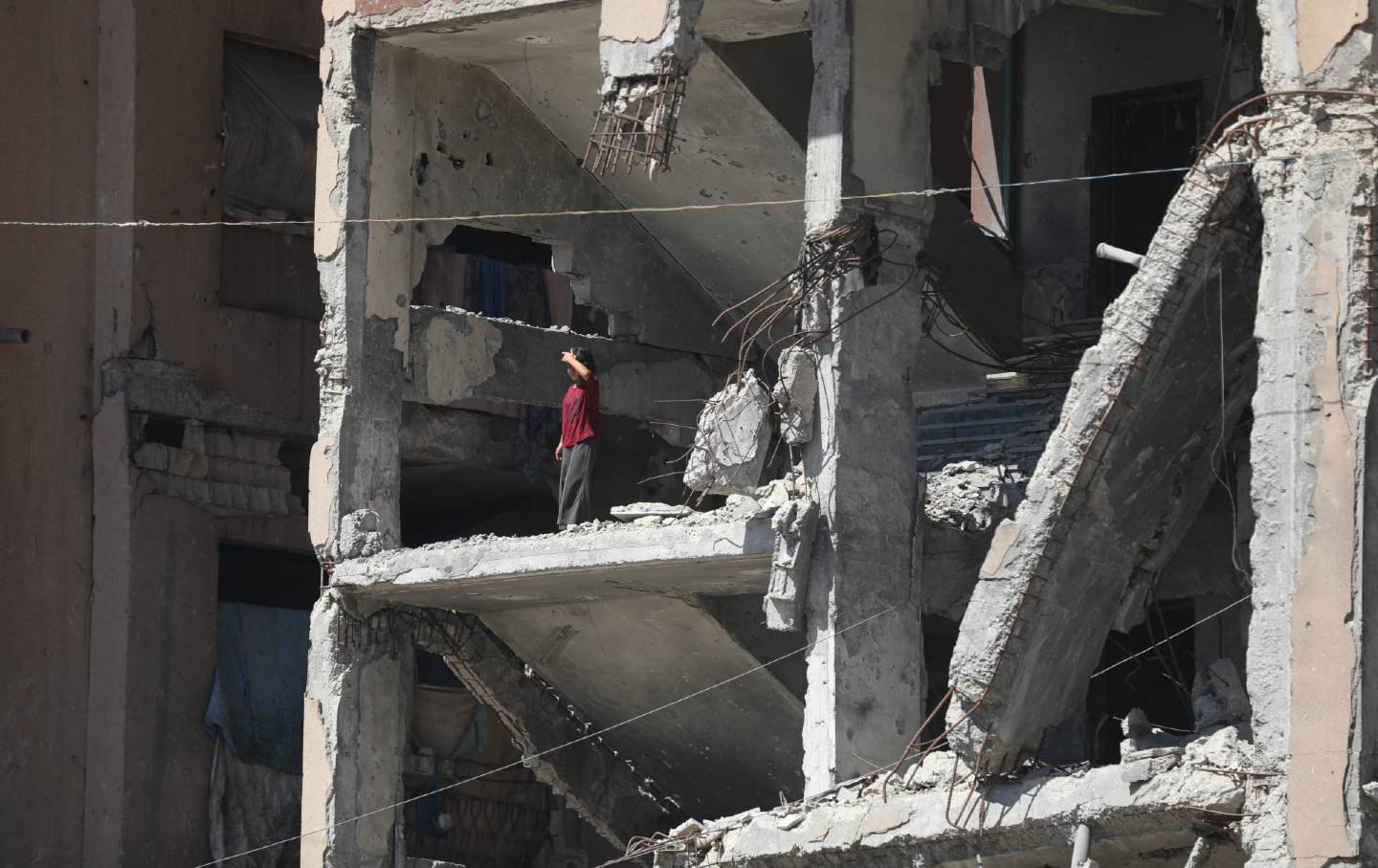
Israel’s Election Can’t Fix What Netanyahu Broke Israel’s Election Can’t Fix What Netanyahu Broke
The fundamental problem is not the name of the prime minister, but rather the actions of the Israeli government and the urgent issues that need to be addressed.
The AfD’s Rise Isn’t Just About East Germany The AfD’s Rise Isn’t Just About East Germany
The Alternative für Deutschland has a stable national poll lead, including in the former West Germany. Its rise owes to much more than Eastern grievances.
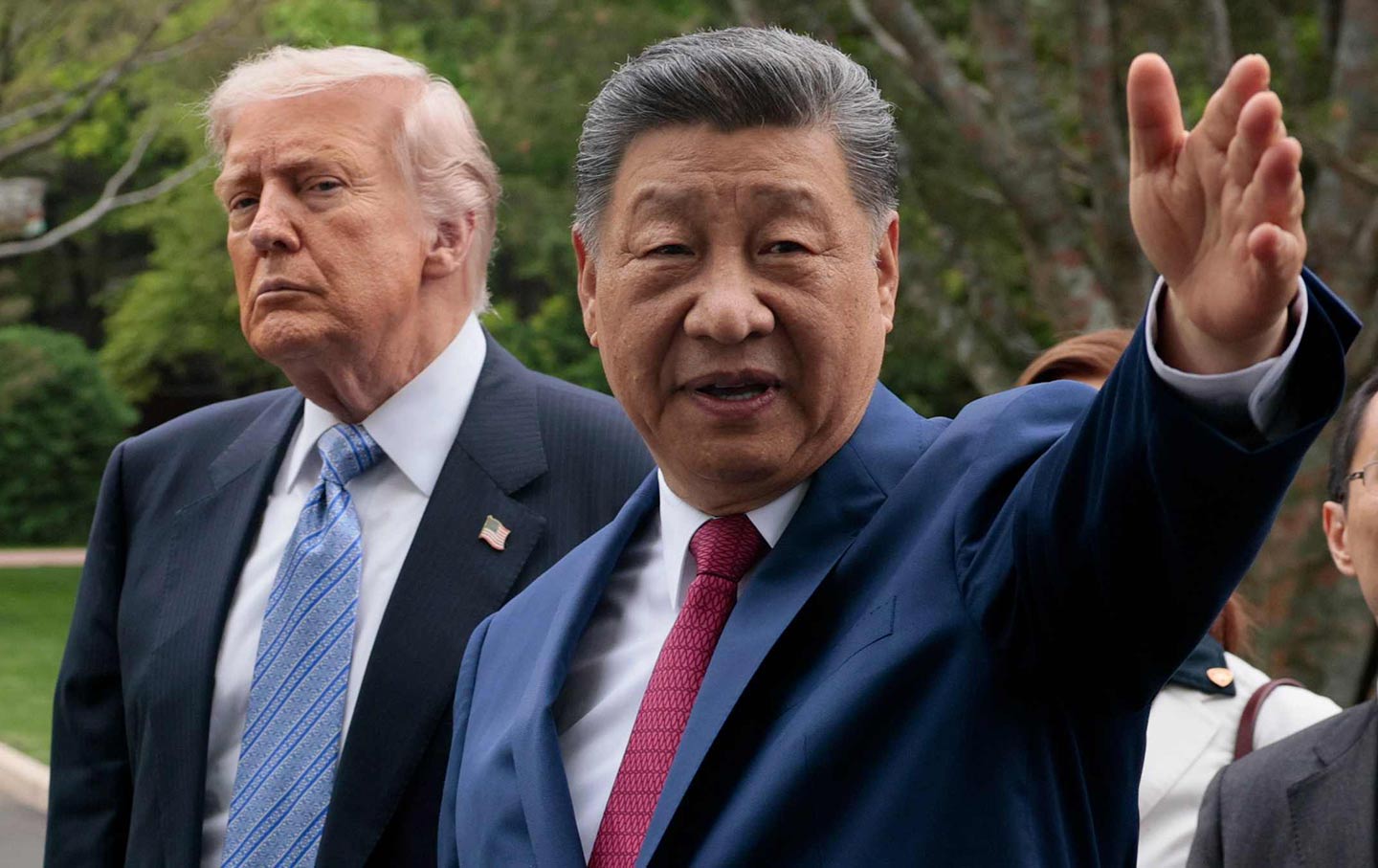
Chinese Development Is the Betrayal Washington Cannot Forgive Chinese Development Is the Betrayal Washington Cannot Forgive
The prospects for Xi Jinping’s visit are dim because American leaders are blaming China for the failures of globalization.
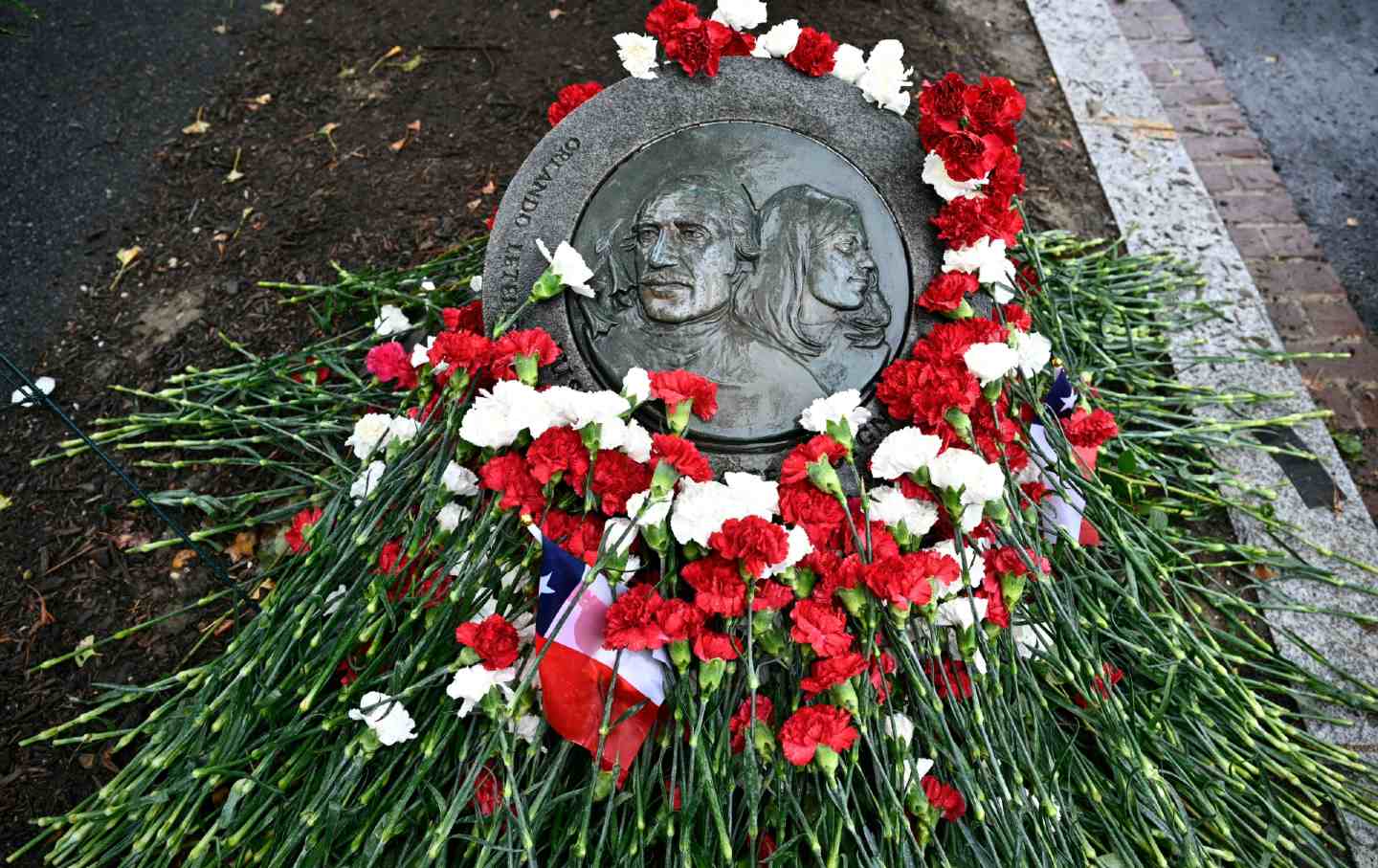
Pinochet: The Verdict of History in the Letelier-Moffitt Case Pinochet: The Verdict of History in the Letelier-Moffitt Case
An act of international terrorism on the streets of Washington, DC, still reverberates 50 years later.

