
We Are About to Miss the Opportunity of a Lifetime
2026 and 2028 can be our time.
Twenty twenty-six and 2028 can and should be the beginnings of something transformational.
We’ve got tailwinds like you wouldn’t believe. A president whose approval rating has dropped below 35 percent, rivaling Nixon during Watergate. The man said, on camera, at an Easter lunch at the White House, that we can’t afford daycare because “we’re fighting wars.” That same week he asked Congress for a $1.5 trillion military budget. A 44 percent increase. The largest in American history. The same guy who wants $152 million to reopen Alcatraz as a prison while spending roughly $2 billion a day bombing Iran in a war nobody asked for, a war that’s woefully unpopular even with the MAGA base. But daycare? Too expensive, folks.
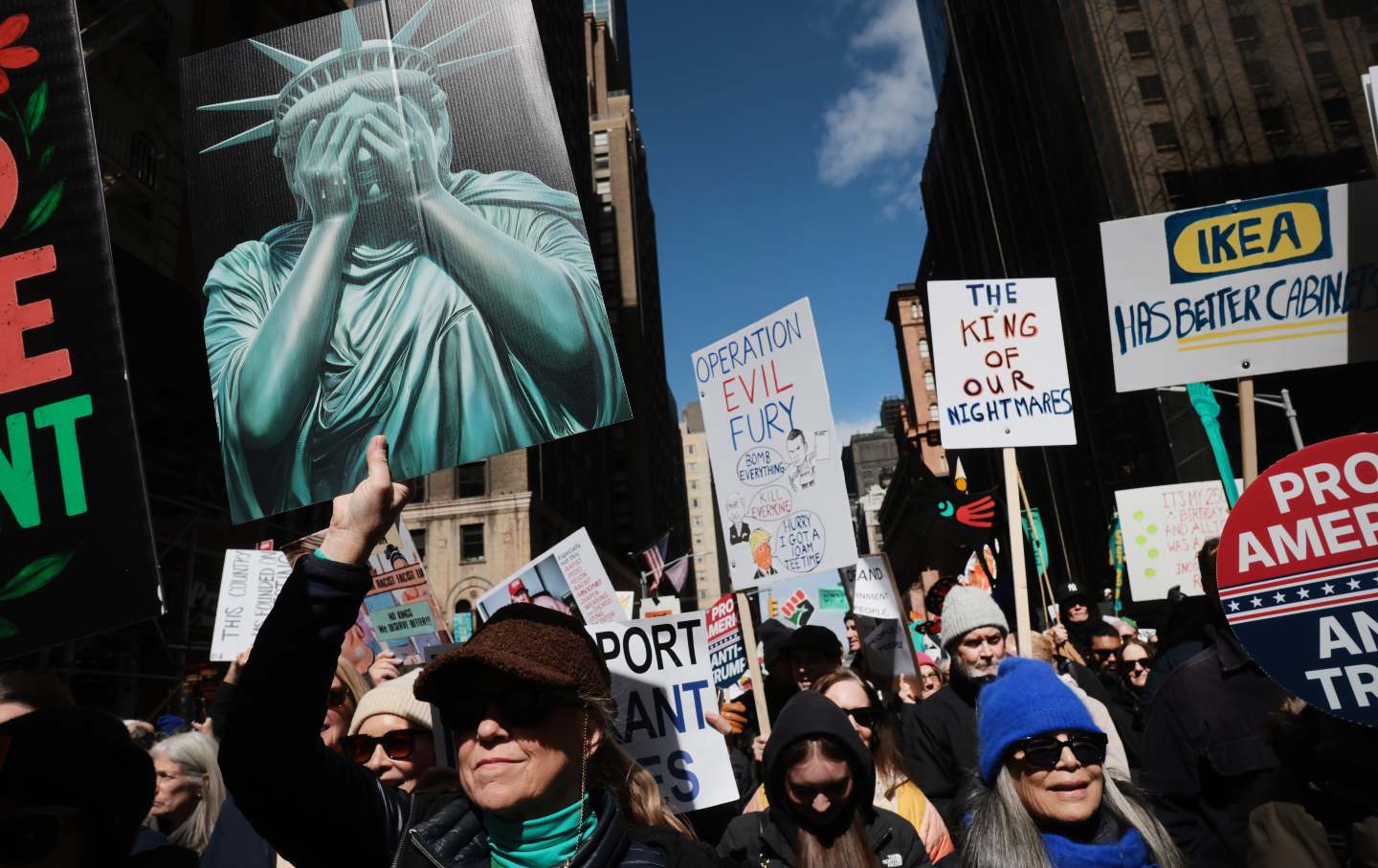
Recently, 8 million of us were in the streets. All 50 states. More than 3,300 events. The largest single-day demonstration in American history. Nearly half of those events were in red states and rural communities. People who never march for anything marched.
But we marched against stuff, not for stuff. Against Trump. Against kings. Against war. There’s real energy out here and it’s righteous, but right now it’s anger without a goal, and anger without a goal can’t build power. A goal, a vision, hope, that’s what you build a supermajority around. Our party is good at channeling anger into “Trump bad,” but that won’t do it. These millions of us could be a burning light hot enough to set this country’s rot ablaze if a party would just hold the magnifying glass.
Here’s the sad part.
Even in the face of all this, our party is still less popular than Trump’s. Even among ourselves. Fifty-five percent of Democrats say the party has the wrong priorities. Seventy-one percent of Democratic-aligned voters say it’s been ineffective at opposing Republican policies. This isn’t a messaging problem. This isn’t voters failing to appreciate how good the Democratic Party is. This is us finally understanding how bad it is. How far our party has drifted from the people it claims to represent. How captured it’s become by Wall Street, Big Pharma, Big Tech, Big Oil, the military-industrial complex, and every other industry that’s learned to write checks to both sides and win no matter who’s in power.
We need to accept that America doesn’t just have a spending problem. We have a system problem. Every time Democrats get into power, they pump money into broken systems without rebuilding them. Obama did it. Biden did it. The money goes in and disappears, absorbed by corporate middlemen, diluted by bureaucracy, leaving barely a trace in the lives of the people who needed it most. And then we get Trump. Twice.
If that doesn’t convince you that Americans are screaming for transformation, I don’t know what will. People aren’t electing Donald Trump because they love Donald Trump. They’re electing him because they’re done with the status quo. They want it burned down. That’s a rational response to decades of betrayal. It’s also a catastrophic one. But it’s what happens when nobody offers an alternative vision. In the absence of hope, anger will do.
Now the backlash is here. Democrats have outperformed their 2024 margins by an average of 13 points in special elections. They flipped Wisconsin’s Supreme Court by 20 points. They nearly won Marjorie Taylor Greene’s old seat. In Texas, a record 2.3 million votes were cast in the Democratic primary. More people voted in the Democratic statewide primary in North Carolina than the Republican one. Analysts are now calling a blue wave not just possible but probable, with some projecting 40 or more House seats.
Nancy Pelosi once said a glass of water could win districts like AOC’s if it had a D next to its name. She meant it as a put-down. Today it’s a prophecy. And a warning.
Because a glass of water majority is not a movement. It’s a placeholder. It’s another cycle of tepid, transactional Democrats who get to Washington, vote for 90 percent of Trump’s nominees like Elissa Slotkin did, mouth the right words about Gaza and Iran while doing nothing, and wonder why nobody trusts them. Even Republican lobbyists see it. One analyst put it plainly this week: There is no unified Democratic message right now besides “not them,” and selling a vision to the American people is what matters.
This moment is as likely to be squandered as seized. We’ve done it before.
What’s possible here, if we choose right, is something bigger than a House majority. It’s the beginning of a restoration. Of faith in the Democratic Party. In democracy itself. In the idea that government can actually work for the people paying for it. But that restoration doesn’t come cheap and it doesn’t come easy. It requires real change inside the party. Change that can only come by firing the current leadership and sending home the people who’ve failed us for a decade. Hakeem Jeffries. Chuck Schumer. Gregory Meeks. Pete Aguilar. Amy Klobuchar. Ted Lieu. The names of the leaders that 55 percent of their own voters think are failing.
Some of us are done waiting for them to figure it out.
Saikat Chakrabarti built Justice Democrats, recruited and elected AOC by unseating a 10-term incumbent the establishment said was untouchable, and wrote the Green New Deal. He’s running for Congress in California’s 11th. Graham Platner is publicly calling for Chuck Schumer to step aside and running for Senate in Maine. Melat Kiros in Colorado’s 1st. Mai Vang in California’s seventh. Oliver Larkin in Florida’s 23rd. Adam Hamawy in New Jersey’s first. And Abdul El-Sayed running for Senate in Michigan. These aren’t isolated insurgents. They’re a coalition forming before they even get to Washington, spread across red states, blue states and purple ones, calling out corporate PAC money, calling out AIPAC, calling out the Iran war, and calling out their own party’s leadership by name.
They’re also running to stop the next great extraction. AI is going to do to the top 20 percent what offshoring and NAFTA did to factory workers. The project manager. The paralegal. The coder. The analyst. Same story, faster timeline. The only path that doesn’t end there runs straight through public ownership. A share of the economy for every American. Because the more automated production becomes, whether it’s software or automobiles or medicine, the more important it is that we own a piece of what it produces. The alternative is the Rust Belt, but for everyone.
Popular
“swipe left below to view more authors”Swipe →We’re roughly 30 percent of the electorate. Independents who want healthcare, housing, a government that actually builds things, those people are with us in enormous numbers. What they don’t trust is our track record. What they’re waiting for is someone who means what they say.
You’ll know the fighters. They won’t be taking corporate PAC money. They won’t have supported the war. They won’t have rubber-stamped an authoritarian’s cabinet. Most of them won’t even be current elected officials.
This party belongs to us. Not to its donors. Not to its consultants. Not to its leadership. We’ve got to be brave enough to back the people willing to break the cycle. With money. With hours. With our voices and our votes in primaries that most people ignore.
Moments like this don’t come around often. The candidates are there. The coalition is forming. Don’t let this one pass.
Let’s back the fighters.
Become a Sustaining Donor This September
Between the reemergence of right-wing red-baiting and Donald Trump’s use of the chilling National Security Presidential Memorandum–7 to criminalize left political organizing, we’re seeing McCarthyism reborn before our eyes.
This assault on democracy cannot be ignored or wished away. Resisting it requires bravery in the face of threats and repression, a steadfast commitment to the truth, and the unwavering belief that we can—and will—overcome this darkness.
We must have an independent media that sets the record straight, unearths corruption and abuses of power, and advances a politics of justice and dignity for all if we’re to win this fight.
That’s why I’m writing to you today. This September, The Nation needs to add 100 monthly donors to sustain our progressive journalism. Your contribution makes the next investigative report, the next truth-speaking column, and the next pathbreaking essay all possible.
I hope you’ll support our work with a recurring donation today. If you donate $10 or more a month, we’ll send you a brand new “Hands Off the Free Press!” sticker to recognise your commitment to our cause. Please, donate today.
Onward,
Katrina vanden Heuvel
Editor and Publisher, The Nation
More from The Nation

Trump Is Using Your Taxpayer Money to Pay for Illegal Election Propaganda Trump Is Using Your Taxpayer Money to Pay for Illegal Election Propaganda
But as brazen and authoritarian as these ad spots are, they seem likely to backfire.

Clavicular’s Charges Are One Thing. Rape Culture Is Another. Clavicular’s Charges Are One Thing. Rape Culture Is Another.
Braden Peters consistently acts as though the autonomy of women is a maladaptive trait, and dogmatically dismisses any claim to female equality as an outlying aberration.

Kimberly Guilfoyle Is a Master of Mafia Diplomacy Kimberly Guilfoyle Is a Master of Mafia Diplomacy
The US Ambassador to Greece is making suspicious deals for her buddies.
Missing Guardrails for AI Missing Guardrails for AI
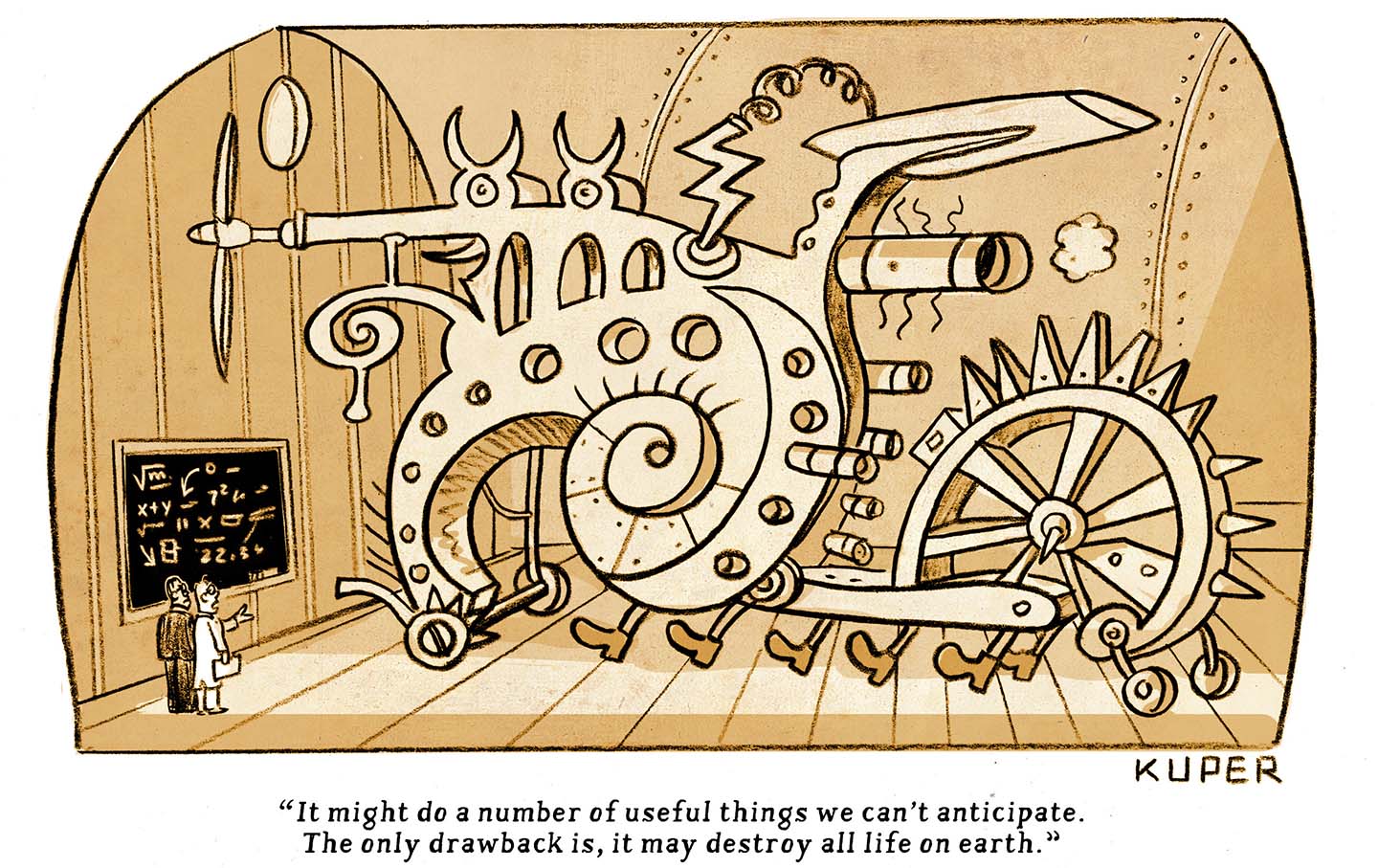
Trump ignores the threat of extinction.

