
Paris, a Capital in “Resistance”?
Barring a few big-ticket victories in this month’s local elections, the French left is more divided than ever—one year from a pivotal fight for the presidency
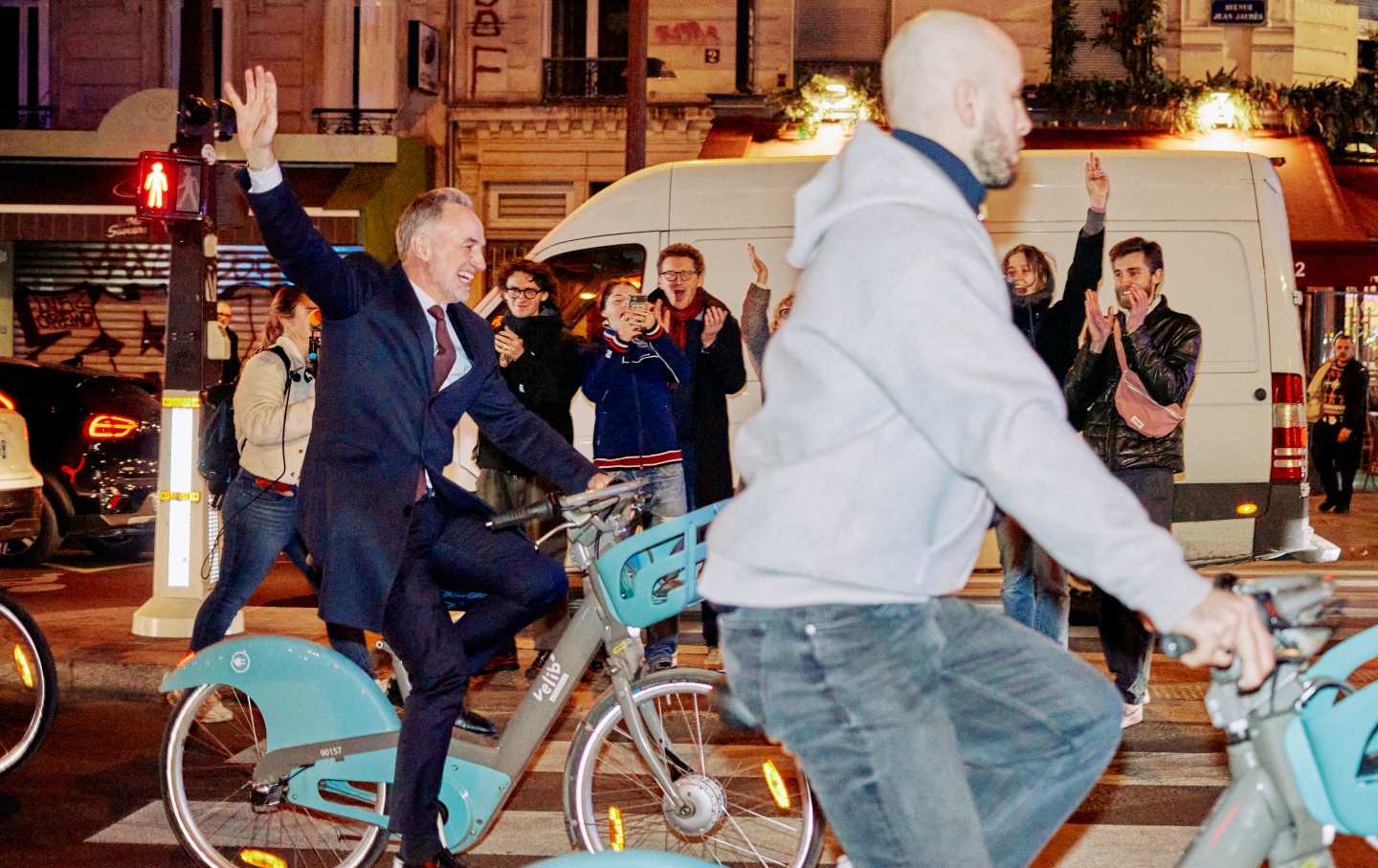
In the end, it wasn’t even close. Emmanuel Grégoire, the Parti Socialite’s candidate for mayor of Paris, was elected with just over 50 percent of the vote in a run-off on Sunday, belying fears that the French capital would fall to the right after 25 years of center-left rule. Grégoire’s win came despite a broad convergence of forces behind conservative contender Rachida Dati, who finished with 41.5 percent.
Just who will govern France after next year’s presidential elections remains an open question. Yet, in a country hurtling to the right, Grégoire pledged in his victory speech that the capital would serve as a node of “resistance.” The prospect of renewed left-wing rule, after 12 years under PS Mayor Anne Hidalgo, could also see more robust efforts to confront the capital’s simmering housing crisis, with Grégoire promising to invest in social housing and tighten regulations of short-term rentals, including a possible ban on Airbnb. But with all eyes on 2027, the incoming mayor boasted in his victory speech that “Paris is not and will never be a city of the extreme right.”
At the Grégoire watch party, the sense of relief was tangible—and could even be felt among members of the press corps gathered to cover Grégoire’s anticlimactic victory. (One campaign aide boasted to me that over 200 journalists had turned out, which is ultimately a symptom of political life in a city that gobbles up an inordinate share of the national spotlight.)
Come what may in 2027, at least in Paris there’ll always be a modicum of normalcy. Indeed, It would be harder to have imagined a clearer nod to the status quo than the incoming mayor’s well-choreographed departure from his watch party to address supporters gathered outside city hall. Grégoire made the short jaunt down the Canal Saint-Martin atop a Vélib’, and the popular bike-share service has become a symbol of center-left good governance.
The problem is that a city like Paris, with its brimming wealth and cultural confidence, is ultimately a poor reflection of the political mood in the wider country. A litmus test of the political situation before next year’s presidential contest, this month’s local elections provide a snapshot of country facing unprecedented levels of political polarization, as the far right stubbornly continues to make inroads.
Yes, France’s largest cities remain strongholds for the left. Progressive coalitions are set to hold on to city hall in urban centers like Lyon, Marseille, Lille, and Grenoble. Elsewhere, Marine Le Pen’s Rassemblement National is continuing its steady march to institutional power. In total, the RN and its allies are now on the cusp of controlling over 70 city halls—including at least 12 with populations of over 30,000 people. Those figures may seem modest in a country with 35,000 localities. But as per tradition, in France’s smallest towns and villages the overwhelming majority of mayoral contests are between contenders unaffiliated with national parties.
Perhaps the safest conclusion to be drawn is the increasing feebleness of second-term centrist president Emmanuel Macron, who is entering his last year in office as a widely unpopular lame duck. Barring a few scattered victories in places like Bordeaux or Le Havre, the president’s allies have again failed to make a considerable dent in local politics. Ex-premier François Bayrou—one of three Macron-appointed PMs since the summer 2024 snap elections that proved disastrous for the president’s camp—lost his bid for a third term as mayor of the southern city of Pau.
This electoral cycle was ultimately a dress rehearsal for the spring of 2027. With Macronism in its death throes, the fractious political blocs to the president’s right and left are fighting it out among themselves for primacy, as they gear up for the ultimate political contest next year.
If Marine Le Pen’s Rassemblement National seems best-positioned, one lingering inconvenience for the far-right force is the establishment-conservative Républicains’ desire to maintain its political autonomy. These local elections were a reminder of the RN’s difficulty in winning larger towns and cities, in part because big municipalities that remain friendly to conservatives trend sociologically towards more traditionalist and genteel right-wingers. Nice, the far right’s biggest prize this March, is the exception that proves the rule. The wealthy city on the Riviera fell to longtime hopeful Éric Ciotti, the former LR president who lost control of his party in 2024 after concocting a lone-wolf alliance with Le Pen.
Where does this all leave the left? Progressives may have been able to avert disaster in this month’s local elections. But that came despite a debilitating tug of war between the center and far lefts that has destroyed the short-lived New Popular Front, the left-wing alliance that won the largest share of seats in parliament in the July 2024 snap elections.
After the March 22 runoff, this battle remains largely inconclusive. La France Insoumise, the party behind left-winger Jean-Luc Mélenchon, can claim its first real local successes, proving its appeal in stomping grounds in the diverse working-class cities and towns that surround France’s wealthier city centers. But LFI’s bitter rivals in the Parti Socialiste can likewise claim success in their anti-LFI strategy, having been able to hold on to Marseille and Paris without direct alliance with the Mélenchonists. In some of the rare localities where the two forces united, as in Toulouse and Limoges, they failed to oust incumbent right-wing mayoralties.
There seems to be no end in sight to the devastating infighting that has handicapped the left since its July 2024 show of force. And both the PS and LFI share responsibility for the failure of unity. The center-left establishment has fully embraced the red-scare campaign targeting La France Insoumise. On the campaign trail in February, Mélenchon made an exceedingly off-color joke on the pronunciation of Jeffrey Epstein’s name, reviving the accusations of anti-Semitism that have been used to delegitimize his party’s stalwart defense of the Palestinian cause. Earlier last month, LFI’s connection to antifa activists implicated in the death of a neo-fascist militant in Lyon provided further justification to a well-mediatized campaign to tar the party as an extremist force.
Instead, the parties of France’s divided left seem ready to dig in behind their respective certitudes. Then again, the signs of a country slipping to the right can be ignored from the sanctuary of progressive urban areas, where the left proved its lingering appeal this past weekend. That could prove more difficult come April 2027.
More from The Nation

Japan’s Far Right Is Courting Young Voters Japan’s Far Right Is Courting Young Voters
Sanseitō has attracted young voters through a robust social-media strategy, Charlie Kirk–like public speaking events, and anti-establishment messaging.
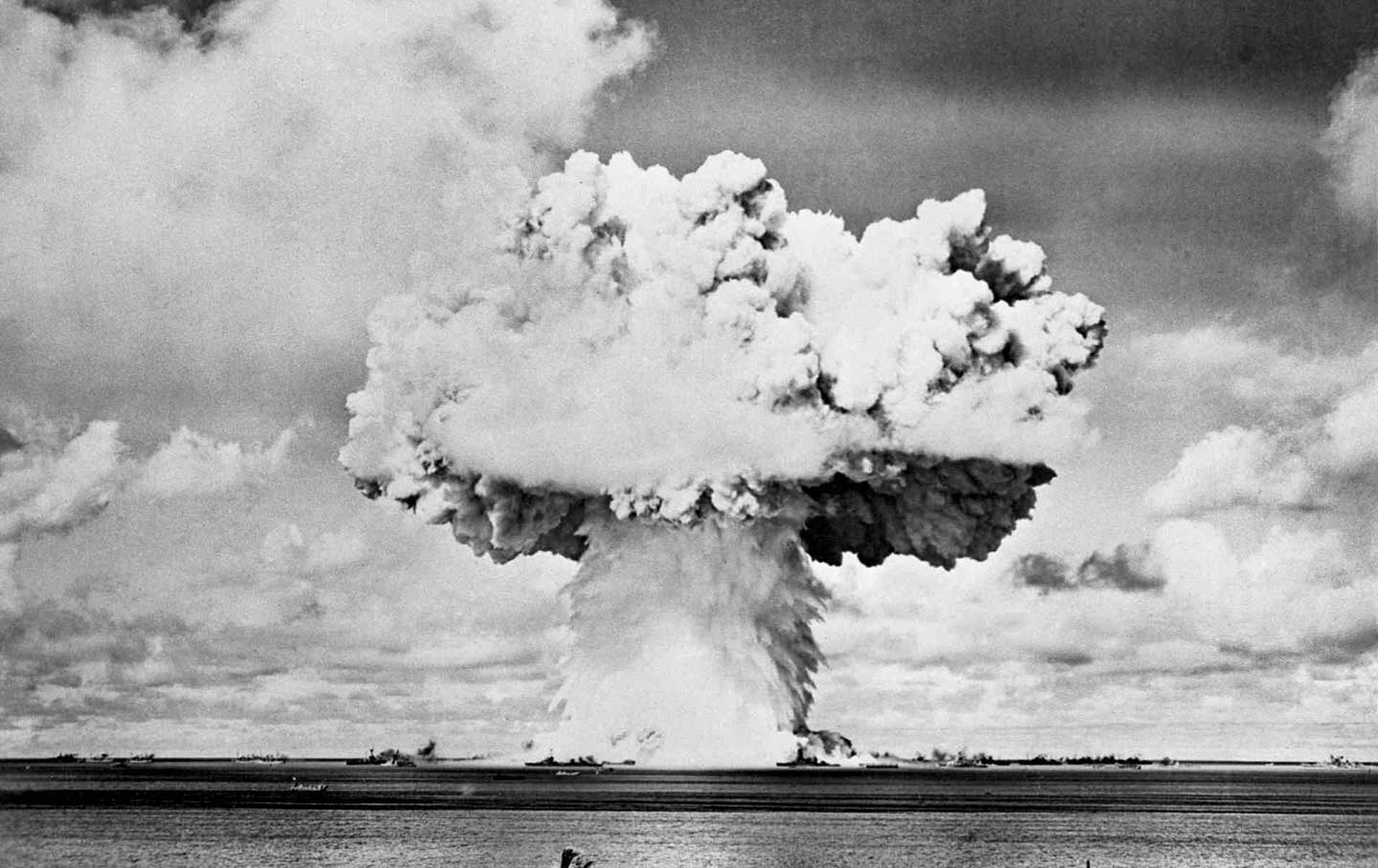
This AI Panic Is Nothing New This AI Panic Is Nothing New
In the 1940s, The Nation asked questions about the atomic bomb we’re asking of artificial intelligence today.
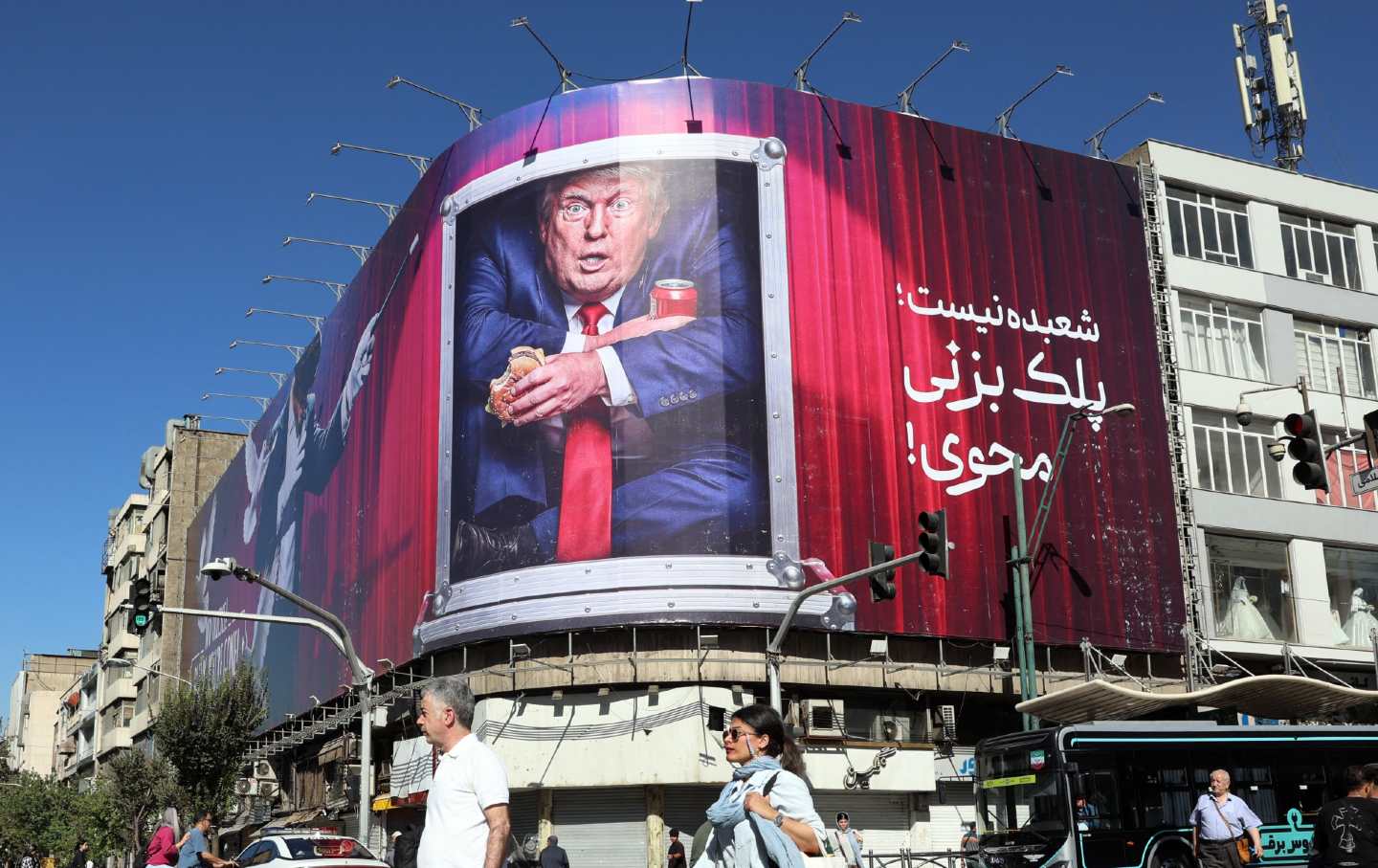
The Decades-Old Roots of Trump’s War on Iran The Decades-Old Roots of Trump’s War on Iran
An interview with historian Behrooz Ghamari-Tabrizi about the generations of US presidents who have tried to destroy the Iranian regime.
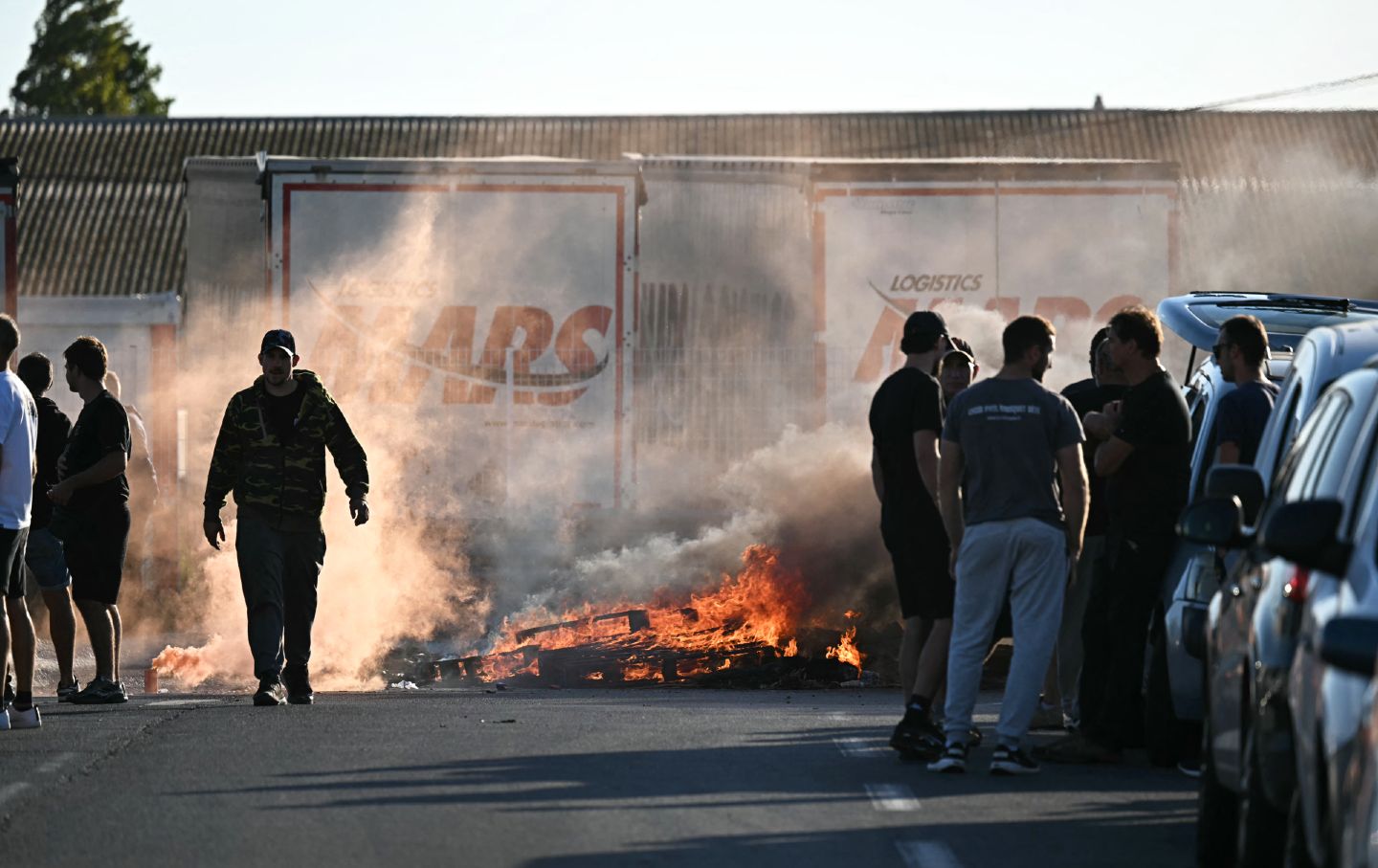
Emmanuel Macron’s Turbulent Exit Emmanuel Macron’s Turbulent Exit
Between a budget crisis and a cost-of-living squeeze, Macron is leaving a country feeling more insecure than ever—and ready to take to the streets.
Israel’s Election Can’t Fix What Netanyahu Broke Israel’s Election Can’t Fix What Netanyahu Broke
The fundamental problem is not the name of the prime minister, but rather the actions of the Israeli government and the urgent issues that need to be addressed.
The AfD’s Rise Isn’t Just About East Germany The AfD’s Rise Isn’t Just About East Germany
The Alternative für Deutschland has a stable national poll lead, including in the former West Germany. Its rise owes to much more than Eastern grievances.

