
Why Is There No Anti-War Movement?
Exploring what might help us move to start building one.
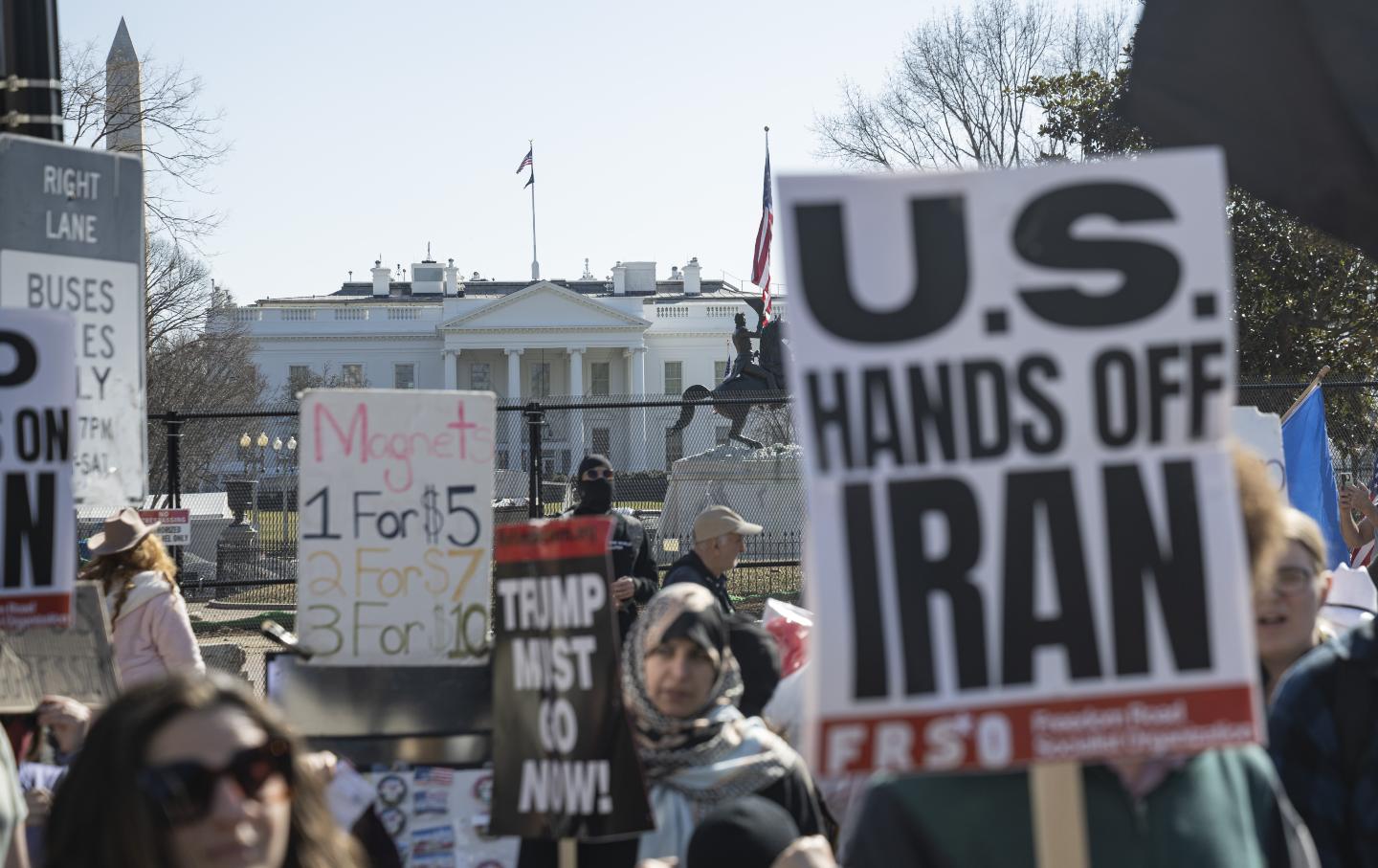
Donald Trump’s war on Iran is very unpopular. As pollster G. Elliot Morris notes, it is the most unpopular a US war has ever been when it started. And “with just 38 percent of Americans in favor, support for bombing Iran is lower than retrospective support for the war in Iraq was in 2014.”
Why then has there been so little collective protest against the US-Israel offensive? Answering this question is not easy. What follows are seven hypotheses rather than definitive conclusions. But exploring why we’re lacking an anti-war movement today can help us move to actually start building one. And for the sake of Iranians, the Middle East, and working people in the United States, we’d better do so as soon as possible.
Americans Feel Powerless
A key reason so many young people in the 1960s threw themselves into the fight against US military involvement in Vietnam was that the civil rights movement had recently demonstrated the power of mass action. As Students for a Democratic Society’s founding manifesto in 1962 put it, “the Southern struggle against racial bigotry…compelled most of us from silence to activism.” Looking back, one participant recalled that such examples of success “gave the feeling that you could actually make a difference, that you needed to take a stand.”
Now the biggest obstacle we face in our country is a pervasive sense of powerlessness. To overcome this feeling of resignation, we need more inspiring examples of successful struggles. Minnesota’s successful mass resistance against ICE, for example, has begun to energize activism nationwide. The challenge now is to find and scale up winnable bottom-up campaigns, like getting our schools to break with ICE or getting millions of consumers to leave companies like OpenAI that are enabling Trump’s war machine. Proving in practice that we have power in smaller battles can inspire millions to join the fight against this administration’s worst horrors at home and abroad.
People Are Hoping the War Ends Quickly
Like so many others, I wake up every morning hoping to see a headline suggesting that the always-mercurial Trump has decided to call a quick victory in Iran, like he did in Venezuela. At least, in that case, further atrocities against civilians would be halted.
Given the administration’s lack of interest in trying to manufacture consent for this war and the obvious political risks of rising gas prices, it’s been hard to believe that Trump would so willingly risk his presidency—to say nothing of the lives of Iranians and US service members—on a long armed intervention with no clear endgame. Nevertheless, the war continues to deepen.
The fact that Trump moved so quickly and with so little regard for public opinion has left many of us in a state of shock. Whereas George W. Bush spent a year trying to convince us to invade Iraq—sparking a deliberative process into which mass protests could intervene—Trump’s speed and dismissal of public opinion has created little space for Americans to break out of spectator mode. This helps explain the paradox of why an exceptionally unpopular war has so far been met with exceptionally little mass protest. But insofar as the war continues, expect increasing numbers to start taking collective action.
And even if Trump does call victory in the next few days or weeks, this is unlikely to put a stop to his imperial ambitions. We’ll still need to ramp up our anti-war agitation to stop the administration’s push for regime change in Cuba, its continued funding of Israel, its belligerence towards China—and to make the 2028 presidential election, in part, a referendum on runaway military spending, US imperial wars, and US support for the genocidal Israeli state.
Trump Is Doing So Many Horrible Things
In contrast to George W. Bush—whose imperialist exploits were his singular focus—it is easy to get overwhelmed by Trump’s across-the-board attacks and difficult to quickly respond to every new outrage. Our side’s organized forces have been stretched thin. Personally, I’ve been spending about 10 volunteer hours daily for the last month helping support the new Schools Drop ICE campaign; I’ve not had a single extra hour to organize around another issue lately, limiting my ability to participate in other essential efforts like organizing against this war.
The good news is that the upcoming No Kings protests on March 28 and the day of disruption on May 1 provide excellent opportunities to bring together all our anti-Trump demands and struggles. Opposition to war is likely to be a major focus of those actions.
People Confuse Mobilizing with Organizing
Even if the upcoming No Kings and May Day actions are massive and denounce imperial domination from Iran to Cuba to Palestine, this doesn’t necessarily mean we’ve rebuilt a powerful movement against the Trump regime generally or its wars in particular. A movement is a movement to the extent that ordinary people organize between protests—in other words, when they get actively involved to win over others to the cause.
One of the challenges of our current era is that digital technologies make it much easier to get existing supporters into the streets without much organizational infrastructure or person-to-person outreach. Social media facilitates mobilizing. But the flip side is that big protests don’t demonstrate as much power as they used to and their preparation doesn’t build the same type of on-the-ground relationships and new leaders that movements depend on for their power.
Angela Davis spells this out clearly:
Demonstrations [are] supposed to demonstrate the potential power of movements.… But these days we tend to think of that process of rendering the movement visible as the very substance of the movement itself. If this is the case, then the millions who go home after the demonstration have concluded that they do not necessarily feel responsible to further build support for the cause.
That’s why we should look at March 28 and May 1 not as one-off protests but as mechanisms to recruit, onboard, and train as many people as possible into ongoing campaigns.
No Draft
The end of the draft in the US is certainly one of the factors explaining why we have less anti-war activity today than in the 1960s. With fewer Americans in harm’s way, and with an increasing reliance on long-distance aerial bombardment, the costs of war are less immediately and directly felt by Americans than in the past.
That said, we shouldn’t overstate this factor. The United States experienced significant anti-war movements even after the draft ended in 1973, notably in the 1980s against US intervention in Central America and during the early 2000s against Bush’s push for war in Iraq. So while the absence of a draft and changes in war methods can help explain the difference between today and the Vietnam era, they don’t go that far in explaining the puzzle of why we aren’t yet seeing levels of anti-war activity comparable to the 1980s or 2000s.
Overall, America’s turn to capital-intensive air wars raises the importance of organizing to demand an end to sky-high US military spending—upwards of $1 trillion yearly—and demanding that those funds be used to fund public services at home.
Sectarianism Has Helped Marginalize Anti-War Activity
Rather than build the broadest and deepest possible opposition to US military aid and interventions abroad, too much anti-war activity in recent years has leaned into alienating, excessively radical rhetoric and slogans, while tying widely supported demands against war to unjustified and unhelpful romanticization of any and all “anti-imperialist” forces. Consistently opposing imperialism does not require justifying Hamas’s killing of civilians or the Islamic Republic’s repression of pro-democracy activists.
And instead of relentlessly focusing their fire on politicians like Trump, Biden, and Schumer who have pushed or enabled atrocities abroad, a bizarrely high amount of activist energy has gone toward calling out elected officials like Alexandria Ocasio-Cortez, even though she has never voted for US military aid to Israel and has vociferously opposed the war in Iran.
Unfortunately, the impact and continuity of many righteous encampments in solidarity with Palestine were undercut by provocative rhetoric that cynical opponents could easily misrepresent, by an excessive focus on activist “security culture,” and by the absence of concerted efforts to win over and mobilize majorities on campuses. Intense repression against these valiant but relatively isolated efforts chilled campus organizing. Especially since students are often a vanguard of anti-war and anti-authoritarian organizing, reviving a culture of mass politics on colleges remains a key task.
Reviving an Anti-War Movement
What steps can we take to help revive a powerful anti-war movement in the US? Most immediately, each of us—and each of the organizations we belong to—can commit not only to attending the March 28 No Kings demonstrations but to going all in to reach out to our neighbors, coworkers, fellow students, and co-congregants to join as well.
Popular
“swipe left below to view more authors”Swipe →You can take the opportunity to ask them what they feel about the Iran war or ICE, note how crazy it is that the US spends nearly a trillion yearly on war while everyday people can’t get by at home, and then pivot to a friendly ask for them to join you at the rally.
And don’t just talk to the people who you know are already left-leaning. Most Americans are strongly against this war and just don’t know what to do about it. It’s time to reach widely and to break beyond our echo chambers. That’s what makes a movement real. And what can set into motion the type of mass nonviolent disruption at work, school, and beyond that Trump and the war machine can’t afford to ignore.
A second concrete step you can take is to support the QuitGPT campaign. This boycott has taken on an added level of urgency—and anti-war content—after the Pentagon two weeks ago refused to accept Anthropic’s contract stipulations that its AI not be used for mass surveillance or fully autonomous military attacks. Unburdened by any principle beyond profitmaking, OpenAI immediately stepped into the breach and signed a contract with the Pentagon that, as one top company executive who resigned last Saturday put it, “was rushed without the guardrails defined.”
Just as Tesla Takedown succeeded in forcing Elon Musk out of the White House, so too can QuitGPT punish OpenAI for its enabling of a US military machine that is massacring grade-school girls in Iran and hurtling the world toward catastrophe. Unlike so many online boycotts, this is an organized effort with a measurable impact that people can get involved in to help scale up. According to QuitGPT organizers, over 4 million people have already taken part in the boycott.
Trump wants us to believe we’re powerless to stop him. But the reality is that this is a widely unpopular regime waging one of the most unpopular wars in US history. As body counts, oil prices, and US taxpayer costs continue to rise, Americans are going to be increasingly looking for ways to stop the bloodshed. Mass collective action in that direction is long overdue.
Support independent journalism that does not fall in line
Even before February 28, the reasons for Donald Trump’s imploding approval rating were abundantly clear: untrammeled corruption and personal enrichment to the tune of billions of dollars during an affordability crisis, a foreign policy guided only by his own derelict sense of morality, and the deployment of a murderous campaign of occupation, detention, and deportation on American streets.
Now an undeclared, unauthorized, unpopular, and unconstitutional war of aggression against Iran has spread like wildfire through the region and into Europe. A new “forever war”—with an ever-increasing likelihood of American troops on the ground—may very well be upon us.
As we’ve seen over and over, this administration uses lies, misdirection, and attempts to flood the zone to justify its abuses of power at home and abroad. Just as Trump, Marco Rubio, and Pete Hegseth offer erratic and contradictory rationales for the attacks on Iran, the administration is also spreading the lie that the upcoming midterm elections are under threat from noncitizens on voter rolls. When these lies go unchecked, they become the basis for further authoritarian encroachment and war.
In these dark times, independent journalism is uniquely able to uncover the falsehoods that threaten our republic—and civilians around the world—and shine a bright light on the truth.
The Nation’s experienced team of writers, editors, and fact-checkers understands the scale of what we’re up against and the urgency with which we have to act. That’s why we’re publishing critical reporting and analysis of the war on Iran, ICE violence at home, new forms of voter suppression emerging in the courts, and much more.
But this journalism is possible only with your support.
This March, The Nation needs to raise $50,000 to ensure that we have the resources for reporting and analysis that sets the record straight and empowers people of conscience to organize. Will you donate today?
More from The Nation
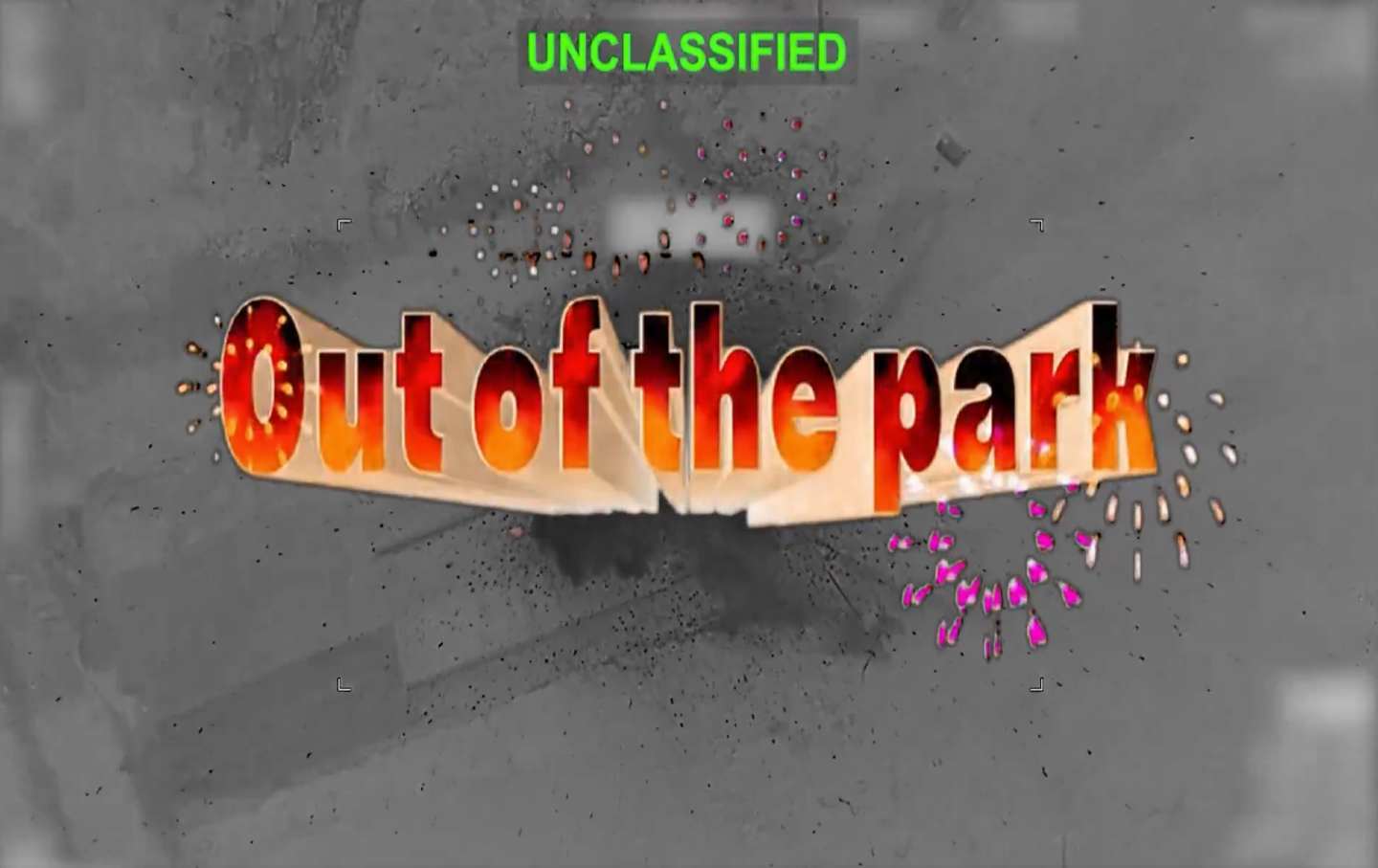
The Trump White House’s Vision of War as Nihilist Entertainment The Trump White House’s Vision of War as Nihilist Entertainment
In a new X post building on an earlier Hollywood action-clip montage, the White House tries to render the horrors of war as a Wii game.
The Iran War Is Spurring Global Anger at America The Iran War Is Spurring Global Anger at America
Trump’s reckless and unnecessary conflict is hurting allies as well as foes.
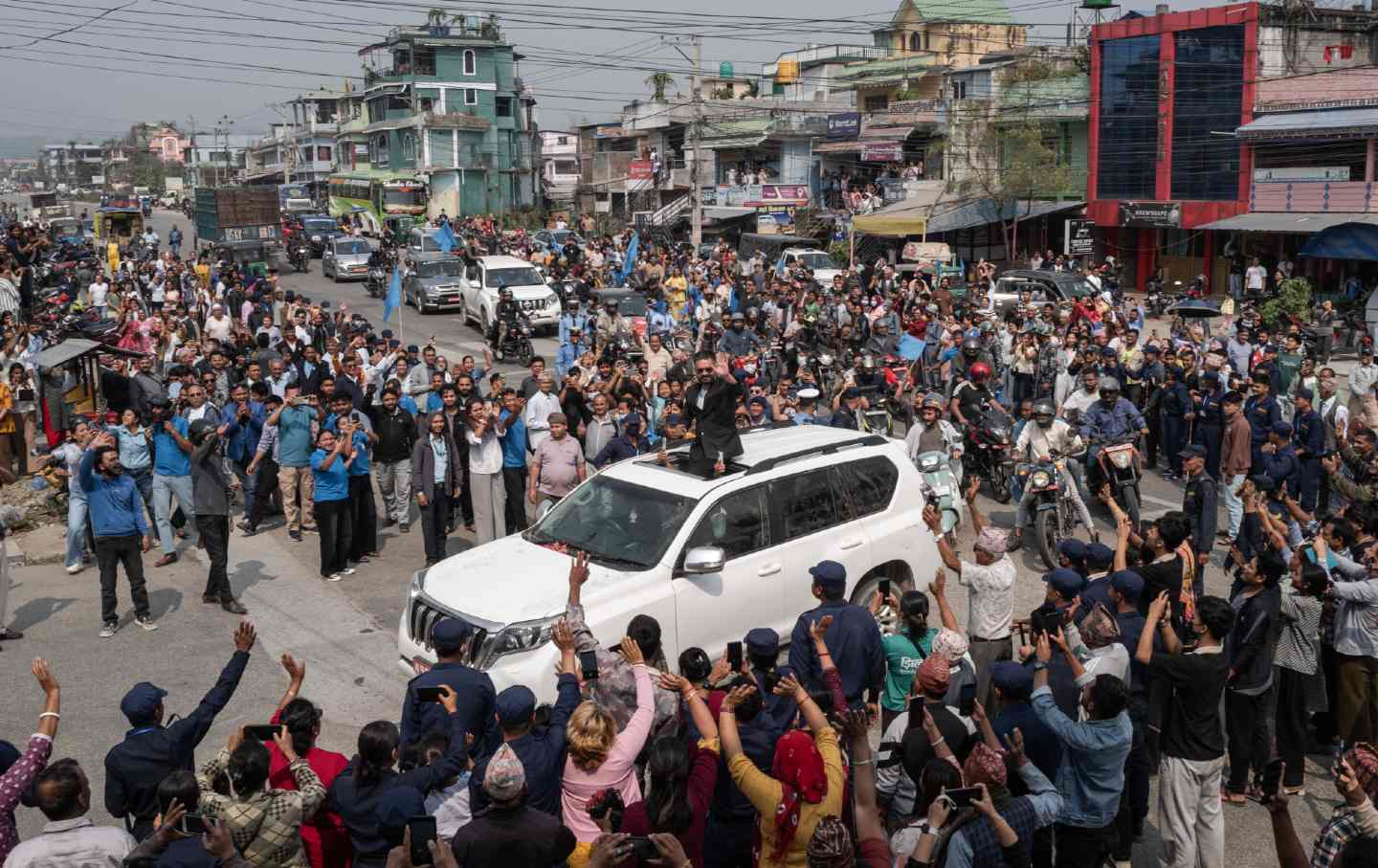
A Sweeping Victory for Gen Z in Nepal—but Not Yet a “Revolution” A Sweeping Victory for Gen Z in Nepal—but Not Yet a “Revolution”
Nepal’s “Gen Z revolution” achieved historic and unexpected electoral success—but transformational change remains elusive.

“We’re Not Calling Things What They Are” “We’re Not Calling Things What They Are”
Years after leading opposition to the US war in Iraq, France’s Dominique de Villepin speaks out against another illegal war in the Middle East and Europe’s timid response.
Haiti Doesn’t Need War. It Needs Peace. Haiti Doesn’t Need War. It Needs Peace.
As Haiti confronts deepening violence and political collapse, calls for military intervention risk repeating a long history of foreign policies that have destabilized the country....

Welcome to the Era of the AI-Powered War Machine Welcome to the Era of the AI-Powered War Machine
How a clique of unhinged techno-optimists is putting humanity at risk.

