
The “Rules-Based Order” Is Gone. Let’s Not Bring It Back.
Trump has destroyed a global system that mostly benefited the rich and powerful. We need to create something completely different in its wake.
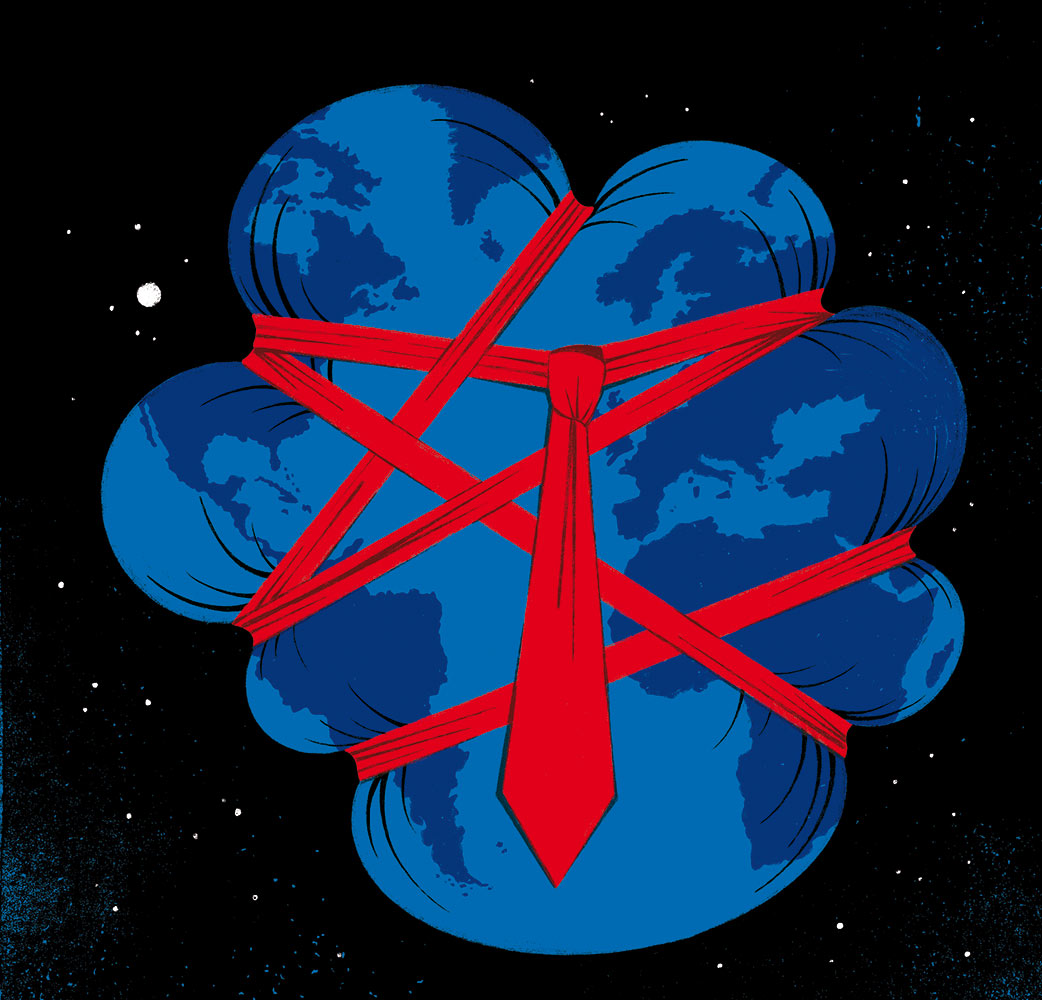
When Donald Trump, our mad king, declared that “we are going to do something on Greenland whether they like it or not,” because “ownership” is “psychologically important for me,” the reaction was immediate and predictable.
The foreign-policy establishment—what the former Obama speechwriter Ben Rhodes dubbed “the Blob”—erupted in fury. Trump was trampling the so-called rules-based international order. “Territorial integrity and sovereignty are fundamental principles of international law,” lectured Ursula von der Leyen, the president of the European Commission. Trump was endangering what Iraq War champion Bill Kristol called our “relatively benign order,” one that, neoconservative nabob Robert Kagan sermonized, was held together in part by “America’s reputation for morality and respect for international norms.”
There’s no question that Trump’s erratic, even demented, global policies— “Liberation Day tariffs,” dubbing NATO allies the “enemy within,” whining about a Nobel Peace Prize snub while bombing seven countries as well as fishing boats in the Caribbean, kidnapping Venezuelan President Nicolás Maduro, pulling out of international organizations, and more—have stripped the mask off of American predation.
But Trump’s manic disruptions should not feed a romantic nostalgia about the “rules-based order.” The very same European leaders and anointed members of the Blob expressing outrage about Greenland were largely silent or supportive as Trump bombed Iran and Nigeria, abducted Maduro, and continued to aid and abet Israel’s genocide in Gaza.
Nor should Trump’s follies whitewash the history of the rules-based order. His villainy may not be masked, but the reality is that the United States has always made the rules—and served as global policeman, judge, jury, and executioner.
Post–World War II America has been at war virtually nonstop, with more than 200 military interventions since 1950. We’ve launched wars against Afghanistan, Iraq, and Libya, among others. Barack Obama, that Nobel Peace Prize–winning champion of democracy, ran what was essentially an assassination bureau out of the White House while bombing seven countries.
In 2015, under Obama, the United States supplied arms to 36 of the 49 countries labeled dictatorships by the pro-democracy research institute Freedom House. Over the last decade, the US has imposed unilateral sanctions on more than 60 countries, primarily in the Global South. Since World War II, we’ve launched regime-change operations—overt and covert—all over the world, from Indonesia to Iran to Guatemala, Chile, Panama, Nicaragua, and Honduras, to name a few.
The rules-based order did create a dense web of institutions to regulate the global economy, such as the International Monetary Fund, the World Bank, and the World Trade Organization. These largely served the interests of Western multinational corporations and banks, enforcing the free flow of capital and providing protection for property but not for workers.
While defenders of the rules-based order celebrate the rise in living standards in the less-developed world, the predominant source of that increase was China’s state-capitalist regime, which played by its own set of rules. The economic prosperity of the rest is best captured by Oxfam’s 2026 World Inequality Report, which revealed that fewer than 60,000 people—0.001 percent of the world’s population—own three times the wealth of the entire bottom half of humanity.
Trump’s rise to power is largely a result of the increasing failure of this order to benefit working people in the US. The “job shock” from the global trade regime wiped out industrial towns across America, and governing elites failed to compensate the victims. Globalization empowered multinationals to undermine wages here and abroad. Endless and futile wars provoked increasing opposition. Global policing came at the expense of investments and reforms that were needed at home. Increasingly, housing, healthcare, education, and retirement security grew less and less affordable for the masses.
At the last World Economic Forum in Davos, Canadian Prime Minister Mark Carney, a former international banker, earned a standing ovation for offering some simple truths. Canadians, he admitted, had prospered for decades while embracing the “story of the international rules-based order,” which they knew “was partially false.” The strongest “would exempt themselves when convenient.” Trade rules “were enforced asymmetrically.” International law applied “with varying rigor depending on the identity of the accused or the victim.”
Carney termed the rules-based order “a pleasant fiction,” a phrase remarkably akin to White House deputy chief of staff Stephen Miller’s scornful dismissal of international law and treaties as “international niceties.” Now, Carney continued, the world was in the midst of a “rupture” from the old system—one stemming less from unprecedented lawlessness than from Trump’s brazen abandonment of that fiction while targeting not just adversaries or developing countries but the core allies themselves.
As Carney noted, the move toward greater and greater predation preceded Trump: “Over the past two decades, a series of crises in finance, health, energy, and geopolitics have laid bare the risks of extreme global integration. But more recently, great powers have begun using economic integration as weapons, tariffs as leverage, financial infrastructure as coercion, supply chains as vulnerabilities to be exploited. You cannot live within the lie of mutual benefit through integration, when integration becomes the source of your subordination.”
Strikingly, Carney compared the decline of the US-led international system to the final days of communism, invoking Václav Havel’s famous parable of the Czech shopkeeper who, acquiescing to “the lie,” continues to display in his window an authorized slogan that no one believes in. It was time, Carney argued, “for companies and countries to take their signs down.”
That advice, which the Canadian prime minister addressed to the “middle powers,” is doubly true for Americans. It is time to stop living within the lie. The old order has failed Americans. It is time for the United States to develop a new way of living in the world. This won’t be easy.
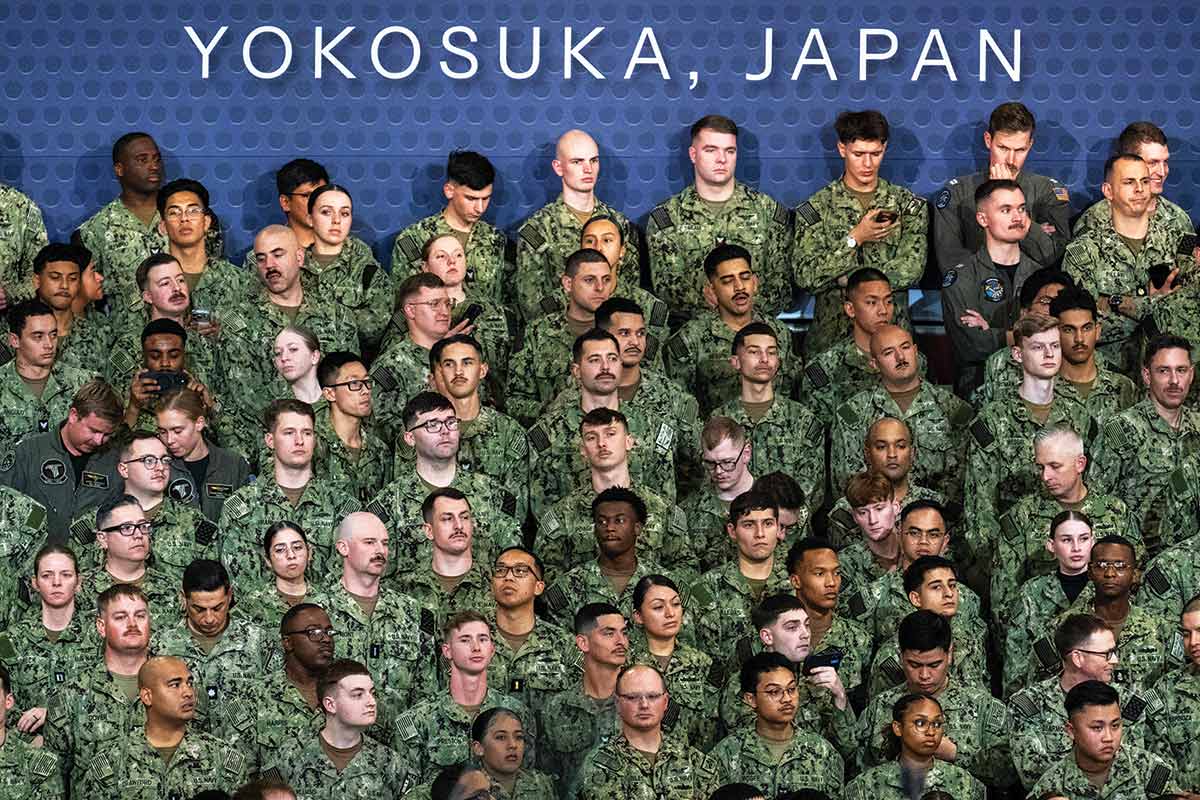
It is almost impossible to imagine the United States as anything other than a global hegemon. Entrenched interests have deep stakes in sustaining the imperial myths. Trump’s America First policies are criticized as neo-isolationist even as he sustains the United States’ commitment to NATO, expands its presence in the Middle East, pledges to police the South China Sea, calls for increasing the US military budget—already the world’s largest, and bigger than the next nine largest military budgets combined—by one-third, and targets Venezuela, Cuba, Iran, Gaza, Greenland, and the Arctic, for starters.
A sensible way to begin would be to discard established shibboleths and apply common sense to rethinking the purpose of our national-security policy. Obviously, such a policy should serve to protect Americans and our democracy from actual threats to our security.
So what are the real security threats that Americans face? Clearly, the obscene and growing inequality within our country and the decline of the middle class drive American insecurity. That inequality also threatens our democracy itself, as big money undermines free elections.
This reality calls for a foreign policy that allows us to focus on domestic reform, as well as on the resources needed to rebuild vital public infrastructure and invest in the well-being of our people. President Joe Biden’s “foreign policy for the middle class” hinted at that promise but was quickly subordinated to US efforts to police the world, take on China and Russia, and aid, abet, and arm Israel’s genocide in Gaza. The foreign-policy establishment, embodied by groups like the Council on Foreign Relations, pays ritual tribute to the need for a robust domestic economy to support our role in the world. But that frames the issue upside down.
What we need desperately is a foreign policy that strengthens our democracy at home, not an economy that supports our imperial pretensions abroad. This means reducing, not reinforcing, our global footprint—particularly our empire of over 750 military bases in some 80 countries—and elevating diplomacy over military intervention. One measure of progress would be whether we return to having more embassies than military bases around the world.
Of the foreign threats that actually impact the security of Americans, catastrophic climate change—which poses an existential threat while causing more destruction each year—must be at the top of the list.
Similarly, global pandemics present direct and growing threats to life, as the loss of more than 1 million Americans to Covid-19 demonstrated. The combination of untrammeled AI and an untrammeled nuclear-arms race threatens to extend ever-increasing perils in an era of great-power jockeying. In January, the Bulletin of the Atomic Scientists moved its Doomsday Clock closer to midnight than at any time in its history—reflecting the spiraling nuclear-arms race, the collapse of arms-control agreements, and the cascading violence and instability gripping so much of the world.
Isolationism isn’t the answer to dealing with these threats. Neither is Trump’s America Alone imperialism. They require greater, not less, international engagement. While curbing the corrosive effects of inequality must begin at home—with progressive taxation, revived antitrust enforcement, regulating finance, and removing the grip of big money on our politicians—empowering workers across the globe is needed to deal with the real and present dangers we all face.
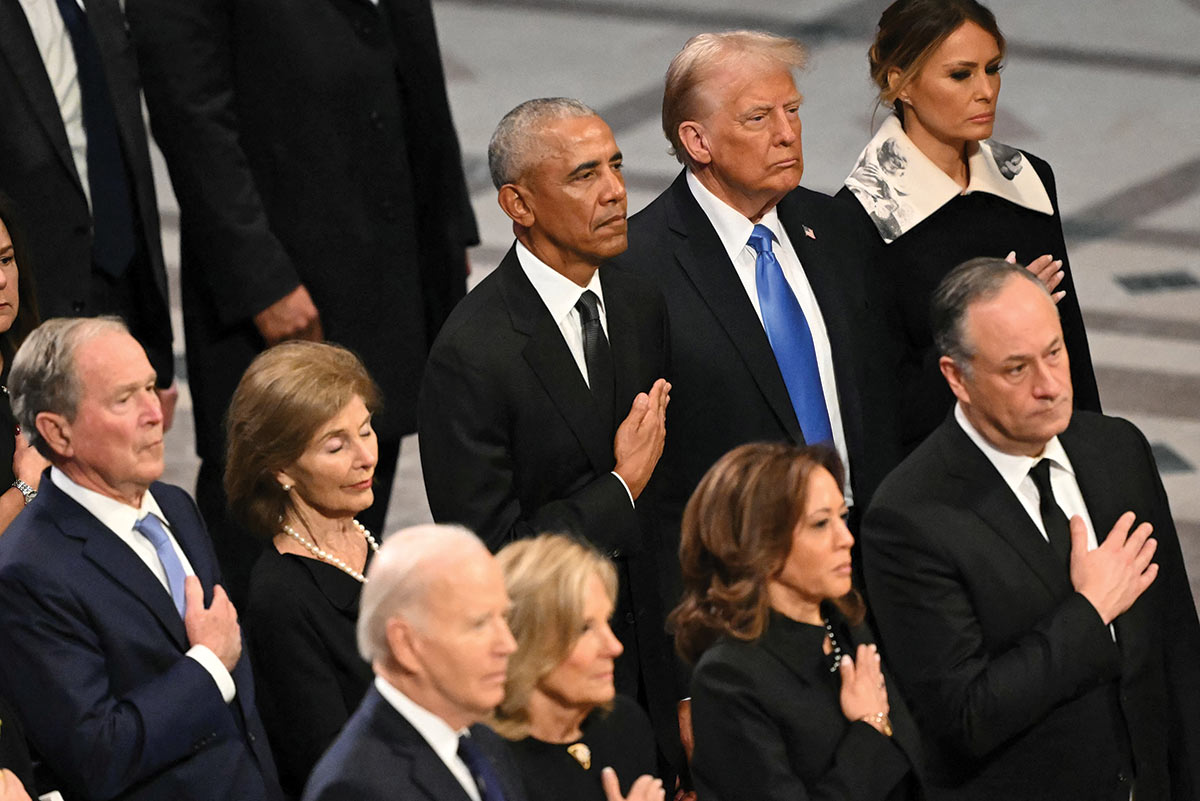
Trump’s actions, perversely, are exacerbating each of these security challenges. He’s eviscerated federal programs addressing climate change while withdrawing from any international cooperation on this critical issue. He’s gutted already inadequate US public-health and global-aid programs while withdrawing from the World Health Organization, which monitors and coordinates responses to pandemics. He’s ramped up the nuclear-arms race; turned his back on extending New START, the last nuclear-arms accord with Russia; and launched his Golden Dome fantasy, which will kick off a new arms race in space. His economic agenda, both at home and abroad, seems designed to increase inequality rather than decrease it, while ushering in a new era of brazen corruption. As Trump pulls the country from 66 international agencies, his risible Board of Peace, designating him as permanent leader of the world, may further weaken the United Nations, but it won’t replace it.
Reversing Trump’s misrule is necessary but surely not sufficient. A dramatic reordering of American priorities and policies and a rethinking of national security and the political economy are inescapable if Americans are to deal with the polycrisis we now face. Can we build rules around the global economy that work for working people and not just for capital? Can we engage the Chinese in a collective effort to address catastrophic climate change and join them and the Russians in beginning to dismantle nuclear arsenals?
Trump’s erratic policies—what Carney called the “rupture”—have insulted our allies, torn up our international commitments, weakened the dollar, and exposed the lie of the rules-based order. The question is whether this rupture will inspire us to begin a turn to a more sensible security framework that addresses the real threats before us.
Trump’s assault on our democracy must be stopped, but a return to the old order offers no way forward. The change won’t come from entrenched interests or established voices, from politicians or elites. It will come from creative thinking, hopefully by a new generation aroused by the reality it confronts, but only if popular movements—on climate, on democracy, on countering inequality and empowering workers, on rebuilding America—force the change.
The odds against this are as long as the interests against it are formidable. But in previous times of “rupture”—the Civil War, the Great Depression, the battle against Jim Crow, the war in Vietnam—popular movements pressured, and then empowered, bold leaders to change course and chart a better path. And that, at the very least, provides the basis to keep hope alive.
More from The Nation
Brazil’s Decision Brazil’s Decision
The moral compass and basic humanity of political leaders really does matter.
Albanian Student Strikes Spur a Political Crisis Albanian Student Strikes Spur a Political Crisis
A new round of protests against the ruling party’s corruption has Prime Minister Edi Rama giving cops bonuses to crack down on dissent.
Inside India’s Gen Z Cockroach Janta Movement Inside India’s Gen Z Cockroach Janta Movement
Young Indians are challenging the purge of voter rolls by Modi’s right-wing government. Shrishti Khanna, who was detained by Delhi police while covering the protests, explains.

The Clarion Call of “NAZA” The Clarion Call of “NAZA”
Yuval Abraham and Rachel Szor’s new film not only documents the horrors of the present but gives us a glimpse of a possible future too.
The Specter of Lepenism Looms Over France’s Social Crisis The Specter of Lepenism Looms Over France’s Social Crisis
Joining forces with the “yellow vests,” youth demonstrators are raising the alarm in a country falling to the far right.

