The Planet-Sized Hole in Trump’s State of the Union Address
Although climate change received no attention during the president’s speech, Americans must continue to find new ways of making progress against the ongoing environmental crisis.
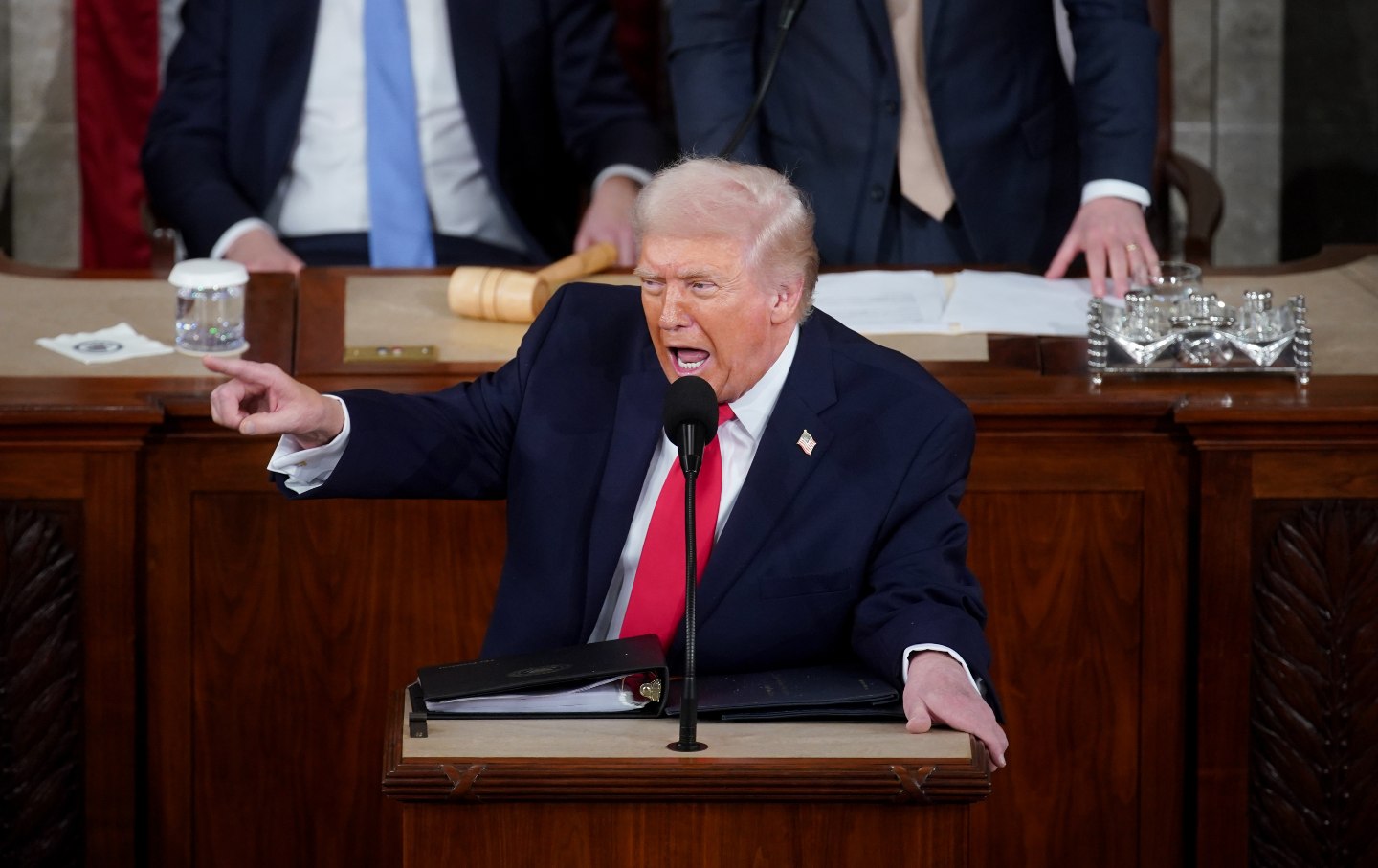
US President Donald Trump speaks during a State of the Union address in the House Chamber of the US Capitol in Washington, DC.
(Al Drago / Getty)
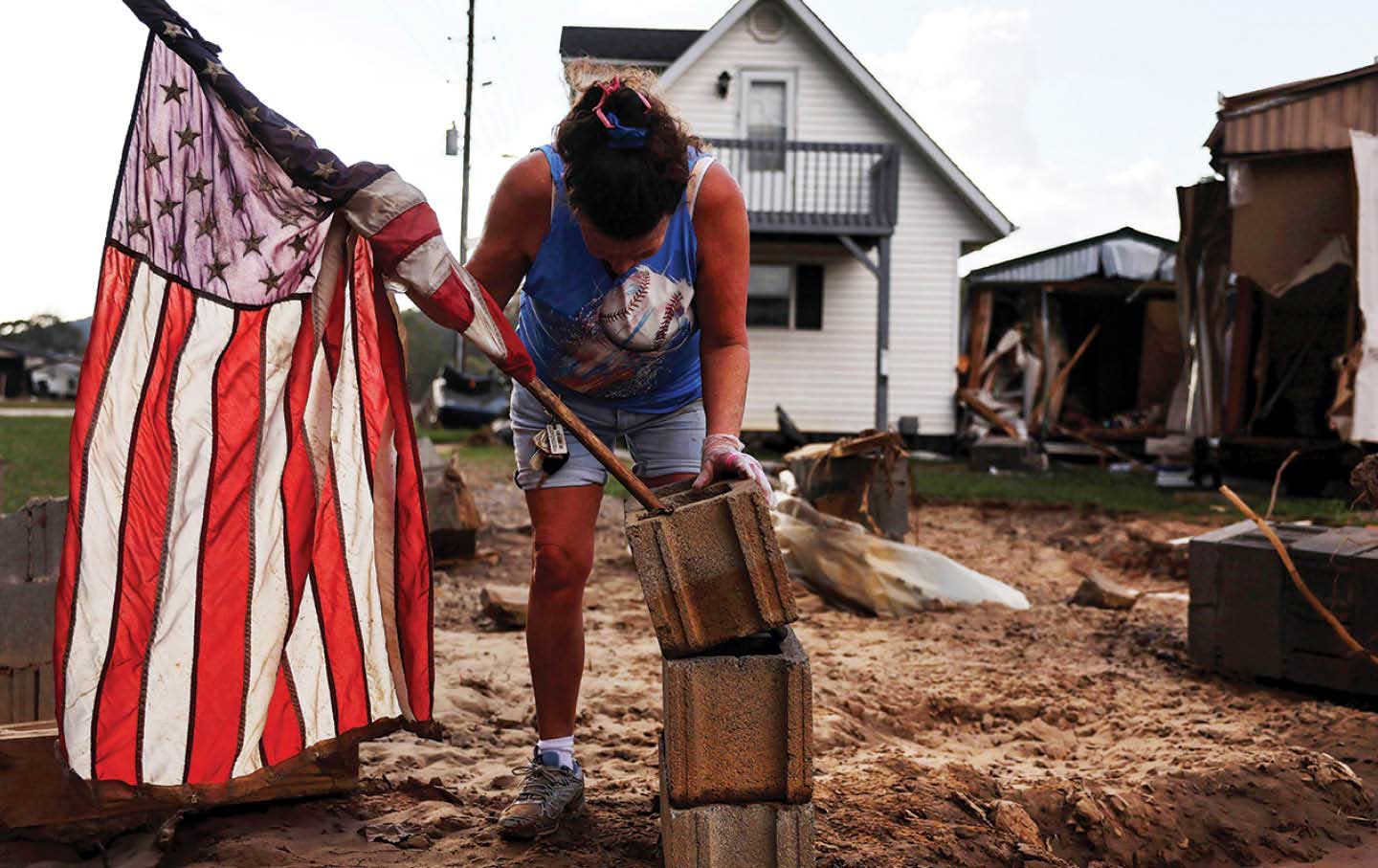
As wildfire smoke and intensified storms wreak apocalyptic levels of devastation across the country, the climate crisis received no attention in the State of the Union Address delivered by President Trump on February 24.
What did get mentioned? Oil and gas.
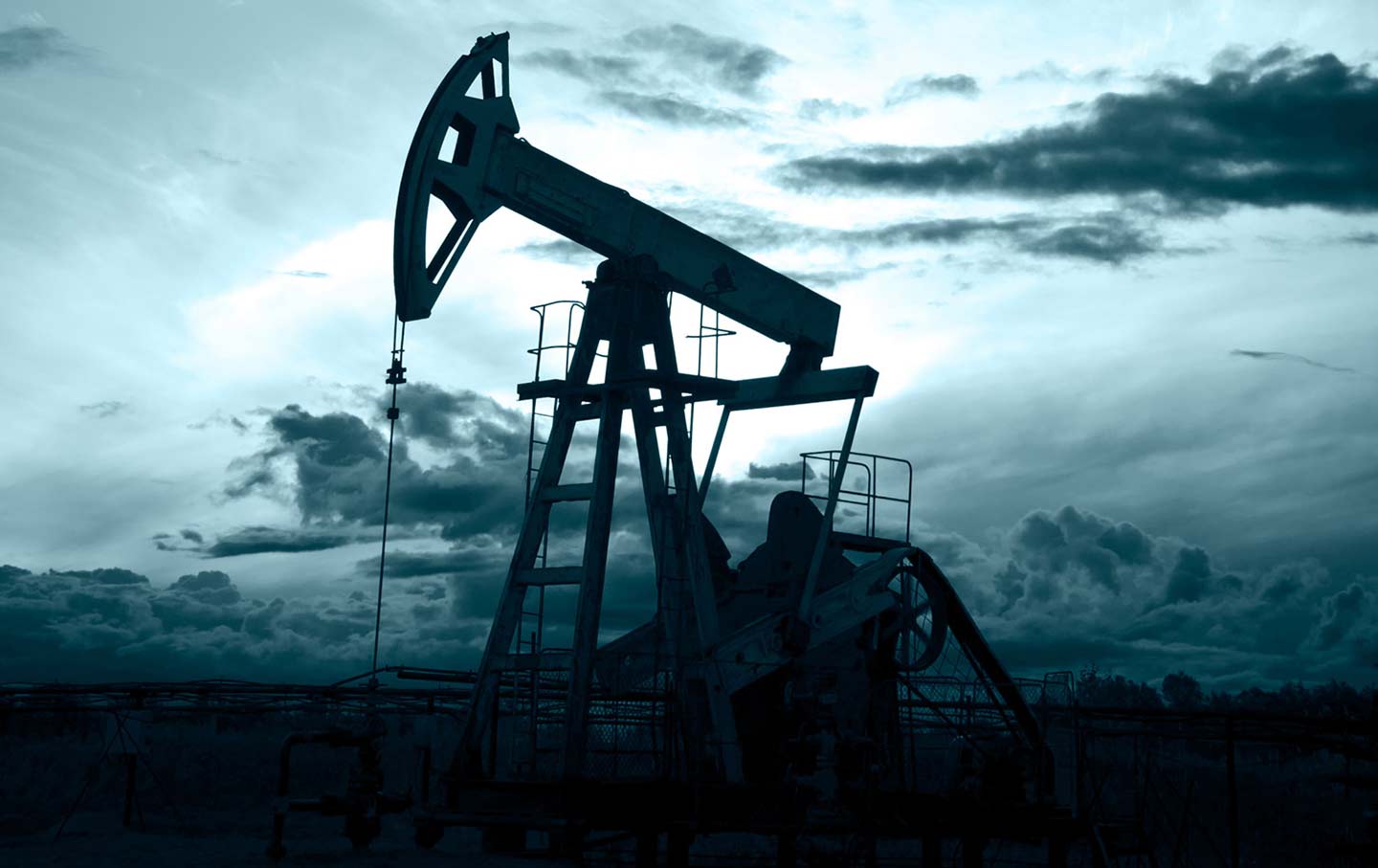
“I kept my promise to drill, baby, drill,” the president boasted during his nearly two-hour speech. In 2026, roughly a decade after the signing of the Paris Agreement, his use of this slogan should feel especially anachronistic. Only a few years away from the 2030 deadline, the United States (the world’s biggest historical carbon polluter) and the world remain on track to careen past the emissions reductions required to crucially limit planetary warming, while fossil fuel companies rake in billions.
In his first year in office, Trump and his administration have gone to immense lengths to prop up fossil fuel interests, including most recently by repealing the bedrock of the federal government’s ability to regulate greenhouse gas emissions. He has dismantled core climate and environmental regulations (including through the so-called “biggest deregulatory action in U.S. history” by the Environmental Protection Agency), removed critical climate information and scientific data (and even mentions of climate change) from government websites, and withdrawn from international climate governance.
On foreign policy. Trump has sought control of Venezuela’s oil industry and briefly fantastized about “doing something” with Greenland, a focus that former national security adviser Mike Waltz attributed in part to the country’s critical minerals and natural resources—clarifying, “it’s oil and gas.” These deliberate efforts to extend dependence on fossil fuels, which the world must rapidly phase out to avoid the worst climate change impacts, come at a profound cost for human health and the environment worldwide.
Perhaps most challengingly, the systematic attacks on climate action often seem to fade into a deluge of upended norms that has overwhelmed many Americans. From at times unlawful and inhumane immigration enforcement, including the increased detention of children and killings of Americans by federal officers, to fossil-fueled foreign policy violence and the ongoing affordability crisis that many Americans believe has been exacerbated by Trump’s tariffs, knowing how to focus one’s attention and energy can feel near impossible. This onslaught of distressing headlines has clear consequences: By moving at breakneck speed, the administration is implementing significant parts of Project 2025, while civil society has little time to mount an effective defense of democracy, social justice, and our healthcare and educational systems, and against the accelerating climate crisis.
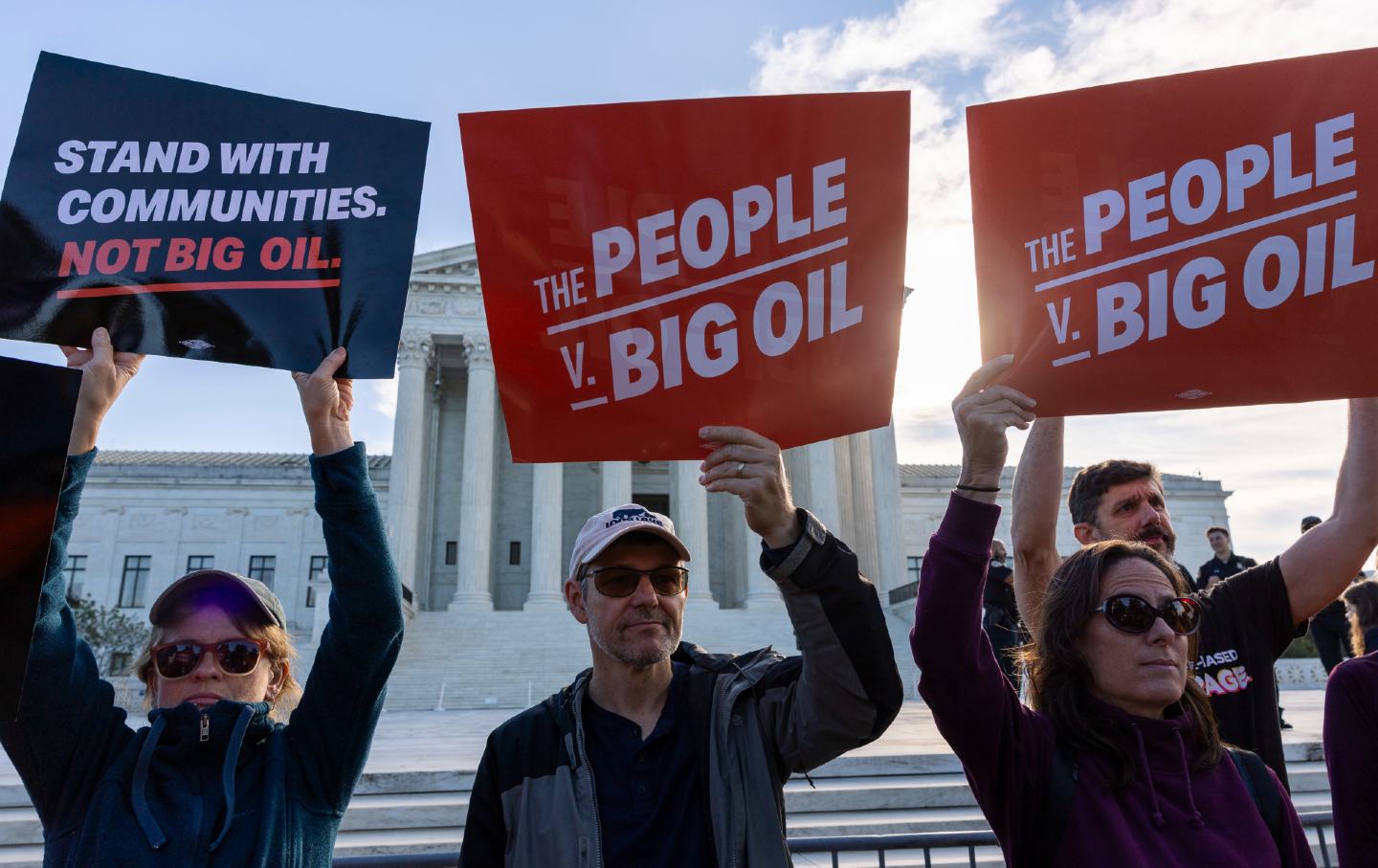
Despite Trump’s address, Americans must continue to find new ways of making progress: from supporting climate policy at the city and state levels to contributing to creative climate journalism and advocacy, and holding the federal administration accountable on the international stage. Outside the US, international legal systems have moved toward holding governments and corporations accountable for climate inaction and recognizing the human right to a stable climate.
At a moment when the highest level of government is selling out Americans’ futures to fossil fuel interests, we cannot afford to lose faith in the struggle for a just, renewable energy transition.
Major environmental legal organizations have launched a lawsuit against the EPA’s rollback of the “Endangerment Finding” and continue to push back against the administration’s deregulatory agenda. Despite threats to public media funding and recent layoffs of journalists producing desperately needed climate journalism, climate journalists and media continue to persevere in many forms, including at publications like NPR and with the advent of collaborative initiatives like Covering Climate Now. Community members are finding ways to balance standing up for democracy with continuing to call for climate action, recognizing that these fights are fundamentally intertwined. City and state governments are also looking to act where the federal government won’t.
“Drill, baby, drill” was a clarion call to all Americans to maintain our commitment to realizing a future free from climate harm, recognizing that a healthy environment and a stable climate are essential to exercising our most fundamental civil rights and constitutional freedoms.
“Can we summon up the awareness, the moral courage, and the popular demand to meet this clear, present and growing threat to our lives?” the late civil rights leader Jesse Jackson asked in 2021. If there was ever a time to answer that question, it’s now.