
Anger at Corporate Power Is Everywhere
It should guide the Democrats.
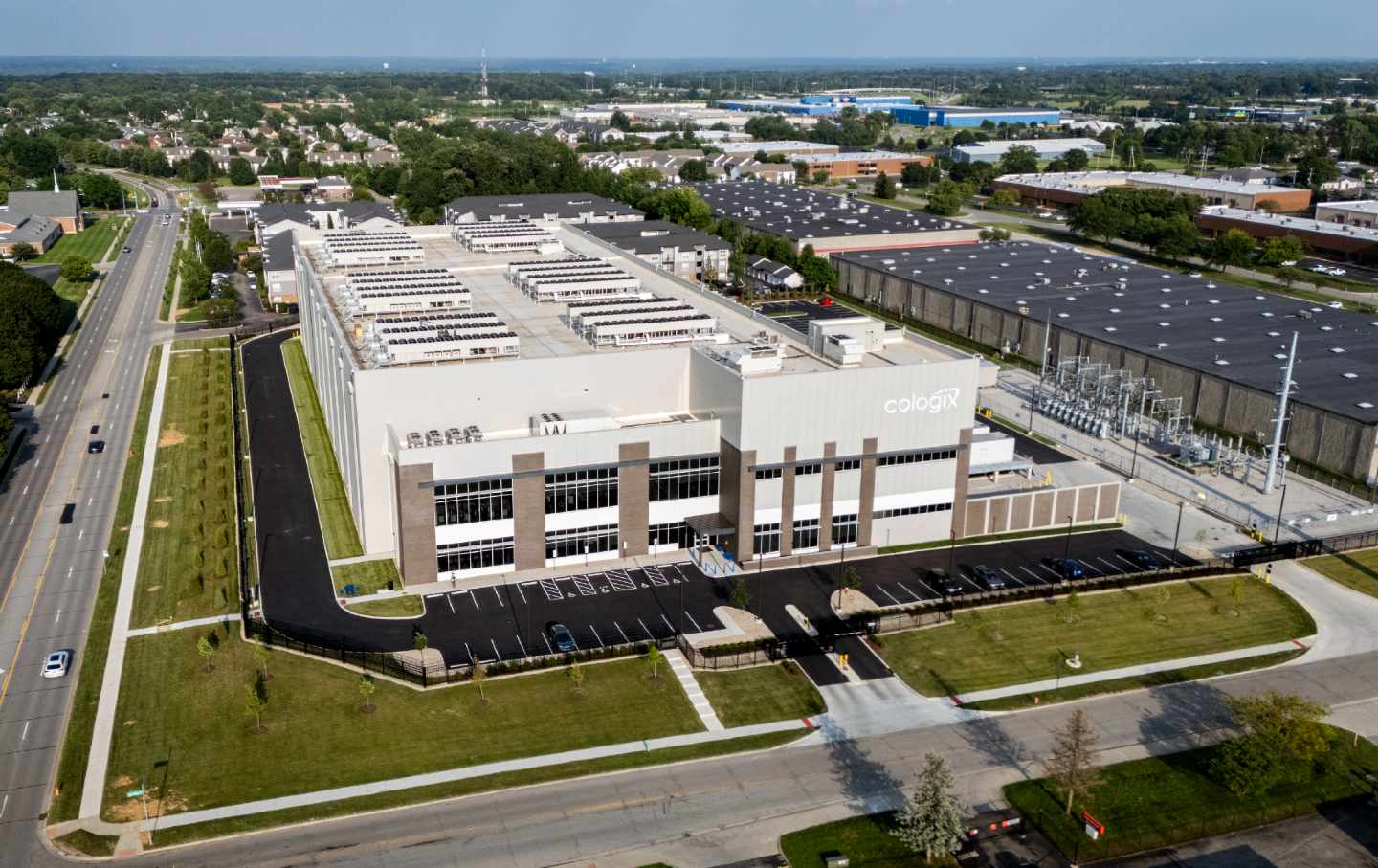
It was a warm, late summer night, September 11, and hundreds of residents had packed the spacious chambers of City Hall in College Station, Texas, to collectively protest what has become a common occurrence in America: the corporate strip-mining of our resources, our communities, and our future.
Less than a week earlier, the city announced that it was considering selling 200 acres of city-owned land on the south end of town to a developer planning to build one of the largest commercial developments in the city’s history.
Data centers are notoriously bad neighbors; their massive banks of servers, generating the computational power needed to run generative AI or mine cryptocurrencies, require immense amounts of water and electricity to operate. Developers and city staff had struck the deal in back rooms without public input, and residents had just days to react to a plan that would, in effect, hand over much control of the city’s water and power to a privately run server farm.
So, on vanishingly short notice, residents packed the chamber. Nearly 80 folks spoke at the six-hour marathon meeting, the majority against what they saw as an unnecessary giveaway to a predatory developer, all for a scant 45 permanent jobs and a onetime, $30 million payout to city coffers. “I want the sale of property to do things that benefit me and my family and the community,” local resident Jeffrey Herron said at the hearing, according to local media. “It seems like this sale benefits a very few people. The timing was terrible. We only had four days to figure out a solution for this. We do not want this in our neighborhoods.” By the time the hearing ended after midnight, the city council had voted to kill the deal.
Scenes of public resistance like the one in College Station have played out in the halls of local governments around the country, where residents have organized to fight back against corporate invasions of their neighborhoods and communities. Resource-thirsty data centers, often backed by Amazon, Google, and other tech titans, have been a frequent target, for good reason. But pockets of people-led resistance have risen to fight Amazon warehouses, dollar stores, Live Nation concert venues, agriculture monopolies, private equity landlords and more—all outcroppings of what residents increasingly view as extractive corporate power that inflict real harms on communities and their resources.
The growing collective outcry against corporate control suggests there’s something far larger going on: Americans, fed up with decades of declining fortunes, have found a common and culpable enemy in the powerful companies that control so much of our lives and politics. While populism has been rising in America for years, this moment feels different. Resistance is happening everywhere, not just in liberal big cities or in communities known for their activism. The broad backlash against corporate power today bridges partisan lines and channels a philosophy that has been core to America since its founding. It is the worldview of anti-monopoly, brought to life in city halls and community hearings nationwide.
If we are to transform this growing movement against monopoly into real power, it must ascend to our electoral politics as a dominant and unifying governing philosophy—a worldview that once called the Democratic Party its home. Today it’s unclear whether the majority of the party is willing to again embrace freedom from corporate control as its guiding light. Whether it’s the obsession with the “abundance” framework or “national security moms,” party leadership seems set on ignoring or flatly rejecting the core thing Americans actually want and need: freedom from corporate abuse. Embracing anti-monopoly as a political lodestar would unleash the broad prosperity needed if we are to be a true democracy. Today a real, national movement against domination may be rising. And whether this blossoming but nascent anti-monopoly movement takes over the Democratic Party or lives on otherwise, it’s inevitable, and Democrats would be wise to use it as a light out of the darkness.
On September 2, a typically mundane meeting outside of Jonesboro, Arkansas between farmers and representatives for Senators Tom Cotton and John Boozman and Representative Rick Crawford turned into a makeshift rally against the corporatization and monopoly control of agriculture. More than 400 corn and rice growers lined up in a parking lot and sat in a meeting hall for hours in the middle of harvest season—a remarkable thing on its own—and demanded that the lawmakers do something to break the grip corporate monopolies and financiers held over their farms and livelihoods. When almost every part of the agriculture economy is under the control of a handful of corporations, as it is today, farmers’ struggles become systemic and inescapable, Bailey Buffalo from the Farm Protection Alliance told the Farm Journal after the meeting. “That’s where I believe we’re at in farming. We can’t climb out of this mess partly because we’re at the mercy of agriculture monopolies.”
From rural communities to the skyscraper-shaded streets of New York and Chicago, being bullied by unchecked corporate power has become the most common experience in America. It’s the thread that connects Americans of all walks of life and political persuasions. Family farmers have seen their livelihoods devastated under the control of some corporate conglomerate, be it Monsanto, JBS, Tysons, John Deere, or otherwise. Hundreds of thousands of good-paying, union factory jobs have been lost to a bad corporate merger or a move overseas. The families that once owned grocers, pharmacies, toy stores, and so on have been bled dry by the vampires of the retail economy, the Walmarts and Amazons, ConAgras and PepsiCos. Our pathways to prosperity are fewer and narrower than they’ve ever been.
Corporate power has likewise brutalized the physical spaces we inhabit. Small towns and cities that for generations were anchored by factories and the work they offered live on today as service-industry zombie towns, existing only on the meager wages offered by the local Amazon warehouse or chicken packing plant. Our downtowns and main streets, once filled with useful business that boosted the fortunes of the community, are now chock-full of dollar stores, salons, tattoo parlors, and sketchy head shops that are among the only businesses immune to the constant predation of Amazon and Walmart. Good jobs and useful businesses have been almost wholly replaced by nuisance, exploitation, and, in so many communities, the corporate grift of data center hyper-scaling.
Resistance toward this corporate degradation of our lives is everywhere and growing by the day. In just three months this year, local opposition has killed or stalled 20 data center projects, worth around $98 billion in investment, according to the watchdog group datacenterwatch.org. More than 160 communities around the country, from the urban core of Chicago to the quiet streets of Monterey Township in Michigan, have passed rules and ordinances to stop new dollar stores from opening. Opposition to endlessly expanding warehouses and logistics facilities—often to be operated by Amazon—has spread from coast to coast, largely led by local residents and business owners worried about the facilities’ risks to workers and the environment. Where Amazon-run logistics facilities exist, worker uprisings have challenged the company’s poor pay and dangerous working conditions.
Americans from all walks of life say they believe monopolies and corporate dominance are at least partially to blame for an economy they see as rigged in favor of the rich and powerful. In a pre-Covid poll from Public Policy Polling and underwritten by the Open Markets Institute, three-quarters of those polled said they were concerned that “big corporations have too much power over your family and your community.” More than 80 percent of rural Americans agreed that corporate monopolies run the entire economy and backed policies that constrained corporate power, a more recent poll found. An 2024 election poll revealed that monopolies were the single-most-hated institution in public life. Resistance to monopoly isn’t wonky or niche; it’s a near-universal value, regardless of place or background or even political party.
If history is not repeating itself, it is rhyming. The first anti-monopoly movement of the late 1800s rose among farmers, shopkeepers, and early industrial workers in response to the rising power of the oligarchs of that day: the railroad, oil, tobacco, and steel trusts and the powerful banks that backed them. These broad alliances were driven by a fundamental American value: resistance to rule by any king, political or economic.
That mass movement led to today’s laws against monopolization, collusion, mergers, and corporate bullying. Resistance to corporate domination was so galvanizing that it animated two different political parties: The Anti-Monopoly Party, a short-lived upstart party that pushed for antitrust laws, worker’s rights, and a progressive income tax, and then the farmer- and labor-led Populist Party, whose demands for collective bargaining rights, publicly owned goods, and the end of trusts was a direct response to rising monopoly power across the country. The party’s policies, captured in its 1892 Omaha Platform, were largely absorbed into the Democratic Party and served as its guide to governance throughout the New Deal and beyond. Behind the core belief that Americans should be free from the shackles of corporate control, Democrats dominated national politics for half a century, from the New Deal until the dawn of our neoliberal decline in the 1970s. Whatever cries there may be today for pluralism in the party, the fact is that the party spent years building a broad working-class coalition by opposing corporate control and then, when in near-perpetual power, delivered prosperity to every corner of America. Even Black Americans, held back by persistent institutional racism, shrunk the racial wealth gap behind the middle-class pathways of union jobs and small businesses.
Today, decades of neoliberalism and the flood of legalized political bribery unleashed by Citizens United have tainted the Democratic Party and triggered the deep, working-class backlash against it. The party has embraced policies that have devastated American communities and facilitated rising corporate power—from Jimmy Carter’s deregulation of American industry to Bill Clinton’s disastrous passage of NAFTA and the Telecommunications Act of 1996, to Obama’s approval of monopolistic mergers and refusal to punish Big Tech for monopoly bullying. After spending decades working in lockstep with Republicans to create the economic and political conditions that have led to open fascism in America, the message-less, ideology-less party has little to offer the American people. Its own members have scant hope for the party’s future.
Even the Biden administration’s admirable job of reviving anti-monopoly as a regulatory framework was not enough. Biden’s policies failed to win over Americans because the Democratic Party failed to embrace it or promote it in a way that would resonate with working-class voters. The campaign of Kamala Harris suffered mightily after choosing to ignore the inroads Biden made in checking corporate power. As the party’s sudden and perhaps unprepared flag-bearer, Harris was simply a mirror held up to a party that remains beholden to its corporate backers rather than working people. Its failures were ultimately her failures too.
The prominent, centrist belief that the Democratic Party is somehow a tent big enough to contain both anti-monopoly and embrace corporatism is fiction. It might have been true two or three decades ago, when the anti-monopoly tide of the 20th century remained sufficiently high that promises of hope and change were enough to win an election. Today, many Americans’ lives and futures are so bleak, open fascism seems like a reasonable option. But Republicans’ alleged pivot to populism has been more hoodwink than hope for working people. Monopoly has always been the industrial wing of the fascist state, and the Trump administration seems happy to approve mergers and greenlight corporate bullying so long as those monopolists donate to their ballrooms and help weaponize their kidnappings and deportations.
Americans searching for a way out of these cycles of corporate abuse can find slivers of promise. New York City’s Mayor-elect Zohran Mamdani understood what’s hurting New Yorkers and who is to blame: runaway rents driven by corporate landlords, a workforce fractured by gig jobs and low pay, and a city that feels rigged for the ultra-wealthy—and he rallied a broad, working-class coalition to the polls on the promise of ending their economic pain. Beyond the five boroughs, frustration with an ever-rising cost of living, runaway corporate power, Washington elites, and Big Tech’s cadre of neo–robber barons is widespread, and the coalition Mamdani built behind that frustration feels replicable across traditional political lines coast to coast. The Democratic tent can and should be big enough to include the vast, diverse American working and middle class and no larger.
If we believe the Democratic Party can be reformed in a way that would make it capable of responding to the social and economic needs of Americans—and the reality is that we have few other realistic political options—then reform must begin now.
In all of the ways powerful corporations damage our communities and lives, a political anti-monopoly movement would present the opposite vision for Americans: one of fair pay for work across entire industries; vibrant, self-reliant communities that build and keep wealth and power locally; the democratization of our most fundamental needs like healthcare and housing to ensure no one goes without; the rejuvenation of Forgotten America (call it the Rust Belt, fly-over country, what have you) by supporting farming, manufacturing, processing, and retail ecosystems free from corporate concentration and abuse; and the creation of governments truly responsive to the democratic wants and needs of Americans, rather than the self-serving interests of monopolists and Wall Street.
The list of policies that should animate a Democratic Party driven by the principles and philosophy of anti-monopoly is too long to detail here. But there are some core policies that would significantly tilt the economy back in the favor of people and communities.
Popular
“swipe left below to view more authors”Swipe →For example, Democrats should give their full-throated support for deconcentrating industries through major regulatory reforms and law enforcement, including strict industrial concentration limits. Fighting oligarchy means dismantling companies that make up that oligarchy, one by one.
Democrats should push for union organizing across entire industries, as exists in Europe and elsewhere. “Sectoral bargaining,” as it’s called, would help ensure that all workers benefit from unions’ high wages and strong workplace protections and would level the playing field between small and large businesses that compete for workers.
A party platform built around anti-monopoly should promote different models of corporate organization beyond shareholder supremacy and top-down ownership. Making worker-owned businesses and cooperatives easier to create and maintain would dovetail with a broader vision of economic democracy. As would public options in markets where concentrated corporate power has cut people off from the things they need to survive—housing, health care, access to food, and more.
Again, anti-monopoly is a philosophy of both abundance and freedom from corporate control. A party platform should deliver both. For the Democratic Party, history holds the blueprint. Anti-monopoly fended off rising fascism once and delivered decades of prosperity. It can do so again.
More from The Nation

The Accidental Activists of Data Center Alley The Accidental Activists of Data Center Alley
These would-be rebels in Northern Virginia joined the fight against data centers mostly to stop the encroachment on their homes and exclusive private communities.

An Effective Movement for Palestine Needs Allies Like Zohran Mamdani An Effective Movement for Palestine Needs Allies Like Zohran Mamdani
In order to build a broad-based coalition, we need to work together—not practice purity politics.

The First Amendment Applies to Concert Stages Too The First Amendment Applies to Concert Stages Too
Protests like that of Macklemore on Palestine should never be silenced by billionaire owners.
France’s Students Won’t Back Down France’s Students Won’t Back Down
Without full-time teachers, temperature-regulated classrooms, or school nurses, French students are turning their grievances into a national movement.
Inside Cornell’s Week of Protest Inside Cornell’s Week of Protest
“We won’t be silenced anymore. Our university needs to start protecting us, like they should’ve with Jane Doe and all other survivors on campus.”
Netanyahu Came to New York. New Yorkers Were Ready for Him. Netanyahu Came to New York. New Yorkers Were Ready for Him.
Scenes from the defiant protest against the genocidal leader’s UN speech.

