
Texas’s “Parental Rights” Amendment Will Cement Republicans’ Anti-Educator Agenda
The ballot proposal is the right’s latest move in the culture war on teachers and public schools, embedding parental primacy in the state constitution.
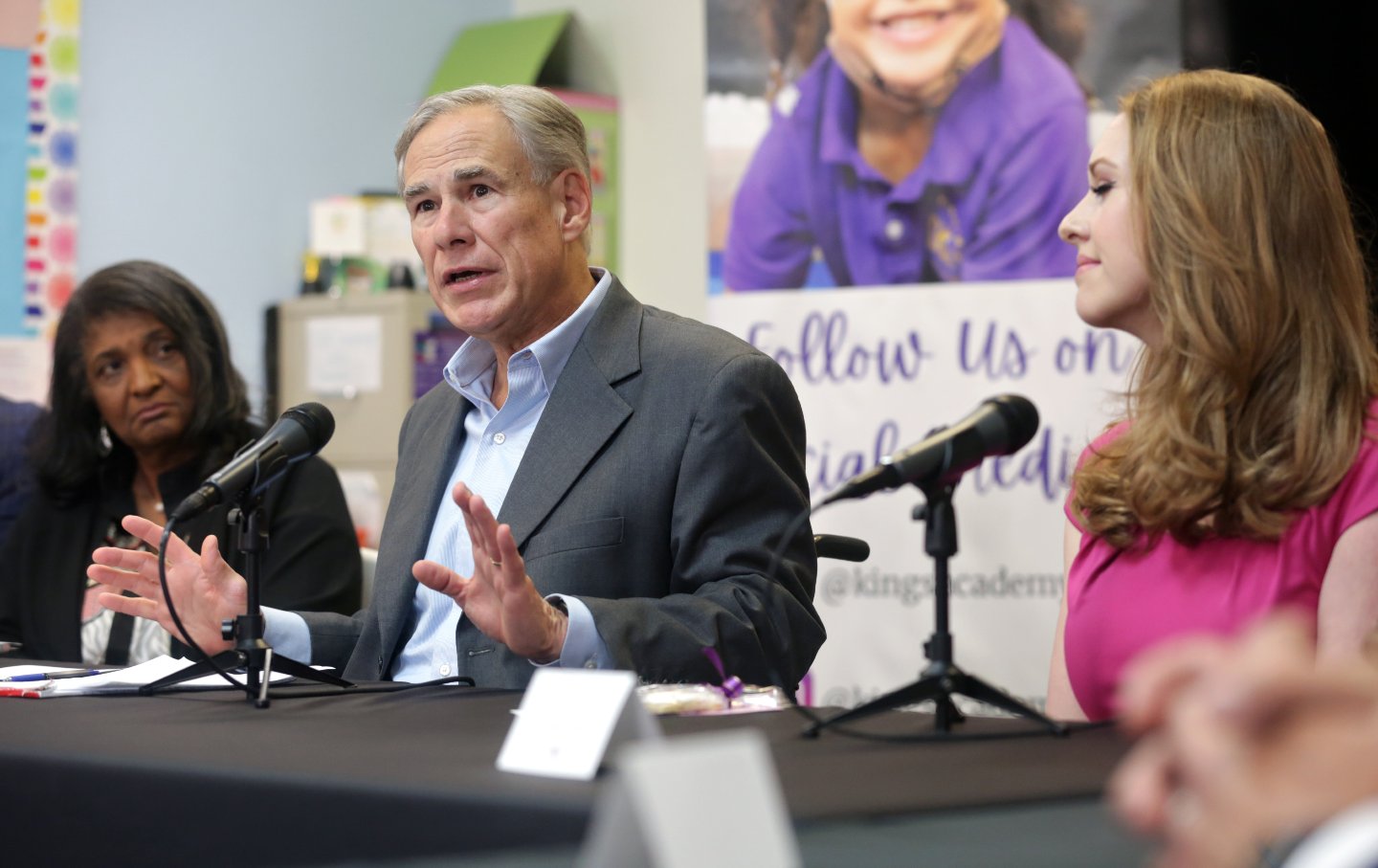
Greg Abbott, governor of Texas, speaks during a news conference on education in August 2022.
(Shelby Tauber / Getty)
This November, Texans will vote on Proposition 15, a ballot initiative to add a parental rights amendment to the Texas Constitution.
The amendment’s language affirms that parents have the “fundamental right to exercise care, custody, and control” over their child and “to make decisions concerning the child’s upbringing.” In the broader context of family law, this amendment offers nothing new. More importantly, is the way the measure dovetails with a wave of controversial legislation this year shifting power away from educators and towards parents.
Avow Texas, a pro-choice group, has called Proposition 15 “unnecessary, vague, and dangerous,” and Progress Texas warns that this amendment could “weaponize the Constitution to propagate right-wing culture wars involving LGBTQ+ families, book bans, and what’s taught in public schools.”
According to the official bill analysis, the legislation is not intended to change the law, but is responsive to the fact that “rights found in case law can change and disappear over time with the appointment of new judges.” Therefore, this amendment would “ensure the longevity of these rights” and codify existing federal case law, specifically from the 2000 Supreme Court decision Troxel v. Glanville, which affirmed parental rights. (Much of the language within the constitutional amendment is taken verbatim from this decision.) The Family Freedom Project claims that “passing a Parental Rights Amendment to the Texas Constitution would significantly shrink the power of the federal government over questions of parental rights” and would ensure its protection in the future.
“Parents’ rights in Texas are already protected. Proposition 15 would go beyond that,” writes Avow Texas. But the ballot proposal is the latest move in Texas’s broader culture war involving the authority of families, teachers, and the state. “Instead of protecting your rights as a parent, Proposition 15 would open the door for another parent’s personal beliefs to strip rights from other people’s children and their families.”
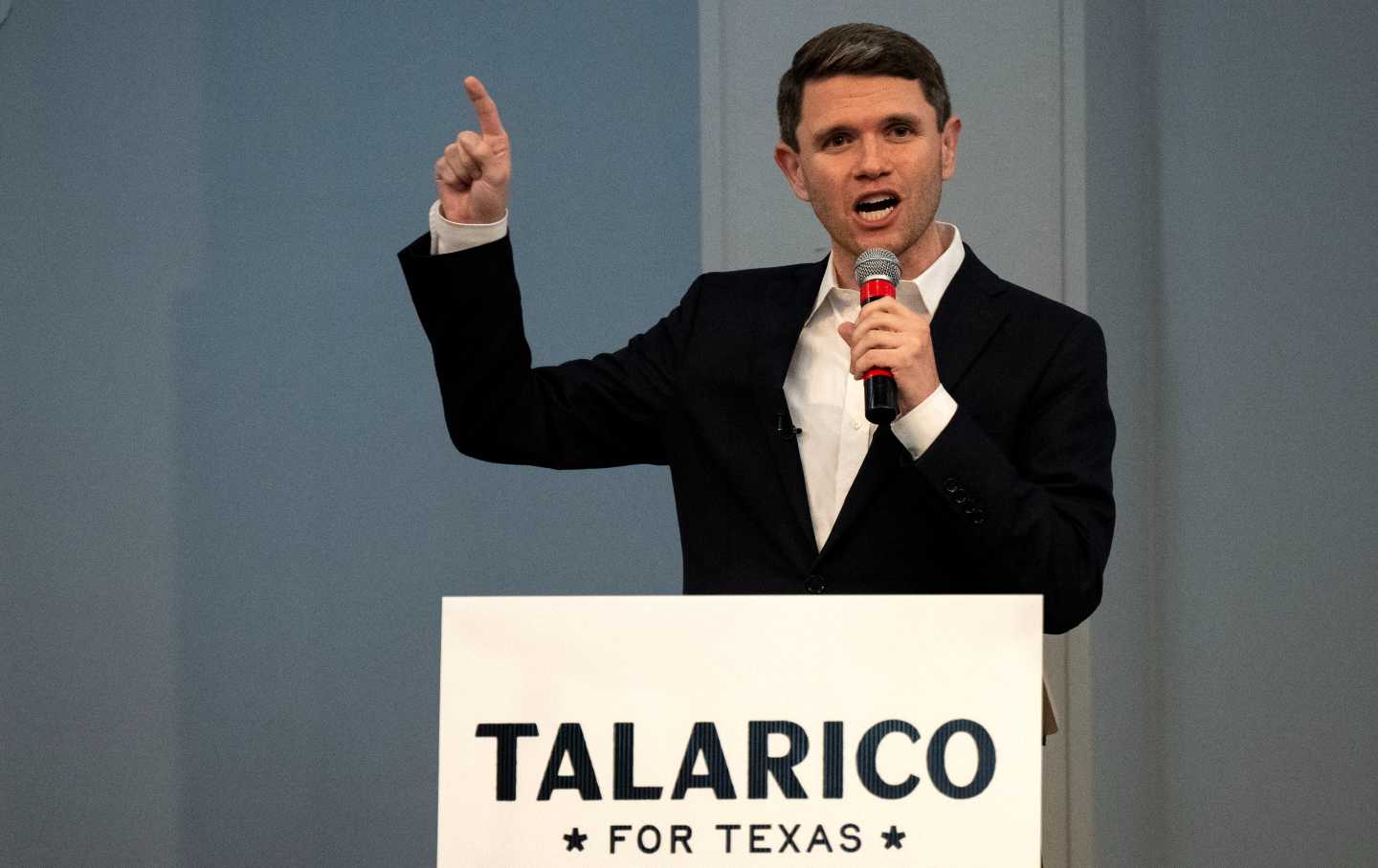
The proposition began as Senate Joint Resolution 34, authored by Republican State Senator Bryan Hughes. Sponsorship of the initial joint resolution was made up almost entirely of Republicans, with one notable exception: Democratic State Representative James Talarico, a former public school teacher who has previously voted against other parental rights legislation and has been an outspoken critic of policies like school choice and book bans. Talarico, a progressive rising star in Texas politics, is now running to be the Democratic candidate for the Senate race in 2026. (Talarico did not respond to a request for comment.)
But across the Texas legislature, the joint resolution had strong bipartisan support. Every Republican and two-thirds of Democrats voted to pass the resolution, including every Democratic State Senator, by a total 112-22 vote across both houses. To be offered as a constitutional amendment, the Texas legislature must first approve a joint resolution by a two-thirds vote in both chambers before a measure goes to the ballot, which this measure well exceeded.
Yet organizing in support of Proposition 15 has primarily been led by conservative PACs and advocacy groups—including Texans for Vaccine Choice, Texas Values, Texas Right to Life, and the Family Freedom Project, an affiliate of the Texas Home School Coalition. The proposition is part of the larger push of legislative advocacy for parental rights in Texas, which has often turned contentious and partisan. This year, the Texas Legislature passed a series of measures to expand parental authority in schools.
In June, Texas Governor Greg Abbott signed Senate Bill 12 into law, dubbed the “Texas Parents Bill of Rights,” giving parents broad authority over their children’s education in public schools, including consent over health services, counseling, and participation in clubs or organizations, and limits the implementation of DEI programs without parental approval.
Provisions of the law have already been challenged in court by groups like the ACLU of Texas. “SB 12 is one of the most extreme education censorship laws in the country,” according to Brian Klosterboer, a staff attorney with the ACLU of Texas, and the law threatens “the safety and privacy of transgender and nonbinary students” across the state. “Some politicians are trying to further their careers by silencing teachers and depriving students of educational opportunities,” wrote Shawn Thomas Meerkamper of the Transgender Law Center.
The measure reflects a concerted effort by Texas lawmakers to position parents as the primary decision-makers in public education—rather than teachers and educators—and extends their authority across curricular, administrative, and even symbolic domains. Senate Bill 13, also passed this session, allows parents to formally challenge library materials they consider inappropriate and gives school boards greater power in choosing which books students can access. Senate Bill 204 complements this by creating a handbook and structured process for parents to contest curricula, administrative decisions, or instructional content—essentially formalizing parental oversight across classrooms. Most controversially, Senate Bill 10 requires public school classrooms to display the Ten Commandments. A federal court temporarily blocked the law in August, though Proposition 15 has yet to experience the same level of organizing or scrutiny as other parental rights laws.
In 1996, Colorado attempted to pass a similar ballot initiative, which did not succeed. But if the Texas measure is approved, the state would be the first to add a parental rights amendment to their state constitution.
By embedding parental primacy in the founding document, the state would cement an anti-educator agenda that has quickly become a centerpiece of Texas conservatism. “We all want young people safe and to ensure every family has the freedom to decide what’s best for themselves” writes Avow Texas. “The answer is not bans, censorship, and extreme laws that create an unsafe environment for everyone.”
More from The Nation
A Horrific ICE Shooting Is Testing Mamdani’s Approach to Trump A Horrific ICE Shooting Is Testing Mamdani’s Approach to Trump
After a federal agent shot an immigrant in New York, activists are questioning Mamdani’s handling of the NYPD and his relationship with the White House.
Jane Doe: Courage and Dignity Jane Doe: Courage and Dignity
Allegations of gang rape and sex trafficking at Cornell University highlight persistent concerns about rape culture, even years after the #MeToo movement.

Why Democratic Leaders Keep Waging War on the Young Why Democratic Leaders Keep Waging War on the Young
The party's silver-haired establishment is caught up in an existential culture war.
The DNC Fight to Ban Dark Money in Presidential Primaries The DNC Fight to Ban Dark Money in Presidential Primaries
The inside debate.
Democrats Are Learning a New Political Language Democrats Are Learning a New Political Language
Candidates in 2026 are responding to an electorate that’s ready to abolish ICE, tax the billionaire class, and free Palestine.

Pete Hegseth’s High-Tech Barbarism Pete Hegseth’s High-Tech Barbarism
In livestreaming Nidal Hasan’s execution, the secretary of war is marking his territory in the snuff movie business—and radicalizing people along the way.

