
The Trump Regime Intensifies Its War on Activism—but Dissent Is Always Possible
The president is presiding over suppression unseen in the US for decades.
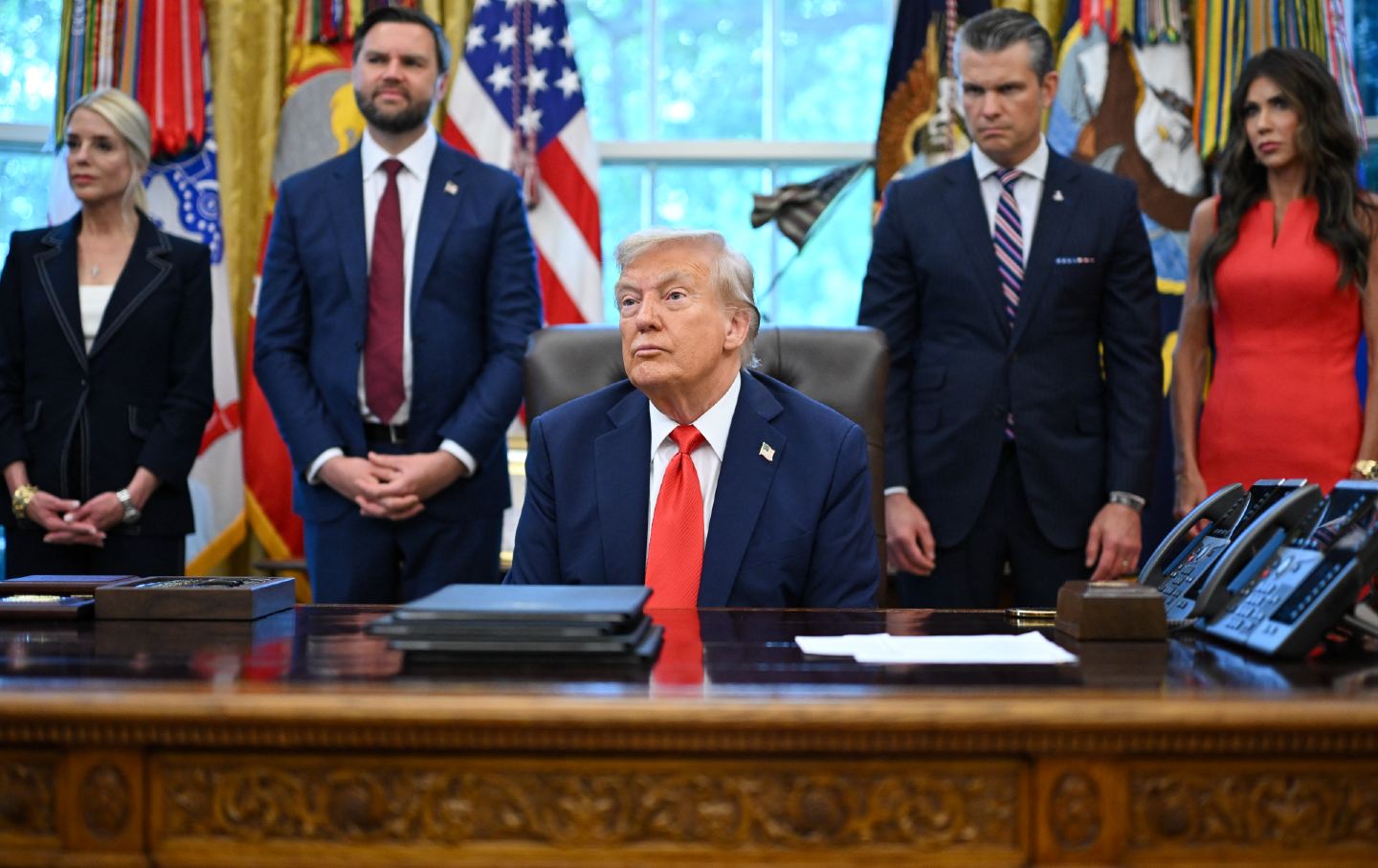
FCC Chair Brendan Carr’s threat to ABC was the stuff of Hollywood cliché: “We can do this the easy way,” the Trump appointee said in a recent interview, “or the hard way.” In the preceding days, the network’s Jimmy Kimmel Live! had become a target of conservative ire over Kimmel’s remarks on the murder of right-wing activist Charlie Kirk. So, with its affiliates’ broadcast licenses imperiled, ABC and its parent company, Disney, had opted for the easy way. Later that day, the network announced the indefinite suspension of Kimmel’s show—now quasi-overturned largely due to public pressure and protest.
The Trump administration and its MAGA devotees have carried out an astonishing attack on free expression in the weeks following Kirk’s horrific murder. Workers ranging from journalists to airline employees have been fired, and students expelled. Thirty-three House Republicans have called for the creation of a select committee to probe the “radical left’s assault on America.” Attorney General Pam Bondi promised, and then walked back, patently unconstitutional hate speech prosecution. Meanwhile, at the newly rechristened Department of War, journalists must function as Pentagon stenographers or risk losing their press passes. And, as guest host of Kirk’s podcast, Vice President JD Vance personally attacked The Nation’s journalism and spread misinformation about the magazine’s funding.
In his remarks at Kirk’s memorial service Sunday, Trump dismissed his critics as merely “screaming fascism over a canceled late-night TV show where the anchor had no talent and no ratings.” However, the right is clearly using Kirk’s death as cover for escalating the repressive tactics that have marked the second Trump term. Since his inauguration, the president has presided over a regime of government suppression unseen in the US for decades—a regime designed to chill activism and dissent.
The administration has pursued wide-ranging assaults on the media. In February, the White House blocked the AP from its presidential press pool because of the news agency’s refusal to adopt Trump’s “Gulf of America” coinage. Later, the administration seized control of pool assignments from the White House Correspondents’ Association. HuffPost and Reuters were out—Newsmax and The Blaze, in.
Last week, on the heels of his lawsuit against The Wall Street Journal, the president sued The New York Times for defamation. (A judge promptly dismissed the Times case, though Trump reportedly plans to refile.) Experts agree that his suits against news outlets are meritless, yet ABC and CBS’s parent companies settled with the president for the tidy sums of $15 million and $16 million apiece.
CBS delivered another line item on Trump’s media suppression wish list when it canceled Stephen Colbert’s Late Show this summer, and 60 Minutes’ top producer quit, citing infringement on the program’s journalistic independence. Outlets beyond US borders are feeling the squeeze, too: The administration is pushing to shorten the length of international journalist visas from five years to only 240 days.
Universities and museums are also among the administration’s many targets. The Smithsonian’s exhibits are currently under review, as the White House scours them for evidence of “woke” thought crimes, like paying undue attention to slavery. In its war on universities, the administration is holding federal funding hostage and threatening schools’ tax-exempt status, all in an attempt to bend higher education towards its conservative ideological goals.
The institutional wreckage is vast, but individuals have not been spared, either. Earlier this month, UC Berkeley notified 160 students and faculty, including acclaimed philosopher Judith Butler, that their names had been delivered to the Trump administration in connection with unspecified allegations of antisemitism. “Will I now be branded on a government list?” Butler asked in a letter published in The Nation, “Will my travel be restricted? Will I be surveilled?” And just last week, a judge ordered the deportation of Palestinian activist Mahmoud Khalil, a green-card holder and the husband and father of US citizens.
Nor are the rights of citizenship inviolable. Florida Representative Brian Mast introduced a bill that initially featured a provision granting Secretary of State Marco Rubio the authority to revoke the passports of American citizens accused of supporting terrorism. After critics pointed out that the provision could be used to police political speech, Mast proposed an amendment repealing it.
Jobs lost, papers revoked, names compiled: America has been in similar territory before. During the Red Scare of the 1940s and ’50s, millions of federal workers were vetted for potential communist associations; 2,700 were fired, and 12,000 more resigned. In Hollywood, hundreds were blacklisted, while university professors were dragged before the House Un-American Activities Committee. When playwright Arthur Miller—a longtime contributor to The Nation—applied for a passport in 1954, his application was denied because the State Department suspected that he harbored communist sympathies. Miller had wanted to visit Belgium to see a production of his now-classic McCarthy-era allegory, The Crucible.
The witch hunts subsided with the help of those who, when forced to choose between the easy way and the hard way, mustered the courage to take the latter path. Broadcaster Edward R. Murrow and his network, CBS, played an important role, producing a series of searing reports on Joseph McCarthy’s red-baiting demagoguery. But thousands of everyday Americans also braved the political headwinds to fight censorship and restore freedom of speech. In 1954, after Republicans lost the midterm elections, the Senate censured McCarthy. Twenty-two of his fellow Republican senators joined with Democrats to condemn him.
Dissent is always possible. A few weeks ago congressional Democrats pledged to introduce a bill to strengthen legal protections for individuals politically persecuted by the government. With the party out of power, the move is largely symbolic. However, given the Trump administration’s efforts to cow its political rivals into silence, even symbolic opposition is preferable to none at all. Liberal nonprofits have also banded together to fundraise in support of democracy-bolstering efforts, such as waging legal challenges to Trump administration policies.
In an editorial on McCarthy, Murrow urged Americans not to be “driven by fear into an age of unreason.” It’s difficult not to feel that we’re currently living through such an age. But America’s witch hunt fever has broken before—and it will again.
Become a Sustaining Donor This September
Between the reemergence of right-wing red-baiting and Donald Trump’s use of the chilling National Security Presidential Memorandum–7 to criminalize left political organizing, we’re seeing McCarthyism reborn before our eyes.
This assault on democracy cannot be ignored or wished away. Resisting it requires bravery in the face of threats and repression, a steadfast commitment to the truth, and the unwavering belief that we can—and will—overcome this darkness.
We must have an independent media that sets the record straight, unearths corruption and abuses of power, and advances a politics of justice and dignity for all if we’re to win this fight.
That’s why I’m writing to you today. This September, The Nation needs to add 100 monthly donors to sustain our progressive journalism. Your contribution makes the next investigative report, the next truth-speaking column, and the next pathbreaking essay all possible.
I hope you’ll support our work with a recurring donation today. If you donate $10 or more a month, we’ll send you a brand new “Hands Off the Free Press!” sticker to recognise your commitment to our cause. Please, donate today.
Onward,
Katrina vanden Heuvel
Editor and Publisher, The Nation
More from The Nation
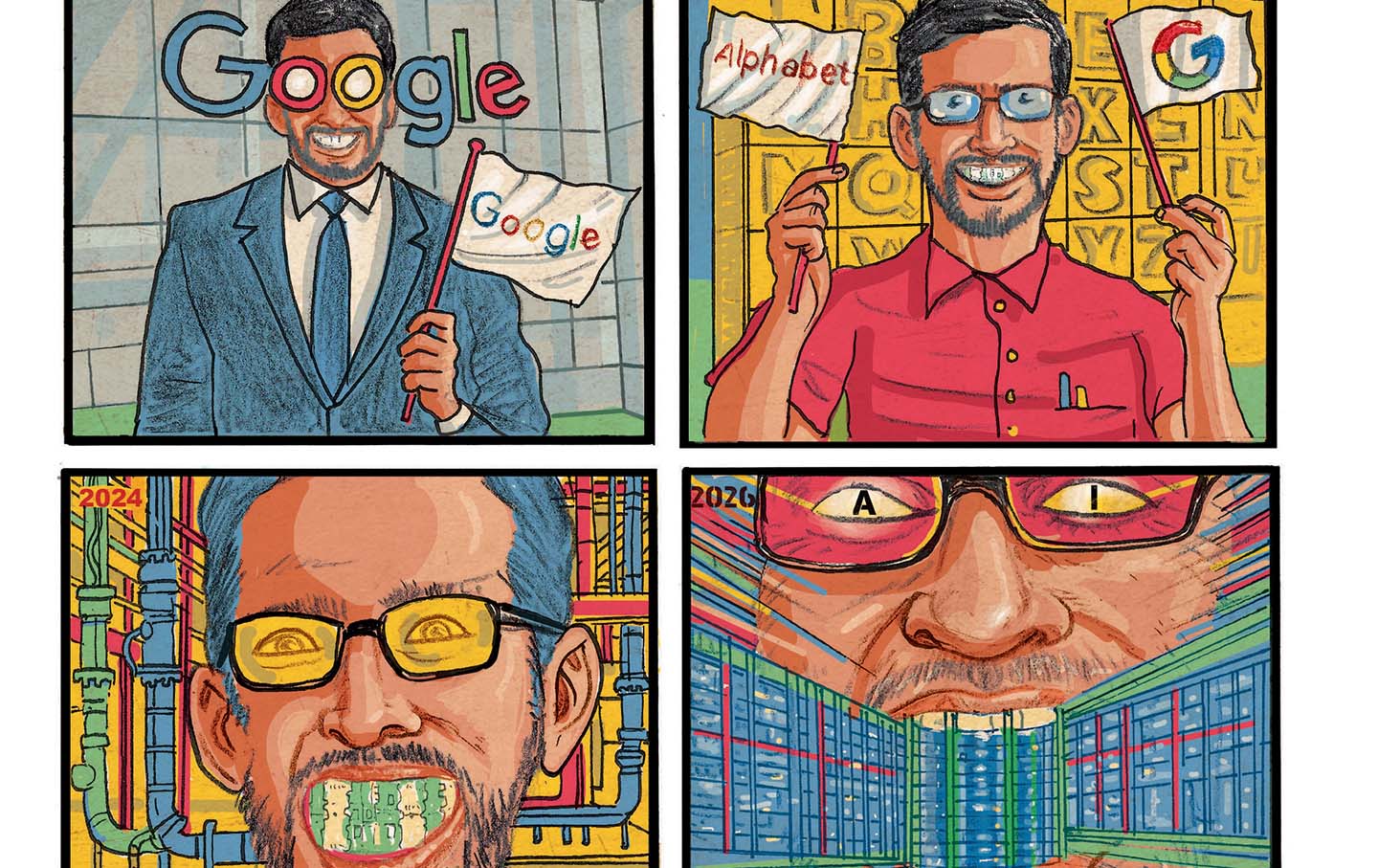
CEOs Are Losing Control of AI CEOs Are Losing Control of AI
With no slowdown from Trump’s administration.
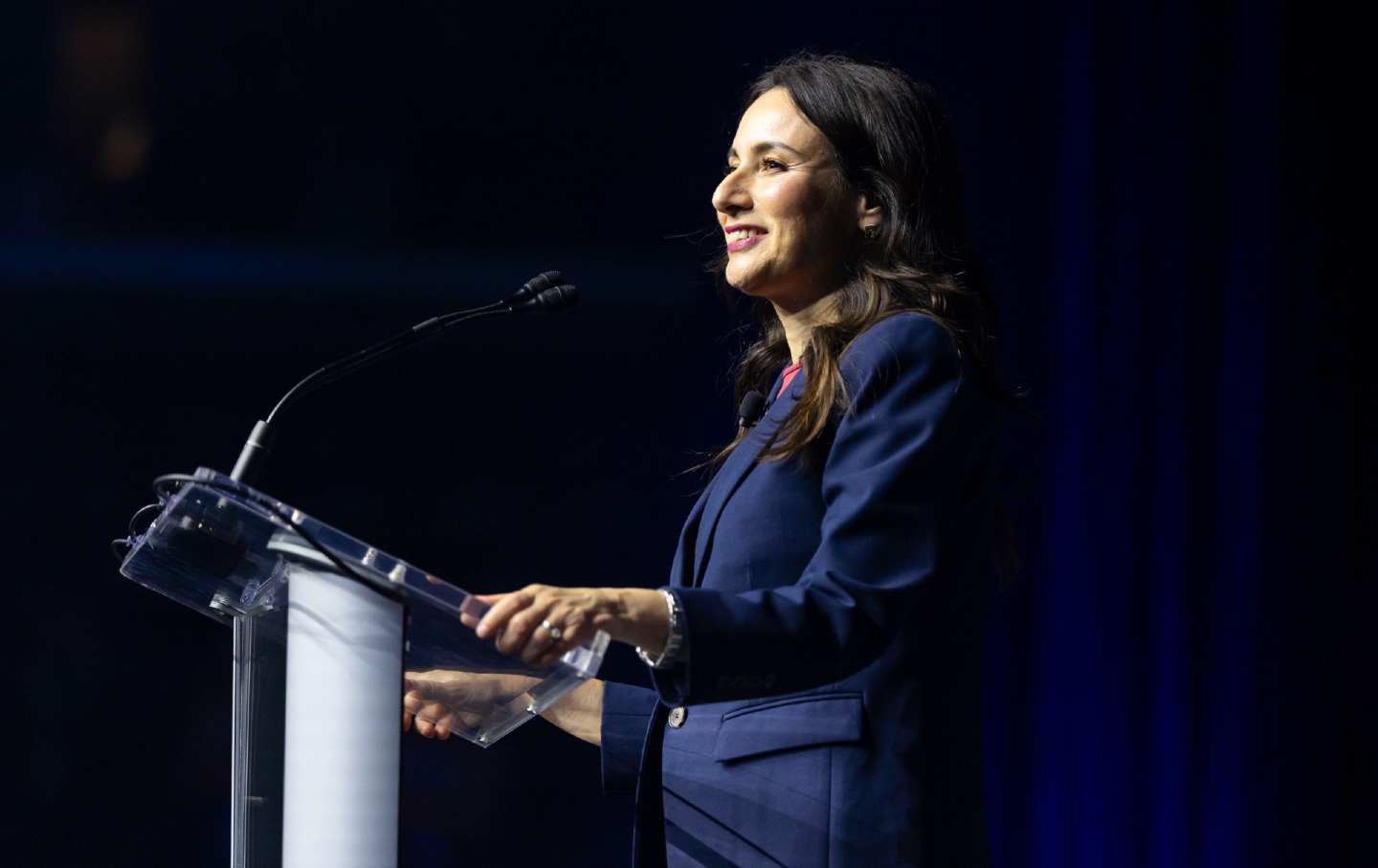
Gina Hinojosa: “We Flip Texas, and It’s Over” Gina Hinojosa: “We Flip Texas, and It’s Over”
Talking to Texas gubernatorial candidate Gina Hinojosa about what redistricting could mean and how a new generation of Democrats is speaking more directly to voters.
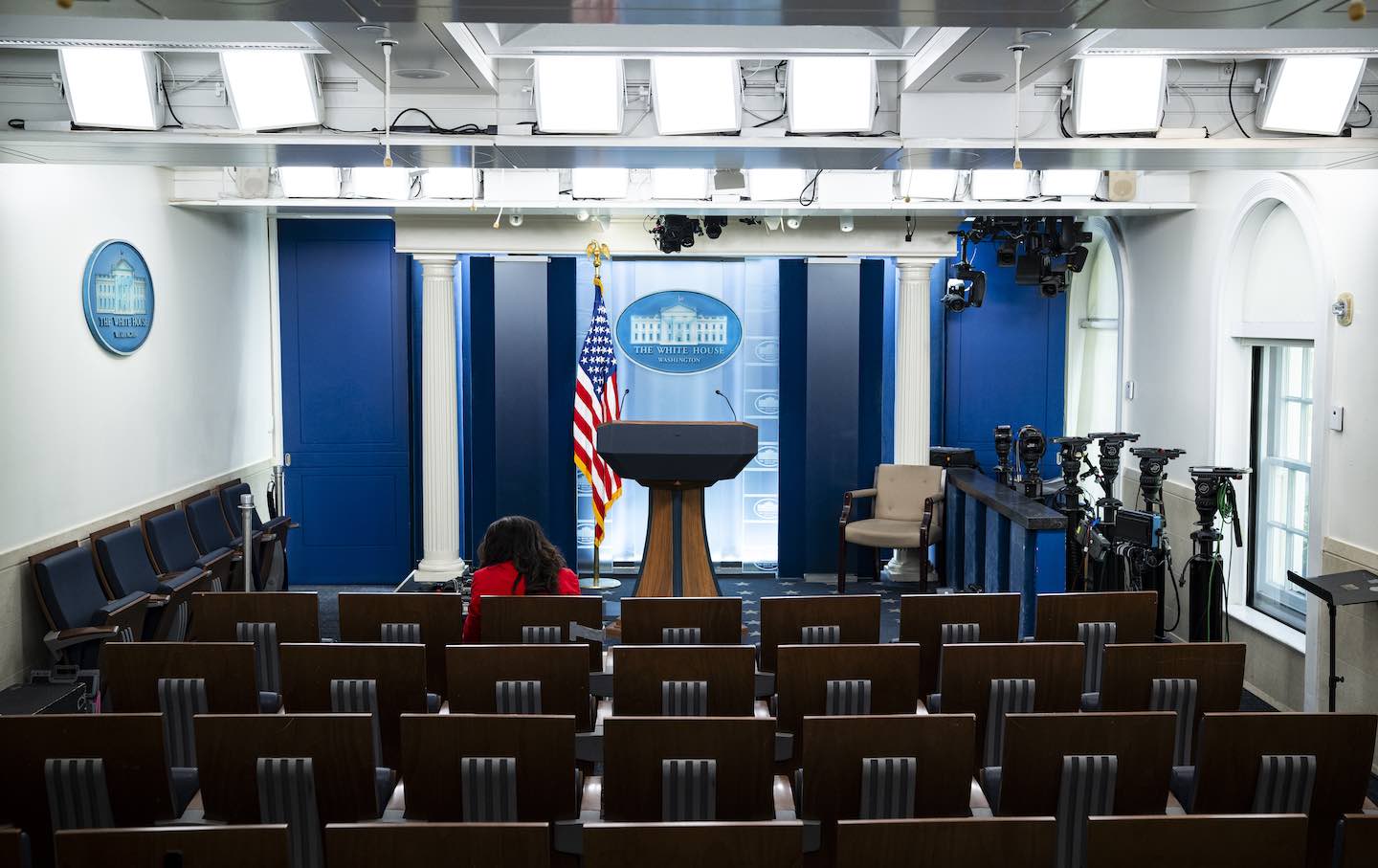
Trump Wants to Keep Journalists Out of the White House. He Should Get His Wish. Trump Wants to Keep Journalists Out of the White House. He Should Get His Wish.
The president has banned MS NOW, CNN, and Politico from attending press briefings. The rest of the media should respond with a boycott.
The GOP’s Incredible Shrinking Senate Map The GOP’s Incredible Shrinking Senate Map
Trump has so badly damaged the Republican Party’s brand that strategists are contemplating bitter fights—and losses—in races they’d been banking on as sure things.
Bernie Sanders: “People Are Sick and Tired of the Status Quo. People Want Change.” Bernie Sanders: “People Are Sick and Tired of the Status Quo. People Want Change.”
Exclusive: Read the text of a major foreign-policy address delivered by the independent senator at Riverside Church.

