The Way Forward for Ukraine
The country is facing a crisis of survival, and its entire elite should take responsibility for bringing the war to a close.
After the drama of Donald Trump’s meetings with Vladimir Putin in Alaska and Volodymyr Zelensky in Washington, DC, the prospect of a summit between the Russian and Ukrainian leaders remains elusive. Trump had once hoped to broker one, with himself as master of ceremonies. To his dismay, Putin has refused to commit to it. Recently, Trump seemed to push the idea that Zelensky and Putin ought to work it out between themselves.
European leaders are equally frustrated. Constantly repeating the mantra “No decisions about Ukraine without Ukraine,” they want to validate it by getting Zelensky and Putin together. But even if such a meeting occurs, it will not be enough. An encounter between the two men has to have substance, not only symbolism.
The agenda is long and will need to be well-prepared. Negotiations to end the US war in Vietnam lasted for five years, starting in 1968. They produced occasional US “bombing pauses” but no ceasefire until the peace talks finally reached an agreement. This is the normal pattern in the history of conflict: You fight on the battlefield at the same time as at the negotiating table.
Throughout the war, Zelensky and his Western partners have shown much less interest in ceasefires or peace talks than in seeking Western weaponry to win the war. They stuck with the illusion that battlefield successes and economic sanctions would give them military victory over Russia. Morale among Ukrainian troops was higher than among their Russian counterparts because they were defending their homeland, and this, they claimed, would allow Ukraine to prevail over the Russian Goliath.
The media and most armchair generals in the West still support this wishful thinking. For the sake of maintaining morale, there is widespread self-censorship. Only rarely do Ukrainian or Western reporters mention the number of casualties among Ukrainian troops or the rates of draft-dodging and desertion. Rare, too, is any mention of opinion-poll findings that millions of Ukrainians want their government to press for peace talks and pursue a political path to ending the war. In June, the Kyiv International Institute of Sociology found that 43 percent of Ukrainians were willing to accept de facto, but not formal, recognition of Russian control of the occupied territories.
The top issues for discussion are Ukraine’s security status and the provision of guarantees. Mutual distrust is massive. The history of lies is long. Western governments cite Putin’s denial of any intention to invade Ukraine even as his troops began their advance in February 2022. As Putin sees it, the root cause of the conflict was Western governments’ campaign to get Ukraine to abandon its constitutional posture of strategic neutrality and join NATO.
A few weeks after Putin’s full-scale invasion in 2022, Russian and Ukrainian delegations reached a draft agreement during talks in Istanbul. The Ukrainians made the key concession that Putin had long demanded, declaring they would go back to neutrality. But Boris Johnson, then the prime minister of the United Kingdom, rushed to Kyiv with Joe Biden’s backing to urge Zelensky to abort the deal and return to war.
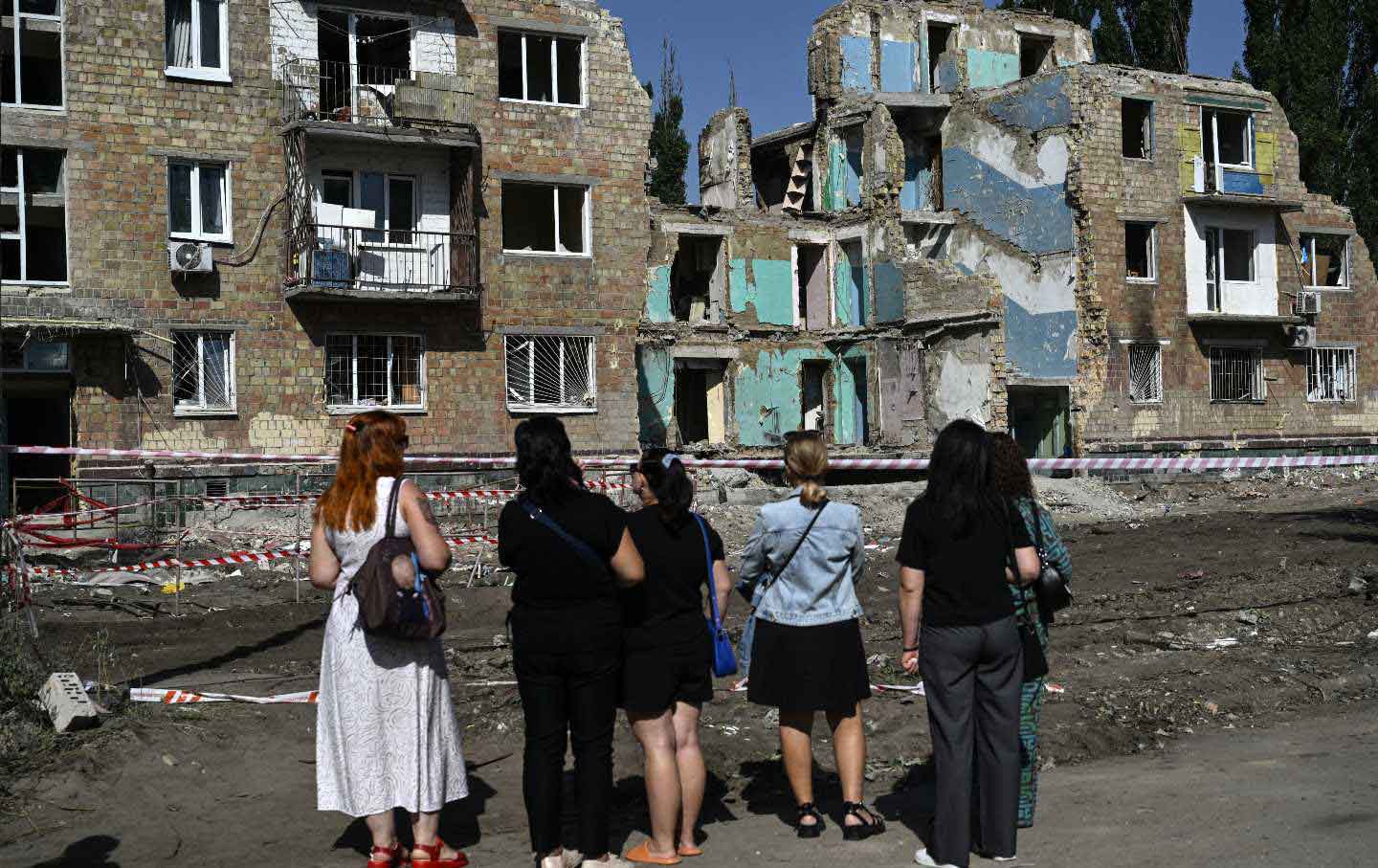
Today, after hundreds of thousands of troops have been killed on both sides, the size of Ukraine’s territory is less important than its ability to function as a democratic state with aspirations to join the European Union. Putin’s demand for Ukraine’s “demilitarization” has to be resisted. US and European defense officials are discussing military reinforcements on land, sea, and air, which could deter Russia from violating any peace deal.
Trump has promised not to send US troops. He is concerned that Ukraine and its European allies are escalating the risk of all-out war. During his February beatdown of Zelensky in the Oval Office, Trump unleashed one phrase that deserves to be remembered: “You are gambling with World War III!” Ever the narcissist, Trump usually reserves his outbursts for what he perceives as personal attacks or threats to his dignity. This was a rare case of political anger. It included an element of fear. After all, Trump’s job forces him to look into the nuclear abyss.
If peace talks progress, all signs indicate that Kyiv will have to make painful concessions. The Russians cannot be forced out of the large chunk of Ukrainian land they occupy. Zelensky will argue that the prize of peace is an end to the loss of soldiers’ and civilians’ lives and the return of thousands from prisoner-of-war camps. Right-wing nationalists could easily sneer at the swapping of land for life and liberty, calling him a traitor, a sell-out, or just plain naive.
The best way for Zelensky to avoid this is to form a government of national unity. There are a handful of well-known figures, including former prime minister Yulia Tymoshenko, former president Petro Poroshenko, Kyiv Mayor Vitaly Klitschko, and former army chief Valery Zaluzhny, who ought to be with Zelensky supervising the negotiations. Making peace with Russia after the trauma of the past three years will require great political courage. Zelensky has shown it, but he needs to bring Ukraine’s other leaders along with him. The country is facing a crisis of survival. The entire elite should take responsibility for making the necessary concessions. Zelensky must not be forced to bear the burden on his own.