How Seattle’s Katie Wilson Launched Her Mayoral Campaign as a Social Movement
The precariat is rising.
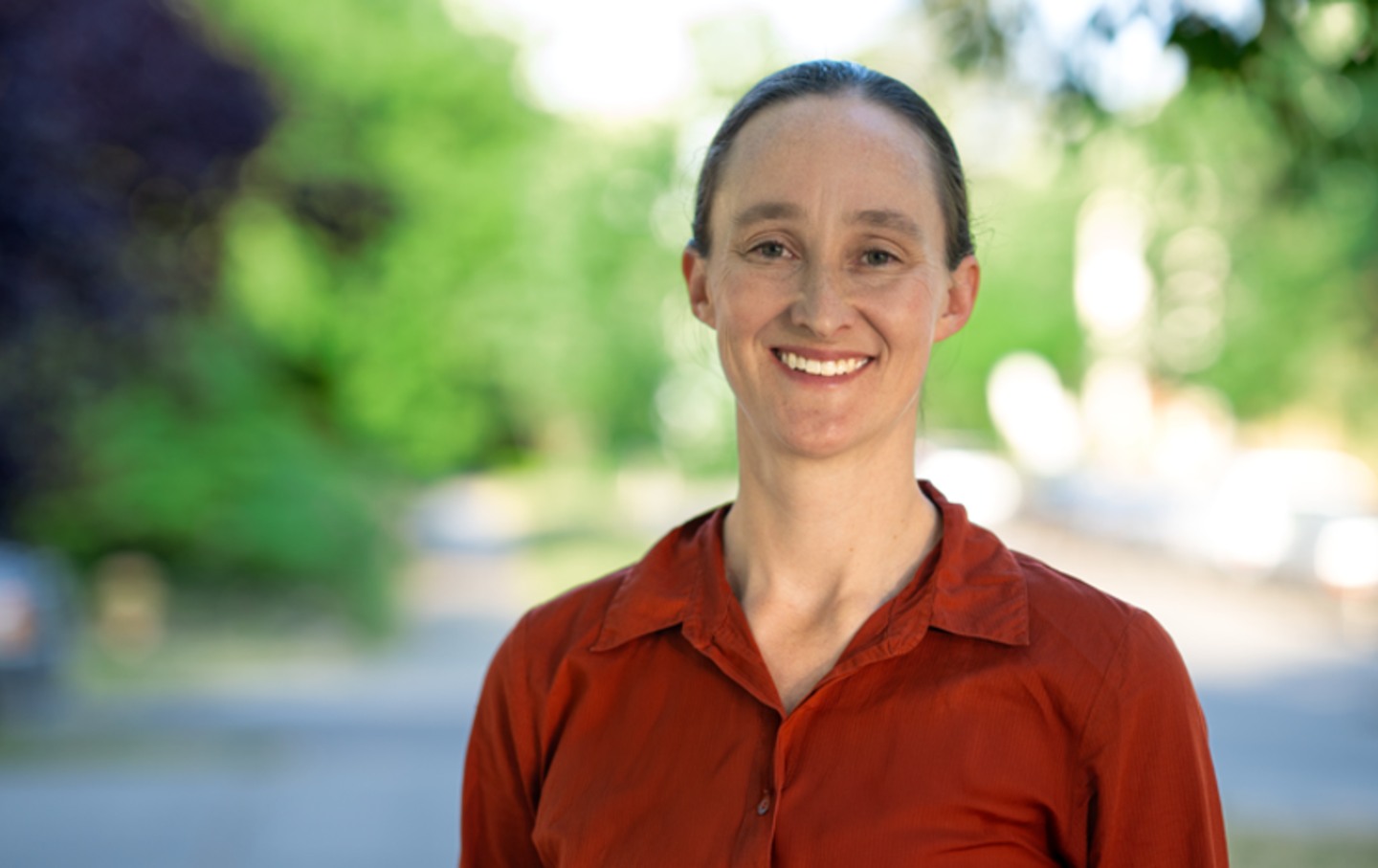
Walking into Seattle mayoral candidate Katie Wilson’s election night party, I recognized very few people. The mainstream Democratic standard-bearers were all missing. In their place was a crowd of 20-, 30- and 40-year-olds, all excited and inspired by a candidate who spoke their language and lived their life. Throughout the night, it became a greater and greater exercise in power, new progressive pragmatic political power.
Six months ago, the current mayor of Seattle, Bruce Harrell, was on a glide path to reelection. He had locked up union support, endorsements from Democrats across the board from the governor to Representative Pramila Jayapal, as well as business support. Bruce was and is a transactional, compromised, and “getting along” Democrat—listening to Amazon and the Seattle Chamber of Commerce as much as to actual voters. But two events made him stumble: the inauguration of Donald Trump and a Seattle ballot initiative in February for social housing funded by an excess compensation tax on corporations. Bruce did the bidding of Microsoft and Amazon and campaigned against the social housing initiative, with his face on all the opposition flyers. The result? It seems that the voters were angry with Trump, the oligarchs, and with Harrell for standing with them.
That election got Katie Wilson thinking that someone should challenge Bruce Harrell, and why not her? Katie lives in a one-bedroom apartment with her husband and 2-year old daughter. She does not own a car. For several years her wages were so low that she qualified for Medicaid. And in those precarious years of working for economic security for others while she herself had little, Katie was responsible for organizing minimum-wage increases across greater Seattle. She founded the Transit Riders Union and gained free transit for K-12 students and low-income residents of Seattle. She authored the Jump Start tax on corporations calculated as a percentage of total salaries more than $200,000.
So Katie launched her campaign as a social movement. She relied on Seattle’s unique Democracy Vouchers, through which every adult resident can contribute up to $100 from a city fund to candidates they support. With Democracy Vouchers, Katie stayed even with the mayor. And even though Harrell enjoyed outside PAC expenditures, Katie garnered over 50 percent of the vote, leaving Harrell behind at 42 percent. Just as in the Big Apple, it is not over yet, with both Katie and Bruce Harrell proceeding to the general election, thanks to Washington’s top-two electoral system, by which the top two primary vote–getters advance, regardless of party.
This election sent out more signals for and from the younger, disaffected, and financially stressed-out voters. The lone progressive City Council member, Alexis Mercedes Rinck, a 30-year-old former waitress (sound familiar?), won with 78 percent. The current City Council president, who just last year tried to roll back the minimum wage for gig workers, was losing by 22 percent to a progressive policy leader. The Republican City Attorney also lost by 22 percent to a progressive former federal prosecutor, Erika Evans, who refused to work for the Trump Justice Department. Even a sitting school board member, who is the policy director of the Seattle Chamber Commerce, has been beaten out by a little-known young mom.
The precariat showed its clout all around Puget Sound. In the mayoral race in Tacoma, Anders Ibsen, an early proponent of paid sick days and minimum-wage increases, easily outdistanced—by 20 percent—the second-place candidate backed by the realtors and apartment owners. In Bellevue, the progressive Democratic state senator beat a business Democrat two to one. In a battleground district, a newly appointed progressive Democratic state senator is leading a four-term Republican.
In greater Seattle, Girmay Zahilay, is the leading candidate for the King County executive, with 44 percent of the vote. Girmay was born in a refugee camp in Sudan and came to Washington state as a 3-year-old. Girmay wants to set up social housing for workers across King County. His general election opponent will be Claudia Balducci, a centrist Democrat, who received 30 percent.
Voters in Seattle and the surrounding Puget Sound are angry and rebelling against Donald Trump and his allied oligarchs and corporations. These voters stand against crony capitalism. They fear the closing fist of fascism. They also reject the transactional politics of the Democratic establishment and the camouflaged (or not) Trump supporters and those who look the other way. These worker-citizens are not waiting to rise up—they are voting and saving our democracy.