Democrats Keep Misreading the Working Class
Many in the party see workers as drifting rightward. But new data show they’re more progressive than ever on economic issues—if Democrats are willing to meet them there.
Zohran Mamdani won New York’s Democratic mayoral nomination with the most votes ever for a primary winner in the city. The democratic socialist did so with an agenda that spoke to the kitchen-table economic issues that, following the debacle of the 2024 election, Democrats generally acknowledge they have to get better at discussing. So what was the reaction of party leaders and the media echo chamber? A meltdown so severe that it has sparked widespread talk of a “civil war” within the party. On one side, the line goes, are younger, highly educated, pro-Palestinian progressives who embrace economic populism; on the other, older Democratic stalwarts who are pro-Israel, economically moderate, in tune with the working class, and cautious about rocking the boat. But that’s not what the numbers say.
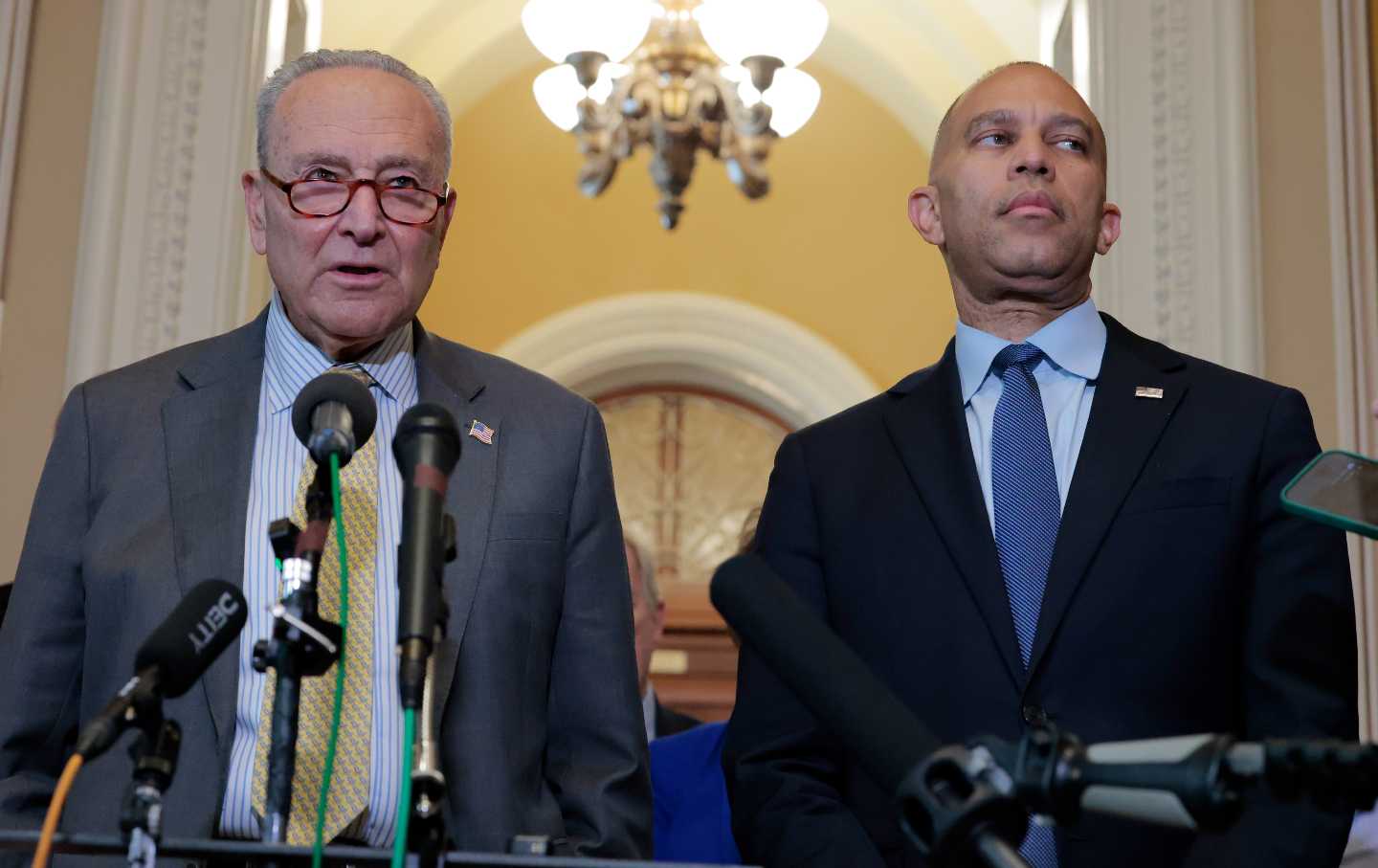
Advisers to House minority leader Hakeem Jeffries—who, like his counterpart in the Senate, Chuck Schumer, resisted endorsing Mamdani after the primary—referred to the city’s rising wave of democratic-socialist-backed candidates as “Team Gentrification.” Yet exit polls reveal a different reality: Mamdani attracted support from a broad swath of New Yorkers by running a campaign relentlessly focused on working-class cost-of-living concerns.
Unfortunately, top Democrats refuse to accept the notion that Mamdani’s economic populism is the key to his success. Or that the appeal of a boisterous tax-the-rich message might extend beyond urban progressive enclaves. Some go as far as Michigan Senator Elissa Slotkin, who says that Democrats need to stop demonizing rich people. But a recent report by the Center for Working-Class Politics (CWCP) upends Slotkin’s assertion. Analyzing data from three long-running national surveys, the report shows that working-class Americans have grown more progressive over the past two decades—not just on economic justice but also on immigration and civil rights. Today’s working class stands farther to the left than when it helped elect Barack Obama in 2008.
Why, then, do so many high-ranking Democrats imagine that workers are reactionary? Because the middle and upper classes are moving leftward at a faster pace, creating a perception gap. As higher-income, college-educated voters embrace progressive positions on climate change, LGBTQ rights, and other issues, working-class voters—despite their own leftward shift—appear comparatively conservative. This distorted narrative misleads Democratic strategists and journalists alike.
Far from being unreachable, working-class voters remain ideal Democratic targets, provided the party emphasizes the bread-and-butter economic issues that most resonate with them. The CWCP report confirms that working-class Americans strongly support economically progressive policies like increasing the minimum wage, protecting jobs from outsourcing, boosting Social Security, and taxing the wealthy. There are nuances: Middle- and upper-class voters now surpass working-class voters in enthusiasm for progressive priorities like taxing the rich and national healthcare. And while workers favor redistributive policies, their support diminishes somewhat when the proposals involve tax hikes or expanded federal bureaucracy.
Nevertheless, working-class voters remain notably left-wing on economic issues. Even if they hold moderate views on cultural issues, they would likely support Democrats if presented with a compelling economic agenda—in 2026 and beyond.
To illustrate this point, the CWCP examined Trump’s 2020 working-class supporters, finding an electorally meaningful segment with moderate to progressive social views and progressive economic positions. Over 20 percent of those voters backed increased spending on public schools and Social Security, higher taxes on the rich, and a higher minimum wage; roughly half of them also held moderate or progressive social views. In tightly contested elections, winning even a small portion of these voters could tip the balance.
Democrats ignore these voters at their peril. Kamala Harris struggled to engage working-class voters despite economic proposals that would have improved millions of lives. A key reason was her campaign’s reluctance to turn up the volume on economic populism.
To rebuild a durable majority, Democrats need candidates who consistently prioritize egalitarian economics. This doesn’t mean abandoning other social causes. But it does mean clearly emphasizing jobs, wages, housing, healthcare, and public services—making these the centerpiece of Democratic campaigns. It also means doing what Mamdani did: genuinely meeting working-class voters where they are, as economically progressive, skeptical of elites, and impatient for tangible results.
Surveying democracies worldwide in 1960, the sociologist Seymour Martin Lipset observed that “in virtually every economically developed country the lower-income groups vote mainly for parties of the left, while the higher-income groups vote mainly for parties of the right.” This described the post–New Deal–era voting patterns that persisted until a decade ago in the US. But since Trump’s 2016 victory, class has become largely dealigned from voting.
Democrats still have time to renew their fortunes by doing battle with economic elites both inside and outside their coalition. Mamdani proved that with his June victory, and he’s working hard to expand the appeal to affordability in the general election—winning endorsements from unions that had backed former governor Andrew Cuomo in the primary. But it would be easier if Jeffries and Schumer looked around and recognized that voters get excited about Democratic nominees who embrace real economic populism, not the priorities of the donor class.
Become a Sustaining Donor This September
Between the reemergence of right-wing red-baiting and Donald Trump’s use of the chilling National Security Presidential Memorandum–7 to criminalize left political organizing, we’re seeing McCarthyism reborn before our eyes.
This assault on democracy cannot be ignored or wished away. Resisting it requires bravery in the face of threats and repression, a steadfast commitment to the truth, and the unwavering belief that we can—and will—overcome this darkness.
We must have an independent media that sets the record straight, unearths corruption and abuses of power, and advances a politics of justice and dignity for all if we’re to win this fight.
That’s why I’m writing to you today. This September, The Nation needs to add 100 monthly donors to sustain our progressive journalism. Your contribution makes the next investigative report, the next truth-speaking column, and the next pathbreaking essay all possible.
I hope you’ll support our work with a recurring donation today. If you donate $10 or more a month, we’ll send you a brand new “Hands Off the Free Press!” sticker to recognise your commitment to our cause. Please, donate today.
Onward,
Katrina vanden Heuvel
Editor and Publisher, The Nation