
“They Wanted to Humiliate Us”: Israel’s Abuse of Freedom Flotilla Activists
One of the organizers tells The Nation about the sleep deprivation, psychological torment, and dehumanization she suffered at Israel’s hands.
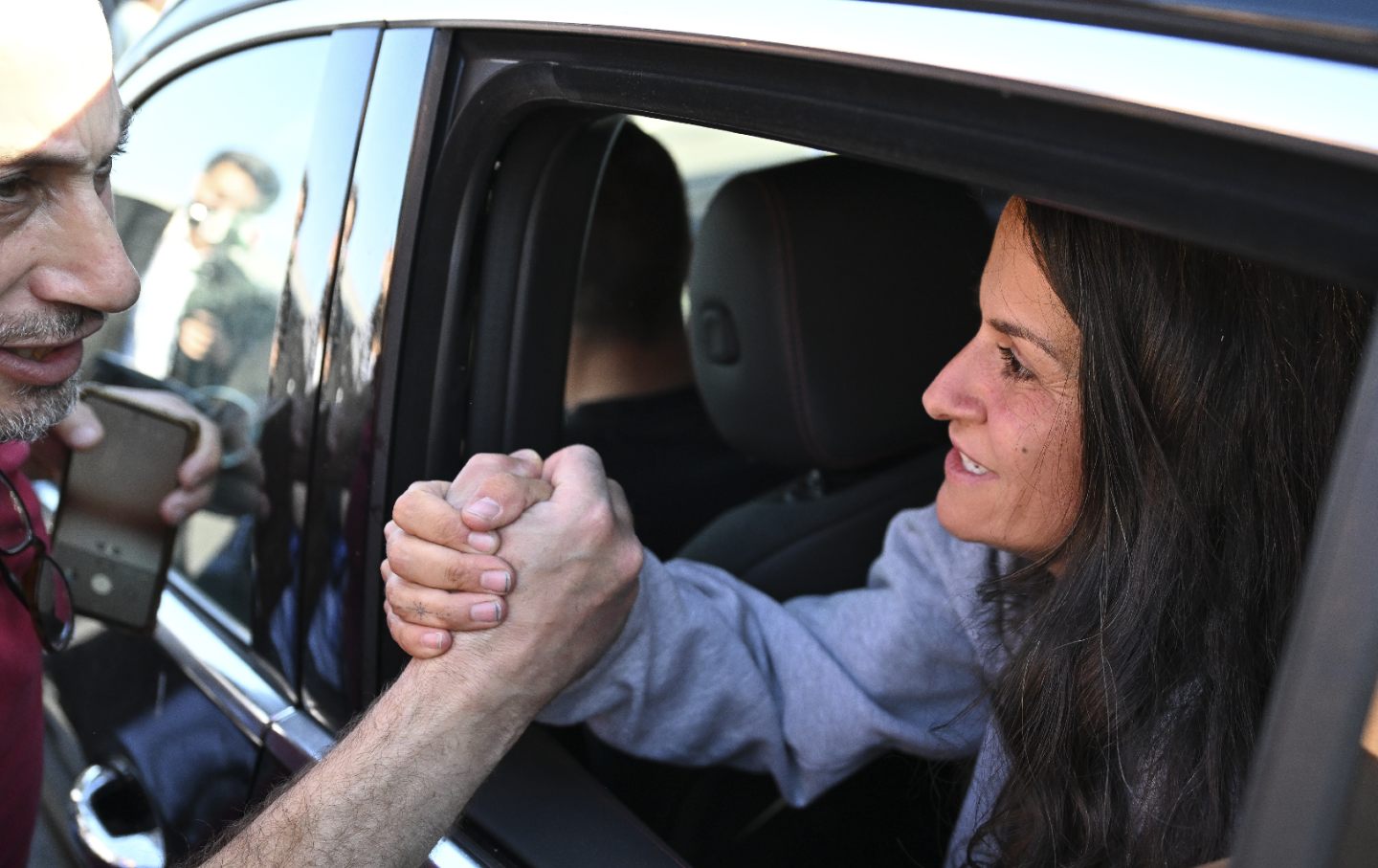
Roughly a month ago, the world watched as a small civilian boat called the Madleen attempted to reach Gaza with lifesaving aid. The ship, which was part of the larger Freedom Flotilla Coalition, was seized by Israel, and all 12 international activists on board were detained and deported, an action that was widely described as a violation of international law. One of them was German activist Yasemin Acar. Back at home and grappling with grief for the still-suffering Palestinians, Acar told The Nation about the inhumane conditions that she and fellow volunteers were subjected to by Israeli authorities while in detention.
The Madleen had been sailing for roughly a week when the raid occurred. At the time of its voyage, fuel had not entered Gaza for almost 100 days, and dozens of Palestinians were being shot and killed at so-called “aid” sites backed by Israel and the United States—something that continues to this day.
The trip was relatively smooth until the ship was about 100 nautical miles away from the city of Ashdod in Israel. Then, Acar explained, the Madleen began to experience interference in its communications, and a quadcopter hovering above dropped an unknown substance that caused burning in the eyes and nose.
Three Israeli navy ships and four speedboats approached the Madleen before roughly 20 Israeli soldiers boarded the ship. The activists were taken to Ashdod later that evening, where they were ordered to dispose of any symbols of Palestine. Instead, Acar wrote “Free Palestine” on the back of her white shirt with a marker. She was later forced to remove that shirt, too, during a strip search. “You could tell that they hated us.… they know we don’t have any weapons, but they just wanted to humiliate us,” Acar said.
The dehumanizing conditions continued. Acar told The Nation that she was kept awake for roughly 30 to 40 hours. If Israeli authorities in Ashdod noticed them dozing off, they would be yelled at to wake up, as they were “not allowed to sleep,” she said. During this time, Acar, along with fellow Madleen volunteers Greta Thunberg, Rima Hassan, and Thiago Ávila, were taken into a separate room by longtime IDF spokesperson Arye Shalicar and asked to watch an IDF-produced documentary about the October 7 attacks. “We were very clear in our message that we’re not interested in their propaganda and their brainwashing,” Acar said.
“I said, ‘If you don’t watch the video of the genocide that you’re committing, we don’t want to watch the video that you are using to manufacture consent for your genocide,” Ávila, a Brazilian activist on board the Madleen, told the CBC.
The psychological torment continued. “They told us that there is no genocide, that there is no civilian killings, there is no starvation. They even told me there is no Palestine. These are the things that I was told constantly, over and over again. I was even told that it’s in my head. Palestine is just in my head,” Acar explained.
Acar said that the activists were separated and ordered to sign deportation documents that claimed they had “illegally” entered Israel. The Israeli authorities pressured Acar to sign, saying some of her fellow volunteers had already done so. Some of the documents, she said, were written only in Hebrew. While four of the volunteers signed that day, Acar and seven others continued to refuse. Ávila and Acar had agreed that, as lead organizers of the mission, they would try to remain in detention longer, ensuring that the others would return home safely to continue their advocacy.
The remaining activists were moved to Givon Prison. Acar and Hassan, a French Palestinian member of the European parliament, were separated from their shared cell for writing “Free Palestine” and “Israel terrorists” on the walls, with Hassan being moved into solitary confinement. Ávila was also put into insect-infested solitary confinement for going on a hunger and thirst strike in solidarity with the Palestinians who were, at that very time, being denied food and water by Israel, he told CBC. “It really deeply hurt them that they cannot hurt us, and that’s due to the fact that we had a great media campaign, and that the world was literally watching,” Acar told me.
By June 16, all of the activists had been deported, with French nationals Pascal Maurieras and Yanis Mhamdi and Dutch national Marco Van Rennes the last to be released. While they never reached Gaza physically, the news of their courage emboldened activists elsewhere. On the same Monday that the activists were detained, about 1,000 volunteers departed from Tunisia in the Sumud caravan, an overland vehicle convoy that intended to travel to Rafah to challenge the blockade, while others prepared to set out on foot to join the Global March to Gaza. While governments fail time and time again—Libya blocked the caravan from proceeding, and Egypt continues to persecute volunteers organizing with the initiatives—Palestine continues to spark civilian action.
After the Madleen’s interception, hundreds of Palestinians also gathered by Gaza’s port to show gratitude for the efforts of the volunteers, hailed as hopeful representatives of the free world. Rana Al-Zebda, one of demonstrators, said, “Despite the shelling and threats, hundreds of children, women, and youth stood here today by Gaza’s coast to say: Thank you. You’ve engraved your names into the heart of Palestine and the soul of Gaza.”
“We realized that the Palestinians in Gaza had so much hope when they started talking to us and sending their videos and waiting at the beach,” Acar told me. “These people are just so used to going on Instagram, showing their most vulnerable moments, crying over the bodies of their children. To make the world believe that they are suffering.… And this time around, they went and made videos saying we are not alone.”
Popular
“swipe left below to view more authors”Swipe →Despite bureaucratic warfare and intentional drone attacks against the Freedom Flotilla, Acar was determined to set sail with the Madleen. “When we were attacked in Malta. We literally took 24 hours to say we are going to do this,” she told me, referring to the attack on their Conscience vessel in May. And there was a determination that persisted despite the attack campaigns and death threats against her, despite her mother’s worries.
“I’ve gone through house raids, broken ribs, being hospitalized three times by the German police, and every four weeks, the cops show up at my house to intimidate me.” For her, getting on the Madleen was another way to protest against German complicity in Israel’s genocide. “I’ve used my passport to hold Germany accountable for aiding and abetting the genocide in Gaza and the ethnic cleansing of Palestine.”
While in her home in Berlin, Acar held back tears—“I keep my tears for when Palestine is free,” she said—and reminded me that this is all about Palestine. “Watching a genocide for 20 months nonstop, people get accustomed and used to it. People become paralyzed,” Acar explained. “I don’t believe I’m a hero. I believe that if we act like we are doing something out of the ordinary, people will distance themselves from their real responsibility. We all have the responsibility to get up. We have to use our bodies, everything that is ours, that belongs to us.”
The Freedom Flotilla sent off their latest boat, the Handala, toward Gaza on Sunday, with 21 international activists and journalists on board.
More from The Nation
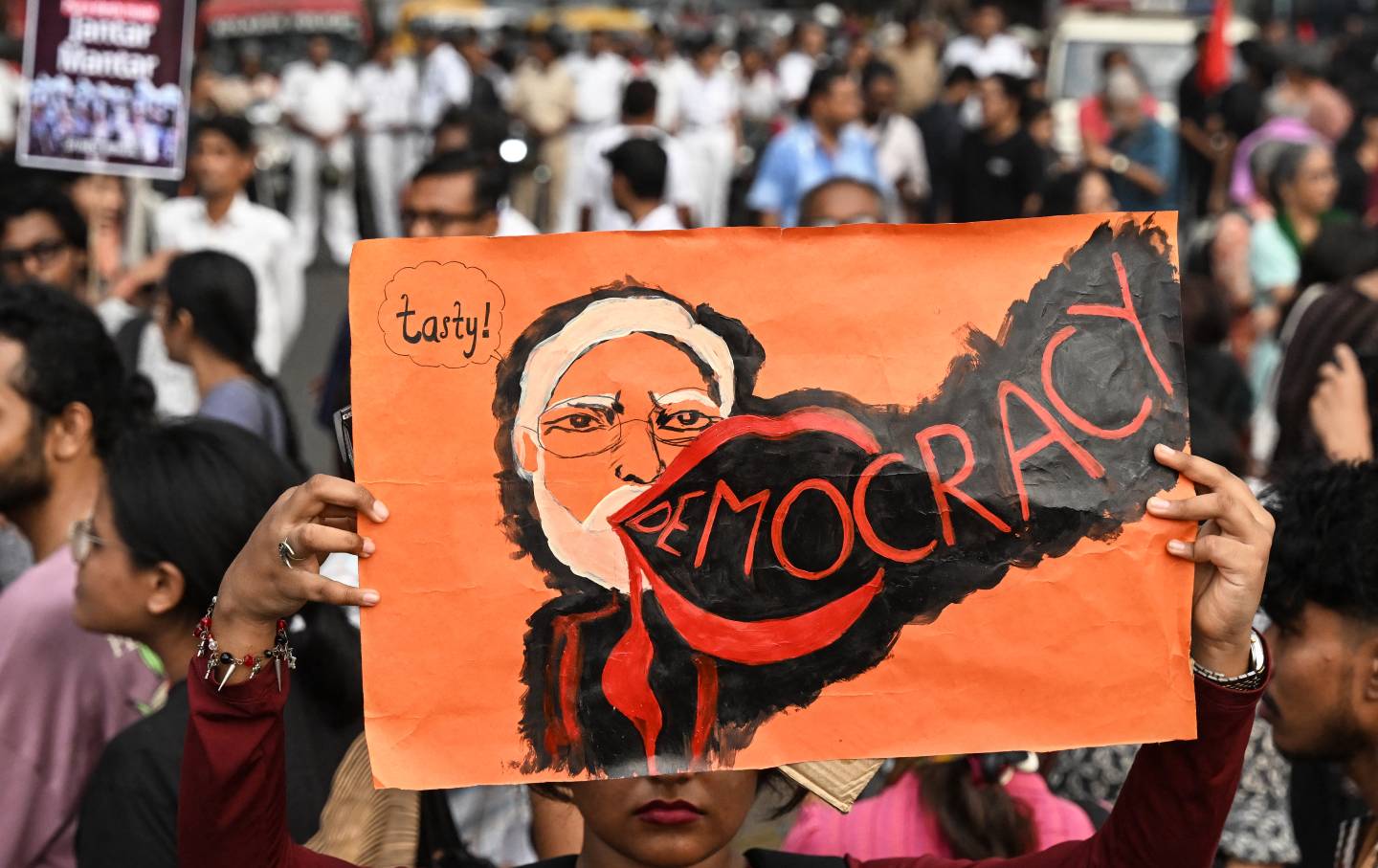
Inside India’s Gen Z Cockroach Janta Movement Inside India’s Gen Z Cockroach Janta Movement
Young Indians are challenging the purge of voter rolls by Modi’s right-wing government. Shrishti Khanna, who was detained by Delhi police while covering the protests, explains.
The Clarion Call of “NAZA” The Clarion Call of “NAZA”
Yuval Abraham and Rachel Szor’s new film not only documents the horrors of the present but give us a glimpse of a possible future too.
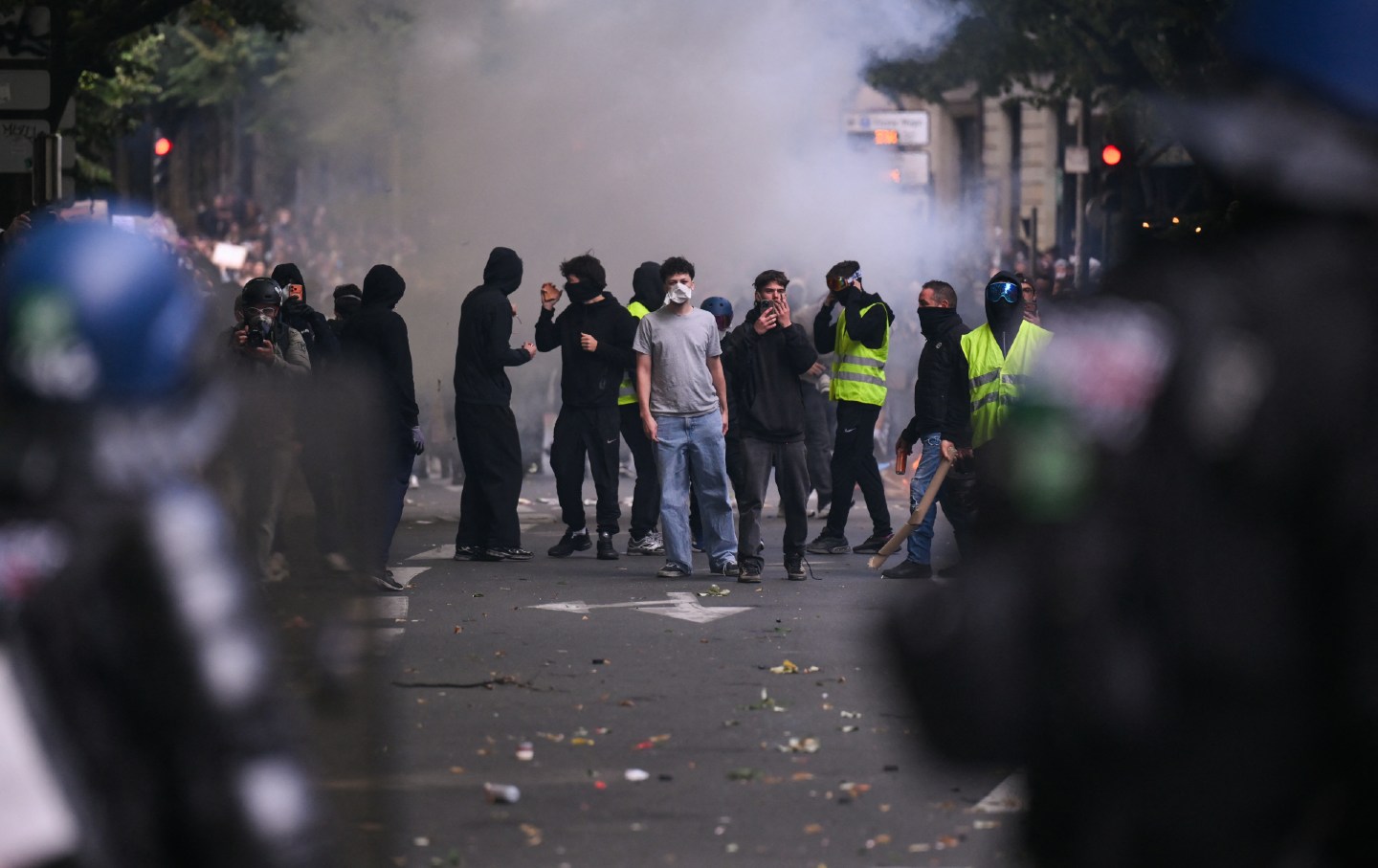
The Specter of Lepenism Looms Over France’s Social Crisis The Specter of Lepenism Looms Over France’s Social Crisis
Joining forces with the “yellow vests,” youth demonstrators are raising the alarm in a country falling to the far right.
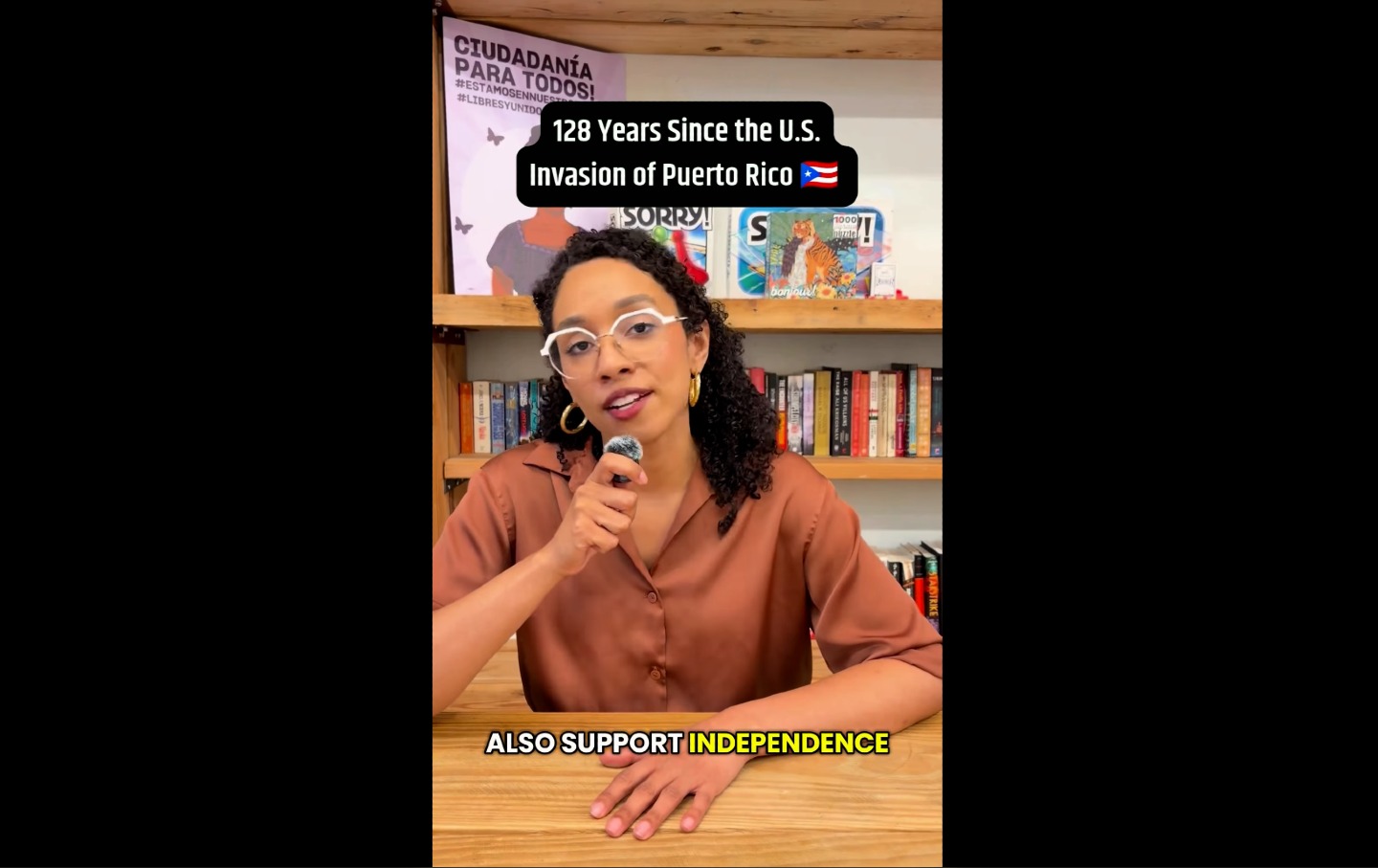
Progressives Are Backing Puerto Rican Independence. It’s About Time. Progressives Are Backing Puerto Rican Independence. It’s About Time.
More and more leftists are concluding that statehood for the island is not enough.
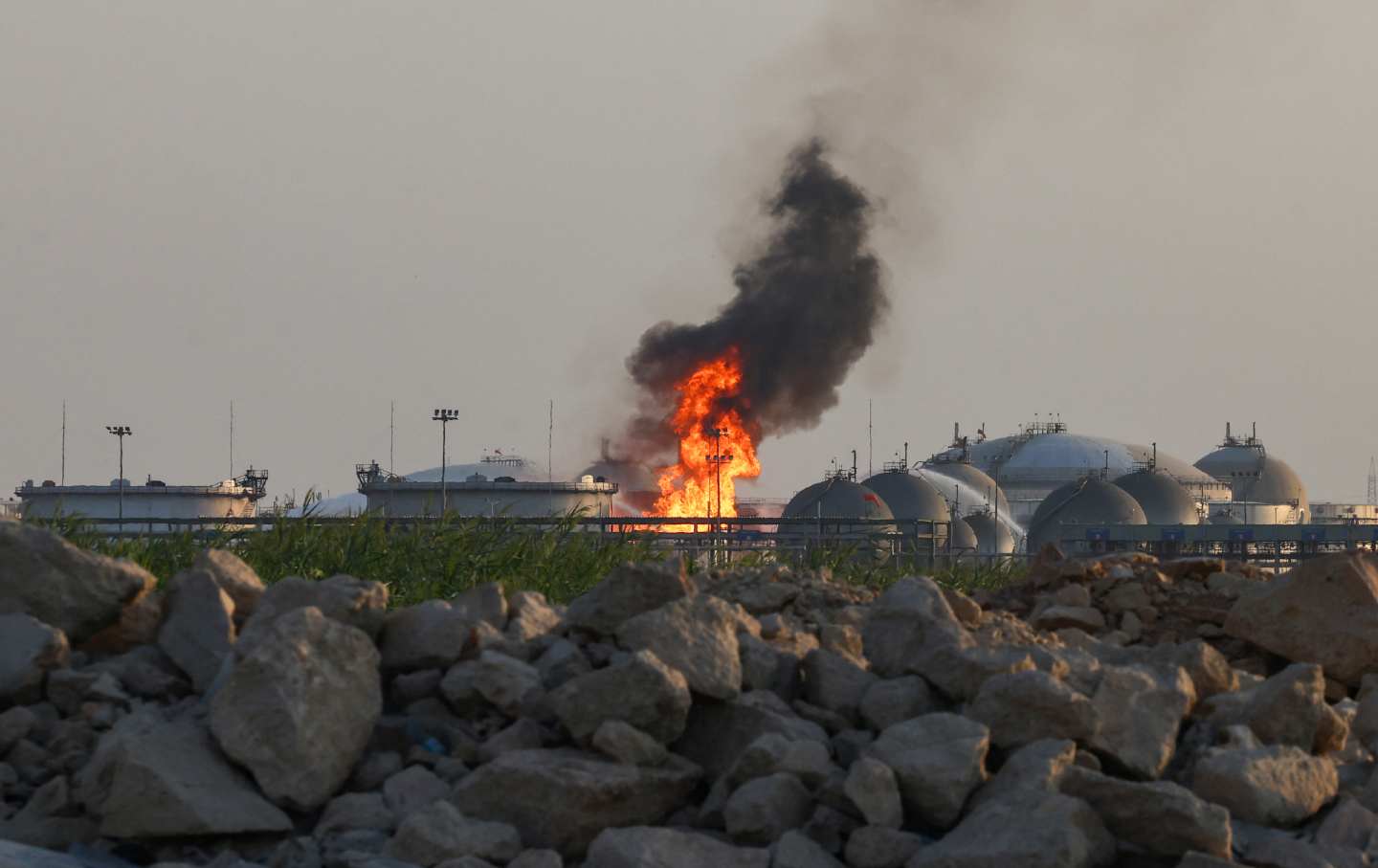
The Saudi Phase of the Iran War Signals More Chaos to Come The Saudi Phase of the Iran War Signals More Chaos to Come
The conflict that Donald Trump has repeatedly proclaimed an unequivocal American victory keeps spiraling out of control.
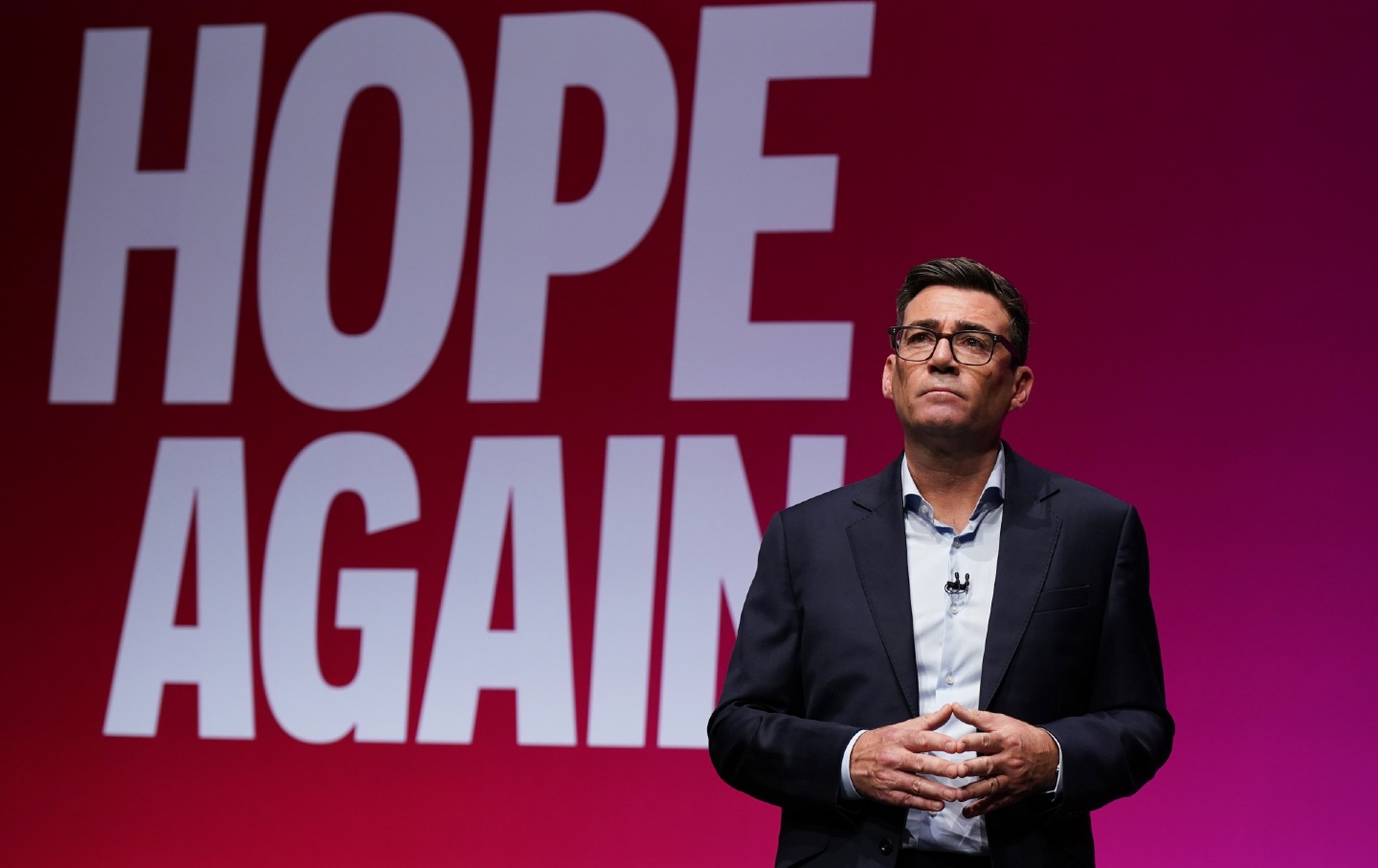
Andy Burnham’s Speech to the Labour Party Conference Could Be the Start of a Positive Social-Democratic Politics Andy Burnham’s Speech to the Labour Party Conference Could Be the Start of a Positive Social-Democratic Politics
But the autumn budget to be released at the end of October will offer needed details.

