The Supreme Court Just Handed the States More Power to Gut Healthcare
The court’s ruling on Medina v. Planned Parenthood South Atlantic undermines the Medicaid program and puts reproductive health care in peril.
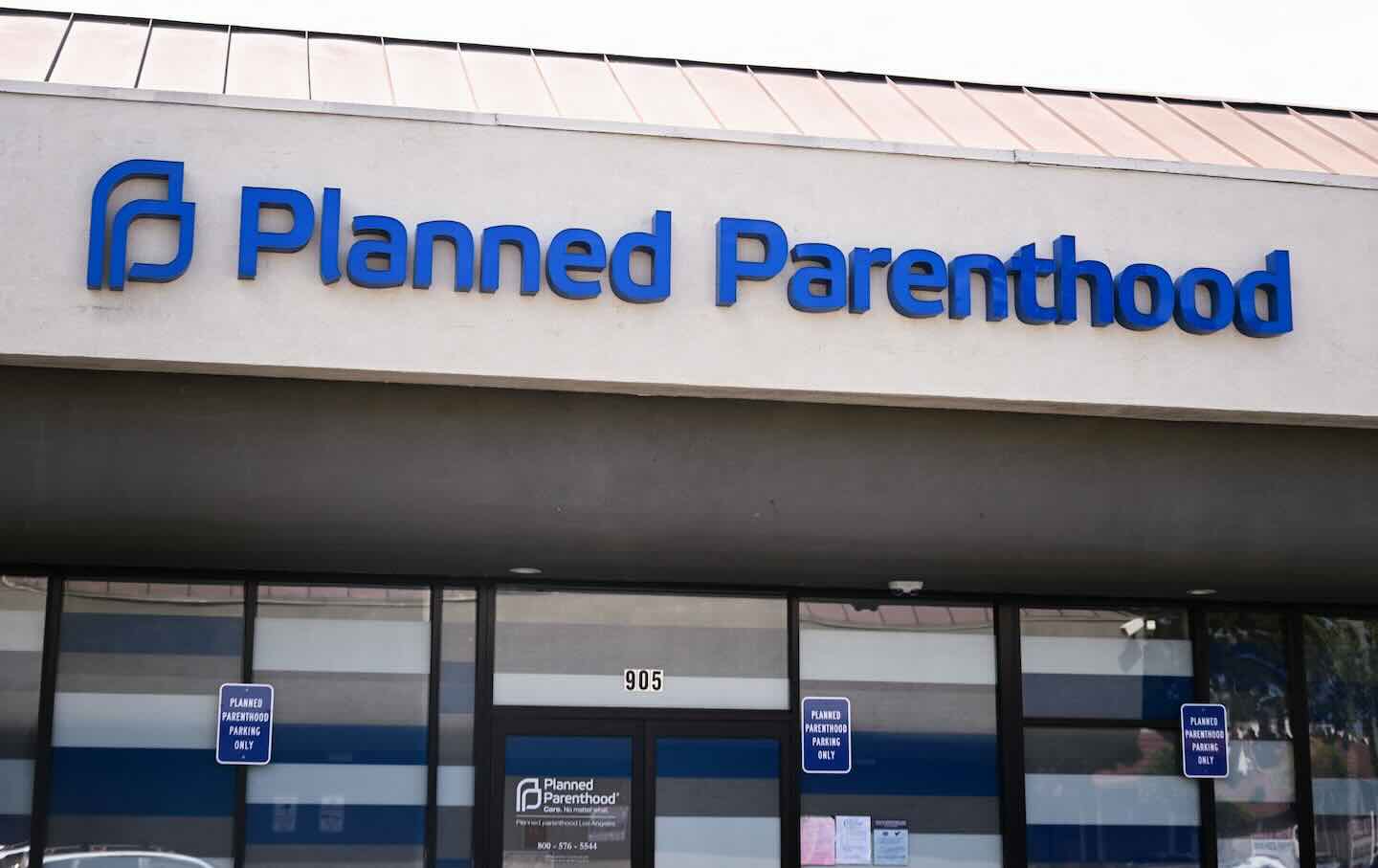
Planned Parenthood signage in Inglewood, California, on May 16, 2023.
(Patrick T. Fallon / AFP / Getty Images)
With little fanfare, the Supreme Court handed down a decision that will erode access to healthcare for Medicaid beneficiaries in South Carolina and beyond. The ruling gives states the green light to impede access to reproductive health care for Medicaid recipients, who have low incomes or other health-vulnerable statuses.
In Medina v. Planned Parenthood South Atlantic, Justice Neil Gorsuch, writing for six of the nine justices, held that there is no right for Medicaid patients to sue a state that expels a healthcare entity or provider from its Medicaid program. In other words, South Carolina, or any state, can exclude entities from participating in Medicaid for political reasons rather than for fitness or competency. Defanging the provision of the Medicaid statute that gives recipients the right to choose their provider means there are very few, and largely impractical, ways to hold states accountable for barring providers from Medicaid participation.
The majority dwells almost entirely on previous court cases interpreting whether statutes, including the Medicaid statute, create a federal right of an individual to sue a state, holding that the provision guaranteeing one’s choice of Medicaid provider did not. Given that Medicaid is “the largest single public payer of family planning services,” Medina will have an immediate impact on people who rely on Medicaid coverage to meet their need for contraceptives, prenatal care, STI treatment, cancer screenings, fertility assistance, and annual exams.
Why would South Carolina target clinics that provide crucial family planning services to the state’s population most in need of that care? The answer is clear, though it is hard to find in the majority opinion of Medina. South Carolina, along with Texas, Arkansas, Indiana, and Missouri, have targeted Planned Parenthood because their clinics also provided abortion care, though not to Medicaid patients. Medicaid cannot fund abortion care in South Carolina, except under very narrow exceptions (rape, incest, or threat to the pregnant person’s life). And abortion is banned in South Carolina after six weeks, making abortion exceedingly rare at the state’s two Planned Parenthood clinics or at any other facility.
As I have written here, Medina is entirely about abortion animus. Yet Justice Gorsuch wrote the word abortion only twice, noting simply that Planned Parenthood provides abortion. The majority does not mention that Planned Parenthood clinics provide a broad spectrum of non-abortion healthcare and that one in five women in this country rely on that care. If Planned Parenthood cannot seek Medicaid reimbursement for those services—healthcare that would be covered at any other entity that does not also offer abortion—clinics will buckle under financial stress, which is what South Carolina intended. Planned Parenthood already has closed clinics throughout the country, and Congress is weighing even deeper funding cuts to the network. After the Medina ruling, people in states that have excluded Planned Parenthood from their Medicaid program will have to find another provider for crucial treatment and preventive services that all women need. And that raises another question Medina left unexplored and unresolved: Where will those Medicaid patients go?
The justices appeared to disagree about what alternatives Medicaid recipients have. Justice Gorsuch wrote briefly to support what the state of South Carolina says it did after seeking to remove Planned Parenthood from its Medicaid program in 2018: “the State took steps that, it said, would help ensure that a “variety of other nongovernmental entities and governmental agencies” would continue to provide “access to necessary medical care and important women’s health and family planning services.” Those entities often include crisis pregnancy centers, which are not medically licensed facilities and are known to provide patients misleading information.
Justice Gorsuch proceeds to depict the experience of the patient at the center of the case as a matter of preference rather than need: “Specifically, Ms. Edwards alleged that, while she regularly visits other medical care providers, she has had especially positive experiences with Planned Parenthood.”
However, Justice Ketanji Brown Jackson, writing a dissent from the majority opinion, offers additional context: “Before she became [a Planned Parenthood] patient, Edwards had struggled to find a healthcare provider capable of meeting her needs as a diabetic whose condition heightened the risks associated with pregnancy. At PPSAT, she found doctors who were able to provide her with the services she needed, as well as a respectful and judgment-free environment to receive care.”
Medicaid patients seeking family planning services do not have unfettered choice among qualified providers and, as Justice Jackson underscores, South Carolina has not given patients appropriate alternatives in seeking care.
A recent report from KFF summarized that, in 2021, 11 percent of women enrolled in Medicaid who received family planning services went to a Planned Parenthood clinic. Moreover, the same study found that other providers often cannot absorb the Planned Parenthood patients if those clinics were to close. Even if they did, most do not offer the same scope of care of specialized family planning clinics, as Planned Parenthood does.
We can look to Texas to see what will happen next in South Carolina. In 2013, Texas replaced its Medicaid family planning program with a state-funded program that excluded Planned Parenthood as a participating provider. The state Medicaid program saw a significant drop in Medicaid claims for contraceptives.
When people cannot access affordable, timely, and adequate family planning services, the results are all but inevitable: increased unintended pregnancy, maternal and infant mortality, and economic hardship, to name three.
In Texas, under its own family planning program and strict abortion ban, not only have contraceptive claims dropped; the rates of preventable injuries and deaths have increased. Everyone is worse off, especially the populations that Medicaid supports. Yet, like Dobbs, six of the court’s justices appear to have a distorted and inaccurate view of what reproductive healthcare should look like in this country. And, as in Dobbs, the court in Medina ceded power to states that would rather play abortion politics than protect the health of their residents.