The Iranian People—Abandoned at Home and Abroad
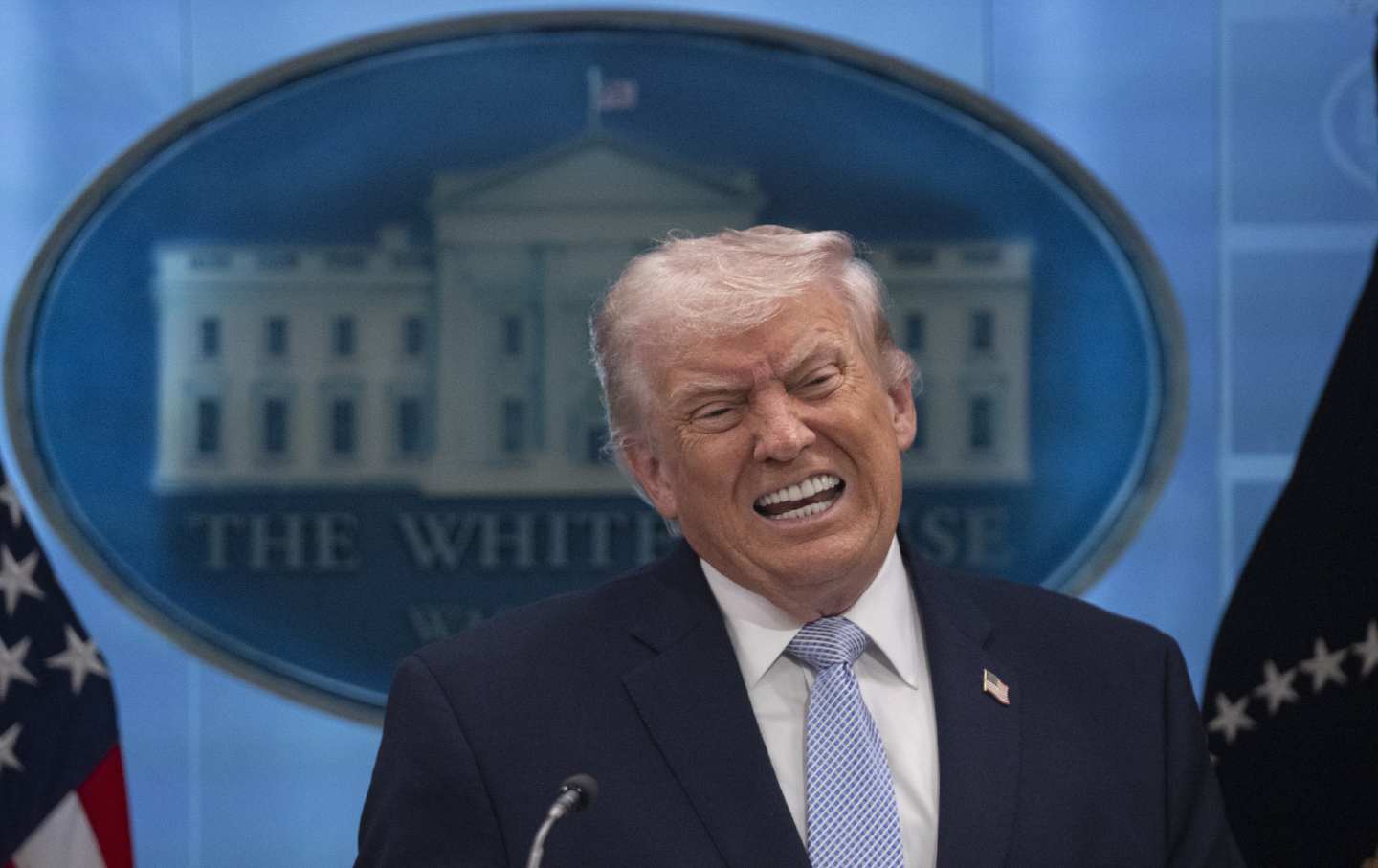
“We now have complete and total control of the skies over Iran,” Donald Trump just boasted on Truth Social. The key word here being “We”—meaning Netanyahu and Trump.
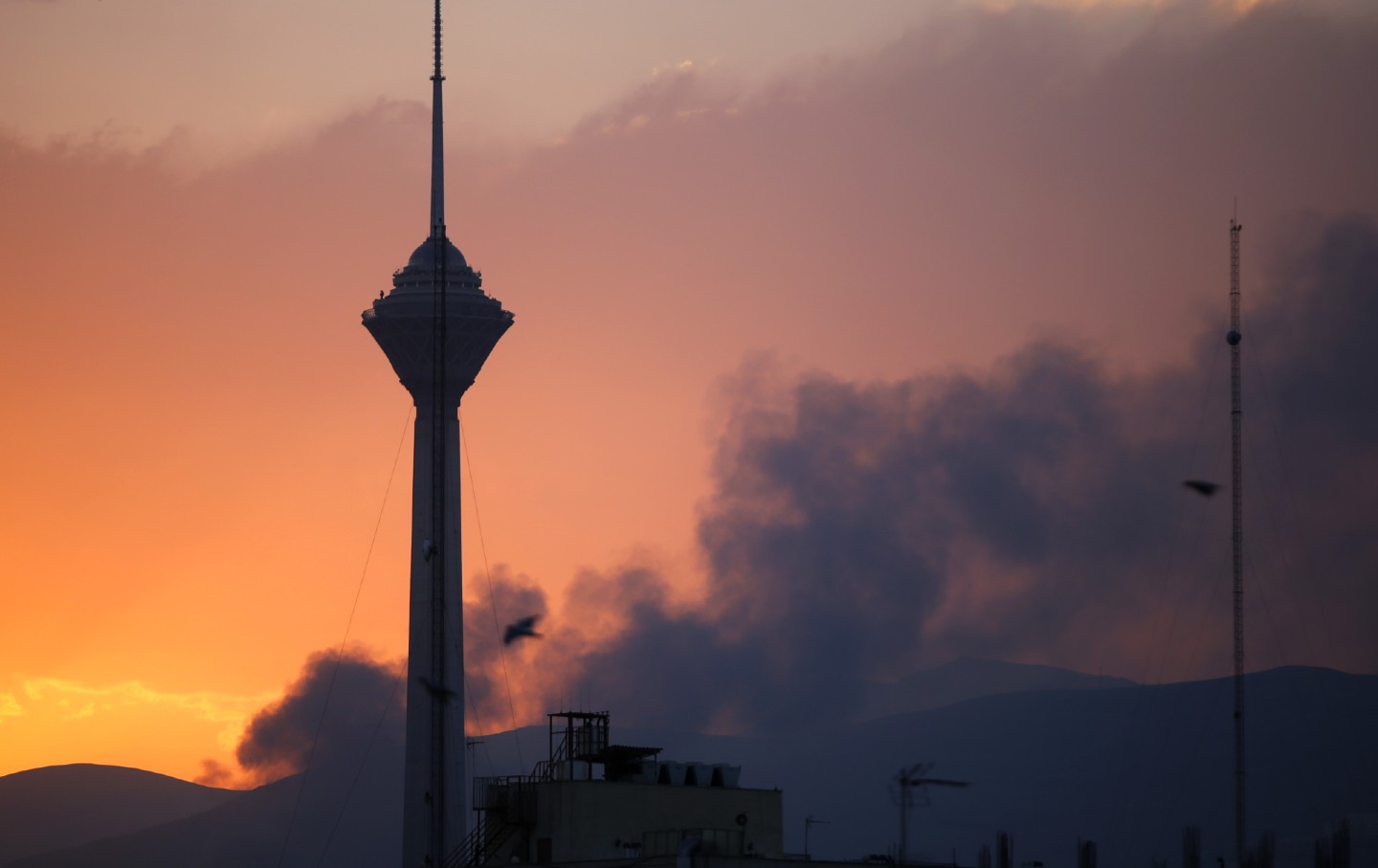
It’s a peculiar moment when Donald Trump seems to be the only figure capable of ending the ongoing war between the regimes of Benjamin Netanyahu in Israel and Ali Khamenei in the Islamic Republic of Iran: two leaders whose years of animosity have not only been to the detriment of their own people but who are now setting the entire Middle East ablaze. Both men deserve to be tried at The Hague—Bibi for his genocidal policies and illegal war machine, and the 86-year-old ayatollah for perpetually choking any form of public dissent for decades, pushing a futile nuclear program that has brought the Iranian nation nothing but grief, and exploiting sanctions to build an enormous financial empire for the regime’s loyal elites on the backs of the struggling Iranian public.
All this at a momentous turning point, where Trump’s latest remarks on Truth Social indicate his full military support for Israel, stating, “We now have complete and total control of the skies over Iran.” The key word here being “We”—meaning Netanyahu and Trump.
According to a Washington, DC–based rights group, in less than four days Israel’s ongoing air campaign has resulted in more than 400 civilian casualties in Iran, with injuries nearing 1,000. Meanwhile, the Iranian government’s missiles have struck parts of Tel Aviv, Petah Tikva, Haifa, and Jerusalem, killing 24 Israelis and injuring dozens. Once again, it is ordinary people who are left to pay the price for the extraordinary hubris, greed, and ideological fanaticism of these two leaders.
Over the years, the world has rightfully rallied around Russia’s war on Ukraine, the atrocities of the October 7 attacks on Israel, justice for Syrians under Assad’s brutal reign, and for a much-needed ceasefire in Gaza. However, in the midst of this escalating crisis, the Iranian people remain the loneliest pieces of this brutal geopolitical puzzle—trapped between a theocracy that has long betrayed them and a world that continues to ignore their cries.
From the unprecedented uprisings during the Green Movement in 2009 to the bloody protests of 2019, and most recently the 2022 Woman, Life, Freedom movement, millions of Iranians have peacefully poured into the streets to express their disdain toward the Ayatollah’s regime, risked their lives for an inch of freedom, and were crushed in return—only to declare to the world: We do not want this regime.
Today, Iran’s brightest and most courageous are in prisons—thinkers, artists, rights activists, lawyers, educators, and journalists—the very women and men who represent the future of a free Iran.
Yet, time and again, the world has done little but watch. Today, as Israel’s world-class arsenal—backed by the United States’ military might—control Iran’s airspace, both Netanyahu and Trump are issuing urgent evacuation orders for densely populated cities. To the ordinary Iranian people who have no hope for either sanity or protection from their government, these warnings ring hollow. “Empty gestures” was the verdict of an engineer waiting for hours at a gas station for a mere 15 liters (four gallons) of gasoline in northern Tehran. Those living in Iran’s densely populated cities know too well that there is no chance of evacuating millions from the country’s sprawling urban centers within hours, let alone minutes.
Aside from a very brief moment that suited the appetites of Western media and public alike during the Woman, Life, Freedom uprising, the Iranian people’s grievances have long been buried beneath the bombast of their own government and the strategic posturing and interests of foreign countries. Now more than ever, the Iranian people are calling for global empathy—to be seen, to be heard, to have their death toll counted alongside that of their Israeli counterparts. Even more urgently—perhaps for one last time—they yearn to be seen by the world through a humanized lens in the face of their utter dehumanization by both the Islamic Republic and the Israeli state.
Most Iranians are now in pure survival mode—simply trying not to die in a crossfire they neither chose nor control. Even if Netanyahu manages to kill the man he describes as his archenemy, the euphoria over Khamenei’s death felt by millions of Iranians may not be enough to heal the wounds of a deeply scarred nation—at least in the short term.
“We came out year after year—got killed over and over and the world just watched,” said a 39-year-old project manager from Tehran’s third district, which had just been ordered to evacuate by the IDF. Stuck in traffic trying to flee to Northern Iran by car, she added, “If we survive this time—one way or another, we won’t go back in time. And if we die, we won’t be here to finally see the result of our blood. We don’t deserve to be caught in between these two monsters.”
Despite being governed by one of the world’s most repressive regimes, the Iranian people have consistently shown intellectual resilience, cultural depth, and social sophistication—along with a fervent tenacity, courage and aspiration mirroring that of many millions worldwide. In contrast to the ethos of the country’s ruling regime, Iran has one of the highest literacy rates in the region, producing some of the highest numbers of engineers, doctors, and scientists relative to its neighboring countries. Iran remains a society where women’s participation in the work force and in higher education remains significantly high. Nearly 70 percent of university graduates in science, technology, engineering, and mathematics (STEM) are women. Iran’s diaspora is among the most educated, while its domestic artists, filmmakers, and poets continue to create what they call “miracles” despite suffocating censorship and constant danger.
Surrounded by 12 land, air, and water borders, Iran is a nation that, if not crushed by sanctions, internal repression, and international isolation, can contribute to global progress in more ways than one. Yet, for nearly four decades—as a result of the Islamic regime’s rogue behavior—its people have been marginalized by the world for crimes they did not commit, while being deceived, terrorized, and humiliated by the powers that be at home.
While some may still accept the IDF’s claim that it does not intend to target civilians, such intentions become meaningless when bombs rain down on densely populated neighborhoods in this fast-moving war—a conflict that will inevitably kill innocent Iranians who, for decades, have shed blood and tears—voicing their grievances to a silent world.
“We just want to breathe. We want to live. We want an end to this all,” said a Jewish designer in Tehran—echoing an ever-present cry for peace —a plea from a people long brutalized, unheard, and misrepresented by their ruling regime and abandoned by the international community at large.
One way or another, the war will end, but the highest price, once again, will be paid by the Iranian people—many of whom may not live to see the sun over their embattled homeland.
Become a Sustaining Donor This September
Between the reemergence of right-wing red-baiting and Donald Trump’s use of the chilling National Security Presidential Memorandum–7 to criminalize left political organizing, we’re seeing McCarthyism reborn before our eyes.
This assault on democracy cannot be ignored or wished away. Resisting it requires bravery in the face of threats and repression, a steadfast commitment to the truth, and the unwavering belief that we can—and will—overcome this darkness.
We must have an independent media that sets the record straight, unearths corruption and abuses of power, and advances a politics of justice and dignity for all if we’re to win this fight.
That’s why I’m writing to you today. This September, The Nation needs to add 100 monthly donors to sustain our progressive journalism. Your contribution makes the next investigative report, the next truth-speaking column, and the next pathbreaking essay all possible.
I hope you’ll support our work with a recurring donation today. If you donate $10 or more a month, we’ll send you a brand new “Hands Off the Free Press!” sticker to recognise your commitment to our cause. Please, donate today.
Onward,
Katrina vanden Heuvel
Editor and Publisher, The Nation