The Climate Costs of Occupation
As Israel expands its settlements in the West Bank, it has destroyed forests and boosted CO2 emissions.
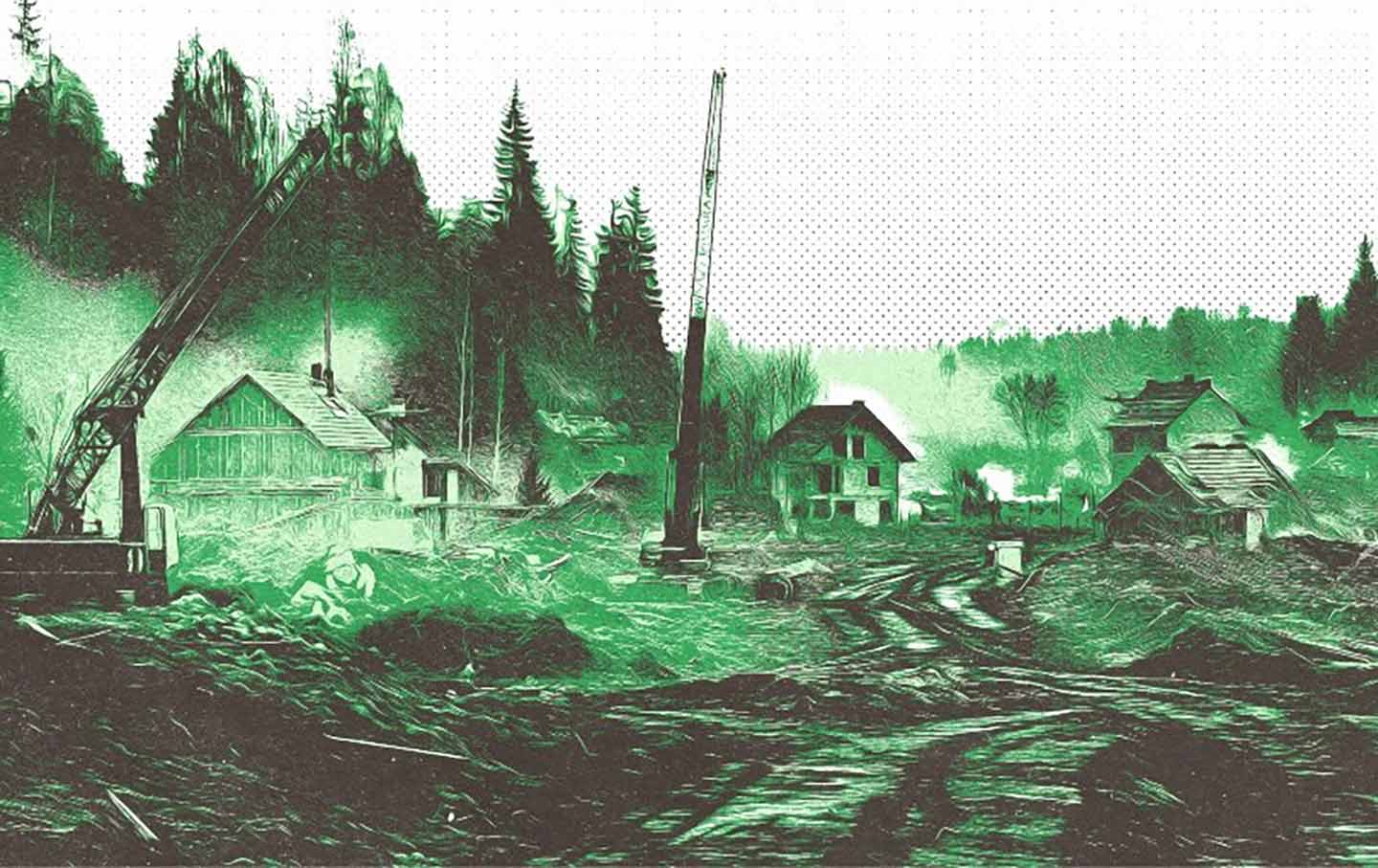
Jabal Abu Ghneim is a former nature preserve five miles south of Jerusalem, on the way to Bethlehem. Locals used to hike its forested hillsides and pick mushrooms there. Its status as a nature reserve meant that cutting down trees in Jabal Abu Ghneim was forbidden by law. But in 1997, the Israeli government revoked that status. Soon, bulldozers began clearing the former reserve’s vegetation to make way for concrete buildings that today house an estimated 30,000 Israeli settlers.
Such enforced transformation of protected green space into occupied residential settlements is not unique to Jabal Abu Ghneim. An investigation by the nonprofit news outlet ARIJ has found much the same pattern at eight locations in the Israeli-occupied West Bank, with seven of the eight former green spaces becoming settlements and one becoming an industrial zone. These transformations took place despite United Nations Resolution 2334, which makes establishing settlements and expanding existing ones in occupied Palestinian territories illegal.
According to ARIJ’s analysis of open-source data, the resulting loss of green space contributed to a larger decline of forested area in Palestine—from 124 square miles in 1970 to 95 square miles in 2023. Today, only 4 percent of the West Bank and Gaza are covered by forests, said Mahmoud Fatafta, the director general of media and international and public relations at the Palestinian Ministry of Agriculture. That figure is much lower than in most other countries, where forests cover an average of 31 percent of a country’s land.
Besides violating international law, the deforestation that enabled construction of new settlements also contributes to climate change, Fatafta said. When trees are cut down, the carbon stored in their leaves, branches, and roots gets released into the atmosphere, where it traps heat via the greenhouse effect. Cutting individual trees also reduces the remaining forest’s capacity to absorb carbon dioxide and thereby limit global temperature rise.
Building on a nature reserve
“You opened a wound and put salt in it,” said Dr. Nafez Khader Mansour, referring to Israel’s transformation of green spaces into residential settlements. Mansour is the president of the Agricultural Charitable Association of Wadi Qana, a river valley east of Tel Aviv that also had its protected status revoked to make way for settlements.
“I was born in Wadi Qana,” said Mansour, 64. “I lived there, and I know it inch by inch. It was a green area and sprouting with oak, saris, terebinth, and various other trees.” Wadi Qana reserve also featured a diversity of wildflowers, birds, and mammals, including the mountain gazelle, red fox, and bat.
As a boy, Mansour used to visit the area to hike and pick wild plants. Now he and other Palestinians are denied the right to roam in what remains of the forest after the Israeli government began transforming the area into settlements, including Karnei Shomron and Ginot Shomron.
The Karnei Shomron settlement covers 257 acres, of which at least 23 acres were previously a nature reserve, according to maps provided by the Geomolj Geospatial Information System in Palestine and current as of 2019. In addition, satellite imagery shows that the settlement continued to expand from 2019 to 2023. Likewise, the Ginot Shomron settlement expanded partly by carving out five acres from the nature reserve, according to Geomolj maps, and satellite imagery shows that urbanization intensified between 2014 and 2023.
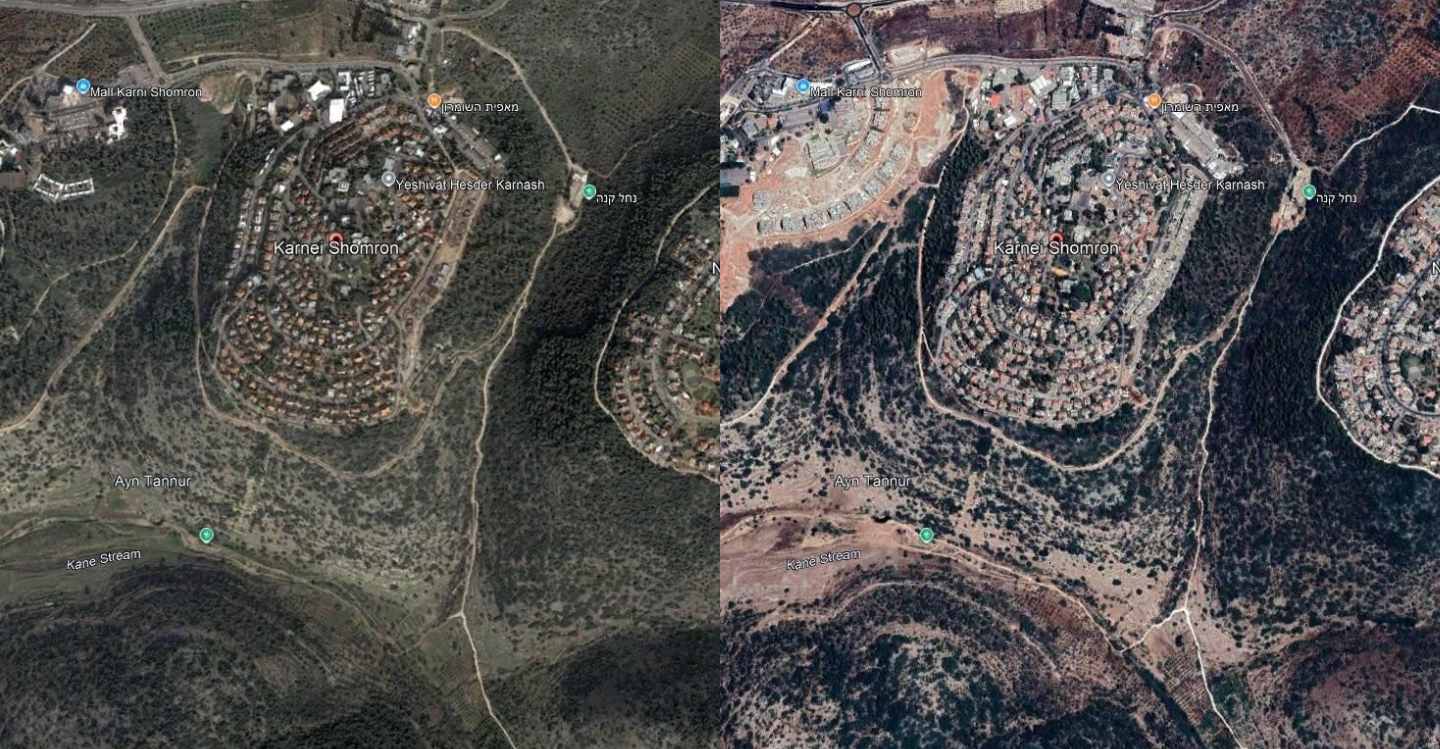
Neve Oranim is another settlement in the Wadi Qana valley previously covered with vegetation. But satellite imagery reveals that the area was transformed between 2014 and 2023 into residential housing. The Geomolj maps indicate that more than 120 housing units were built in the former nature reserve.
Besides worsening climate change, deforestation also harms biodiversity and boosts local temperatures, said Fatafta. Trees provide habitat for wildlife as well as both shade and cooling through evaporation, limiting local temperature rise.
Deforestation also leads to higher levels of suspended particulate matter in the air. In Qalqilya, a formerly protected area a few miles west of Wadi Qana, air quality sharply deteriorated in recent years. The area experienced only one day of “unhealthy” air quality in all of 2018; by 2024, 88 days were classified as “unhealthy.”
“The transformation of natural reserves into concrete blocks and settlements is sad in every sense of the word,” said Mansour.
Popular
“swipe left below to view more authors”Swipe →Jenin’s lost forests
Israeli bulldozers have also been busy farther north in the West Bank, where green space in the region of Jenin has been sacrificed not only for residential settlements but also for an industrial zone.
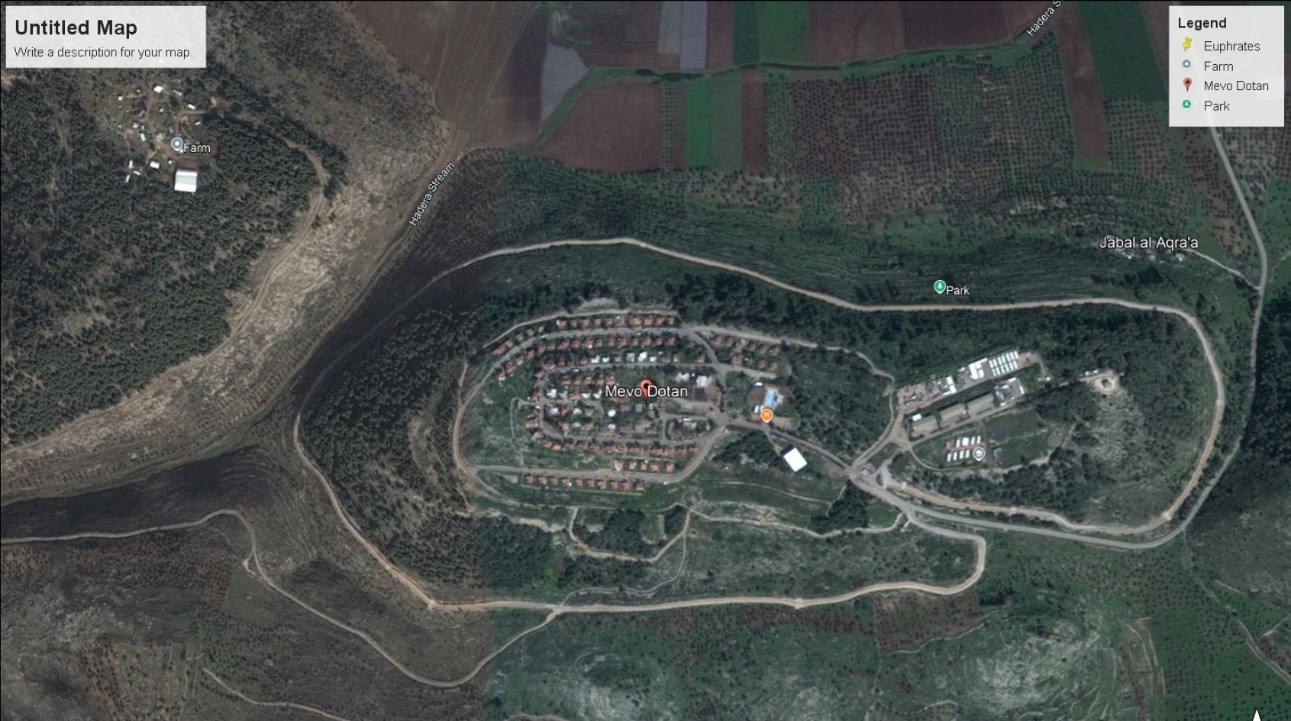
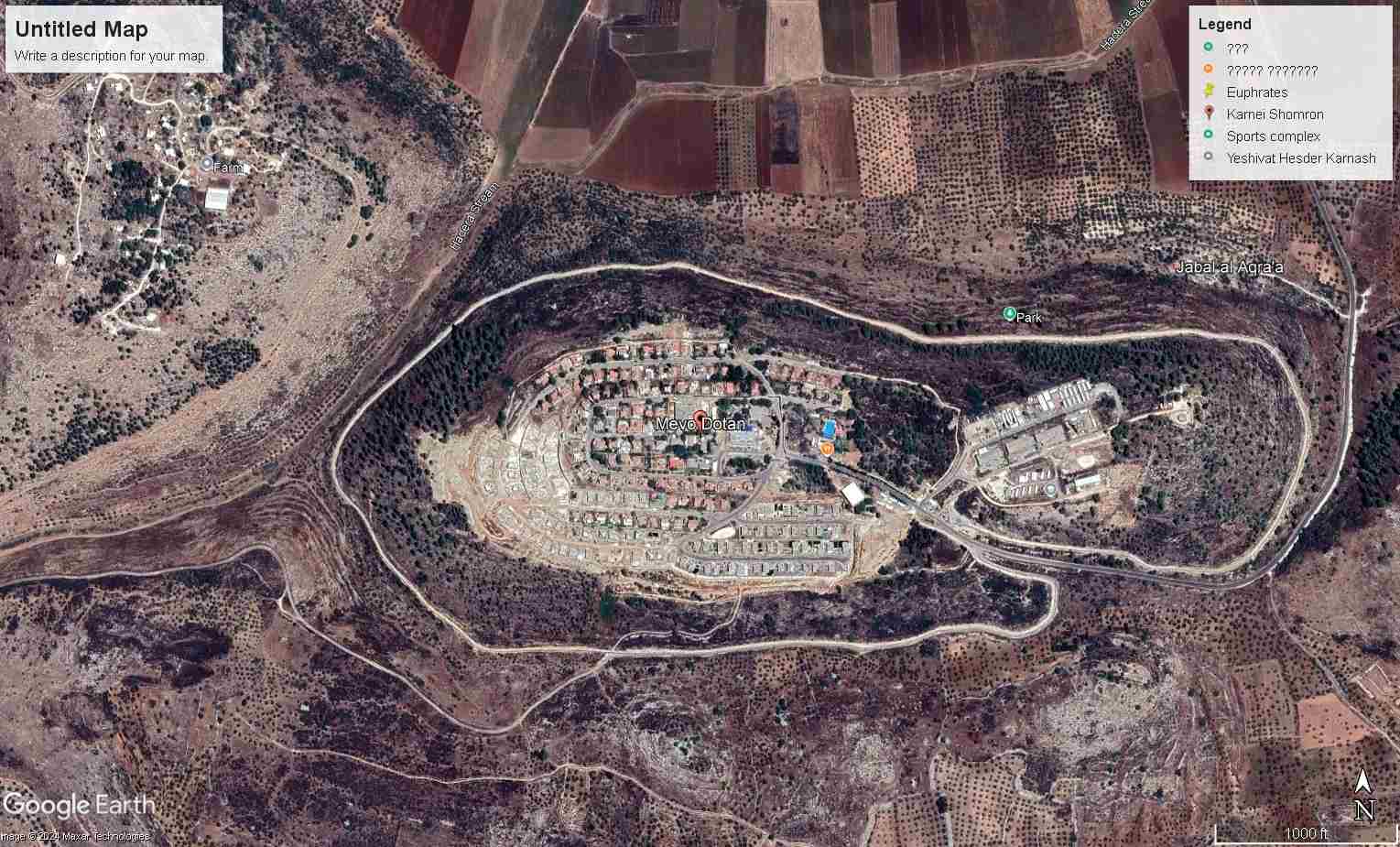
One of the settlements is Mevo Dotan, part of which was built in the Alonei Arava nature reserve, whose name refers to the oak trees—in Arabic, alonim—that grew there. Satellite imagery taken between 2016 and 2023 shows the cutting of cultivated areas south of Mevo Dotan and the construction of buildings.
Another settlement, named Hananit, was constructed after the Israeli government ordered the conversion of farmland into housing. “Since 2016, 15 dunams [3.7 acres] of vegetation on the northern side of Hananit were removed to build 60 new housing units,” said Moayad Bisharat, the director of the Lobbying and Advocacy Department at the Union of Agricultural Work Committees.
The industrial zone built on previously green space is named Shahak. It houses factories that produce timber, chemicals, rubber, leather, iron, and plastics. In addition to the harms to biodiversity and the climate caused by losing green space, these factories emit pollutants that threaten local air, water, and soil quality.
Effective regulation of such pollution is hampered by the fact that the West Bank exists in a legal limbo. Its industrial zones are not subject to Israeli law, but neither are they “subject to international law in the treatment of their waste because they are located in the West Bank,” said Raed Muqadi, a researcher at the Land Research Center in Jerusalem.
Historically, Jenin’s forests hosted a range of tree species, including pine, cypress, oak, carob, sumac, cress, and henna. But turning green spaces into settlements and an industrial zone contributed to losing 10 to 15 percent of Jenin’s forest cover between 1970 and 2023, according to the Palestinian Ministry of Agriculture.
When he was a boy growing up near the town of Ya’bad, Yaqoub Zaid al-Kilani used to follow along as local farmers took their livestock to graze in the area’s forests. Those forests used to connect the Palestinian villages scattered nearby, and “there was nothing to prevent us from accessing those areas,” he recalled. Now, barriers block Palestinians’ freedom of movement, Al-Kilani says, and the “settlements have destroyed the vegetation, bulldozed the land, and replaced the picturesque, natural views with concrete blocks.”