
The Endless Conflicts of Interest in the Trump Administration
Each day, another ethics scandal unfolds—and each day, it gets lost in the white noise.
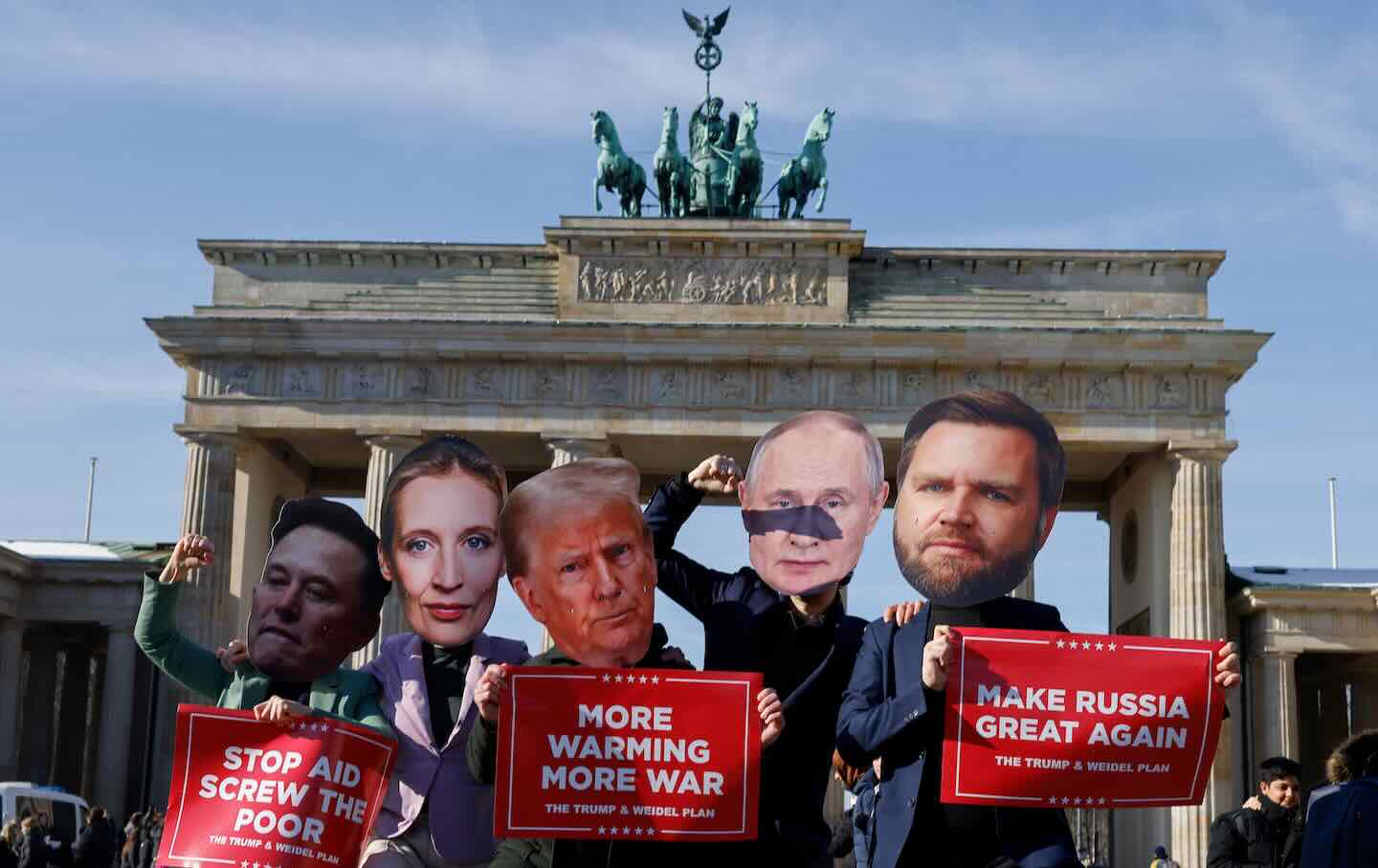
Activists wearing masks of (L-R) Tesla and SpaceX CEO Elon Musk, Co-leader and main candidate of the far-right Alternative for Germany (AfD) party Alice Weidel, US President Donald Trump, Russian President Vladimir Putin, and US Vice President JD Vance, hold up placards which read “Stop Aid, Screw the poor,” “More Warming More War,” and “Make Russia Great Again” as they stage a protest against the perceived support of the US and Russia for the far-right AfD party in front of the landmark Brandenburg Gate in Berlin, on February 20, 2025, ahead of the upcoming German elections on February 23.
(David Gannon / AFP)
I had intended to focus this week’s column on Donald Trump’s biggest scam to date—and I will get to that. But as I write this, the president has been on a manic tear on Truth Social, posting that Ukrainian President Volodymyr Zelensky, is a “dictator, without elections,” a “modestly successful comedian,” and a man who needs to act fast or “he is not going to have a country left.” Zelensky—who has managed to hold off a Russian invasion for three years and who has been feted by the US Congress and parliaments throughout Europe—was doing a “terrible job,” Trump sneered.
Trump’s comments, combined with Vice President JD Vance’s performance at the Munich security conference last week, should establish beyond question that the US-Russian “negotiations” that took place in Saudi Arabia, and the proposed Putin-Trump summits that will follow, are setting the stage for a betrayal on a truly global scale.
Not since Neville Chamberlain’s craven trip to Munich in 1938, to meet with Hitler and to carve up Czechoslovakia (England’s erstwhile ally), has a superpower behaved so dishonorably to a state it had pledged to support against the aggressions of a stronger neighbor.
Foreign policy is, of course, always up for debate; and it’s a legitimate argument as to whether expanding NATO to Russia’s borders was a sensible or hubristic goal. It’s also a legitimate argument as to how involved America should be in this fight. But what Trump is doing goes far beyond that. He is, quite literally, rewriting history, declaring that Ukraine “started” the war with Russia, and echoing Putin’s line that Ukraine is the aggressor and Russia the victim.
Why is he doing it? Probably because the Russians have dangled the possibility of huge business profits for Trump and his inner circle. Russian Foreign Minister Sergey Lavrov and US Secretary of State Marco Rubio talked of the tremendous economic opportunities that would follow a normalization of relations—and made moves to begin that normalization even absent a conclusion to the war. At the same time, Russia’s sovereign wealth fund is anticipating the return of major US companies over the coming months, after three years in which American-led sanctions efforts reduced economic contact between Russia and the West to a minimum. The Russians told Trump at the meeting in Saudi Arabia that US businesses had lost out on over $300 billion in investments since the start of the war.
The US public might not realize the enormity of what is transpiring, but I guarantee you the Ukrainians do, and I guarantee you that America’s European allies, as well as our friends elsewhere around the globe, also do. It marks the end of the post–World War II global system, and the recasting of America as a malicious, dangerous, and deeply opportunistic force, one at least as likely to sell out its allies as to defend them. In the short term, Americans might not notice their diminished global standing; in the long term, as allies flee or are driven away, as new alliances form and as new economic partnerships emerge, they most certainly will.
And for what? For the short-term grift, the irresistible lure of golden baubles, and the chance that Russian and American oligarchs can join forces and extract yet more resources and yet more profits from beleaguered, war-ravaged, Ukraine, and from all the other Eastern European countries now quaking in the shadows of Putin’s armies.
Which seems as good a place as any to pivot to my original focus for this week: Trump’s endless, almost pathological, grift, or the nonstop profiteering of this gangster government.
Trump is a master at spinning dollars out of thin air. Witness: Days before his inauguration, he launched the “$TRUMP” crypto asset. Vox reported that the value of these meme coins instantly soared, and Trump’s share alone was soon worth an astounding $58 billion.
There are many problems with this. Three in particular stand out. First, like the Dutch tulip mania in the 17th century, or any other irrational, cult-like economic craze, there are no real assets backing up meme coins. One minute, they’re worth a fortune; the next, as with the end of the tulip craze, they’re simply faded flowers. Trump will, of course, have long since cashed out by then, leaving the poor schmoes who bought into what looks remarkably like a Ponzi scheme holding a whole bunch of worthless investments.
Second, Trump has created a near-perfect arena for influence peddling: Any big business that wants his ear or wants favorable treatment from the administration knows that buying into $TRUMP will add to its value, thus indirectly enriching Trump. How much more effective this is than the grift in Trump 1.0, when overseas companies and governments simply paid inflated rates to stay at, and organize conferences in, Trump hotels.
It’s all hiding in plain sight here, but, like any money-laundering scheme, it comes with enough plausible deniability to allow the president and his family to claim ignorance of efforts to influence them.
Popular
“swipe left below to view more authors”Swipe →Third, Trump has cozied up to the crypto industry like few other leaders globally, reaping huge rewards. In the 2024 election cycle, half of all corporate donations came from the crypto industry, with most of those dollars going to pro-crypto candidates such as Trump. As soon as he came into office, Trump repaid the favor, by signing an executive order directing the US to boost the cryptocurrency industry and to potentially build up a cryptocurrency stockpile—thus giving a huge boost to the industry, including the meme coin that he now controls.
In normal times, that would represent an unpardonable conflict of interest. In Trump 2.0, with a quiescent Congress and fired watchdogs, ethics ombudsmen, and inspectors general, and with Elon Musk using his alignment with the president to boost his own business profile, it’s raised barely a whimper of opposition.
Each day, another ethics scandal unfolds—and each day, it gets lost in the white noise.
Take Trump’s order to the Department of Justice to no longer enforce the Foreign Corrupt Practices Act, and the extraordinary language contained in that White House memo, which basically encouraged US businesses interests to dole out bribes. This is a White House that feasts on conflicts of interest. Consider Indian Prime Minister Narendra Modi’s recent visit to DC to meet with Trump, where Musk arranged a side-meeting. When Trump was asked whether Musk was meeting Modi as a government official or a businessman, he answered that he didn’t know, but then added, “I assume [Musk] wants to do business in India.”
This week, The New York Times reported that Trump was blending his political and business interests in arranging lucrative golf tour deals with the Saudis that could end up financially benefiting his companies through the numerous golf courses that he owns.
Also this week, Trump signed an executive order essentially giving himself direct power over regulatory agencies such as the SEC, the FDIC, the FCC, and the FEC. That’s a lot of acronyms, but basically, if it withstands the legal challenges that will almost certainly be launched against it, it’s a vast, dictatorial power grab to usurp the regulatory powers of agencies that monitor everything from the stability of the country’s banking system to the legality of trade deals to the broadcasting licenses issued to television and radio stations, through to how elections are conducted.
In one month, Trump and Musk have so trampled America’s constitutional system of governance that, when it comes to the federal government, virtually nothing remains of the checks and balances supposed to rein in a lawless leader. They are co-governing by direct fiat, bypassing the legislative, the regulatory, and the public comments processes to enact vast changes to basic governing and administrative systems for their own personal financial gains. They have weakened to the point of nonexistence the ethics guardrails intended to prevent the mixing of political and business interests. And they have declared that American policy on everything from crypto-currency to Ukraine is up for sale.
Shameful and dishonorable don’t even begin to describe this globe-wrecking administration.
Become a Sustaining Donor This September
Between the reemergence of right-wing red-baiting and Donald Trump’s use of the chilling National Security Presidential Memorandum–7 to criminalize left political organizing, we’re seeing McCarthyism reborn before our eyes.
This assault on democracy cannot be ignored or wished away. Resisting it requires bravery in the face of threats and repression, a steadfast commitment to the truth, and the unwavering belief that we can—and will—overcome this darkness.
We must have an independent media that sets the record straight, unearths corruption and abuses of power, and advances a politics of justice and dignity for all if we’re to win this fight.
That’s why I’m writing to you today. This September, The Nation needs to add 100 monthly donors to sustain our progressive journalism. Your contribution makes the next investigative report, the next truth-speaking column, and the next pathbreaking essay all possible.
I hope you’ll support our work with a recurring donation today. If you donate $10 or more a month, we’ll send you a brand new “Hands Off the Free Press!” sticker to recognise your commitment to our cause. Please, donate today.
Onward,
Katrina vanden Heuvel
Editor and Publisher, The Nation
More from The Nation
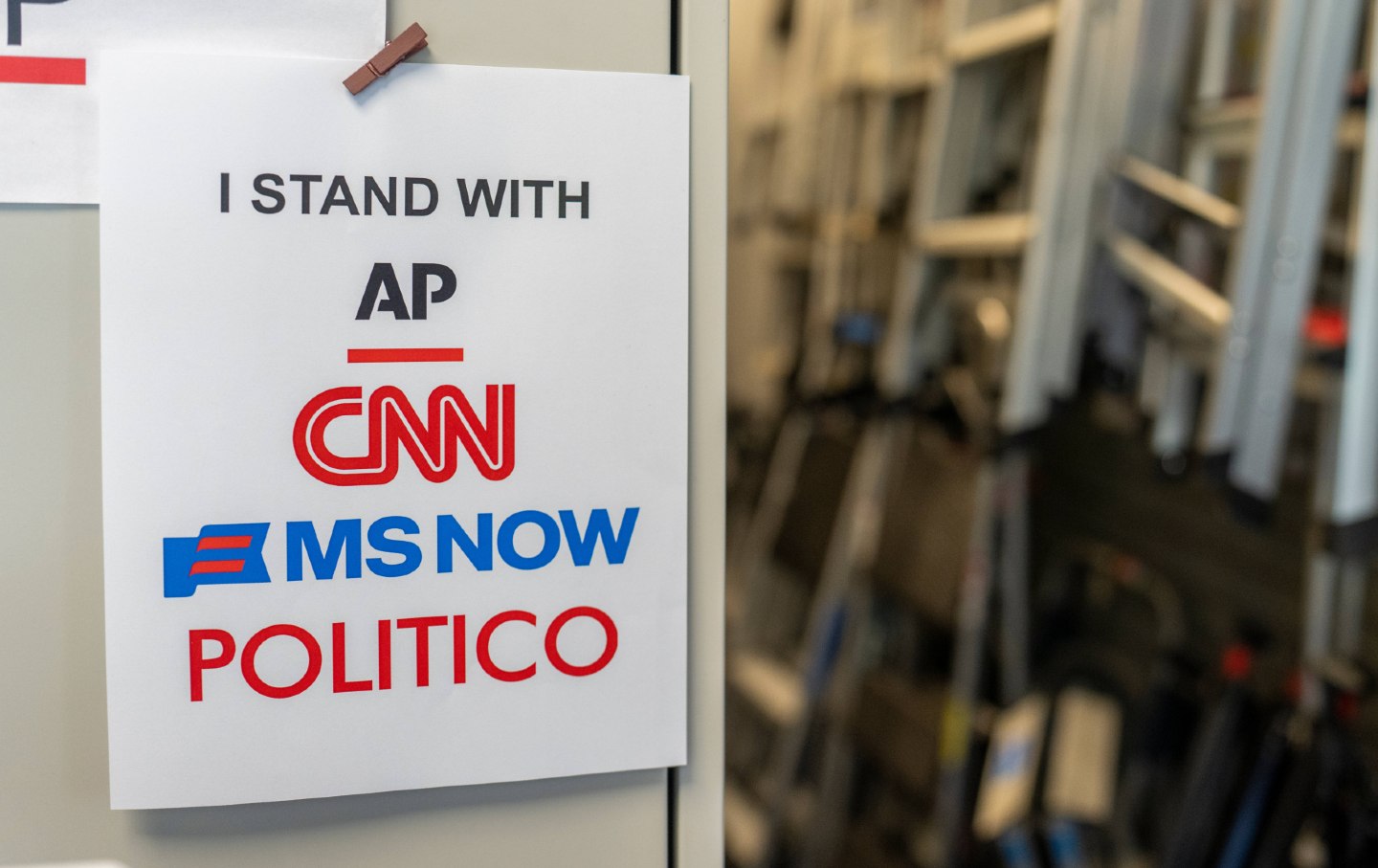
The First Amendment Lives for Another News Cycle—Maybe The First Amendment Lives for Another News Cycle—Maybe
In this week’s Elie v. U.S., our justice correspondent parses Trump’s attacks on CNN, MS NOW, and Politico. Plus: it’s time to impeach the judges!
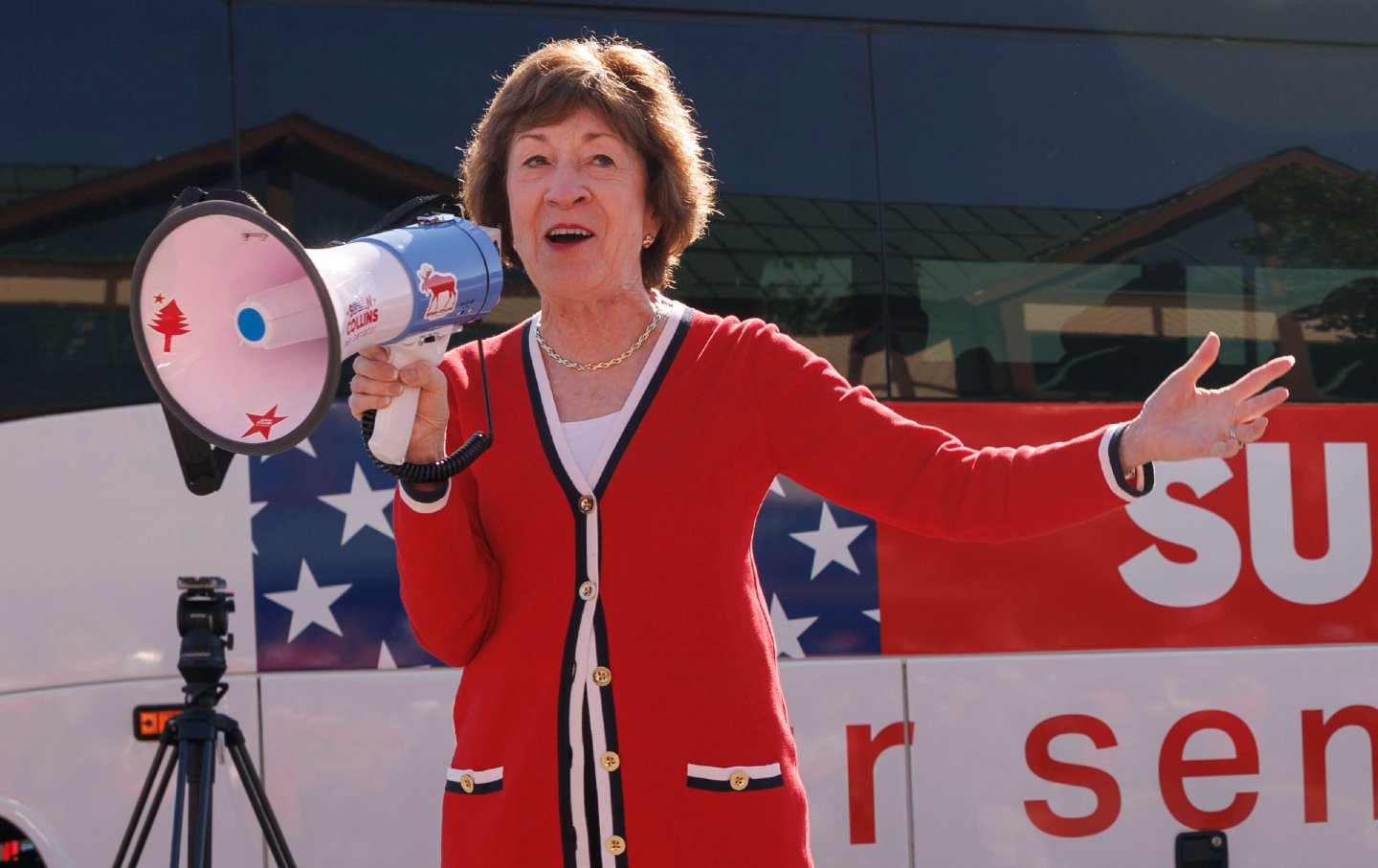
Susan Collins Is Corrupt. She Still Might Be Reelected. Susan Collins Is Corrupt. She Still Might Be Reelected.
Despite being embroiled in scandal, the Maine senator is benefiting from Democratic Party divisions.
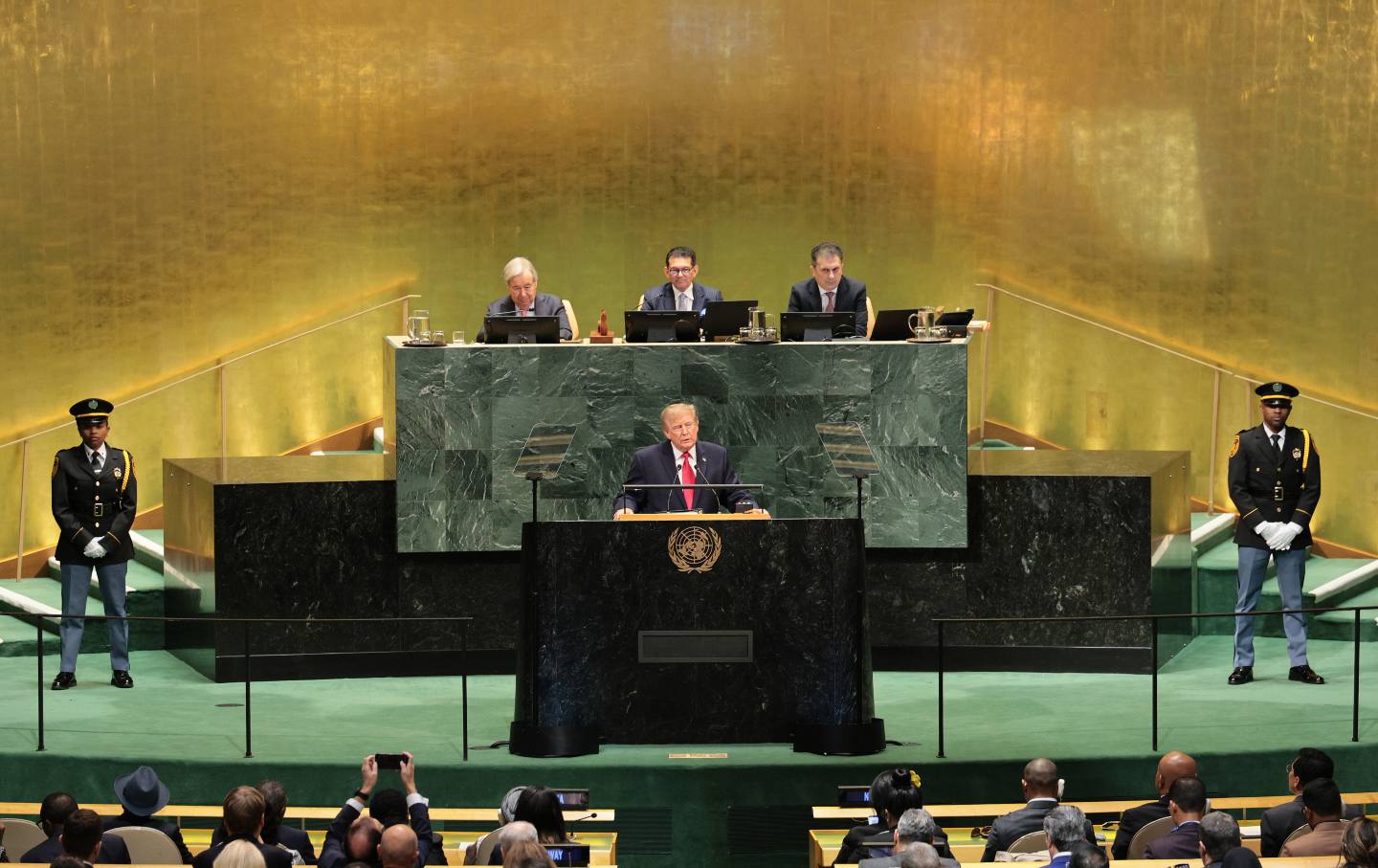
Trump Impersonated Hitler at the United Nations Trump Impersonated Hitler at the United Nations
It was just one more of many examples of the president mirroring a fascist leadership.
Trump Is Destroying Public Health. Democrats Need to Fight Back. Trump Is Destroying Public Health. Democrats Need to Fight Back.
If they win in the midterms, the party must move quickly and aggressively to undo the harm Trump and his cronies have caused.
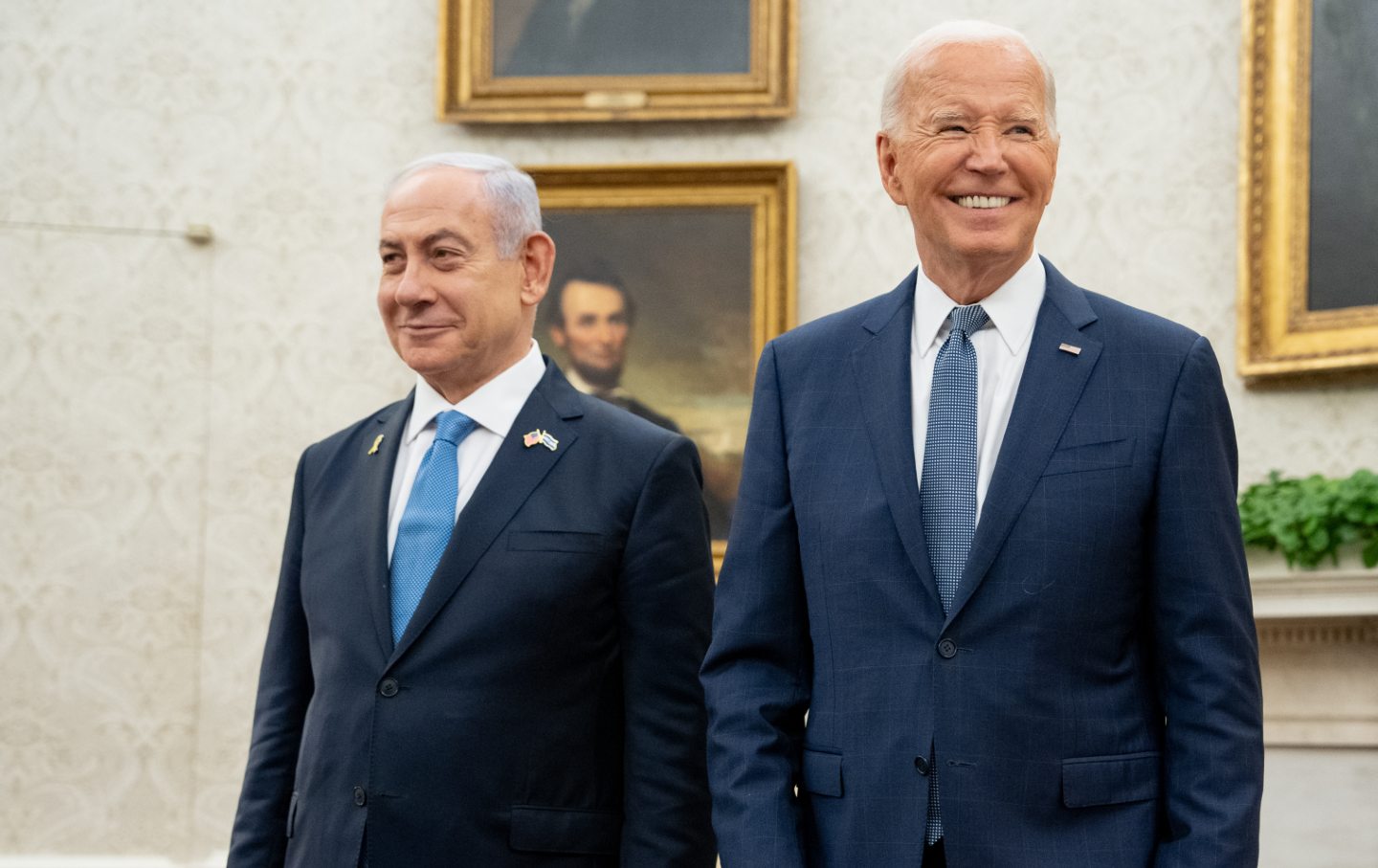
How Joe Biden Helped Cause a Genocide in Gaza How Joe Biden Helped Cause a Genocide in Gaza
An interview with reporter Akbar Shahid Ahmed about his new book, “Crossing the Red Line.”

