How Loyalty Trumps Qualification in Trump Universe
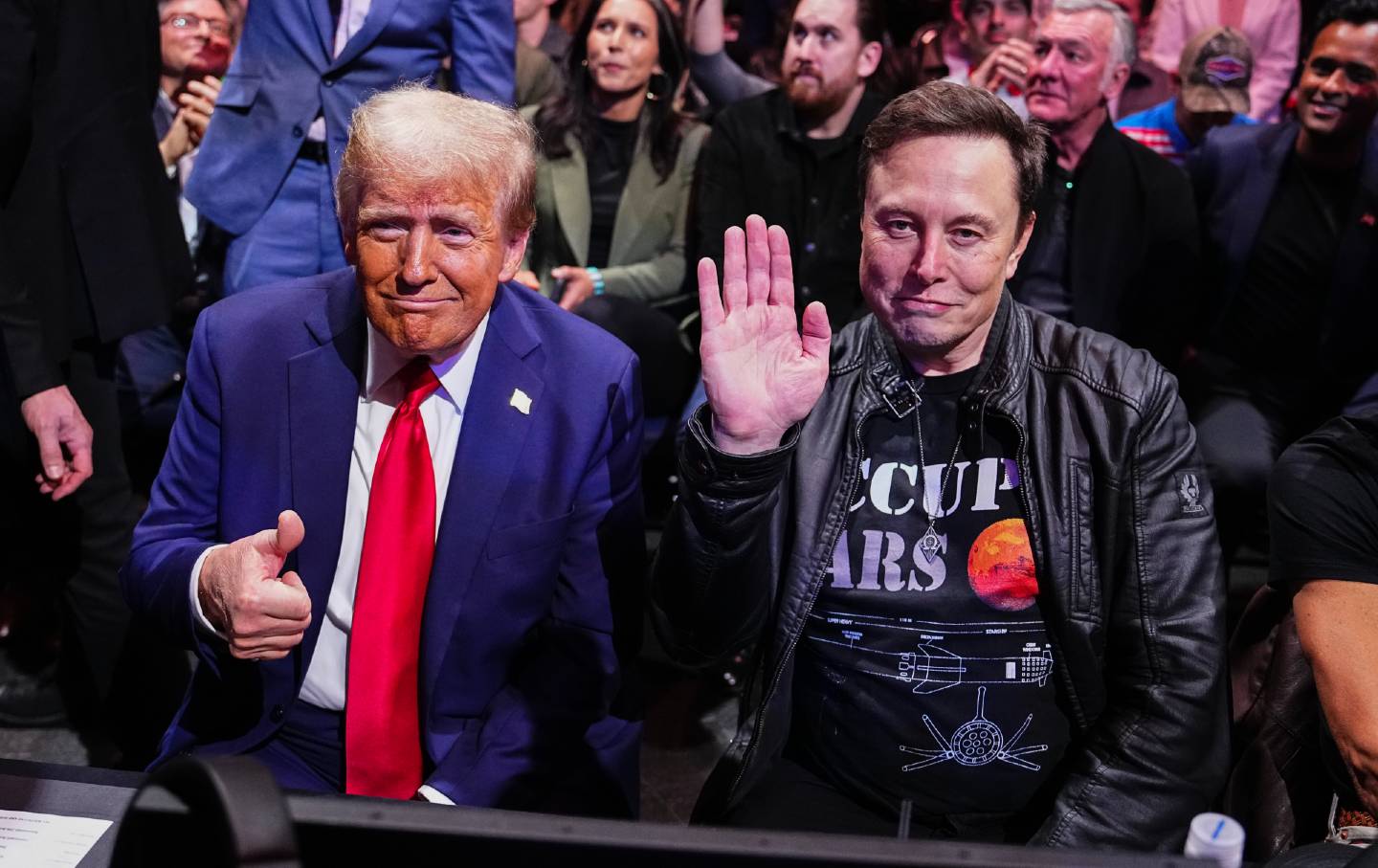
Meet “first buddy” Elon Musk.
It’s déjà vu all over again, again. In the wake of Donald Trump’s decisive reelection, his transition team has moved to pack his cabinet and advisor positions with figures straight out of the Star Wars cantina—some of the most dangerous and bizarre sideshows from every corner of his chaotic galaxy.
In the Trump Cinematic Universe, loyalty usurps qualification. That’s why Pete Hegseth, a Fox News host who wants to eliminate “woke” officials from the military, got tapped to oversee our national defense. And it’s why Matt Gaetz might helm the very Department of Justice that was investigating him for sex trafficking.
But perhaps no figure better captures the cartoonish nature of Trump’s staffing philosophy than Elon Musk, the literal richest man on Earth who has somehow grabbed the wheel of a presidential transition that’s navigating the road ahead about as well as one of his Teslas.
From offering his two cents on presidential appointments, to joining calls with the Ukrainian president, to adjudicating the race for Senate majority leader via an X poll, the man who broke Twitter now has his sights set on breaking the federal government. He’s poised to hack the budget, ramrod in his half-baked policy musings, and push through deregulation that will inevitably benefit his fleet of companies.
As in any great rom-com, Musk and Trump got off to a rocky start. Two years ago, before he donned a “dark gothic MAGA” cap himself, Musk was urging Trump to “hang up his hat,” and Trump was calling Musk too chicken to buy Twitter. But then Musk did buy Twitter, and began diligently turning it into a bastion of right-wing misinformation called X. The arc of this entanglement reached its inevitable conclusion when Musk rewired the platform’s algorithm to promote his own conspiracies about immigrants and election interference, while also giving free advertisement to Trump to the tune of two billion views. Though Trump was already the first major party nominee to own a social media platform in Truth Social, he now essentially leases a second one for free.
While Trump received support from Musk gratis, his voters received million-dollar checks. For all Musk’s hand-wringing about “ballot harvesting,” he engaged in a brazen election interference scheme when he more or less paid citizens to vote for Trump. His so-called sweepstakes, which a Pennsylvania court waved through, culminates Big Money’s political playbook. Billionaires no longer need to launder their bribes through super PACs with vaguely patriotic names. They can avoid that rigmarole, cut out the middleman, and offer direct financial incentives for supporting whichever candidate they deem most favorable to their business interests.
And now that Musk’s doubtfully legal efforts have paid off in the election of the country’s first president with a felony conviction, the true singularity can begin—the merging not of humans with AI supposedly portended by Neuralink but of Musk’s agenda with Trump’s. There’s no shortage of “catastrophic conflicts of interest,” to quote former chief of government ethics Walter Shaub. Sure enough, Musk’s corporate empire has received $15 billion in public contracts, while facing 20 federal investigations. But it would be no more than coincidence should that first number skyrocket and the second number plummet over the next four years.
More troubling than his informal heft as Trump’s self-proclaimed “first buddy,” though, is Musk’s appointment to co-lead the Department of Government Efficiency—which, as many have pointed out, takes two people to lead. This glorified task force has a mandate to slash government costs, regulations, and employment. With his typical spunk, Musk has pledged to eliminate a third of the $6.75 trillion federal budget, not unlike how he cut half of Twitter’s workforce. Fortunately, that austerity doesn’t extend to his own bank account, which has received a generous Trump bump. Postelection Tesla stock surges have already earned him $70 billion, and Musk’s appointment may also qualify him to receive a massive tax break. That seems only appropriate given that this faux-department’s name abbreviates to DOGE, a cryptocurrency that Musk owns “a bunch of.”
Nevertheless, the patent absurdity of the Musk-Trump pact just might offer a silver lining for Democrats. First, analysts and casual observers alike remain skeptical of how long the honeymoon can last between two narcissists whose power is exceeded only by their pettiness. Their relationship, like Trump’s coalition at large, is perilous and fragile.
Second, DOGE’s recommendations are just that: nonbinding. Trump himself has described Musk and Ramaswamy as offering “advice and guidance from outside of government.” That means the Department of Government Efficiency is not actually a department, nor is it government—so its proposals can be dispensed with efficiently. This cuts both ways. The few worthy, populist ideas that could expand the Trump administration’s appeal—like reining in the Pentagon—will never get past a Republican House. And if they dared touch entitlements like Social Security, Medicare, and Medicaid, there won’t be a Republican House for much longer.
Musk is clearly attempting to emulate Trump’s governing style. But Trump has consistently proven a more effective huckster than head of state. On the campaign trail, he was a Rorschach test. Voters projected their grievances and aspirations onto his concepts of a plan. But a record is concrete. Soon enough, reality will sharpen into undeniable focus, one bad bromance at a time.