
Harris-Walz Must Reclaim Progressivism for Workers, Farmers, and Rural Communities
To win in 2024, Harris and Walz must wholeheartedly commit to a populist vision that makes people’s economic self-determination every bit as important as control of our own bodies.


In the days after Kamala Harris picked Tim Walz as her running mate, many commentators and media outlets focused on the progressive policies he championed as governor of Minnesota. An August article in Axios laid out 10 elements of his “progressive agenda,” from expanded family leave to laws ensuring abortion rights and “gender-affirming care” to the legalization of marijuana and the restoration of voting rights for ex-felons.
Another article, in U.S. News and World Report, described how Walz “morphed into a strong progressive leader,” citing his record on abortion, gender-affirming care, and drivers’ licenses for immigrants. NPR referenced “several progressive proposals” Walz signed into law, repeating the aforementioned, along with a commitment to climate-friendly energy.
What’s missing from all of these descriptions of progressive priorities? Anything to do with workers, family farmers, or tackling economic inequality.
In today’s Democratic Party, the fight against corporate dominance has taken a back seat as a progressive priority. Indeed, many even on the left have highlighted issues of personal liberty—abortion, LGBTQ rights, marijuana legalization—not as a part of the progressive agenda but as its essence. Might this be part of why we’ve lost so many rural and working-class voters?
Forty years of laissez-faire antitrust policies and neglect of the people who make things created the suck-up—since nothing much is trickling down—economy that has devastated so many small towns and rural communities, paving the way for Trump and Vance to win over “forgotten Americans.” Yet too many college-educated professionals and Democratic pundits continue to relegate the priorities of rural and working-class voters to the bottom of the progressive agenda. In order to win in 2024, and to forestall an even wider embrace of Trumpism, Harris and Walz must wholeheartedly commit to a new progressive populist vision that makes people’s economic self-determination every bit as important as personal autonomy and control of our own bodies.
Tim Walz’s record, particularly as governor of Minnesota but also as a congressman, tracks well with the Biden-Harris pro-worker, pro-rural policies of the past four years. On the House Agriculture Committee, Walz championed the Beginning Farmer and Rancher legislation that has helped a significant number of new farmers get started. He helped pass the Rural Energy for America Program, expanding energy efficiency and renewable energy on farms, along with support for farmers using climate-friendly practices. Though considered a “moderate” in Congress, Walz opposed most free-trade agreements as well as the Wall Street bailouts, largely for the same reason—they hurt working people and increased the power of corporations.
As governor, Walz and the Democratic majority in Minnesota passed a range of economically progressive policies, from increased taxes on multinational corporations to the abolishment of non-compete clauses to banning intimidation of employees trying to unionize. Progressive policies in Tim Walz’s Minnesota have mirrored those of the Biden administration, with workers and farmers at the center, where they should be.
Though the inclusion of Walz on the ticket was promising, it would be a mistake to assume that his selection guarantees a continuation of the Biden-Harris shift toward working people, let alone a newfound commitment to rural America. One critical area rural progressives are closely watching is antitrust. The good news is that the Harris-Walz “Opportunity Economy” plan includes commitments to prosecute corporations for price fixing in groceries, rental housing, and pharmaceuticals, to challenge private equity’s ever-expanding dominance in health care, and to fight back against anticompetitive corporate actions.
Nowhere in the plan, however, is there a specific commitment to vigorous antitrust enforcement across all sectors of the economy. Why is this a concern? Because Democratic megadonors like Reid Hoffman have called on Harris to fire Lina Khan, the relentless FTC Chair whose effectiveness has earned her the hatred of Silicon Valley and Wall Street. Because Mark Cuban, acting as an unofficial campaign surrogate , has called the current Securities and Exchange Commission Chair a “blight on the technology community,” claiming that the Harris team has told him “in no uncertain terms” that they will go easy on crypto currency regulation. And because, as Matt Stoller, one of the nation’s leading antitrust experts put it, she’s “surrounded by Silicon Valley-friendly Obama types.”
These are not the only Democrats encouraging Harris to ease up on antitrust. None other than Larry Summers, the bad penny that keeps turning up at the top of Democratic circles, has laid out the case that Khan must go. In comments on Bloomberg TV, he asserted, “The function of antitrust policy is to maintain competition for the benefit of low prices for consumers; to help consumers.” Khan’s mistake, he said is that she “has tried to go way beyond that, to some sort of broader, populist theory of antitrust.”
Where does that “broader, populist theory” Khan espouses come from? Maybe it’s the Clayton Antitrust Act of 1914, which stipulates that mergers and acquisitions should be prohibited if they “substantially lessen competition”; bars corporations from requiring their customers to buy exclusively from them; prohibits members of corporate boards from being on competitors’ boards if it lessens competition; and perhaps most importantly, insists that workers’ right to join a union be protected because labor is “not a commodity or article of commerce.” That sounds like a pretty broad, populist policy to me, and enforcing it is hardly a “mistake.”
The notion that higher prices for consumers is the only reason that corporate mergers should be challenged didn’t originate with Larry Summers. It came from Robert Bork, Ronald Reagan’s failed Supreme Court nominee. Though Congress rejected Bork’s nomination, his radical downsizing became the dominant view of antitrust from the late 1970s through 2020 with the relentless push of conservative economic and judicial scholars. And with the shameful acquiescence of Democratic presidents.
This linchpin of extreme wealth concentration and corporate political dominance has finally met its match in Lina Khan and other antitrust warriors in the Biden-Harris administration. And their return to the Clayton Act’s more expansive view is beginning to generate concrete results, from greater transparency and fairer terms for contract chicken farmers to lower prices for pharmaceuticals and medical devices to the biggest surge in new small businesses in decades, thanks in part to these challenges to corporate concentration. But most of the gains of these past four years would quickly unwind if Harris backtracks on antitrust. Once the election is behind us, Democrats and progressives must do everything we can to ensure that this does not happen.
More from The Nation

The White Man Can Always Take What You Have The White Man Can Always Take What You Have
In this week's Elie v. US, our justice correspondent breaks down the real message of the attacks on Ilhan Omar. Plus: the anti-trans case that will come for us all.


Where Is the Outrage Over Trump’s Racist Targeting of Ilhan Omar? Where Is the Outrage Over Trump’s Racist Targeting of Ilhan Omar?
The establishment press and some Democrats are strangely mute over the president’s flagrant abuse of the legal system.
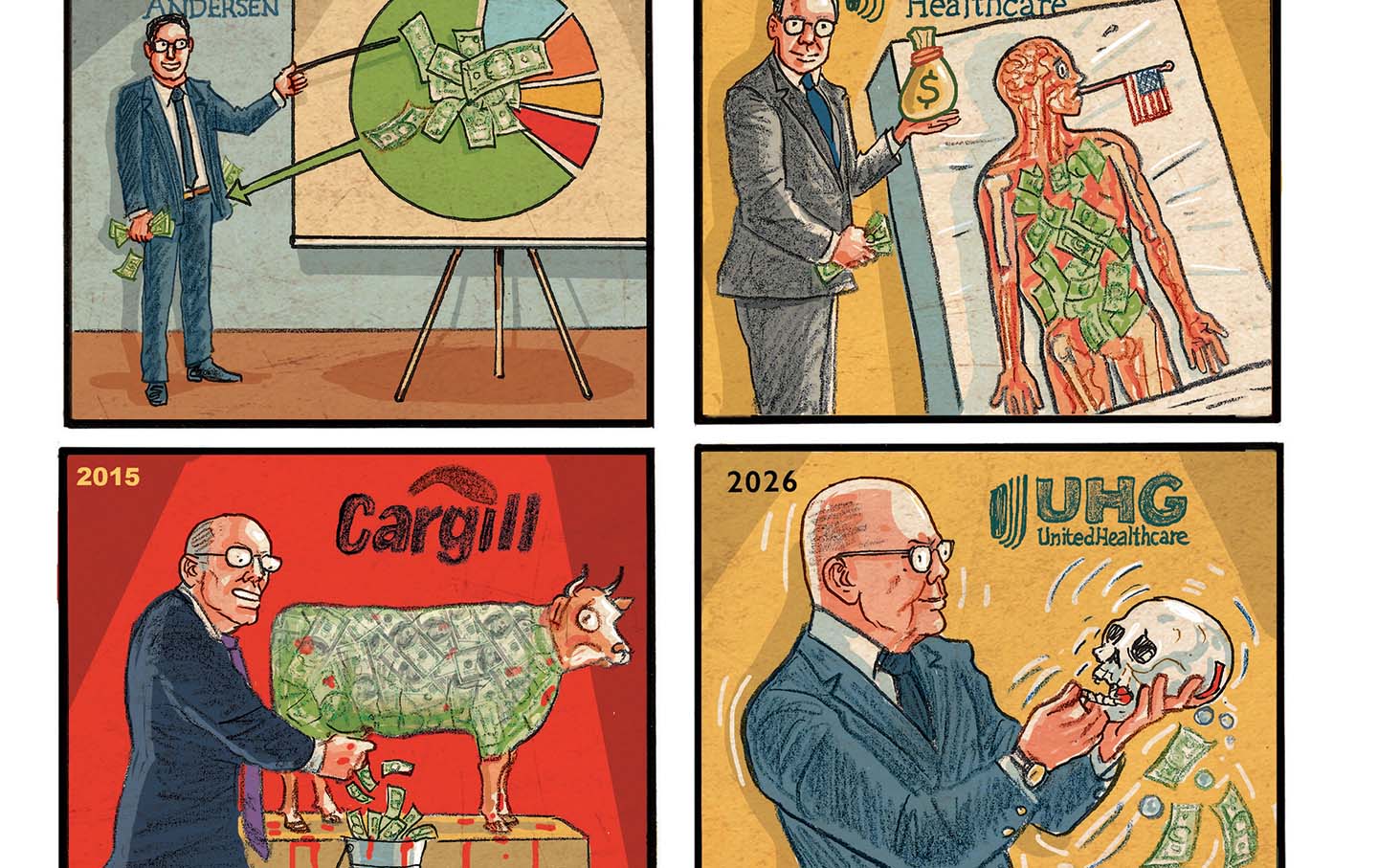
America’s UN-Healthcare Treatment America’s UN-Healthcare Treatment
The UnitedHealth group CEO’s savings plan.


Gina Hinojosa Is Showing Democrats How to Run Against Republican Grifters Gina Hinojosa Is Showing Democrats How to Run Against Republican Grifters
The Democratic gubernatorial candidate has closed the gap in Texas by focusing relentlessly on Greg Abbott’s corruption.

