
For Many Indigenous People, Voting Is Getting Harder
A century after the Indian Citizenship Act made their ancestors US citizens and acknowledged their right to vote, Indigenous Americans still face barriers to casting their ballots.
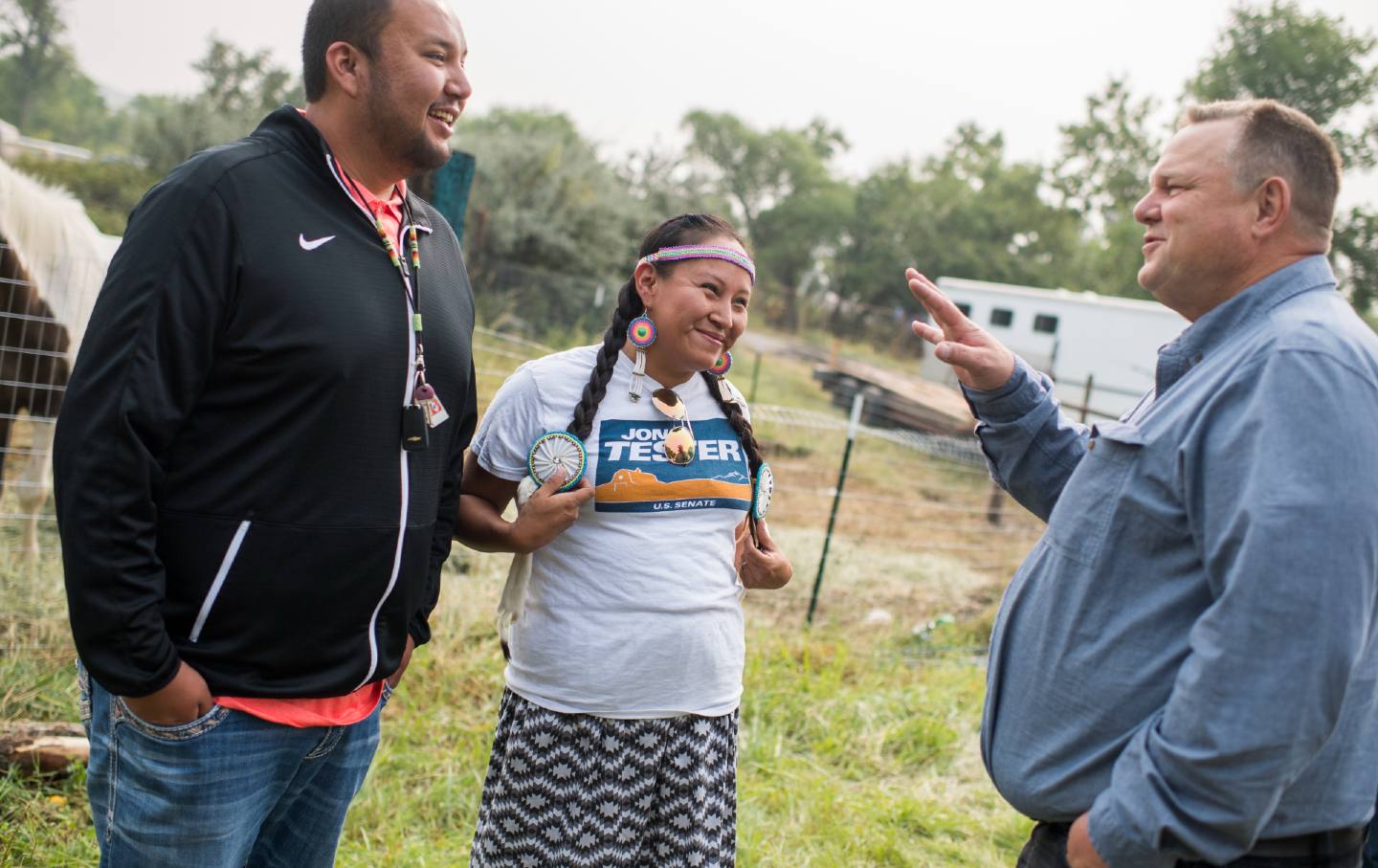
Senator Jon Tester (D-MT), right, meets with constituents at Crow Fair in Crow Agency, Montana, on August 19, 2018. Tester has said Indigenous voters were crucial to his successful 2018 reelection bid. He is now seeking a fourth term and will need their support if he’s to defeat GOP candidate Tim Sheehy.
(Tom Williams / CQ Roll Call)
On June 4, Western Native Voice organizers fanned out across downtown Billings, Montana, to register voters. Wearing sky-blue T-shirts that read “I Can Help You Register to Vote,” they hailed passers-by and approached families setting up lawn chairs on the sidewalk to ask whether anyone needed to update their registration. The organization was hosting a centennial celebration of the Indian Citizenship Act, and colorful floats lined the parade route.
A banner on one flatbed trailer announced the descendants of Chief Pretty Eagle, a Crow warrior and US military scout who died in 1903. Nearby, Louise Four Stars Smith, an Oglala Sioux centenarian, sat beneath a purple umbrella in the back of a black convertible. At 100 years old, Smith is the oldest known Indigenous voter in Montana.
Jayson Fisher, a 23-year-old Northern Cheyenne citizen, walked the route with a clipboard full of voter registration forms, explaining his work with Western Native Voice, which helps Montana’s Indigenous communities build political power.
“The whole thing is just to vote. Really, we don’t care who you vote for, we’re just registering you to vote,” he said “We try to make it as easy as possible, too, so we’re going to pick up ballots, we’re going to give people rides, we’re going to make sure they voted.”
For many Indigenous people, though, voting is getting harder. A century after the Indian Citizenship Act, they are still fighting to exercise the most fundamental right of US citizens: the right to elect our leaders. Rural isolation, slow postal service, and the failure of local governments to follow laws governing ballot access are just a few of the challenges they face. The biggest threats, however, are the legislators and county officials creating obstacles to voting under the guise of ensuring election security. In Montana, Indigenous people make up 6.2 percent of the population and represent a powerful yet diverse voting bloc, which Senator Tester credits as essential to his last reelection bid, in 2018. Now, as Tester seeks a fourth term, many of these same voters could determine the fate of the Senate.
“Republicans don’t want to try to earn Native votes, so they’re trying to suppress Native votes.” said Bret Healy, a non-Indigenous consultant with Four Directions, a voting rights organization based on the Rosebud Sioux Indian Reservation in South Dakota. “That’s just the cold hard politics right now.”
On September 30, six Assiniboine and Sioux citizens on the Fort Peck Reservation sued Valley and Roosevelt Counties, located on the north bank of the Missouri River in far northeastern Montana. With funding and legal support from Four Directions, they argue that county officials’ “refusal to establish satellite offices” in the reservation towns of Frazer and Poplar “denies the Plaintiffs’ voting rights and is an apparent effort to dilute Indian voting strength.”
Election offices are open year-round in the Valley County seat of Glasgow (population 3,192) and the Roosevelt County seat of Wolf Point (population 2,477), making it easy for residents to update their registration status and deliver absentee ballots. But there is no office in Frazer (population 420), 30 miles away from Glasgow, or Poplar (population 745), 21 miles away from Wolf Point.
For Bryce Kirk, a second-term councilman for the Assiniboine and Sioux Tribes, this disparity is notable because Glasgow and Wolf Point have much higher percentages of white residents than Frazer and Poplar.
“Last week, one county commissioner told me this is their election, and they have to protect it,” Kirk said. “To me, when they say it’s their election, they mean it’s a white person’s election.”
Kirk and other tribal leaders say this perception of bias is reinforced by GOP Senate candidate Tim Sheehy’s recent racist comments about how a cattle-branding trip he made to the Crow Nation was a “great way to bond with all the Indians out there while they’re drunk at 8 am and you’re roping together.”
Also, this isn’t the first time Indigenous people have sued for equal voting rights in Montana. In 2012, residents of the Fort Belknap, Northern Cheyenne, and Crow reservations successfully sued officials in Blaine, Big Horn, and Rosebud counties, forcing them to establish satellite offices. Eight years later, the Blackfeet Nation successfully sued Pondera County to secure a satellite office in the remote town of Heart Butte.
These victories, though, were temporary. In 2013, the US Supreme Court issued a landmark ruling in Shelby County v. Holder, which revised the 1965 Voting Rights Act, ending federal “preclearance,” a process that required election officials in jurisdictions with a history of restricting voting rights to submit proposed changes to voting laws for federal review before they could be implemented. Since then, lawmakers nationwide have passed 94 different laws restricting ballot access in 29 states, including laws that have an outsize impact on Indigenous voters.
“As soon as Chief Justice Roberts [issued] that Shelby County opinion, you could see the backlash,” Richard Clow, a retired Indigenous studies professor at the University of Montana, told me. “Once Shelby County came out, who do Republicans go after? Tribal voters.”
Popular
“swipe left below to view more authors”Swipe →After the Shelby opinion, Republican legislators in Montana targeted third-party ballot collection, a get-out-the-vote method widely used by organizations and campaigns across the country, in which someone picks up and delivers another person’s sealed ballot to ensure that it gets submitted to election officials on time. In 2017, legislators approved a ballot initiative banning the practice, and in 2018, voters passed the measure.
Western Native Voice and eight Montana tribes sued and overturned the ban two years later. Once again, the victory was short-lived. After President Donald Trump lost the 2020 election and refused to concede defeat, Republican legislators in Montana and other states prioritized passing new restrictions on voting rights.
In 2021, Montana Republicans passed laws prohibiting paid ballot collection, eliminating Election Day registration, banning the use of student IDs to vote, and preventing ballots from being mailed to young adults who turn 18 before Election Day.
Within months, Western Native Voice, five Montana tribes, two statewide unions, three youth organizations, and the state Democratic Party filed four separate lawsuits to overturn the new restrictions. These suits wound their way to the Montana Supreme Court, which struck down all four laws last March. In that 5–2 ruling, Chief Justice Mike McGrath reminded legislators that Montana’s Constitution has stronger voting rights than the US Constitution.
In August, though, Republican Secretary of State Christi Jacobsen petitioned the US Supreme Court to hear an appeal on two of the four laws—Election Day voter registration and paid ballot collection—on the grounds that Montana’s Constitution gives the state legislature discretion over election administration.
When I called Republican state Senator Steve Fitzpatrick, a Great Falls lawyer who helped pass the 2021 paid ballot collection ban, he suggested that GOP opposition to these practices was a matter of election integrity. “I don’t like third-party ballot collection because it breeds distrust in the election system,” he explained. “It’s very minimal, but there is a chance for fraud.”
When I asked whether there had been any such fraud in Montana, he said, “Not in Montana, no, but there was that case in North Carolina a few years ago.”
In that case, McCrae Dowless, a convicted felon hired by Republican congressional candidate Mark Harris, was caught stealing ballots from people’s doorsteps and altering their votes. During a subsequent trial, Harris agreed with the state’s bipartisan Election Board that a new election was warranted, but he now claims that the election was stolen.
Fitzpatrick also rejected the argument that new voter restrictions are politically motivated. “The fact of the matter is that Republicans do well on Indian reservations in Montana,” he said.
In fact, Indigenous voters statewide have historically supported Democratic candidates at a much higher rate than the average Montana voter. In 2020, for example, 57 percent of Montana voters supported Trump. But in three counties with the highest percent of native residents—Glacier, Big Horn, and Roosevelt—56 percent of voters supported Biden. Consequently, nine of the 11 members of the Montana Legislature’s Indigenous Caucus are Democrats.
“A quick look at the data explains why they don’t want Native people to have equal access to the polls.” Healy said. “It is the rigging of the election against Native people. All other reasons are just pretext.”
Whatever their reasons, Montana isn’t the only state were GOP lawmakers find themselves at odds with Indigenous voters. In 2020, Navajo citizens in Arizona lost a high-profile lawsuit to overturn a state law prohibiting ballots from being counted if they arrived after 7 pm on Election Day, even if they were postmarked on time.
In September of that year, President Trump’s campaign and several Republican committees attempted to intervene in the case. They argued that “counting these ballots would affect Proposed Intervenors and other candidates seeking office at the local, state, and federal level because it would change the share of votes those candidates receive.”
“They literally said the quiet part out loud,” Healy said. “The reason they didn’t want a lawsuit to go forward was that Native people didn’t vote for their candidates.”
Since then, Indigenous communities in Arizona, which have traditionally supported the Democratic Party, have defeated a law requiring proof of physical address to vote and are fighting a new law requiring proof of US citizenship, which places a burden on tribal elders who were never issued a birth certificate.
“I watch the Republican Party constantly limit people’s right to vote and specifically people who they don’t want to vote,” said Chris McClure, a Pawnee descendent, former Democratic candidate, and lawyer who represented Navajo plaintiffs in the 2020 case. “It seems winning is more important than democracy to them.”
After a series of meetings with Four Directions staff in early October, Roosevelt County officials opened election offices in Poplar for five hours a day from October 21 to 23. This was a temporary concession in just one of the two counties named in the lawsuit, but Kirk made the most of it.
“I put hay bales on a 20-foot trailer, and we ran hayrides through town picking up anyone who wanted to vote,” Kirk said, estimating that over 100 people voted on October 21. “When Indian country comes together, we win. They put us down for years, but we’re gonna continue to fight.”
More on Indian Country:
For many Indigenous voters, this fight now extends more than a century after the Indian Citizenship Act made their ancestors US citizens and acknowledged their right to vote.
“My mom always instilled in me that it was very important to vote,” Fisher told me. “It’s also really important because this is the 100th year of us being able to vote, and even when we became citizens some of us still didn’t have that right to vote.”
After passage of the act, state and county authorities prevented Indigenous people from voting because their land was held in federal trust and most did not pay taxes. This and other methods of disenfranchisement continued until the 1965 Voting Rights Act finally swept away the web of Jim Crow laws that barred Indigenous people, African Americans, and immigrants from voting.
Today, Fisher and his colleagues are determined to prevent lawmakers from weaving that web once again. As I walked with him along the parade route, we encountered another organizer, registering Tionna Horn, a Crow citizen, young mother, and first-time voter.
“I want to help out our tribe and our schools,” Horn replied, when I asked how it felt to register for the first time. Then, after clicking the brake on her stroller, she laughed.
“I feel like I actually did something for myself!”
More from The Nation
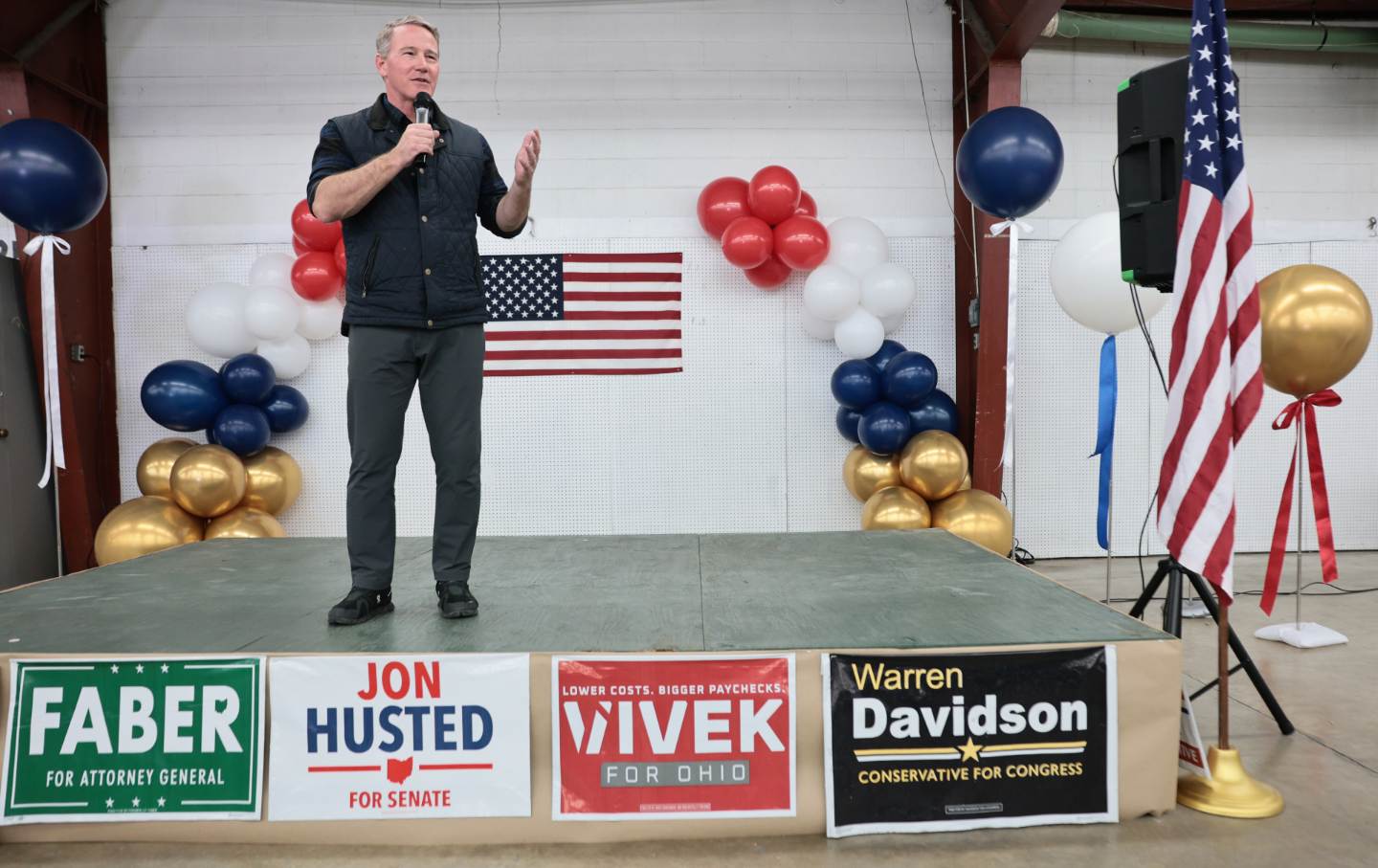
Will the GOP’s Big Money Save Jon Husted in Ohio? Will the GOP’s Big Money Save Jon Husted in Ohio?
Former senator Sherrod Brown is leading in most polls, but a tidal wave of spending may prop up the struggling incumbent.
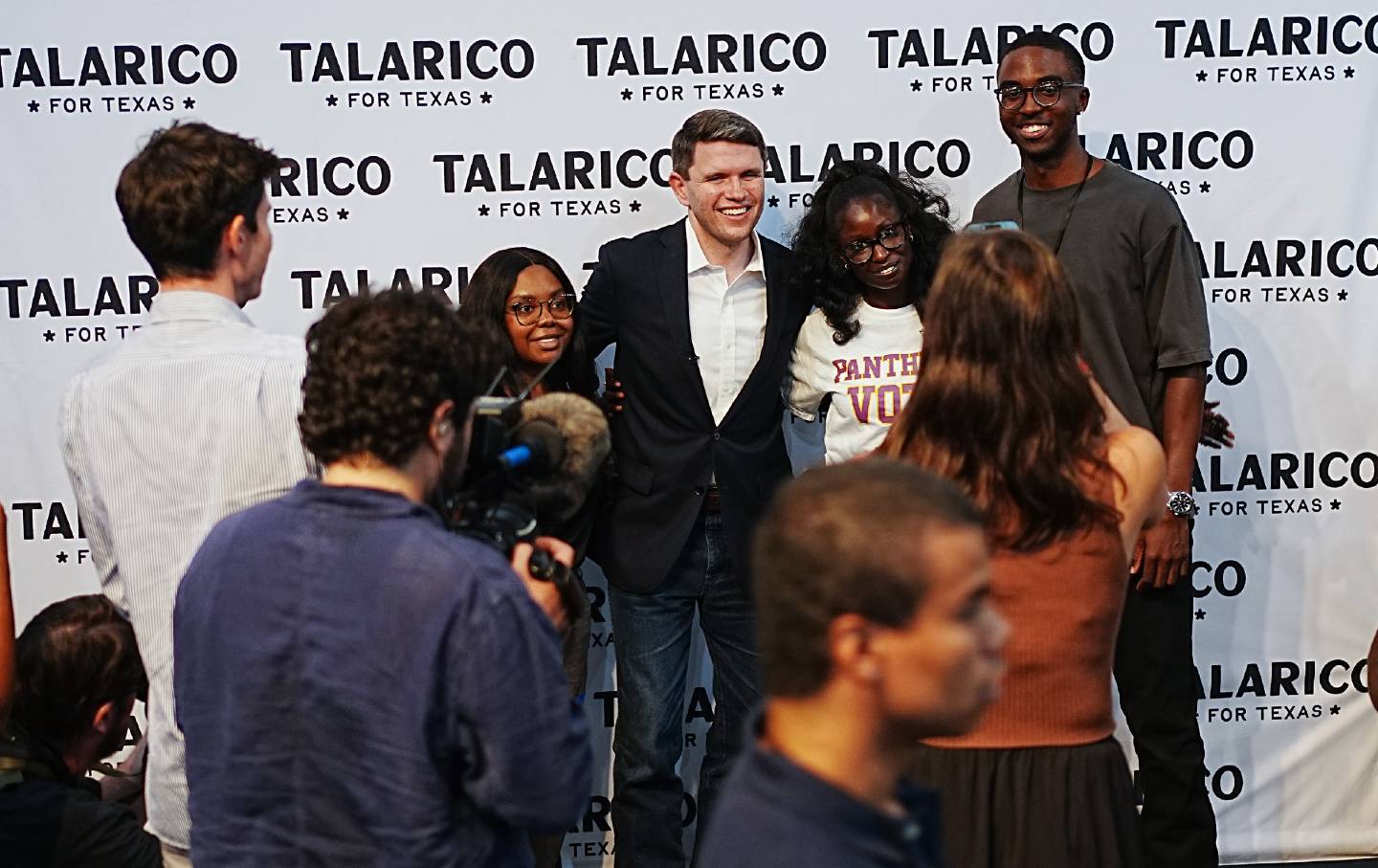
James Talarico Is Preaching a Gospel of Pluralism James Talarico Is Preaching a Gospel of Pluralism
He’s not the only progressive doing it.
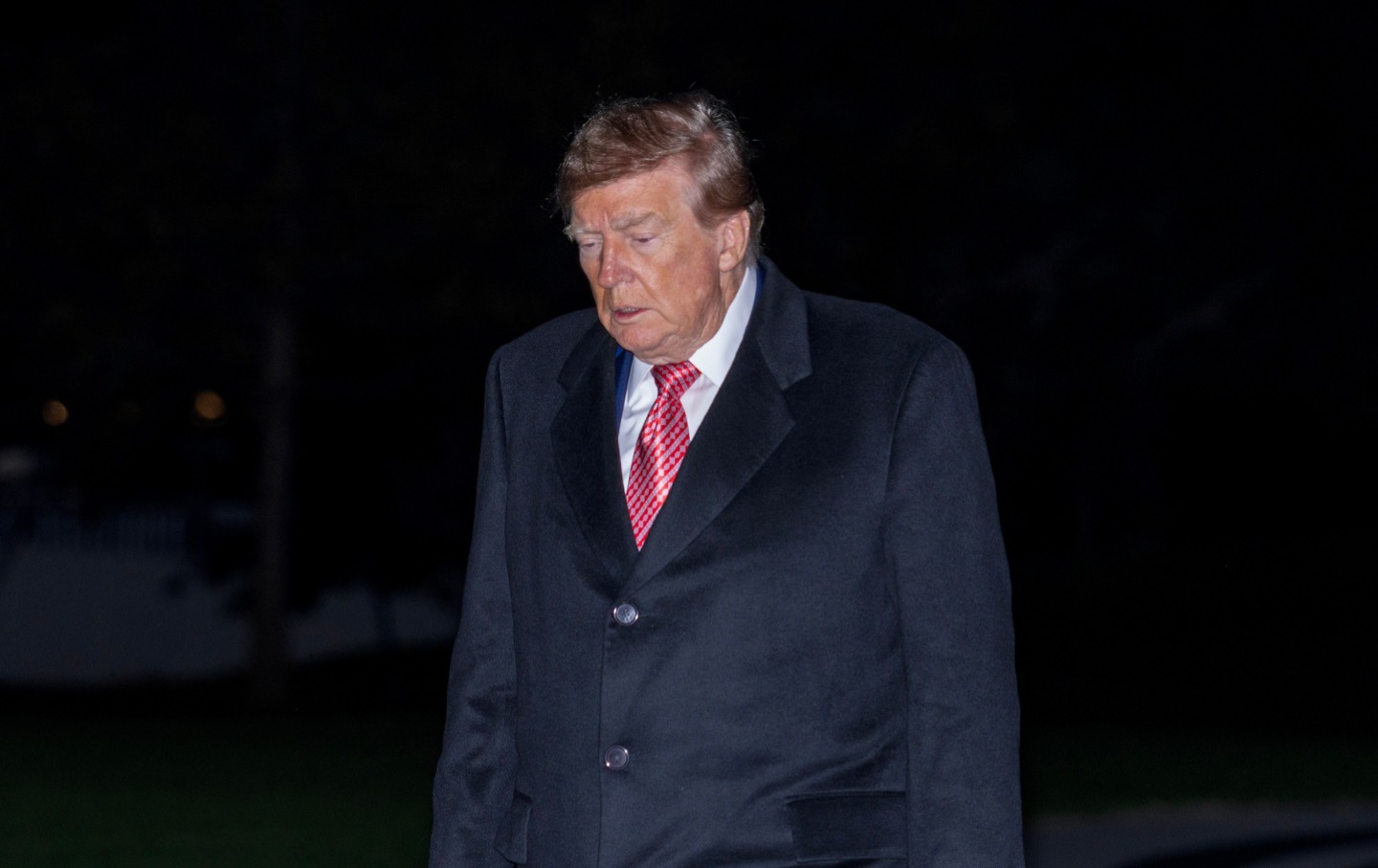
Even Republicans Are Waking Up to Trump’s Corruption Even Republicans Are Waking Up to Trump’s Corruption
And, somewhat shockingly, so are Democratic elites.
Mamdani Can No Longer Avoid the Issue of the NYPD Mamdani Can No Longer Avoid the Issue of the NYPD
The mayor has been able to put difficult questions about policing on the back burner—until now.
Why Democratic Leaders Keep Waging War on the Young Why Democratic Leaders Keep Waging War on the Young
The party's silver-haired establishment is caught up in an existential culture war.

