
The Harris Campaign Needs a Course Correction
The vice president’s eager embrace of Republican support is one sign that the mistakes of 2016 are being repeated.
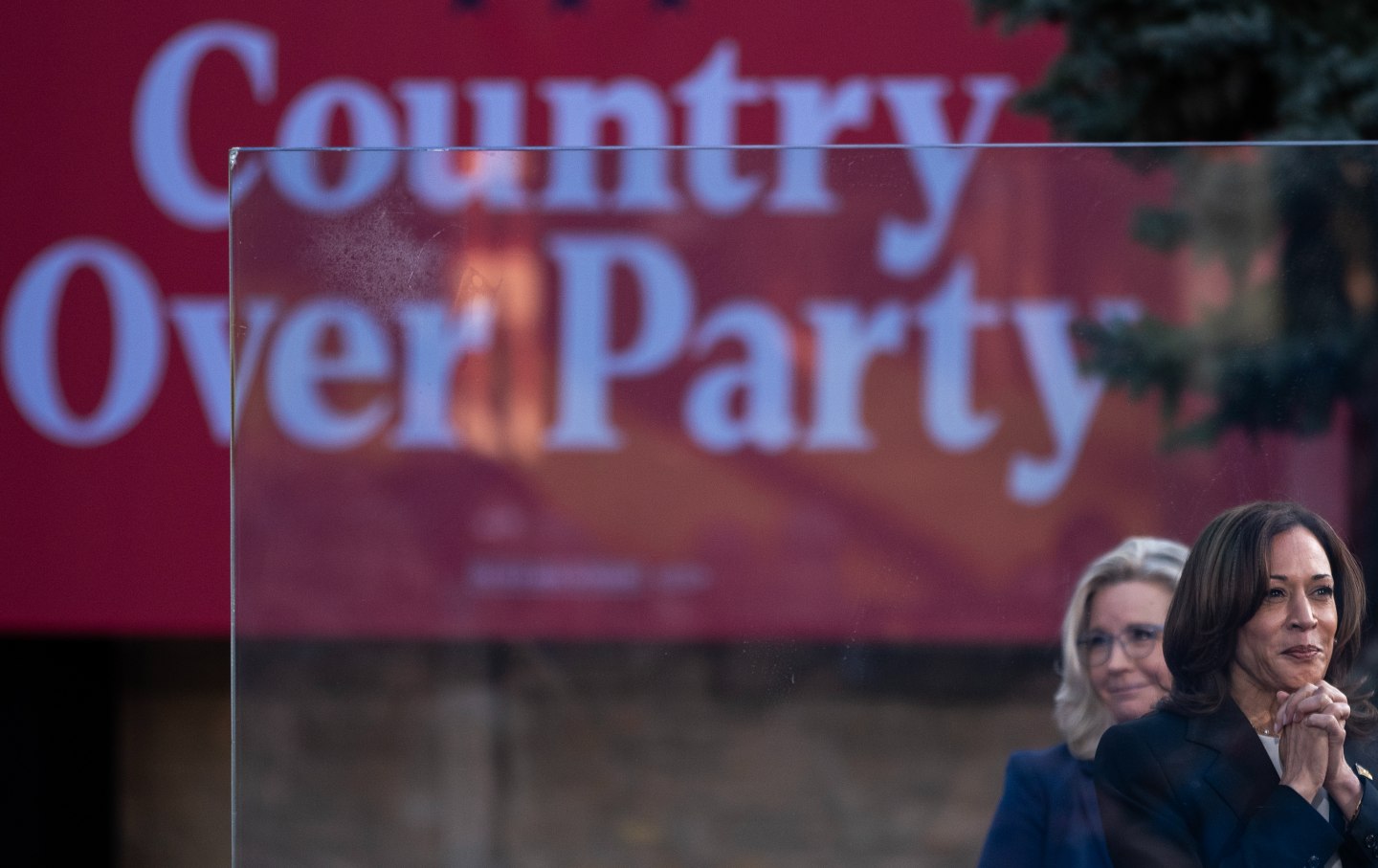
Speaking on Thursday at a town hall sponsored by Univision, Vice President Kamala Harris trumpeted, as she often has in recent weeks, the support she has from anti-Trump Republicans. But if the rhetoric was familiar, Harris tarted up the talking point by adding a surprising name to the list. Harris boasted that she’s been endorsed by “200 Republicans who worked with and for both Presidents Bush, John McCain, Mitt Romney; including Liz Cheney, the former congresswoman, and her father, the former vice president, Dick Cheney, who is supporting me; former members—very esteemed members, including generals—of the national security community. I have the endorsement and support of Alberto Gonzales, most recently, who, of course, was attorney general.”
Given the venue where she was speaking, Harris probably brought up Gonzales as an example of a prominent Latino Republican. But this gambit was tone-deaf. Gonzales hasn’t held public office since 2005, so he’s an obscure name—and, in fact, an infamous one for those who do remember him. Gonzales was one of the most hideous ghouls of George W. Bush’s War on Terror, specializing in developing legal rationales for warrantless wiretapping and torture. Gonzales authored the notorious “torture memos” that argued that fighting terrorism “renders obsolete Geneva’s strict limitations on questioning of enemy prisoners.” In 2007, Gonzales resigned after allegations that he had lied to and stonewalled congressional investigations. Prior to his resignation, both Republicans and Democrats in the Senate stated that they had lost confidence in him.
In other words, Gonzales is a thoroughly disgraced figure whose endorsement is worthless. Harris might as well make a bid for the Greek American vote by announcing that she’s been praised by the ghost of Spiro Agnew.
By itself, Harris’s invocation of Gonzales is a minor enough misstep, but it falls into a broader pattern. To a distressing degree, Harris has been spending the closing weeks of her campaign trying to win over Never Trump Republicans, at the expense of highlighting her own economic populism and defense of abortion rights.
This tactic inevitably calls to mind Hillary Clinton’s singular focus on Trump’s unfitness for office—an issue her campaign elevated as a way to win over suburban college-educated Republicans. As Senator Chuck Schumer notoriously declared in 2016, “For every blue-collar Democrat we lose in western Pennsylvania, we will pick up two moderate Republicans in the suburbs in Philadelphia, and you can repeat that in Ohio and Illinois and Wisconsin.” Schumer’s math was ridiculously wrong for an obvious reason: Non-college-educated voters outnumber college-educated voters by nearly two to one (64 percent to 36 percent). So it shouldn’t have come as a surprise that Clinton lost in Pennsylvania, Ohio, and Wisconsin. The only thing that keeps the Democrats viable is that they have strong support from non-college-educated Black and Latino voters, but polling over the last few years shows that support from these groups has also been eroding.
One big reason Clinton lost in 2016 was that she neglected the working-class base of the party at the expense of trying to win converts from Never Trump Republicans. Democrats are now starting to worry that Harris is heading down the same path.
Writing in The New Republic, Greg Sargent notes:
Some Democrats worry, for instance, that the party still isn’t doing enough to engage low-propensity Black and Latino voters, particularly young men. There is time to repair this. Democrats also wonder if they failed to define Trump early in the cycle, letting him slowly rehabilitate his favorability numbers. Still others fear they didn’t remind voters early on of the horrors of Trump’s first term, leaving them with rosy memories of his presidency—including blue-collar voters’ fond impressions of the Trump economy. Those latter two problems may not be repairable in time.
As Sargent suggests, a messaging shift could still help win back some of the low-propensity voters who tell pollsters they are leaning Trump but who are by no means lost to the Democrats.
In Jacobin, Branko Marcetic offers a much more dire assessment:
For weeks now, it’s been clear the Harris campaign has decided that it’s going to rerun the Clinton 2016 strategy on the off chance that that year really was a fluke, and that Trump really is so hated that Americans will have no choice but to vote for his opponent. It didn’t work in 2016, but this time . . .
What does that look like in practice? It looks like dropping the “negative” label of weird and performing civil disagreement instead. It looks like giving up on exciting the party’s progressive flank—actively thumbing your nose at them, in fact—and explicitly pivoting to trying to win over Republicans instead. It looks like rolling out white papers and policy positions that few will read, while rarely talking publicly about what you would actually do when given the chance at a public forum. Like running to Trump’s right on immigration and foreign policy, even calling Iran, absurdly, the country’s most dangerous adversary and suggesting you might launch a preemptive strike on it.
While Marcetic makes many good points, he goes too far. Unlike Hillary Clinton in 2016, Harris does have a genuine economic populist agenda. In contrast to Clinton, Harris isn’t avoiding crucial states like Michigan and Wisconsin. Nor is Harris unwilling to foreground labor unions as a crucial part of the Democratic Party’s coalition.
Harris wants Medicare to cover in-home care for seniors and people with disabilities. As Jonathan Cohn notes in HuffPost, if carried out, this proposal “would arguably represent the largest expansion of the welfare state since the Affordable Care Act, and the single biggest investment in caregiving in modern history.”
Cohn is rightly critical of the mainstream media for not giving this ambitious proposal the attention it deserves. But even if the media has faltered, Harris herself deserves criticism. In its national messaging, the Harris campaign has been giving much more emphasis to assuaging moderate Republicans—a tactic that necessarily pushes economic policy to the background.
There are still three weeks left until the election, which might seem short but does still leave time to reach out to wavering Democrats. The polls show a race that is at best static with a slight Harris lead, with worrying signs of tightening in swing states. The Harris campaign desperately needs to do a course correction. The Dick Cheney fan club will never win this election. Hitting hard on economic populism while there is still time to excite the base remains the best path to victory.
More from The Nation
The White Man Can Always Take What You Have The White Man Can Always Take What You Have
In this week's Elie v. US, our justice correspondent breaks down the real message of the attacks on Ilhan Omar. Plus: the anti-trans case that will come for us all.

Where Is the Outrage Over Trump’s Racist Targeting of Ilhan Omar? Where Is the Outrage Over Trump’s Racist Targeting of Ilhan Omar?
The establishment press and some Democrats are strangely mute over the president’s flagrant abuse of the legal system.
America’s UN-Healthcare Treatment America’s UN-Healthcare Treatment
The UnitedHealth group CEO’s savings plan.

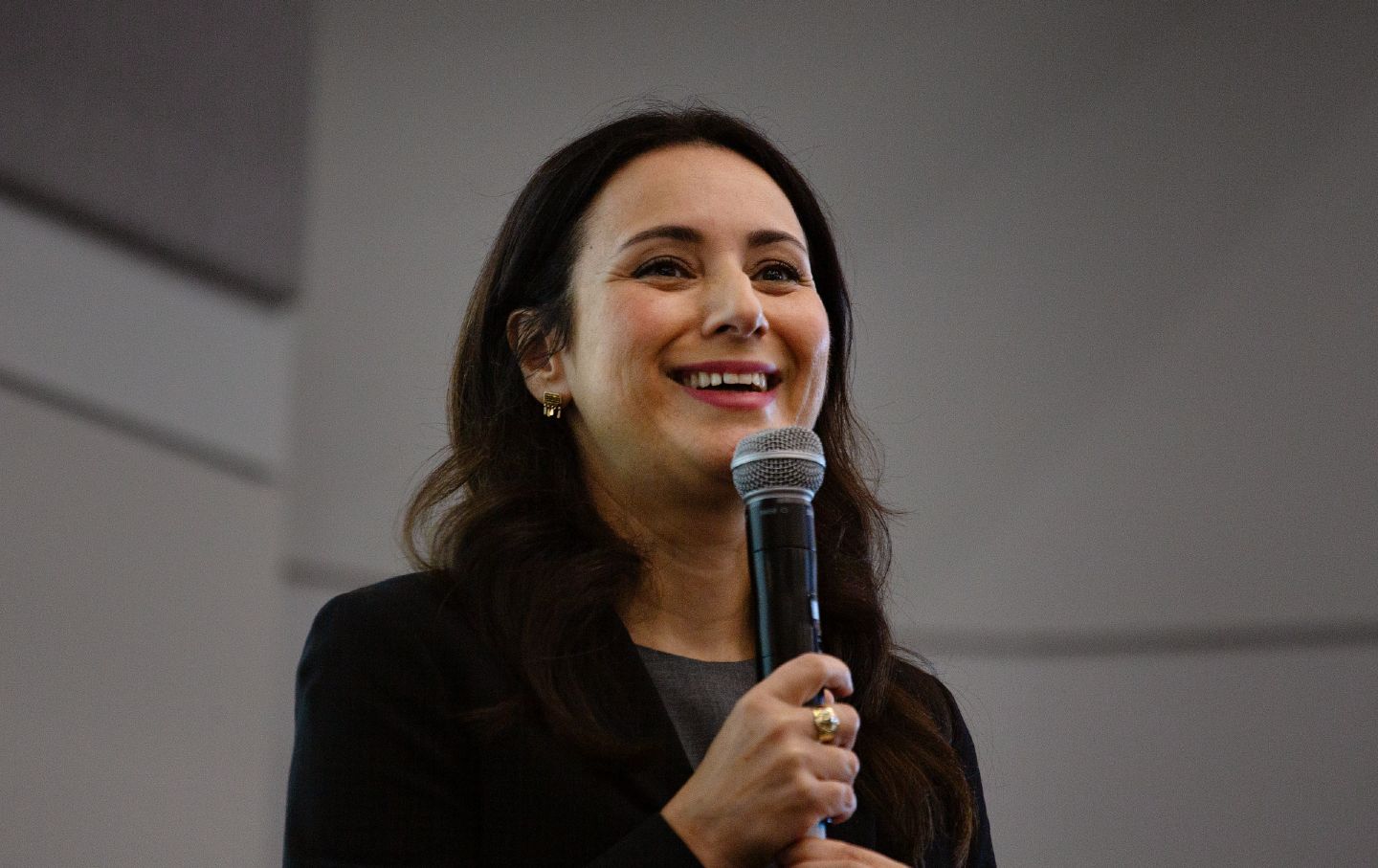
Gina Hinojosa Is Showing Democrats How to Run Against Republican Grifters Gina Hinojosa Is Showing Democrats How to Run Against Republican Grifters
The Democratic gubernatorial candidate has closed the gap in Texas by focusing relentlessly on Greg Abbott’s corruption.

