Documenting the First Year Without “Roe v. Wade”
A conversation with journalist Amanda Becker about her new book, You Must Stand Up: The Fight for Abortion Rights in Post-Dobbs America.
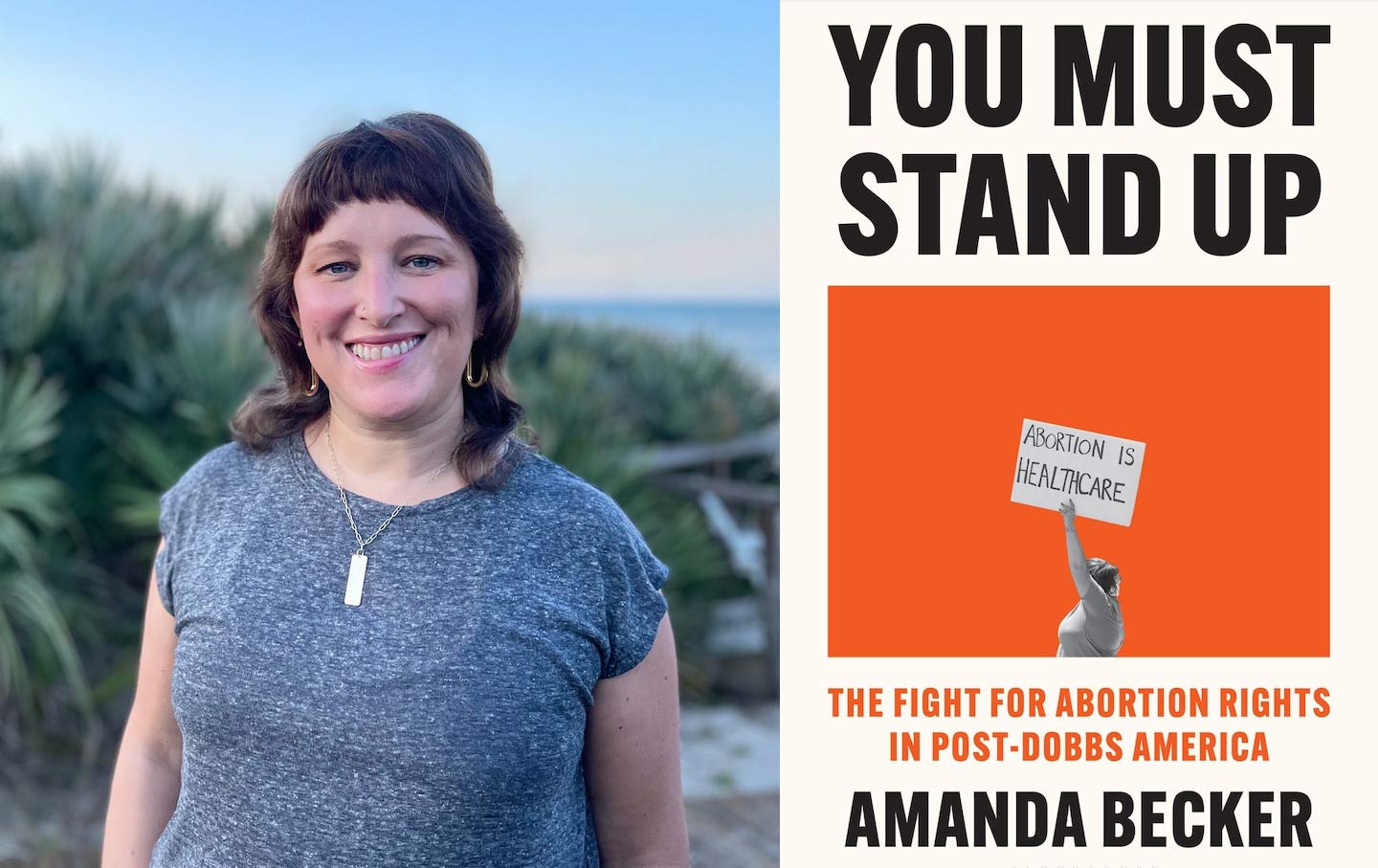
Amanda Becker is no stranger to tackling tough topics head-on. The Washington correspondent for the nonprofit news organization The 19th, Amanda has spent over a decade covering Congress, the White House, and elections, having previously worked at Reuters and CQ Roll Call. Amanda is also an Ohio native and brings a personal connection to the challenges faced in her home state, particularly the restrictive abortion laws that have long shaped the lives of many.
Her latest book, You Must Stand Up: The Fight for Abortion Rights in Post-Dobbs America, was born out of what she describes as a moment of “seismic change” following the Supreme Court’s decision in Dobbs v. Jackson Women’s Health Organization. While on a family trip in Florida, Becker learned through the draft leak that the Supreme Court was poised to overturn Roe v. Wade, and she immediately understood that her book would be “the most important story” she would ever cover.
In You Must Stand Up, Becker follows grassroots leaders, healthcare providers, and activists as they navigate the chaotic aftermath of the ruling. Becker also acknowledges the complexities of reporting on abortion at this moment when, as one clinic worker pointed out, “the world is gawking at our trauma.” Real people are impacted by these legislative and judicial decisions, and Becker doesn’t shy away from the complicated realities that we are all living in. At the same time, Becker offers a powerful portrait of resilience and hope in the fight for abortion rights and access for everyone.
I spoke with Amanda about her process and the challenges that came with documenting the first year after Dobbs, a time when it seemed as if everything was in flux, and about the remarkable ways providers, activists, and everyday people have navigated and resisted the attacks on abortion access. This interview has been edited for clarity and length.
—Larada Lee-Wallace
LLW: The Dobbs decision has had a profound impact on abortion access across the country. How did you choose what subjects to focus on in your book, and what were the most striking differences you observed in how different regions responded to the decision?
AB: I chose to focus on the first year without federal abortion rights to capture a snapshot of what it meant to live in a post-Dobbs world. I wanted to illuminate the different realities Americans face under new abortion restrictions and highlight the varied responses across regions.
Tuscaloosa, Alabama, was a primary focus because Robin Marty—executive director of the West Alabama Women’s Center—was a key figure in providing insight into the challenges of a state with strict abortion bans.
Robin’s connections led me to Dr. Gabrielle Goodrick, who founded the Camelback Family Planning Center in Phoenix, Arizona, which offered a contrasting perspective from the western United States.
I also included tertiary settings like Ohio, where I have personal ties, to explore its direct ballot initiative aimed at protecting abortion rights, while Wisconsin illustrates how democratic responses are unfolding in the face of restrictive laws.
Overall, I selected these locations to highlight not only the varied regional responses but also to address the broader theme of democratic erosion and the disconnect between laws and public opinion.
LLW: “Creative resistance” is a key theme in your book. Can you share some examples of the innovative strategies that activists, healthcare providers, or legal teams used to navigate the new post-Dobbs landscape?
AB: I think Dr. Gabrielle Goodrick is a prime example of creative resistance. As an abortion provider, her expertise lies in medicine, not legal strategy. Yet, she has adeptly navigated the post-Dobbs landscape by using her medical knowledge to circumvent restrictive laws.
Arizona law currently restricts most abortions after 15 weeks of pregnancy, with few exceptions, and imposes strict regulations on providers, making access more challenging. The situation worsened when a pre-statehood law kicked in that was a near-total ban on abortion. Although the 15-week ban was later reinstated, the legal uncertainty created confusion and it was difficult for Dr. Goodrick or other providers to know on a day-to-day basis which law was in place and how they were able to treat patients.
Dr. Goodrick explores how to provide the same standard of care within the confines of new regulations and the title of the book is from a blog post she wrote that called on doctors to protect their profession.
In addition to providers like Dr. Goodrick, the book highlights various ways in which people figured out their role to play in our democracy to protect abortion rights. For instance, medical students have had to adapt to new challenges, such as limited access to OB-GYN education in certain areas. Everyday voters also play a crucial role, as shown in the chapter set in Kentucky, which underscores the importance of active engagement to ensure voters, who overwhelmingly support abortion access, have a voice in shaping policies.
These examples collectively demonstrate that when faced with significant challenges, individuals and groups can find innovative ways to contribute to causes they care about, they just have to figure out what their specific role is based on their strengths and expertise.
LLW: What were some of the challenges you faced in documenting the first year after Roe was overturned, given that it was such a rapidly evolving situation? How did you ensure your reporting remained accurate and up-to-date?
AB: I was actually doing the Nieman Fellowship at Harvard during much of this first year after Dobbs, and it was not a book fellowship. I was trying to balance what my responsibilities for the fellowship were and what I was looking forward to—having a break from the newsroom as I was doing this fantastic fellowship.
The nature of book writing offers both luxuries and challenges compared to daily journalism. While I had the time to reflect and revise, this also meant that my work was often subject to change long after it was written. To address this, I focused on capturing the accuracy of events as they unfolded in real-time, knowing that updates might be needed.
A prime example is Arizona, where legal confusion and shifting regulations created a chaotic environment. The state’s situation was in constant flux, with even Republican officials struggling to agree on which laws were in effect. I was aware that some details might become outdated quickly, but documenting this ongoing uncertainty was crucial to illustrating the confusion and distress experienced by abortion providers and other stakeholders in those early months.
Popular
“swipe left below to view more authors”Swipe →LLW: What do you hope readers take away from these stories, and what they tell us about the post-Dobbs landscape?
AB: I hope readers gain a deeper understanding of what I like to refer to as the “connective tissues” of our democracy. The US democratic system is incredibly complex, with numerous forces at play, including those who profit from understanding and exploiting its intricacies. I want readers to grasp how our democracy functions on a granular level, which will hopefully empower them to participate more fully and confidently in the democratic process.
The post-Dobbs landscape has created vastly different realities for Americans depending on where they live, illuminating the erosion of democratic norms and equal rights across the country. But if abortion rights are issue someone cares about, there is a role for everyone to play, and the book is showing people who have figured out what their specific role is based on their own experience and expertise.
Another key takeaway I hope to impart is the importance of active participation in democracy. It’s not about passively waiting for change to happen. Democracy offers direct avenues for engagement, such as ballot initiatives, and we elect representatives to serve our interests. When they fail to do so, it’s crucial for us to remember that we have the power to hold them accountable and, if necessary, replace them. People need to take this responsibility seriously if they believe their elected officials are not representing their interests. My hope is that these stories I tell can be used as a manual for how people can participate in US democracy.