The Canadian Wildfires Are Once Again Sounding the Alarm About What’s to Come
Immediate climate action must be taken to keep communities safe, in the US and abroad.
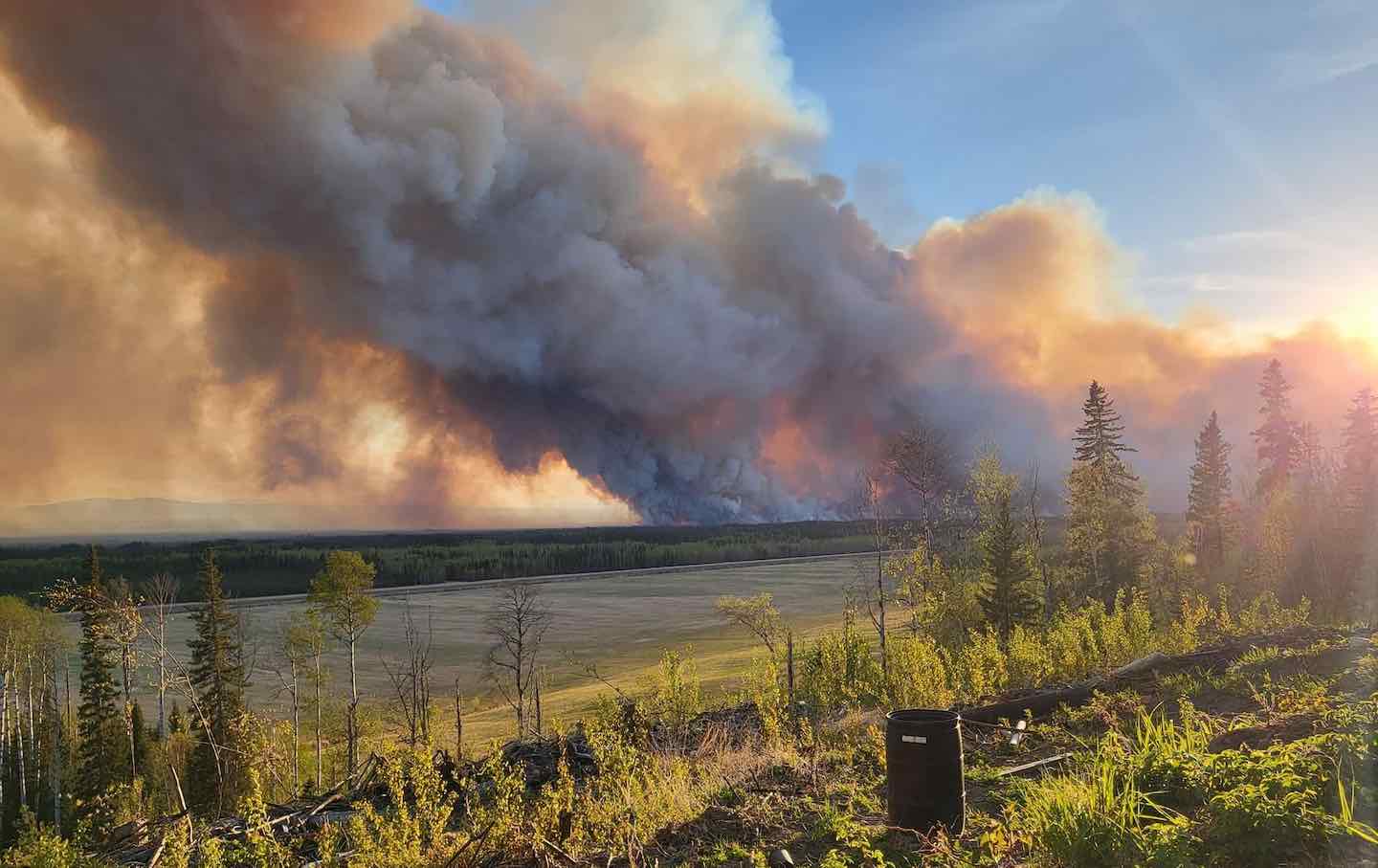
In recent weeks, one story has failed to garner as many headlines or dominate as many social media feeds as it should have, despite its widespread implications. Right now, Canadian wildfires are once again issuing a grave global warning: Catastrophic climate change is no longer just a future dystopian possibility; it’s a present, inescapable reality.
While fires blaze across Western Canada, spreading smoke, making it harder to breathe, and diminishing air quality for people living as far away as South Dakota and Iowa, millions of people in Brazil are recovering from severe floods in Rio Grande do Sul, which, as with the Canadian wildfires, scientists and major research organizations have characterized as an alarming sign of what is to come from accelerating climate change.
Following the last Canadian wildfire season, as I watched smoke from hundreds of miles away blow over my home city of New York and turn the sky orange, I wrote for The Nation about the importance of learning from the precarious reality these fires reflected and of the imminent need for governments to promote serious climate policies. Today, I am astounded to see how governments learned nothing from that crisis. Having failed to agree to phase out fossil fuels at COP28, nations continue to lag behind on—and even outright contradict—their espoused climate goals.
As oil and gas companies continue to increase the production of fossil fuels, basically turning the earth into a microwave oven, the opposite weather extremes seen in North and South America affirm that immediate and global action must be taken to keep all of our communities safe. Such action means not only massively curbing greenhouse gas emissions in alignment with climate science but adapting to the terrifying new normal, especially as the slow-onset effects of climate change, like rising sea levels, make more and more places dangerous to inhabit. As long as governments fail to lead the way in these two essential charges, it’s clear that we ordinary citizens must use every tool available to us to shift political and economic conditions in the direction of a rapid and just transition to renewable energy. In effect, if our elected officials refuse to wake up to the climate emergency, we must force them to.
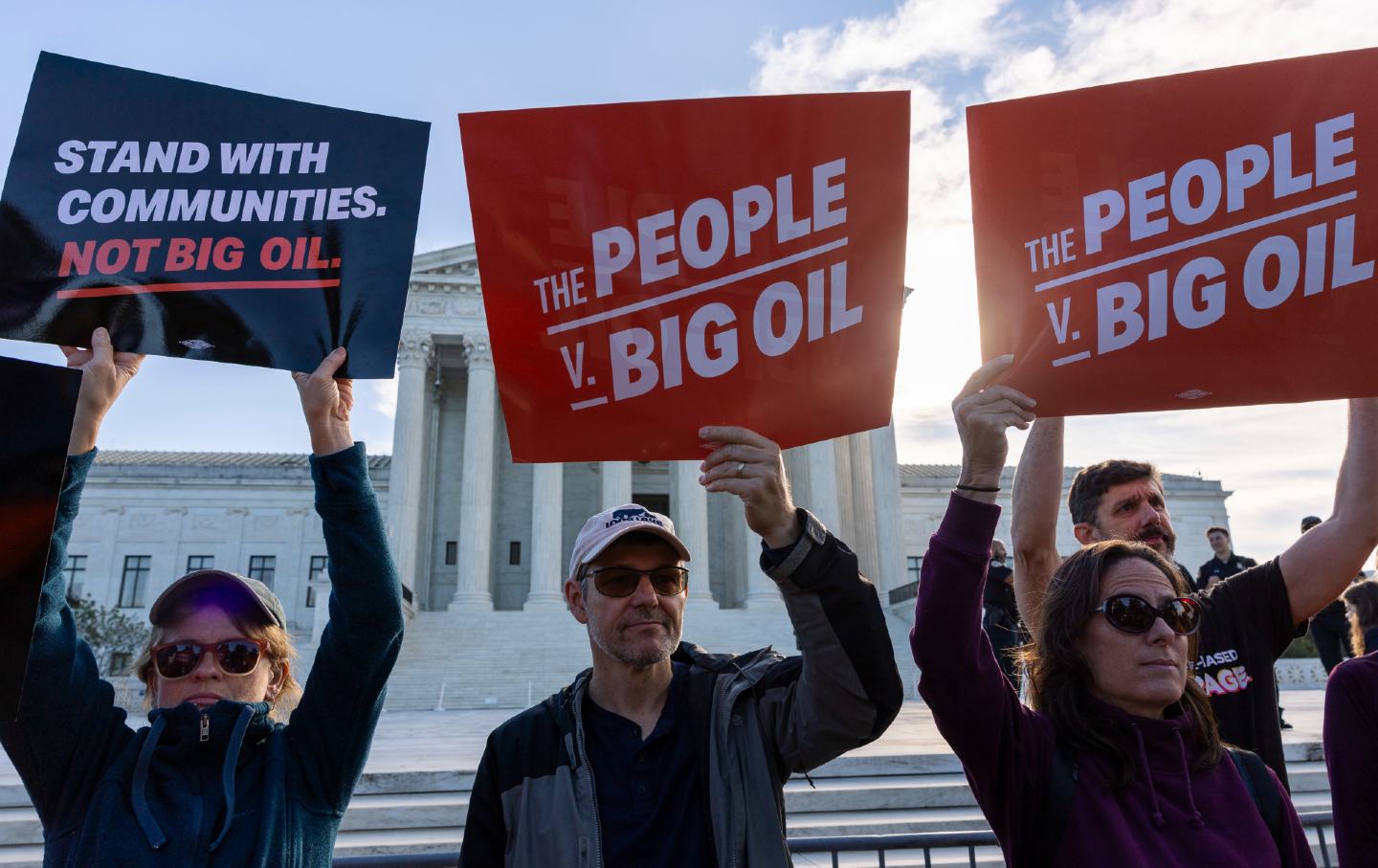
The upcoming elections in the European Parliament and US presidential race—the latter of which features a notorious climate denier who spent his time in office systematically dismantling environmental and climate policy—provide an essential opportunity to raise the call for climate action. Beyond simply voting for candidates who voice commitment to the cause, people must pressure politicians to either deliver on climate promises or get out of the way. This pressure can include public protests but also action through indirectly influential channels, including the media and the courts; in April, for instance, elderly Swiss women won a major victory in compelling the European Court of Human Rights to recognize their government’s inadequate response to climate change as a fundamental violation of their human rights.
Moreover, meaningful action must involve a reckoning with the unequal distribution of climate-change-related suffering. A recent study estimates that the economic damage caused by climate change is six times greater than previously thought and that by the century’s end, the total could rival the damage caused by permanent war. Currently, these astronomical costs are being paid disproportionately by those least responsible for the crisis—namely, by the world’s least developed or poorest countries and by marginalized communities, women, and future generations. Advocacy for policies that tax fossil fuel wealth, alongside direct challenges to this wealth through tactics like boycotts and calls for divestment, can help hold big polluters accountable.
More immediately, it is essential to look for local models of resilience. As numerous studies have suggested, mutual aid funds, such as those that proliferated during the Covid-19 pandemic and in the wake of major natural disasters like Hurricane Katrina, offer powerful examples of how communities can come together, help close the gaps left by inadequate government programs, and ensure a focus on equity and social justice in resource distribution. Online trainings focused on community preparedness can help build capacity for immediate disaster response and longer-term climate-risk management.
Finally, we all must commit to doing more than simply accept the new normal passively. That means ensuring that every climate catastrophe makes headlines. According to top climate scientists, every 10th of a degree of planetary warming matters, and so every 10th of a degree that can be prevented must be. We should be sharing news of and responding to every intensified wildfire season and flood. Indeed, every sign of the climate crisis should, so to speak, set alight a firm determination to address its root causes and provide a humanitarian response to its inevitable consequences.
If we fall for the distractions of partisan politics—getting caught up in fabricated culture wars—or deprioritize a climate agenda, a more stable future will always remain out of reach.