
Inside the Latest Congressional Hearing on Campus Antisemitism
Students for Justice in Palestine called the hearing “a manufactured attack on higher education” as Republicans criticized universities for negotiating with protesters.
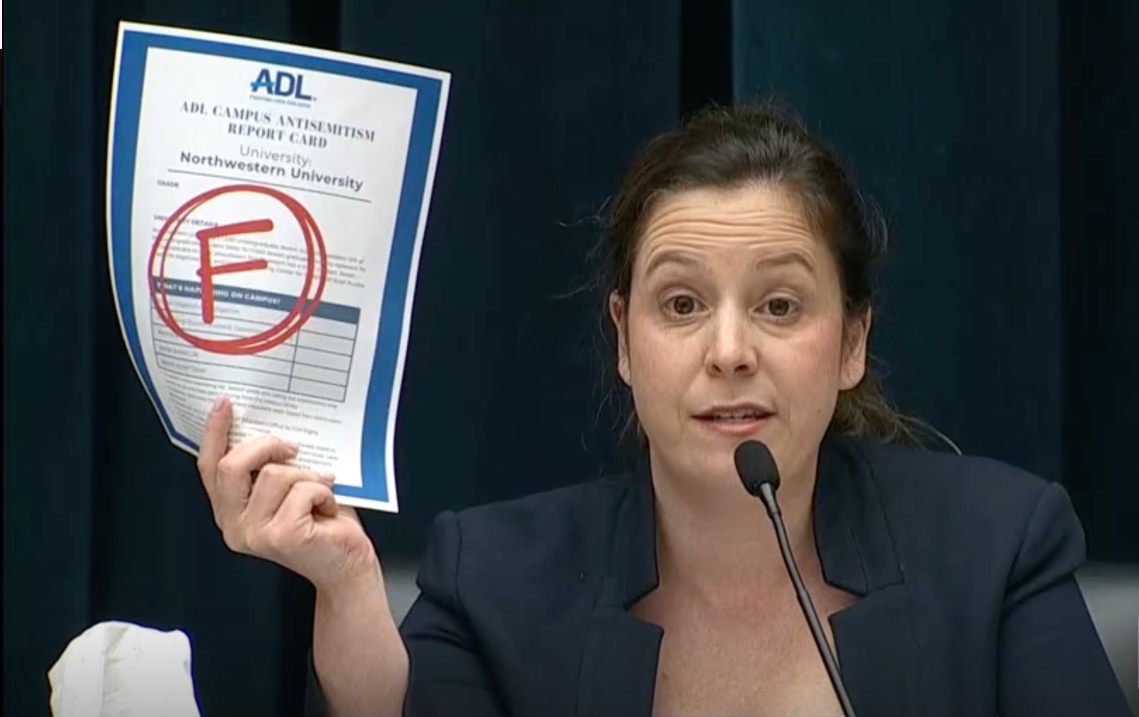
Rep. Elise Stefanik during a House Education and the Workforce Committee hearing on May 23, 2024.
(C-SPAN)
During a three-hour hearing on Thursday, May 23, the House Committee on Education and the Workforce grilled four university leaders on their response to student protests against US involvement in the Israel-Gaza war.
This round of questioning was the third installment in the Republican-led committee’s quest to probe university presidents. Previous hearings brought chaos to the tenures of other leaders who testified before the body. Last year, the presidents of Harvard University and the University of Pennsylvania resigned after being questioned by the committee and facing mounting public pressure to step down.
Committee Chair Rep. Virginia Foxx called the president of Northwestern University Michael Schill, chancellor at the University of California, Los Angeles Gene Block, and president of Rutgers University Jonathan Holloway to Capitol Hill following the formation—and subsequent removal—of pro-Palestinian Gaza solidarity encampments on their campuses. Student protesters demanded, among other measures, divestment of their university’s endowment from companies affiliated with Israel.
While many Republican and Democratic politicians have called these demonstrations antisemitic, the protestors—including many Jewish students who have participated—reject this charge. “This crisis is the carefully engineered climax of a long-standing project to conflate criticism of the Israeli state with racism against Jewish people; its aim is to discredit critics of Israel and, if possible, banish them from campuses across the United States,” wrote members of UCLA’s task force on anti-Palestinian, anti-Muslim, and anti-Arab racism for The Nation.
During the hearing, entitled “Calling for Accountability: Stopping Antisemitic College Chaos,” Schill and Block drew on their own family histories of relatives who died in or survived the Holocaust. “My family’s story, which unfortunately is not unique among American Jews, makes me deeply appreciative of Israel, and is a constant reminder to me of what can happen when antisemitism is allowed to take root and spread,” Schill wrote in his opening statement.
Republican members repeatedly criticized the university leaders’ decision to negotiate with the encampment participants. “The Committee has a clear message for mealy-mouthed, spineless college leaders: Congress will not tolerate your dereliction of your duty to your Jewish students,” Foxx said in a statement. While Rutgers and Northwestern secured peaceful resolutions with students, U.C.L.A’s encampment faced violent attacks by counter-protesters before law enforcement dismantled the camp.
In the face of pointed questioning, Schill and Holloway stood by their decision to negotiate with the protesters instead of resorting to law enforcement. “I knew at the time that there would be criticism of this [agreement],” Schill wrote in his opening statement. “I understand and accept those criticisms, but I also believed, and continue to believe, that this option provided the clearest and safest path forward.”
“Many people have argued that Rutgers should not have engaged in discussions with the protestors,” Holloway wrote. “What I have said in response is that we talked with Rutgers students. They were, for the most part, New Jersey students: born in our state, educated in our high schools, and enrolled at their state university. They were not, as some have characterized them, terrorists; they were our students.”
On April 29, Northwestern reached an agreement that promised further transparency on the university’s investments and the establishment of an advisory committee to engage in investment questions, though Schill said he would never recommend divestment to the university’s Board of Trustees. Rutgers also declined to sever its ties with Tel Aviv University, as protesters demanded, but agreed to establish an Arab Cultural Center along with the hiring of administrators specifically focused on the experience of Arab, Muslim and Palestinian students.
Questioning by Republican representatives focused on the disciplinary actions being taken against student protesters who have been reported for antisemitic behavior. Each school’s representative said that investigations were ongoing and did not touch on specific instances. Block specifically said that his institution was investigating reports of Islamophobia as well as antisemitism.
In a heated exchange, Representative Elise Stefanik listed allegations of antisemitic incidents by Northwestern students and criticized the supposed lack of subsequent disciplinary actions. But Schill did not equivocate. “We believe in due process at Northwestern,” Schill said. “We believe in investigations.” He refused to commit to any concrete actions against these protesters before the investigations were completed.
Popular
“swipe left below to view more authors”Swipe →Democrats, including Representative Bobby Scott and Representative Pramila Jayapal, said that if Republicans truly wanted to take action against anti-semitism on college campuses, they should support efforts to increase funding to the Office for Civil Rights in the Department of Education. Last year, the Republican-dominated House Appropriations Committee proposed a 25 percent cut to the Office’s budget.
Representative Haley Stevens reflected Democratic frustration, saying “as a Democrat on this committee who is focused on increasing and expanding Pell, lowering the cost of higher education and trying to build equity, it is deeply frustrating and concerning that this is the third hearing that we’ve had cosplaying about protecting students equally.”
In a joint statement released before the hearing, Students for Justice in Palestine chapters at Rutgers, Northwestern, and U.C.L.A. accused the congressional committee of repressing pro-Palestine student protesters. “As we enter the 231st day of genocide, the US Congress continues its McCarthyist project, establishing a manufactured attack on higher education to distract from their own genocidal actions,” they wrote. “Our movement for Palestinian Liberation only grows in the wake of repression.”
More from The Nation
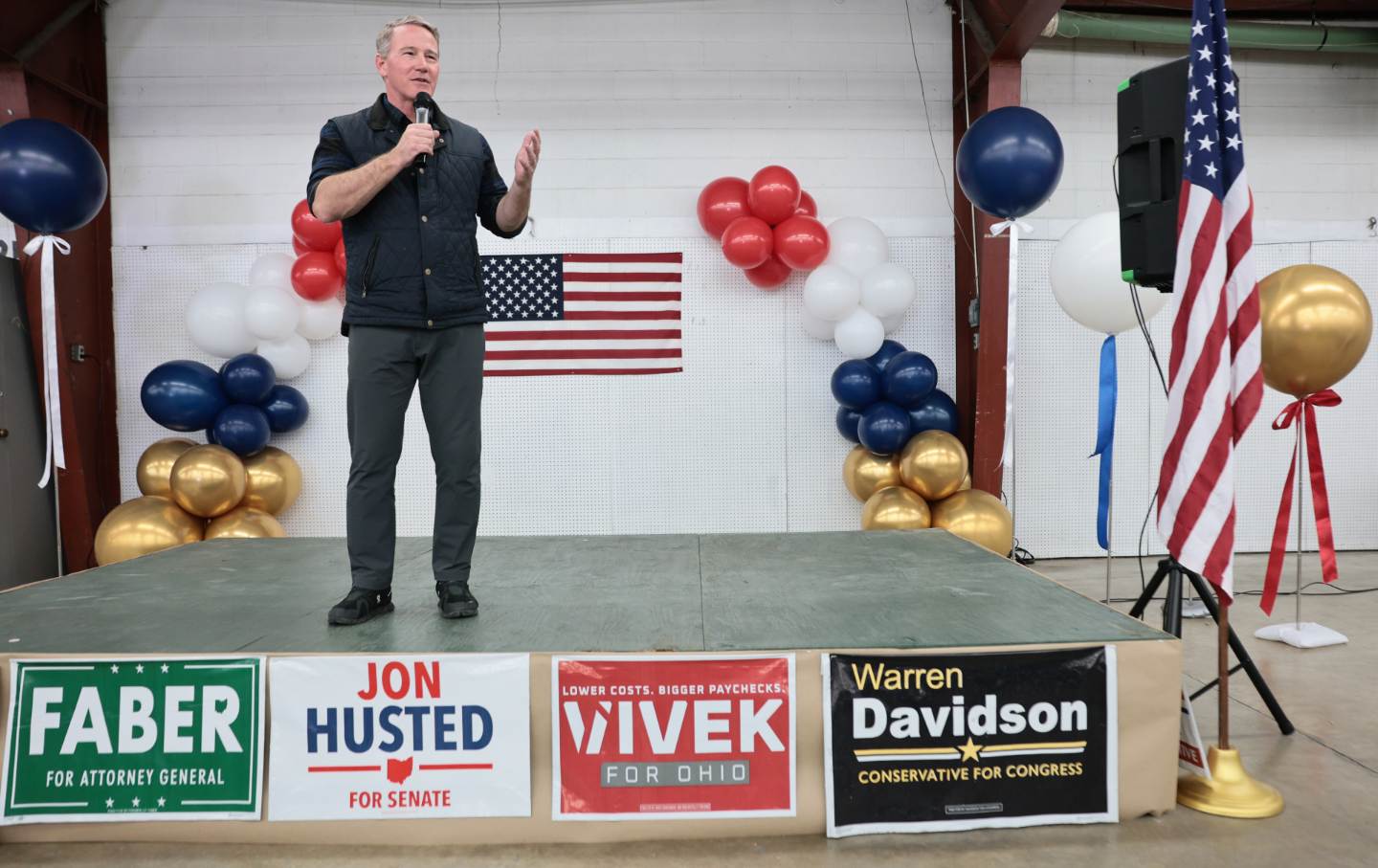
Will the GOP’s Big Money Save Jon Husted in Ohio? Will the GOP’s Big Money Save Jon Husted in Ohio?
Former senator Sherrod Brown is leading in most polls, but a tidal wave of spending may prop up the struggling incumbent.

James Talarico Is Preaching a Gospel of Pluralism James Talarico Is Preaching a Gospel of Pluralism
He’s not the only progressive doing it.

Even Republicans Are Waking Up to Trump’s Corruption Even Republicans Are Waking Up to Trump’s Corruption
And, somewhat shockingly, so are Democratic elites.

Mamdani Can No Longer Avoid the Issue of the NYPD Mamdani Can No Longer Avoid the Issue of the NYPD
The mayor has been able to put difficult questions about policing on the back burner—until now.

Why Democratic Leaders Keep Waging War on the Young Why Democratic Leaders Keep Waging War on the Young
The party's silver-haired establishment is caught up in an existential culture war.

