
Protests Are Supposed to Be an Inconvenience
Critics of the climate activists who interrupted a recent Broadway play are missing the point.

Broadway opening night for Ibsen’s An Enemy of the People at Circle in the Square Theatre on March 18, 2024.
(Photo by Arturo Holmes / Getty Images)A Broadway audience sits rapt as Michael Imperioli, playing the vain small-town mayor in Henrik Ibsen’s An Enemy of the People, moves to shut down the whistleblowing doctor, performed by Jeremy Strong, who is struggling to expose dangerous toxins in the waters of the town. The mayor asks if there are any objections. There are objections. But last Thursday night, there were objections that were not part of the script.
Three activists from the climate group Extinction Rebellion interrupted the speakers on stage to object to the silencing of scientists and the dangers in our waters. Since their protest was so smoothly in keeping with Ibsen’s message—and since Imperioli and Strong stayed in character—some members of the audience didn’t realize that it was not part of the play.
Afterward, when footage of the protest started making the rounds on the Internet, many criticized the activists. “Why not go storm Gov. Greg Abbott’s press conference in Texas instead of art in New York City?” asked one. “People are paying to watch this play. Go protest outside,” wrote another. A whole string of commenters argued that the disruption was worthless or worse—it turned people against the cause.
This is an old story for activists. No matter what the action, it is always in the wrong place at the wrong time. It is loud. It is inappropriate. It makes no difference. It creates backlash. Activists should be less strident and more savvy and moderate—less attention-grabby, more decorous.
But the historical record tells a different story. Activists have shaped almost every aspect of our daily lives, from eliminating poison from our pepper to creating public parks, eradicating smallpox, and ensuring that we all learn some math. In 1850, you could be fired for missing a day of work for illness, and your employer owed you nothing if you happened to lose your arm in one of his machines. We have generations of activists to thank for medical leave and worker safety protections.
And this isn’t only true of the distant past. In 2020, a team of environmentalists led by Teaneck Girl Scout Troop 19 successfully pressured New Jersey to impose a statewide plastic bag ban, which took more than 8 billion bags out of circulation in just the first year.
From a historical perspective, what’s compelling is not how frequently activists fail but how remarkably often they succeed.
Let’s also not forget that activists often turn to disruptive tactics after other forms—marches, letter-writing campaigns, and elections—have failed. In these contexts, they face a paradox: When they can’t attract publicity by doing more of the same, they escalate, risking denunciation as fanatics or sensationalizers. Extinction Rebellion is canny about making sure that their disruptions make the news. They interrupted an Opera performance, as well as a US Open match.
Activists are right to escalate. History shows us that “extreme” tactics (like disrupting a theater production or gluing your feet to the road) actually amplify and expand support for moderate ones (like voting or writing letters). Scholars call this the “radical flank effect.” Malcolm X’s militancy famously broadened the appeal of Martin Luther King Jr.’s nonviolent demonstrations. Instead of pitting the two against one another, we can see how together they build the kind of public pressure that actually shifts the political needle.
Activists also have to keep the pressure going. One big march or social media drive can spark a burst of excitement, but the action can also just as quickly fizzle without having realized any meaningful goals. Daniel Hunter, author of the Climate Resistance Handbook, asks us to imagine what it’s like to be a politician targeted by protesters. “People are outside your office urging you to do something. You had to sneak in the back door so you wouldn’t have to face them.” But chances are that the protesters will be gone the next day. The politician might as well “wait until the heat blows over” instead of formulating a response.
Sustaining pressure is a huge challenge for activist movements. It’s hard to keep volunteer energies from flagging, especially when there is no easy victory in sight. And when tactics escalate, it’s a lot to ask people to run the risk of going to jail or losing their jobs. (No one was arrested at the Ibsen action, but one of the activists said that he was an actor risking his career by disrupting Broadway.)
Activists may seem exasperating, then, but their actions are, in fact, how meaningful change happens—even when the odds are stacked against them. So, let’s understand protesters for what they are: brave and principled people who are risking their own well-being for the good of the rest of us.
Ibsen would approve.
More from The Nation

Has France’s Government Overplayed Its Hand? Has France’s Government Overplayed Its Hand?
The speed and scale of the police response mark a dangerous new normal.

Seeing My Mother in Prison: A Conversation With Author Harriet Clark Seeing My Mother in Prison: A Conversation With Author Harriet Clark
An interview with the author of The Hill about her debut novel and the artist’s role in documenting atrocities.

Harlan Crow’s Portrait of SCOTUS Under Trump Harlan Crow’s Portrait of SCOTUS Under Trump
Clarence Thomas, the picture of corruption.

How the Skydance Merger Will Remake Hollywood and the News Business How the Skydance Merger Will Remake Hollywood and the News Business
The Ellison family’s $110 billion deal to acquire Warner Bros. Discovery means more top-down control, and less room for dissent.
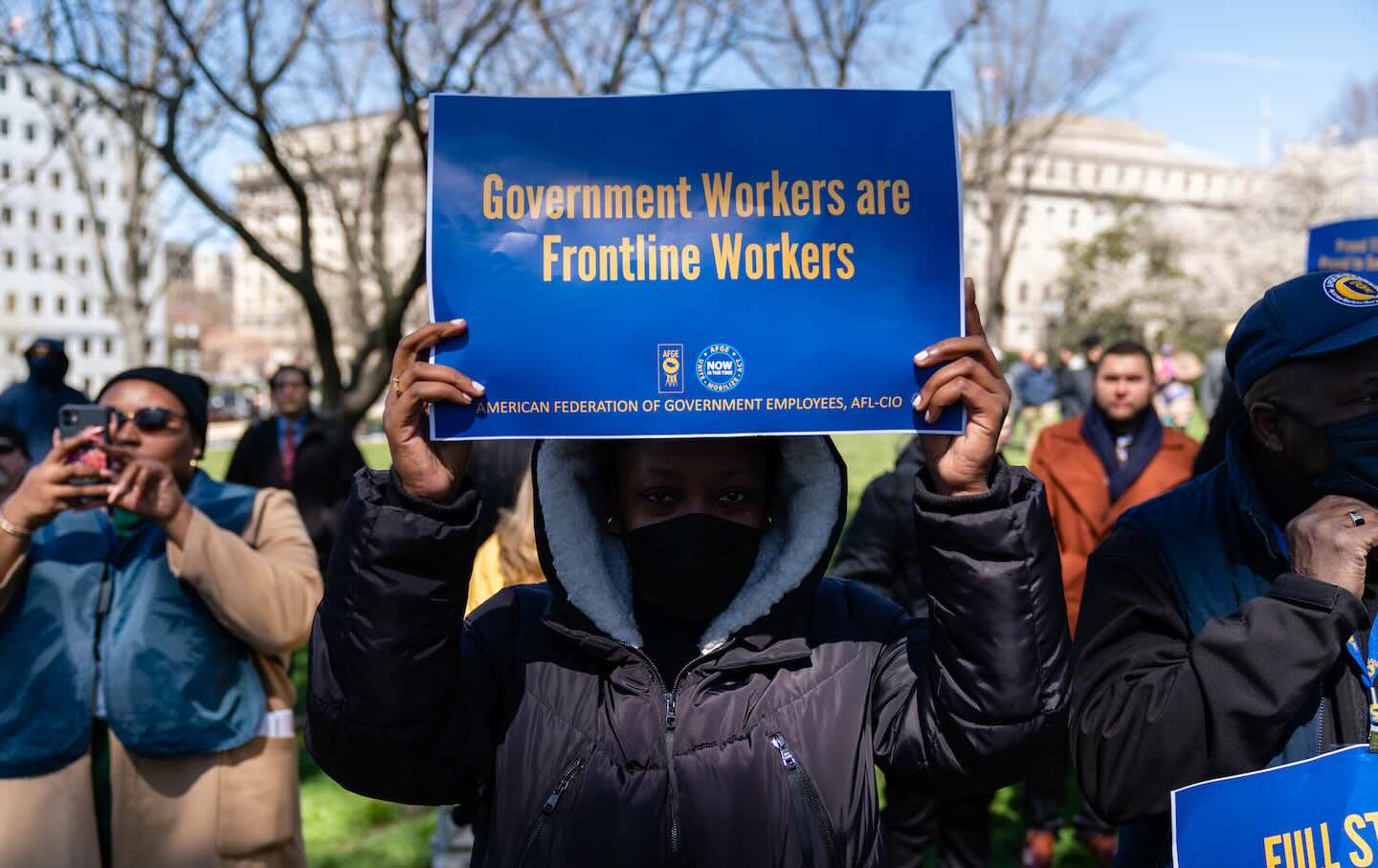
Recovering From a “Gut Punch”: Black Women Fired by Trump and Musk Work to Overcome Shame and Self-Blame Recovering From a “Gut Punch”: Black Women Fired by Trump and Musk Work to Overcome Shame and Self-Blame
Black women working for the federal government did what they were supposed to do. Yet their achievements could not protect them from the political winds.

The Conservative Organization Building a New Young Elite The Conservative Organization Building a New Young Elite
From pro-life summits to Palantir résumé drops, the David Network is discreetly building a pipeline for conservative college students.

