When Her Neighbors Began Dying, the World Looked Away
A new podcast takes us back to the early days of the HIV/AIDS crisis, when a mystery virus began spreading among New York’s Black and brown communities.
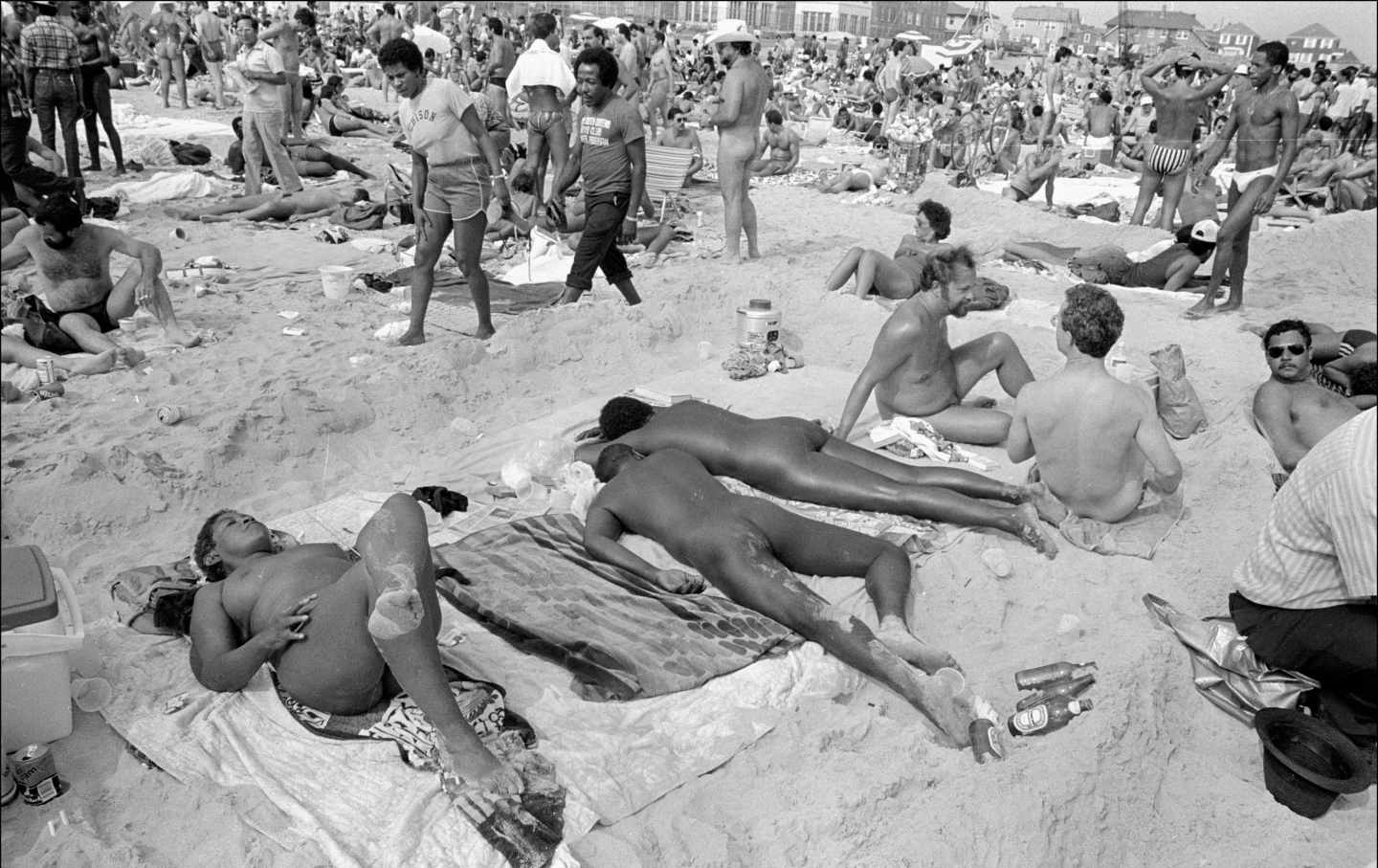
In the mid-1980s, the people of Valerie Reyes-Jimenez’s Lower Manhattan neighborhood began to disappear. First one, then another, then tens—then 75 from one single block. “One day they were there,” she said, “and the next day they were gone.”
In the decades before these disappearances, Reyes-Jimenez’s neighborhood had been a tight-knit Puerto Rican community—a vibrant place where friends and family were always close at hand. But in the 1970s, as the local economy crumbled, a different one grew in its place—an economy centered around the city’s largest open-air heroin market—and, with that heroin, came this other thing, this illness, that began to steal people away.
“We said that people had The Monster, because they had that look,” Reyes-Jimenez said. “They had the sucked-in cheeks.… They were really thin.”
Outside Reyes-Jimenez’s neighborhood, doctors had a different name for what was going on: They called it HIV, the virus that causes AIDS. By this point, the illness that was destroying people’s immune systems was widely recognized as the biggest contagious threat facing the United States, but its effect on communities like Reyes-Jimenez’s—Black and Puerto Rican, poor, often in the grips of drug crises—remained largely invisible. It was a blind spot that would shape the course of the epidemic for years to come.
Why didn’t more people see this side of HIV and AIDS? And what might have been different if they had?
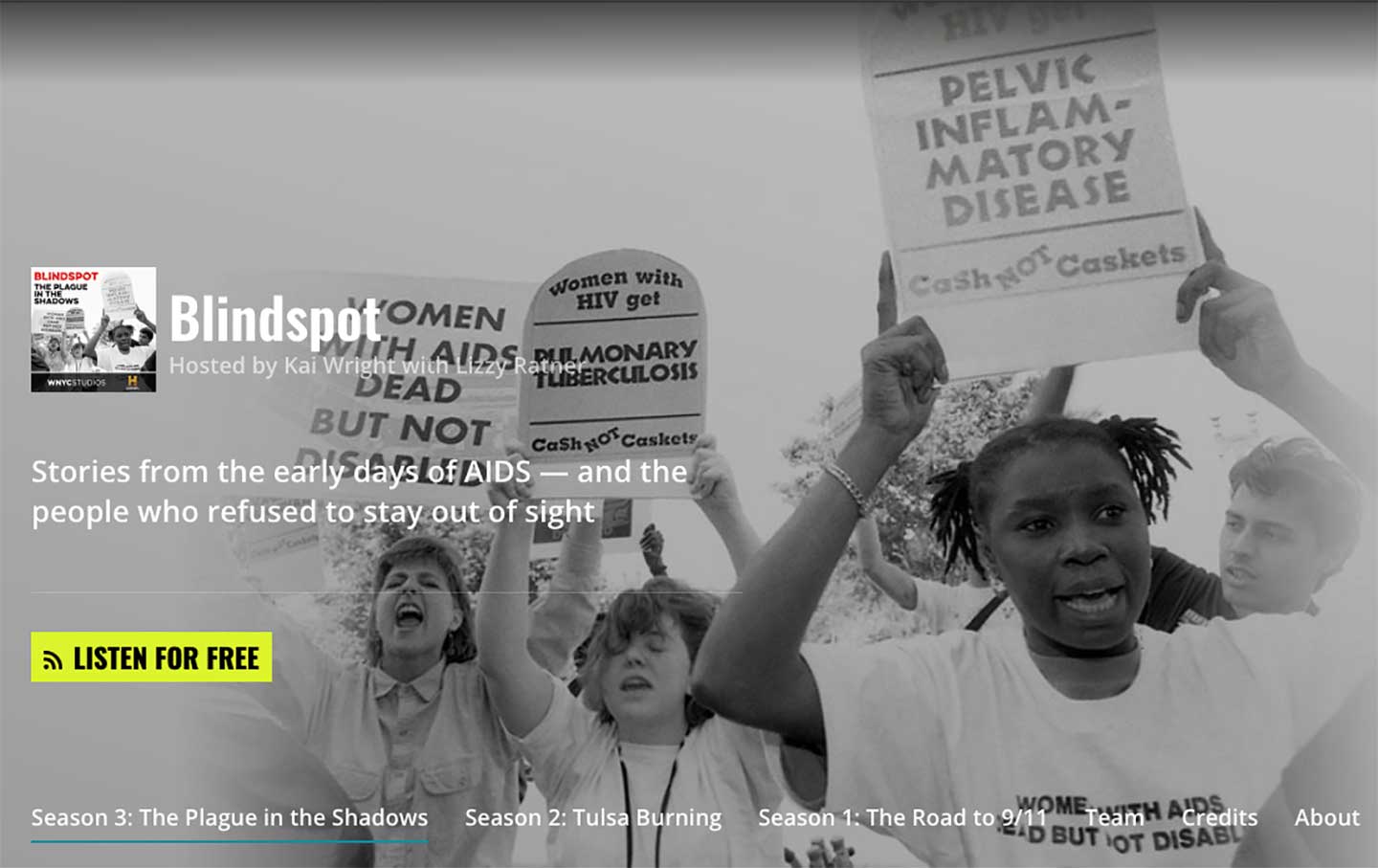
These are some of the questions at the heart of Blindspot: The Plague in the Shadows, a podcast I helped make alongside a dream team of journalists from WNYC, including Kai Wright, my former Nation colleague and the sublime host of Notes from America. Our collective hope was to understand how, decades before Covid-19, a virus had torn through some of this country’s most vulnerable communities while the wider world looked away.
What we found both devastated and inspired us. As we time-warped back to the 1980s, our reporting took us from a pediatric ward in Harlem to a maximum security women’s prison in upstate New York to a needle exchange in a South Bronx church to the city’s own potter’s field. And it revealed how, unseen but desperately feared, a single, tiny virus could take advantage of some of the worst bigotries, biases, and, yes, blindspots in our society. As Kai says in the first episode, “AIDS was not just a medical crisis; it was and it remains a social disease, one that exploits the inequities that already define so much of American life.”
And yet: Amid the grief and enduring pain, we also found something else—truly heroic human beings who had no intention of bowing to any of society’s bigotries and biases. These were activists and nurses, doctors and elected officials, daughters, sons, a nun, a priest, and a woman who literally helped change the definition of AIDS. They were people dying of HIV. When the world averted its eyes, they demanded the world look; they demanded to be seen.
It’s now been more than 40 years since HIV/AIDS burst into public consciousness, scorching lives, neighborhoods, and whole communities. Some 40 million people have died around the world, and it’s still killing people today. But in the US, much of the country has moved past the illness; we have forgotten it—or, in too many cases, never gotten to know—an illness that redefined everything from love and intimacy to health, sexuality, solidarity, and activism.
With Blindspot: The Plague in the Shadows, we revisit the early days of this pandemic, and we ask: What might have happened if more people had chosen to see the plague in the shadows—if they chose to see it even now? And what lessons can we learn from it today?
* * *
Listen to an excerpt of the new podcast series Blindspot: The Plague in the Shadows, which revisits the early years of the HIV epidemic in New York City and how the virus tore through some of our most vulnerable communities while the wider world looked away. A co-production of The HISTORY® Channel and WNYC Studios.
You can listen to more of Blindspot: The Plague in the Shadows here.
Advertising Inquiries: https://redcircle.com/brands
Privacy & Opt-Out: https://redcircle.com/privacy
Blindspot: The Plague in the Shadows is a coproduction of the History Channel and WNYC Studios, with The Nation. Its first two episodes are “Mourning in America” and “If I Didn’t Have HIV, I Wouldn’t Have Met You.” You can find them at wnycstudios.org/podcasts/blindspot or wherever you get your podcasts.
Become a Sustaining Donor This September
Between the reemergence of right-wing red-baiting and Donald Trump’s use of the chilling National Security Presidential Memorandum–7 to criminalize left political organizing, we’re seeing McCarthyism reborn before our eyes.
This assault on democracy cannot be ignored or wished away. Resisting it requires bravery in the face of threats and repression, a steadfast commitment to the truth, and the unwavering belief that we can—and will—overcome this darkness.
We must have an independent media that sets the record straight, unearths corruption and abuses of power, and advances a politics of justice and dignity for all if we’re to win this fight.
That’s why I’m writing to you today. This September, The Nation needs to add 100 monthly donors to sustain our progressive journalism. Your contribution makes the next investigative report, the next truth-speaking column, and the next pathbreaking essay all possible.
I hope you’ll support our work with a recurring donation today. If you donate $10 or more a month, we’ll send you a brand new “Hands Off the Free Press!” sticker to recognise your commitment to our cause. Please, donate today.
Onward,
Katrina vanden Heuvel
Editor and Publisher, The Nation