As the Death Toll Rises in Gaza, AIPAC Lobbies for War
Political interests in Washington are vying for influence when it comes to US policy in the Middle East—no matter how out of step they are with public opinion.
If war is the health of the state, as Randolph Bourne famously proclaimed, it is a full-blown Power Rangers surge for the donors, think tanks, and political action committees who have long shaped the US foreign-policy consensus. Neoconservative policy outfits such as the Bastion Institute and Elliot Abrams’s Vandenberg Coalition have already seized on Hamas’s October 7 massacre of more than 1,400 Israeli civilians to agitate for an American attack on Iran—and a wider war in the Middle East. Republican senators like South Carolina’s Lindsey Graham and Iowa’s Jodi Ernst are enthusiastic recruits, along with GOP presidential hopeful Doug Burgum, the governor of North Dakota.
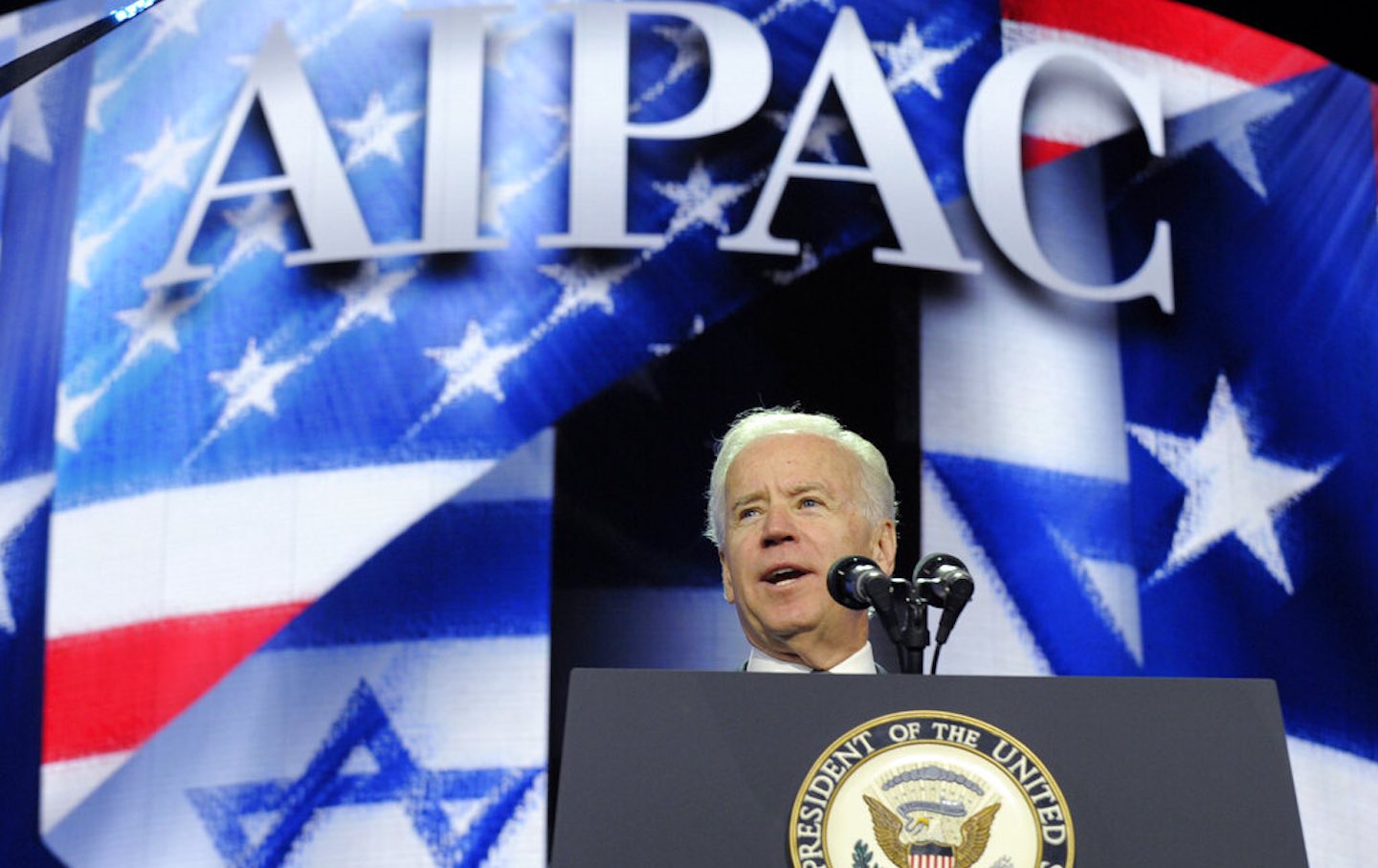
Meanwhile, the hard-line pro-Israeli lobby AIPAC, which aggressively targeted progressive Democratic candidates it regarded as antagonists to Israel’s interests during the 2022 primary cycle, will almost certainly be monitoring congressional incumbents in both major parties. The organization’s political arm, AIPAC PAC, hasn’t yet promulgated a strategy for messaging in 2024. “There will be a time for political action,” says AIPAC spokesman Marshall Wittmann, “but right now our priority is building and sustaining congressional support for Israel’s fight to permanently dismantle Hamas, which perpetrated the barbaric, terrorist attack on the Jewish state.”
Still, it’s not hard to track the lobby’s tight alliance with the present congressional leadership. AIPAC PAC’s website features the legend “We stand with those who stand with Israel” above photos of senior leaders of both major parties in the US House, from minority leader Hakeem Jeffries, whip Catherine Clark, and caucus chair Pete Aguilar on the Democratic side to former speaker Kevin McCarthy, majority leader Steve Scalise, and majority whip Tom Emmer on the GOP side.
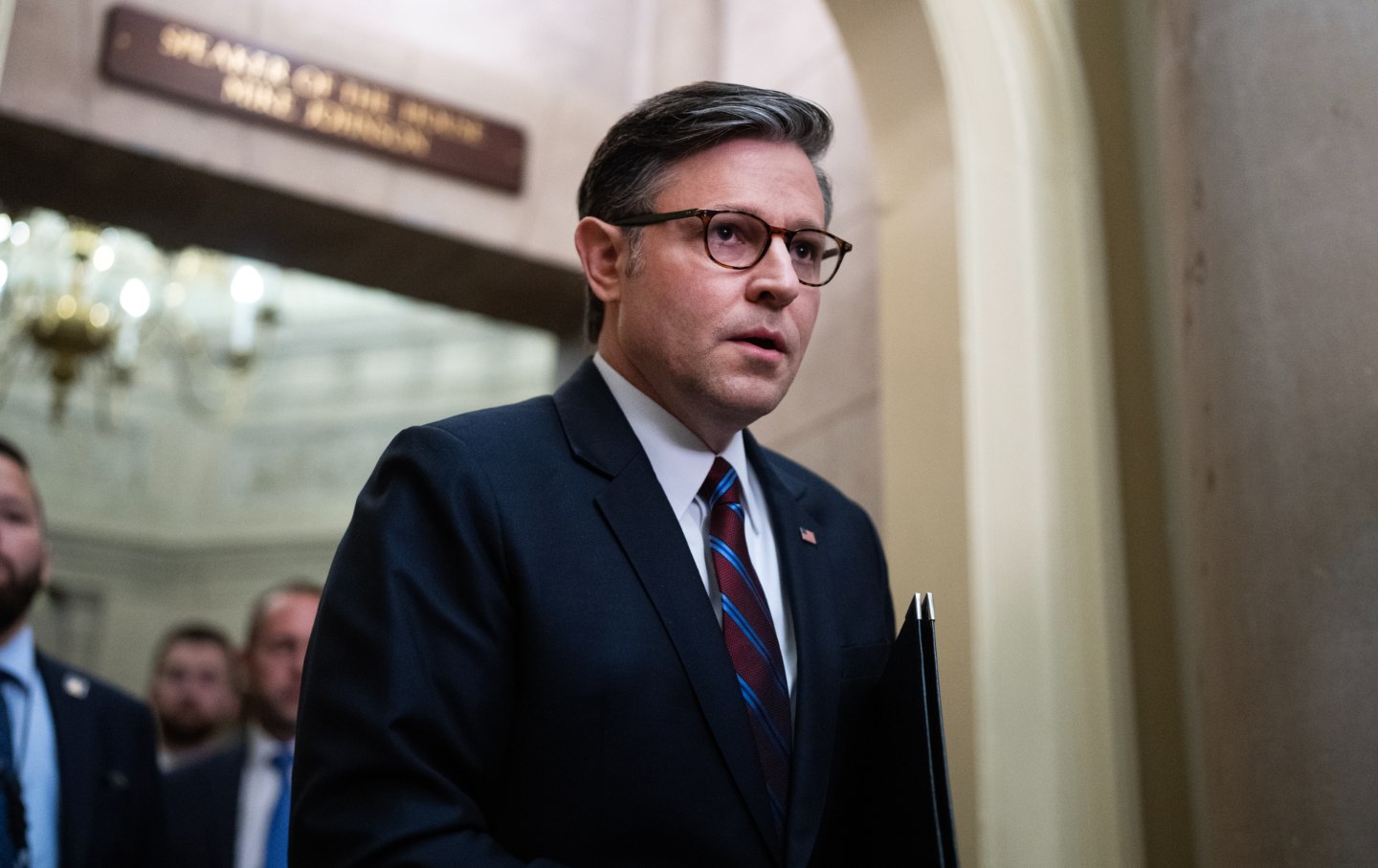
As I write, Mike Johnson’s portrait hasn’t replaced McCarthy’s, but it doubtless will soon; the new speaker’s first act was to secure a House resolution, passed by an overwhelming 412–10 majority, affirming support for Israel and demanding that Hamas cease hostilities and return all hostages. Nine of the “no” votes came from progressive Democrats, who noted that the resolution made no mention of the civilian death toll in Gaza under Israel’s retaliatory invasion. The Democratic-led Senate, meanwhile, unanimously endorsed a resolution pledging to “completely support” Israel and denouncing the rhetoric of “anti-Israel, pro-Hamas student groups as antisemitic, repugnant and morally contemptible.”
The congressional consensus presents a striking contrast with public opinion. Two-thirds of respondents in a Data for Progress poll from late October supported a cease-fire, including 80 percent of Democrats and 56 percent of Republicans. A Quinnipiac survey taken around the same time found 85 percent of respondents concerned that the Gaza war would erupt into a wider Middle East conflict—the outcome neoconservatives are already agitating for.
Meanwhile, President Biden—who has backed Israel’s preparation for a ground war and requested an additional $14.3 billion in aid to Israel while casting doubt on the Gaza Ministry of Health’s casualty reports—has seen his approval numbers among Democrats plummet by a stunning 11 points in the past month, to 75 percent. Biden’s showing among younger voters, the most vocal anti-war demographic, is especially dire—a troubling portent for the president’s reelection hopes, since that same vote was decisive in his 2020 victory over Donald Trump.
Progressive strategists argue that the White House’s all-in posture is a grievous moral and political error. “What we hear from the White House is a quick line saying, ‘Palestinians are not Hamas,’” says Usamah Andrabi, the communications director for Justice Democrats. “Well, you can’t say that and say humanitarian aid is important while you’re actively lobbying Congress for billions to kill Palestinian people. No one is buying that shit, frankly.”
The adherence to intervention-first models of US foreign policy, Andrabi says, is far afield from popular sentiment here and in the Middle East. “A bipartisan foreign-policy establishment has always been willing to erase the people on the ground in Israel and Gaza who don’t support any of this—all in order to support another conflict that will lead to 10-to-1 civilian versus Hamas casualties,” he argues. “It’s really sad, for a group that pretends to be bipartisan, how overtly this is backed by right-wing money and influence.” Democratic Representative Alexandria Ocasio-Cortez responded with similar outrage to an AIPAC tweet targeting GOP Representative Thomas Massie for his “no” vote on the Gaza resolution; citing AIPAC’s support for backers of the January 6 insurrection, she called the group “racist and bigoted” and “an extremist organization that destabilizes US democracy.”
The progressive Jewish lobby J Street does not support a cease-fire and contends that left activists are showing worrying signs of affinity with Hamas. “We’re seeing the emergence of a very complex and wide political map,” says J Street president Jeremy Ben-Ami. “What you see among elements of the progressive left has been a conflation of the movement for liberation of Palestinians from the occupation and the desire for peace…with what Hamas just did, touching off a tremendous amount of antisemitism on the left on campuses and other places.” At the same time, he adds, “on the far right, they don’t miss an opportunity to look for a war to get started. I think where the majority of both parties are is that they don’t want to see us pouring all sorts of resources into a war and getting troops engaged in some way.”
This volatile realignment makes the role of J Street’s opposite number on K Street especially fraught, Ben-Ami adds. “I think it’s a mistake for those who care about the US-Israeli relationship to look for political wedges to drive into either party just now, at a moment when Israel needs as broad as possible a base of support. That will backfire not only on AIPAC but on the US-Israeli relationship in general…. To drive a $30-to-$40-million wedge between supporters of Israel would be a huge mistake.”
Become a Sustaining Donor This September
Between the reemergence of right-wing red-baiting and Donald Trump’s use of the chilling National Security Presidential Memorandum–7 to criminalize left political organizing, we’re seeing McCarthyism reborn before our eyes.
This assault on democracy cannot be ignored or wished away. Resisting it requires bravery in the face of threats and repression, a steadfast commitment to the truth, and the unwavering belief that we can—and will—overcome this darkness.
We must have an independent media that sets the record straight, unearths corruption and abuses of power, and advances a politics of justice and dignity for all if we’re to win this fight.
That’s why I’m writing to you today. This September, The Nation needs to add 100 monthly donors to sustain our progressive journalism. Your contribution makes the next investigative report, the next truth-speaking column, and the next pathbreaking essay all possible.
I hope you’ll support our work with a recurring donation today. If you donate $10 or more a month, we’ll send you a brand new “Hands Off the Free Press!” sticker to recognise your commitment to our cause. Please, donate today.
Onward,
Katrina vanden Heuvel
Editor and Publisher, The Nation