
Wisconsin’s Supreme Court Is No Longer a Threat to American Democracy
A hyper-partisan conservative majority that almost helped Trump try to steal the 2020 election has been replaced by a new majority determined to defend voting rights.
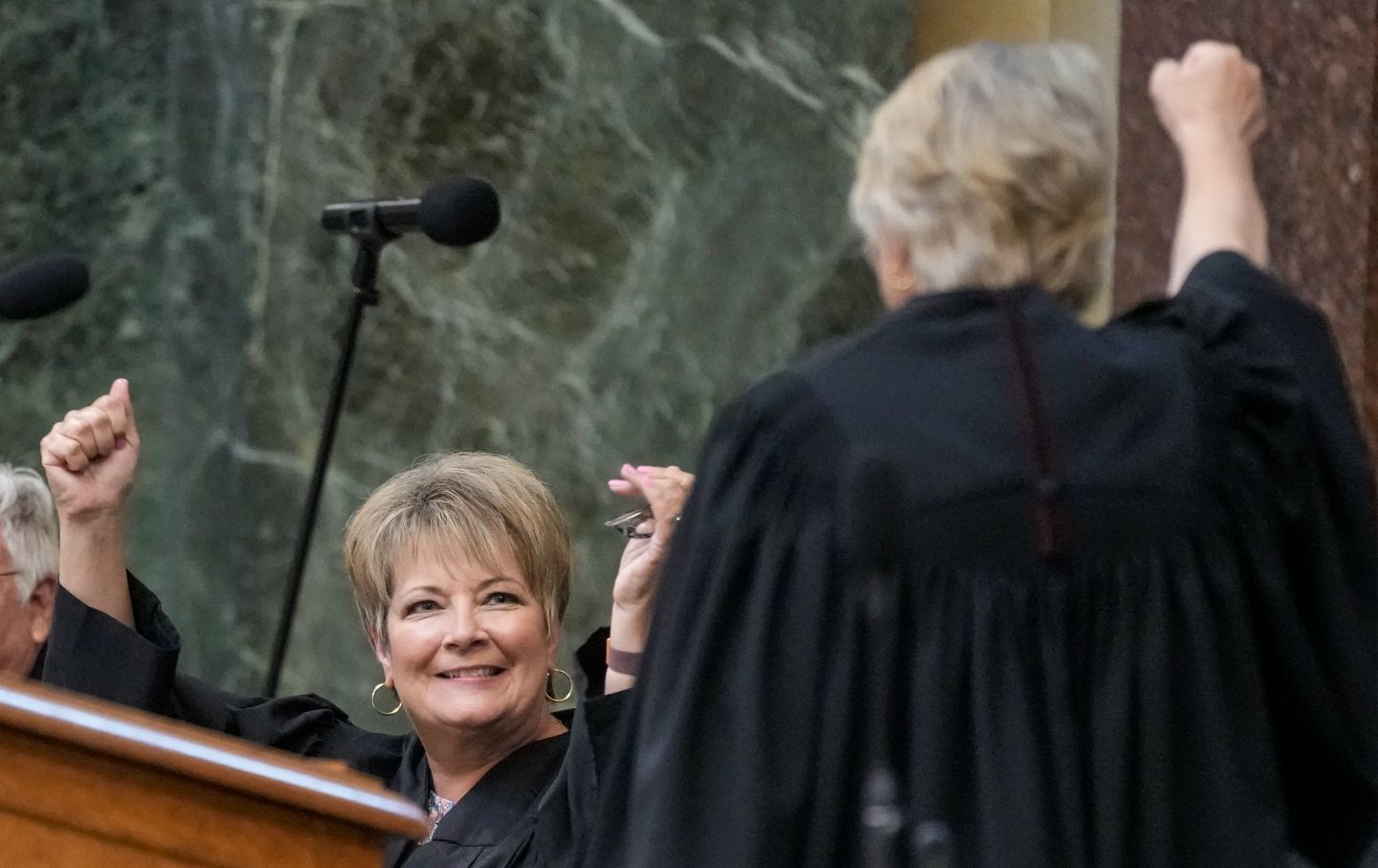
Janet Protasiewicz, left, celebrates with Supreme Court Justice Ann Walsh Bradley before being sworn in as a Wisconsin Supreme Court justice, Tuesday, August 1, 2023, in Madison, Wis.
(Morry Gash / AP)Psychologists tell us that bad players engage in projection in order to shift blame for their own misdeeds onto others. That was certainly the case in the Badger State this week, when a spokesperson for the beleaguered Republican Party of Wisconsin tried to suggest that the ascendance of a liberal majority on the state’s Supreme Court— which was completed on Tuesday with the swearing-in of newly elected Justice Janet Protasiewicz—would lead to “an era of hyper-partisanship brought on by Protasiewicz and her allies as they use the courts to implement their partisan policy agenda.”
In fact, the new 4-3 bloc on the highest court of the nation’s most contentious battleground state is in a position to finally bring an end to the era of extremism that kicked off more than a decade ago, when a conservative majority made the court an extension of rigidly right-wing Republican Governor Scott Walker. Throughout Walker’s eight-year tenure as a fiercely anti-union and pro-corporate governor, the court upheld even his most radical and lawless moves. And after Walker’s defeat in 2018, the court continued to do the bidding of the Republicans who control the state legislature—most recently by maintaining radically gerrymandered legislative district lines that tip the balance in favor of GOP candidates, and by regularly sustaining Republican assaults on voting rights and democracy itself.
The conservative majority became so blatant, and so aggressive, in its efforts to upend free and fair elections that, in the fall of 2020, it went further than any high court in the country in its indulgence of Donald Trump’s efforts to overturn the results of that year’s presidential election. Challenges by Trump and his Republican allies were quickly dismissed in dozens of local, state and federal courts across the country after Democrat Joe Biden won the national popular vote by more than 7 million ballots and carried the Electoral College by a commanding 306-232 margin. But in Wisconsin, one of several states where Republicans had assembled slates of fake electors, the high court came within one vote of siding with Trump’s lawyers.
On December 14, 2020, just an hour before the state’s electors were due to cast their votes, three conservative justices on the court embraced arguments made by Trump’s team, with Republican-aligned Chief Justice Patience Roggensack declaring, “A significant portion of the public does not believe that the November 3, 2020, presidential election was fairly conducted.” If Roggensack and her cabal court had gotten one more justice to vote with them, Trump might well have had the opening he was looking for in Wisconsin– potentially setting the stage for the former president’s congressional allies to mount an even more aggressive challenge to the results when it came time for Congress to certify the results.
Luckily for America, conservative Justice Brian Hagedorn blinked. He sided with the court’s three liberals to reject the suit. But that didn’t happen in the vast majority of cases on democracy issues. As a result, Wisconsin’s legislative maps are so skewed toward Republicans that even when Democrats win the popular vote comfortably statewide, the GOP maintains lopsided majorities in the state Assembly and Senate, and in the state’s D.C. delegation. As a further result, Wisconsin has some of the most rigid voter ID requirements in the country, erects multiple roadblocks to voting by college students, bans the use of drop boxes to cast absentee ballots, and maintains a long list of additional antidemocratic rules—all advanced by legislative Republicans and approved by the conservative court—that have upended the state’s historic commitment to promoting high-turnout elections in which it is easy to cast ballots.
In the fall of 2022, the Election Law Journal’s “Cost of Voting Index” rated Wisconsin as one of the five hardest states in the country for voting – ranking the historic heartland of Midwestern progressivism worse than Texas. The gerrymandering of the legislature to produce overwhelming Republican majorities has had severe consequences for Wisconsin, according to retired University of Wisconsin law professor Bill Whitford, who in an essay several years ago noted that public education, public services, civil rights, and women’s rights had all suffered because of the lines that gave the GOP dominance in the legislature. The essay was titled, “Why Wisconsin Is Not a Democracy.”
Whitford and other legal scholars identified the state Supreme Court as a major part of the problem, as it was the court’s conservative majority that allowed Wisconsin Republicans to implement their antidemocratic agenda. Protasiewicz ran to change things. She warned on the campaign trail that “on an almost-daily basis, our most closely-held constitutional rights are under attack by radical right-wing extremists.” And she spoke bluntly about what almost happened in 2020, telling Democracy Docket, “Three out of seven justices would have overturned the results of the Presidential Election in Wisconsin [in order to] hand the state’s electoral votes to Donald Trump.”
Protasiewicz focused on many issues during her campaign—including her support for reproductive rights, which proved to be a major factor in her landslide victory on April 4. But her boldest criticisms were reserved for “the extreme, partisan right-wing justices who tried to overturn democracy in Wisconsin because they didn’t like the result.” Those justices, she said, “should be ashamed of themselves.”
On Tuesday—the same day, ironically, that Trump was indicted for his scheming to overturn the 2020 election results—Protasiewicz replaced the most powerful of the Wisconsin conservatives, former chief justice Roggensack. After she was sworn in before a cheering crowd in the rotunda of the state capitol, Protasiewicz joined three other liberals to form a majority that is committed to defending the right to vote in free and fair—and competitive—elections.
For the first time in more than 15 years, the court will have a clearly defined and unapologetic pro-democracy majority. That majority is positioned to address the damage done to Wisconsin democracy by the conservatives who controlled the bench during Walker’s governorship and in its aftermath. And change could come quickly; on Wednesday morning, a long-anticipated lawsuit was filed challenging the state’s gerrymandered legislative district maps.
The era of hyper-partisanship that uses the courts to implement a partisan policy agenda is finished.
The era of justice for all, and the renewal of Wisconsin democracy, has begun.
More from The Nation

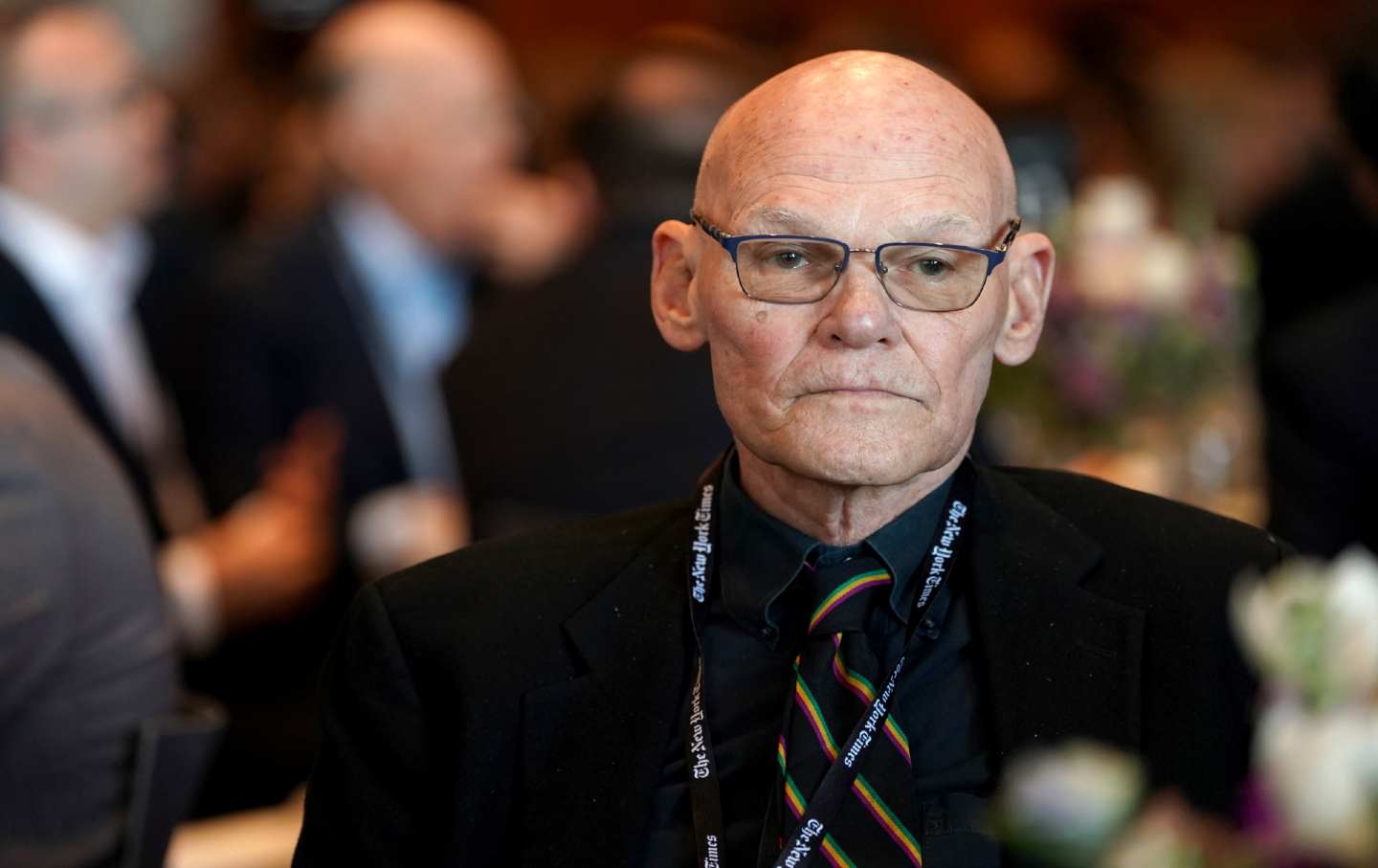
Can James Carville Please Just Be Quietly Wrong Somewhere Else? Can James Carville Please Just Be Quietly Wrong Somewhere Else?
The omnipresent consultant-cum-tantrum-thrower has long outlived whatever relevance he once had, but cable producers, podcast hosts, and Democratic campaigns haven’t got the memo....
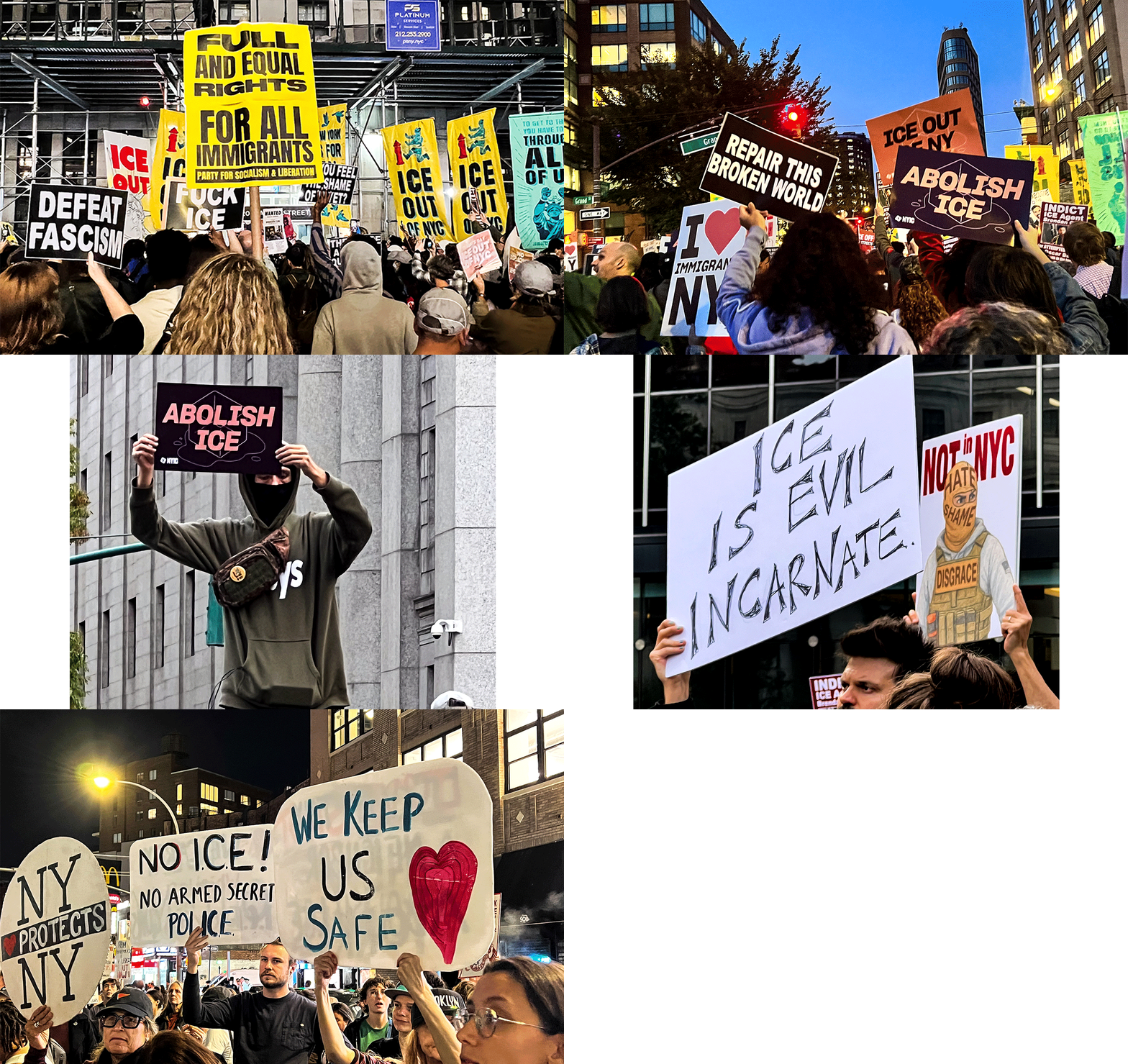
Abolish ICE Abolish ICE
Demonstrators take to the streets in protest against an ICE shooting in New York City. Foley Square, October 2026.

Mamdani Is Facing Heat Over the NYPD. Here’s What He Should Do. Mamdani Is Facing Heat Over the NYPD. Here’s What He Should Do.
The mayor is being given a series of false choices over his public-safety agenda. But there is another way forward.
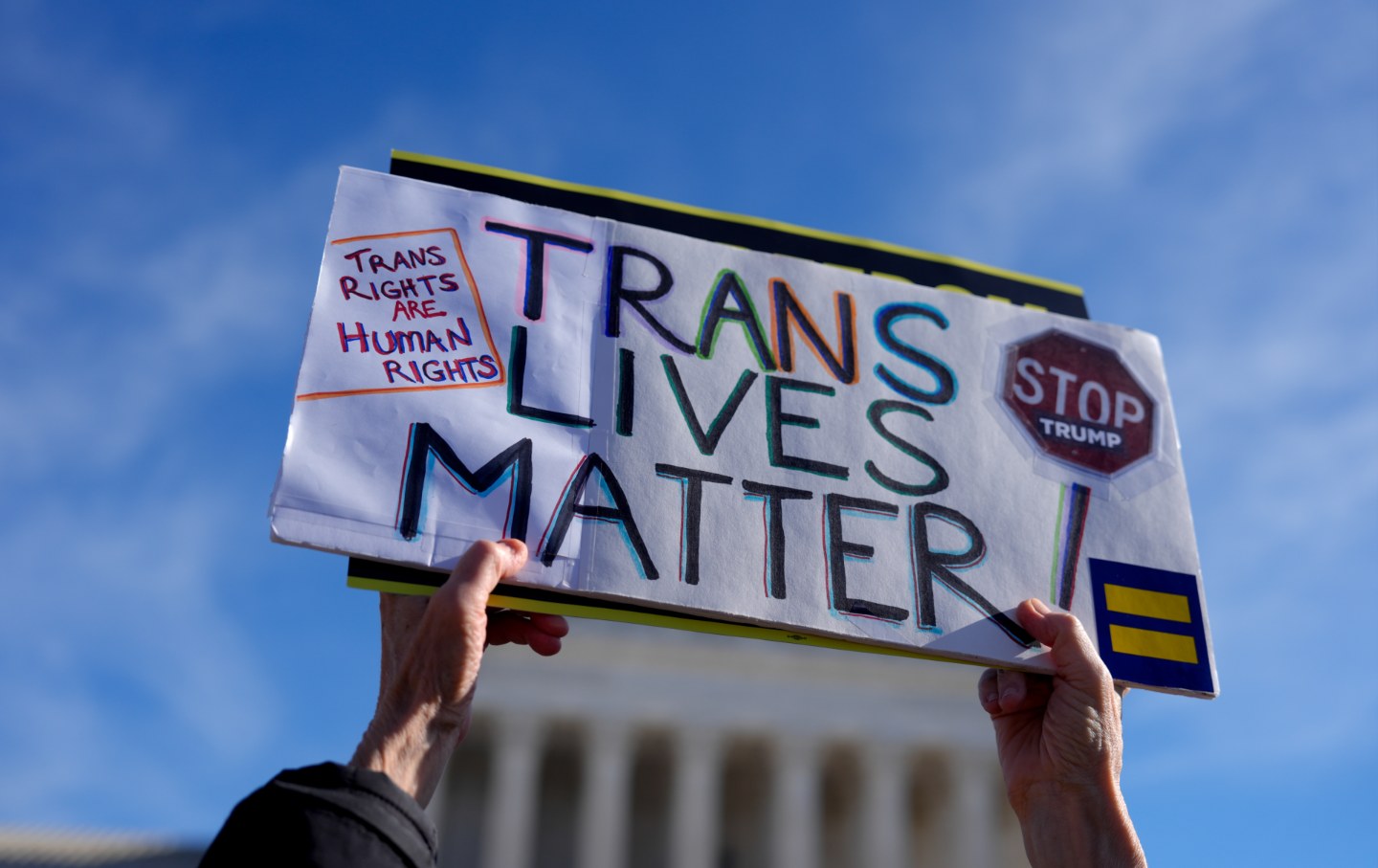
Why Calling Anti-Trans Hate a “Distraction” Is So Troubling Why Calling Anti-Trans Hate a “Distraction” Is So Troubling
It’s a familiar line in the midterms: Anti-trans attacks are a “distraction” from “kitchen-table” issues. That sends a chilling message about whose rights are worth fighting for.
So What Is Socialism, Anyway? So What Is Socialism, Anyway?
In a world dominated by neoliberal market fundamentalism, “socialism” is what will make a more moderate, regulated form of capitalism work for most people.

